
MEXICO · THE COUNTRY GUIDE · CHECKED SEPT 2026
Mexico is a beach week, a desert coast, a jungle-backed bay and a colonial city, and they do not share a thermometer. In January, the Cancún station of the national weather service (SMN 23155) records an average high of 83.7°F. The same month at the Tacubaya observatory in Mexico City, 2,309 meters up, averages a low of 46.9°F.
The U.S. State Department reads the country the same way, state by state. The national rating is Level 2, Yucatán and Campeche are Level 1, and six states sit at Level 4, Guerrero (Acapulco) among them. Getting in is simpler: a passport for the flight, an FMM collected through the airline, and in Quintana Roo a small state fee.
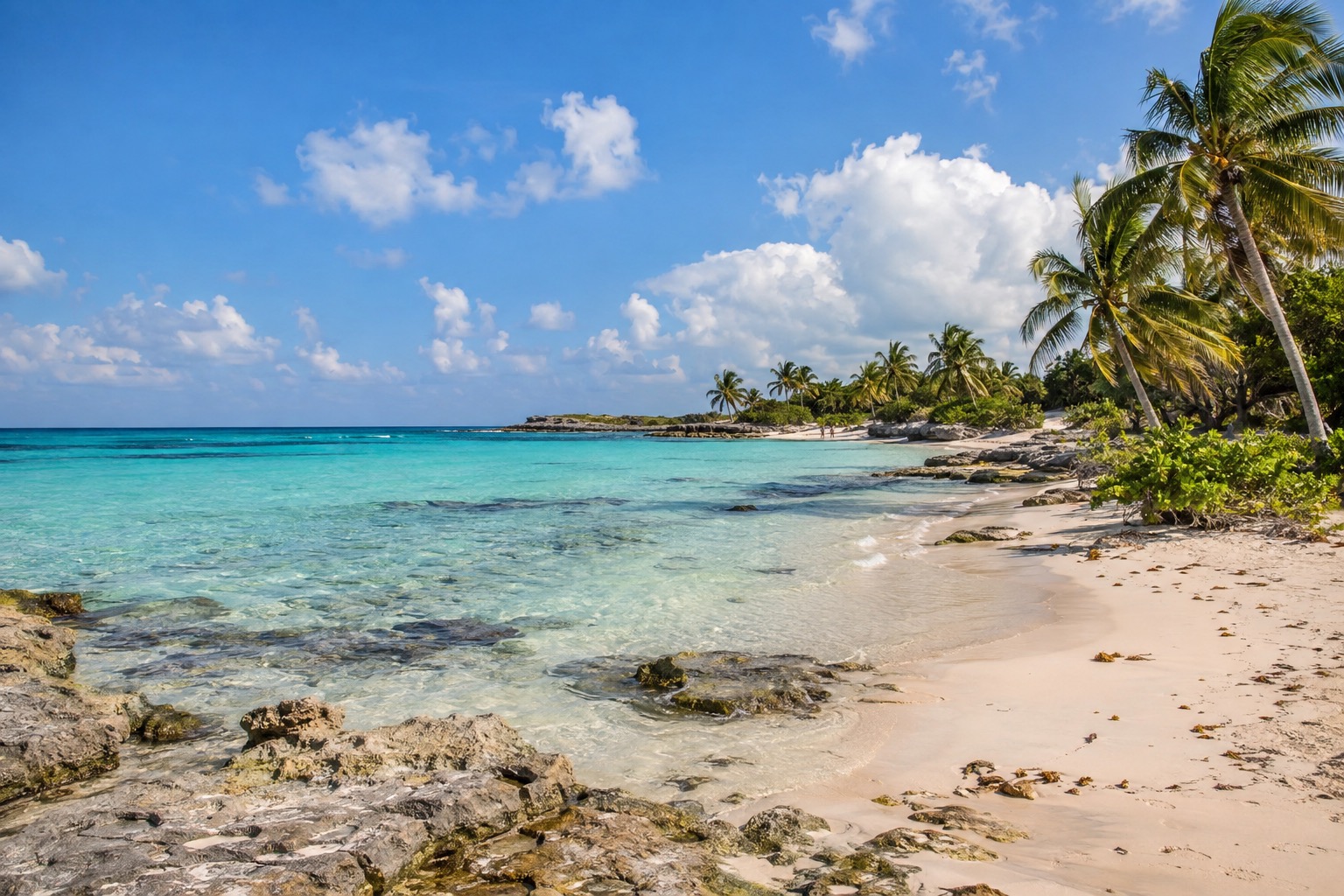
THE COUNTRY AT A GLANCE · MEXICO
Pick the region before the month: January highs reach 83.7°F at the Cancún station while nights at Mexico City’s Tacubaya observatory fall to 46.9°F, and the U.S. advisory is set state by state.
U.S. ADVISORY: LEVEL 2 NATIONALLY (MAY 29, 2026) · HURRICANE SEASONS: MAY 15 / JUN 1 TO NOV 30 · FOUR REGIONS, FOUR CALENDARS
Go for: Caribbean beaches and Maya ruins, the desert coast of Los Cabos, Puerto Vallarta’s jungle-backed bay, and highland cities built around food, museums and colonial centers.
Think twice before: booking a base without checking its state’s advisory level. Six states sit at Level 4 (Do not travel), including Guerrero, home of Acapulco.
Advisory: U.S. Department of State · Weather: SMN/CONAGUA · Hurricanes: NOAA NHC · Entry: INM, CBP · dated sources below
On this page
- Where to go in MexicoCaribbean coast, Los Cabos, Puerto Vallarta and the highlands
- Weather in Mexico by regionJanuary and July at five SMN stations
- Is Mexico safe to visit?Level 2 nationally, Level 4 in six states
- Best time to visit MexicoJanuary figures and hurricane season dates
- Mexico entry requirements for U.S. citizensPassport, FMM at 717 pesos, Visitax at about 293
- Can I pay in US dollars in Mexico?Article 8 of the Ley Monetaria
- Whale watching, monarch butterflies and Day of the Dead datesGray whales, monarchs, November 1 and 2
Mexico’s beach coasts and its highland cities keep nearly opposite calendars, and Washington rates each state separately. Once you have a region, our guide to where to stay in Mexico takes the base question further, from resort strips to colonial centers.
Where to go in Mexico
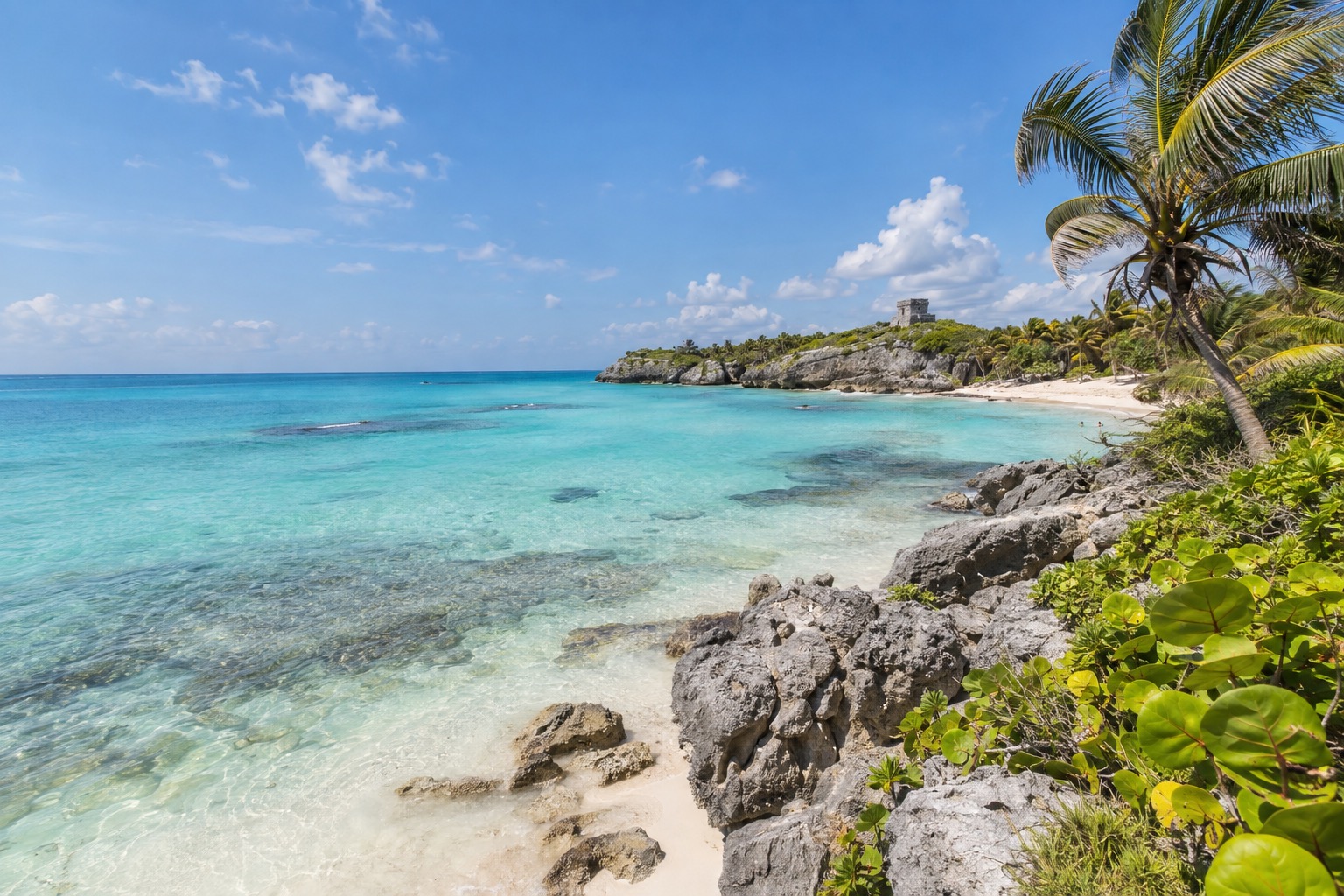
The Caribbean coast of Quintana Roo holds Cancún, Playa del Carmen, Tulum, Cozumel and Isla Mujeres: white-sand beaches, cenotes and Maya ruins such as Tulum. Inland in Yucatán, the ruins of Chichén Itzá add another stop.
At the tip of the Baja California peninsula, Los Cabos is desert meeting the sea. Cabo San Lucas brings the nightlife and the arch, while San José del Cabo is quieter. Many Pacific-facing beaches there are too rough for swimming, so ask at your hotel before wading in.
Puerto Vallarta sits on the Bay of Banderas on the mainland Pacific, with jungle hills behind it. Next door, Riviera Nayarit strings together beach towns such as Sayulita and Punta Mita.
Inland, the central highlands hold Mexico City, Oaxaca, Guadalajara and San Miguel de Allende. Colonial centers, museums and food take the place of beaches, and the altitude keeps nights cool.
What is the weather like in Mexico?
| Station | Jan high | Jan low | Jan rain | Jul high | Jul low | Jul rain |
|---|---|---|---|---|---|---|
| Cancún (SMN 23155) | 83.7°F | 68.0°F | 4.09 in | 94.6°F | 77.0°F | 2.64 in |
| Mexico City, Tacubaya (SMN 09048, 2,309 m) | 72.0°F | 46.9°F | 0.47 in | 76.5°F | 55.4°F | 6.85 in |
| Cabo San Lucas (SMN 03005) | 79.9°F | 55.0°F | 0.24 in | 93.9°F | 72.3°F | 0.31 in |
| Puerto Vallarta, El Cuale (SMN 14339) | 80.1°F | 56.7°F | 1.22 in | 88.0°F | 70.9°F | 15.46 in |
| Oaxaca (SMN 20079, 1,594 m) | 84.0°F | 50.5°F | 0.09 in | 86.2°F | 60.6°F | 4.67 in |
In January, Cancún (SMN station 23155, on the mainland side of the lagoon) averages 83.7°F by day, 68.0°F at night and 4.09 inches of rain. The barrier-island Hotel Zone, a few miles east, runs a touch cooler and windier. Cabo San Lucas (station 03005, in town) reads 79.9°F and 55.0°F with 0.24 inches. Over at El Cuale station (14339, near the river), Puerto Vallarta reads 80.1°F and 56.7°F with 1.22 inches. The hotel strips a few miles north sit on flatter, more exposed ground. By day, Oaxaca (station 20079) tops the five at 84.0°F, with 50.5°F nights and 0.09 inches of rain. Mexico City’s Tacubaya observatory (09048) brings up the rear at 72.0°F and 46.9°F, with 0.47 inches.
In July, Puerto Vallarta records 15.46 inches over 22.2 rain days, Mexico City’s Tacubaya 6.85 inches over 21.8 days and Oaxaca 4.67 inches over 20.4. Cabo San Lucas stays dry with 0.31 inches over 1.0 day and a 93.9°F high. Cancún sits at 94.6°F by day and 77.0°F at night, with 2.64 inches over 9.2 days, less than its January total. Rain-day counts are SMN’s own, so they may not match a U.S. day-with-rain count.
Tacubaya sits at 2,309 meters and the Oaxaca station at 1,594, and both cool fast after sunset: January lows of 46.9°F and 50.5°F, against afternoon highs of 72.0°F and 84.0°F. Pack a sweater or light jacket for highland evenings. The historic center and eastern boroughs of Mexico City run lower and warmer than Tacubaya, while Sierra villages around Oaxaca sit higher and cooler than the valley station.
Is Mexico safe to visit?
The U.S. State Department rates Mexico Level 2 overall, “Exercise increased caution,” in the advisory reissued May 29, 2026. It names terrorism, crime and kidnapping as the reasons, then sorts the country state by state. For a beach or city trip, the rating of the state you land in matters more than the national one.
Quintana Roo (Cancún, Tulum), Baja California Sur (Los Cabos), Nayarit, Oaxaca and Mexico City are all Level 2. For Baja California Sur, the advisory adds that U.S. government employees face no specific travel restrictions. Yucatán and Campeche are Level 1, “Exercise normal precautions.” Guanajuato, the state of San Miguel de Allende, is Level 3, “Reconsider travel,” with gang violence mostly in its southern and central areas.
Six states are Level 4, “Do not travel”: Colima, Guerrero, Michoacán, Sinaloa, Tamaulipas and Zacatecas. U.S. government employees may not travel anywhere in Guerrero, Acapulco, Zihuatanejo, Taxco and Ixtapa included. Jalisco is Level 3, and the advisory notes clashes between criminal groups in Guadalajara’s tourist areas. It lists no restrictions for U.S. government employees in the Guadalajara Metropolitan area, Puerto Vallarta with Riviera Nayarit, Chapala or Ajijic. Our Mexico travel advisory guide goes through each state.
When is the best time to visit Mexico?
January suits Los Cabos and the highlands: Cabo San Lucas gets 0.24 inches of rain, Oaxaca 0.09 and Mexico City’s Tacubaya 0.47, with average highs between 72.0°F and 84.0°F across those three stations. The Caribbean and Pacific resorts stay warm but not bone dry, with Cancún at 4.09 inches over 10.9 rain days and Puerto Vallarta at 1.22 inches over 8.8. Sea surface (mean of daily maxima, 2015-2024) averages 80.7°F off Cancún, 78.2°F off Puerto Vallarta and 73.6°F off Cabo San Lucas.
The Atlantic hurricane season, which governs Quintana Roo, Yucatán and Campeche, runs June 1 to November 30. The Eastern Pacific season, which governs Los Cabos, Puerto Vallarta and Baja California Sur, starts earlier, on May 15, and also ends November 30 (NOAA National Hurricane Center). Book a refundable rate for trips inside those dates and check the NHC forecast the week before flying. Our Mexico best time to visit guide covers the full calendar, and the Cancún month-by-month view is in our Cancún best-time guide.
What do you need to travel to Mexico?
For a flight, bring a passport book. The U.S. passport card is valid for entering the United States by land or sea only, so it does not work on an international flight. Children follow the same rule by air: each needs their own passport.
Every foreign tourist entering Mexico needs a Forma Migratoria Múltiple (FMM) from the Instituto Nacional de Migración. The fee was set at 717 pesos under article 8-I of the Ley Federal de Derechos in the reform in effect since January 1, 2024. It is indexed each year, so the 2026 charge can differ. On international flights the airline collects it for you, and air arrivals now receive a digital version, the FMMd, as a QR code after the passport is stamped.
Quintana Roo, home of Cancún, Tulum and Cozumel, charges every foreign visitor a state fee called Visitax: 2.50 UMA under article 51-Octies of the state’s Ley de Derechos. With the 2026 UMA at 117.31 pesos, that comes to about 293 pesos per person, and the law writes no age exemption. Pay online at visitax.gob.mx before the trip or in cash at the airport before departure. Cruise passengers pay a separate 5-dollar right through the cruise line, and that payment covers them.
Coming home by land or sea, a U.S. citizen can show a passport, a passport card, an Enhanced Driver’s License or a trusted traveler card (NEXUS, SENTRI or FAST). Children under 16, or under 19 with a school, religious or youth group, need only a birth certificate or other proof of citizenship. Full entry detail sits in our Mexico entry requirements guide.
Can you use US dollars in Mexico?
The peso is Mexico’s monetary unit under article 1 of the Ley Monetaria. Article 8 says foreign currency has no legal-tender status in the Republic unless a law expressly provides otherwise, so no shop or restaurant has to take US dollars. Some do, at a rate and up to an amount each business sets for itself, and the practice varies a lot between tourist resorts and everywhere else. Carry pesos for taxis, markets and small counters. Our Mexico money guide has the practical side of paying in pesos.
Best time to visit Mexico for wildlife and festivals
Gray whales come to breed and calve in the lagoons of Ojo de Liebre and San Ignacio, inside the El Vizcaíno Biosphere Reserve in Baja California Sur, and CONANP puts the watching season at December 15 to April 30. Humpbacks are watched from tour boats off Los Cabos and in the Bay of Banderas at Puerto Vallarta in winter. For whale sharks, CONANP describes an arrival in June and a stay until December at Bahía de los Ángeles in Baja California. On the Caribbean side, tours leave from Holbox, Isla Mujeres and Cancún, and swimmers go in beside the shark with a guide, never touching it.
CONANP opens four monarch butterfly sanctuaries each winter. For 2024-2025 they ran from November 15, 2024 to March 31, 2025, daily from 8 a.m. to 5 p.m. El Rosario, Senguio and Sierra Chincua are in Michoacán, a Level 4 state where the advisory names the Monarch Butterfly Reserve among the areas U.S. government employees may not enter. Piedra Herrada, at San Mateo Almomoloa, is in the State of Mexico (Estado de México), rated Level 2. Check CONANP’s announcement for the current season’s dates.
Day of the Dead falls on November 1 and 2. UNESCO inscribed it on its Intangible Cultural Heritage list in 2008, describing indigenous communities laying flower petals, candles and offerings from the cemetery to the home shrine and preparing the departed’s favorite dishes. Altars carry marigolds (cempasúchil), candles, photos, pan de muerto and sugar skulls, and cemeteries fill with families at night. Oaxaca, Pátzcuaro and Mexico City are among the places visitors go. It is a joyful family remembrance, and visitors are welcome in cemeteries as long as they stay respectful.
The last word
Choose the Mexico you want to wake up in, and the rest falls into place: a January high of 83.7°F in Cancún, a cool evening in Oaxaca at 50.5°F with a sweater over your shoulders, a boat in the Baja lagoons before April 30. Settle the Visitax, about 293 pesos per person, at visitax.gob.mx before the flight home from Cancún, and the last morning is free for one more swim.
Sources & data for this guide
- U.S. travel advisory, national and state levels · U.S. Department of State, travel.state.gov · reissued May 29, 2026 · checked Sep 29, 2026 (read live in a browser, since automated requests are blocked)
- Weather normals 1991-2020 · SMN/CONAGUA stations 23155 (Cancún), 09048 (Tacubaya), 03005 (Cabo San Lucas), 14339 (El Cuale, Puerto Vallarta), 20079 (Oaxaca) · checked Sep 29, 2026 · rain-day counts follow SMN’s own threshold
- Sea surface temperature · Open-Meteo Marine API, 2015-2024 mean of daily maxima · read Sept 8, 2026
- Hurricane season dates · NOAA National Hurricane Center, Tropical Cyclone Climatology · checked Sep 29, 2026
- FMM fee and digital form · Ley Federal de Derechos art. 8-I and Instituto Nacional de Migración (FMMd) · checked Sep 29, 2026 · the 717-peso base dates from 2024 and is indexed yearly, so the 2026 charge may differ
- Visitax · Ley de Derechos del Estado de Quintana Roo arts. 51-Octies and 51-Nonies, UMA value from INEGI (117.31 pesos, in force Feb 1, 2026), visitax.gob.mx · checked Sep 29, 2026
- Peso and legal tender · Ley Monetaria de los Estados Unidos Mexicanos arts. 1 and 8 · checked Sep 29, 2026
- Passport card and land or sea return · U.S. Department of State and U.S. Customs and Border Protection (WHTI) · checked Sep 29, 2026
- Whale, whale shark and monarch seasons · CONANP announcements · checked Sep 29, 2026 · monarch dates are the 2024-2025 season
- Day of the Dead · UNESCO Intangible Cultural Heritage · checked Sep 29, 2026
- Regional descriptions, tour departure points and altar customs are editorial; advisories, fees and season dates change · check the source when you book.