
JAMAICA · THE COUNTRY GUIDE · 18.1° N
Jamaica is the Caribbean with the volume turned up: the beaches are the postcard, but the island behind them has mountains that grow world-famous coffee, waterfalls you climb rather than photograph, a food culture built around smoke and scotch bonnet, and a musical gravity no island its size has ever matched. Americans know it as a resort brand. The country attached to the resorts is better than the brand.
This guide is the straight map: where to base, what the island asks of you (a little more street-smarts than Portugal, a lot less than the internet implies), and how to plan around the year that was. Jamaica in 2026 is a country in visible, fast recovery from a major hurricane, and pretending otherwise would make every other page here worthless.
JAMAICA AT A GLANCE
Fly into Montego Bay, base west (Negril) or east (Ocho Rios) by taste, go in the December–April dry season, and budget street-smarts the way you budget sunscreen: a normal amount, applied daily, no drama.
HIGH SEASON: MID-DEC – APRIL · US ADVISORY: LEVEL 2 · RECOVERY FROM MELISSA: WELL UNDER WAY
Go for: the warmest easy-reach winter sea in the hemisphere, jerk eaten where it was invented, waterfalls as participation sports, and a culture that treats visitors as guests rather than inventory.
Think twice if: you want to wander anywhere at any hour without a thought, Lisbon-style. Jamaica rewards planned spontaneity: the freedom is real, inside a frame.
Climate: 1991–2020 normals (ERA5, Montego Bay) · advisory: US State Dept · full sources at the end
On this page
- The famous sunset beach, barefoot paceNegril and the west
- Waterfalls, gardens, adventure parksOcho Rios and the north coast
- Arrival ease, resorts, golfMontego Bay
- The lush, untouristed eastPort Antonio
- Culture, coffee, the real capitalKingston and the Blue Mountains
Where to go in Jamaica: the bases
Negril: the west, horizontal
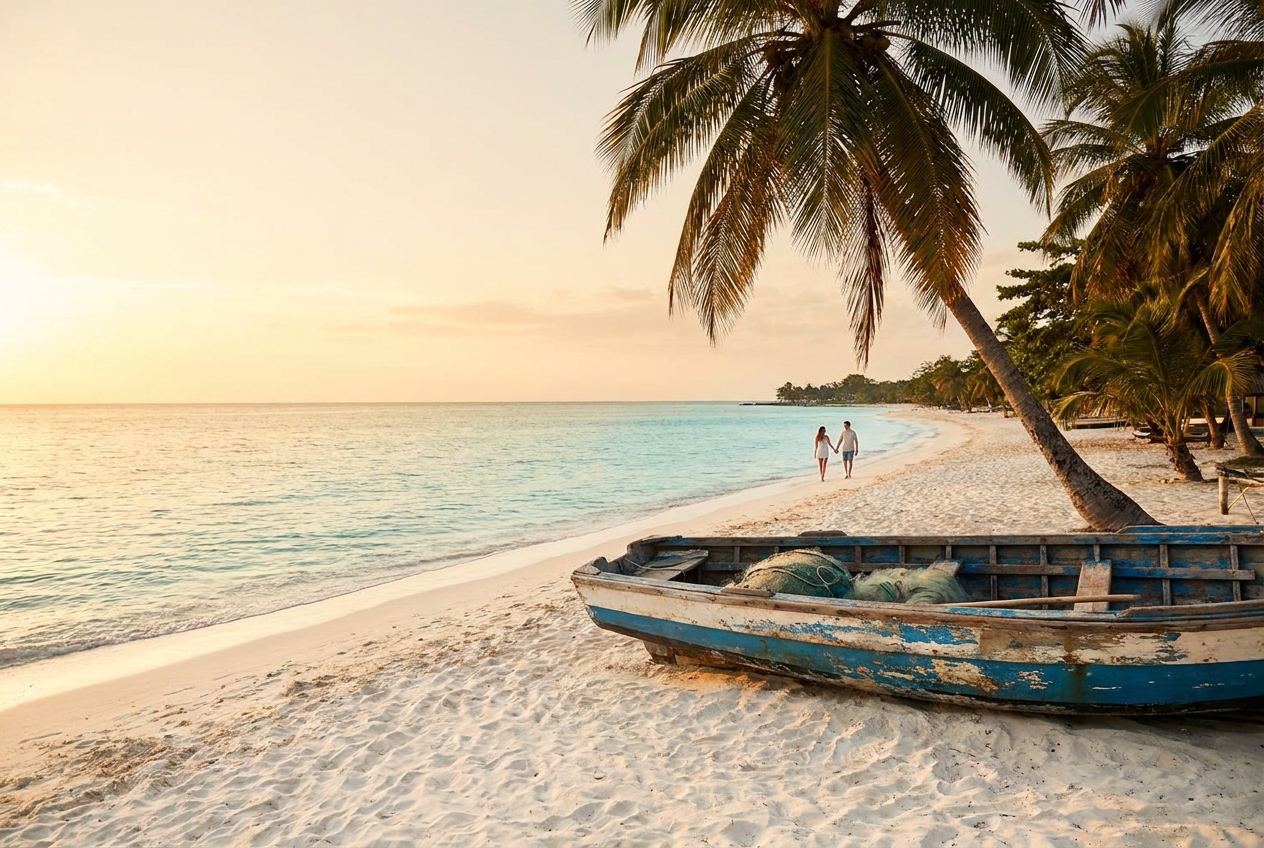
Seven miles of white sand facing due west (sunset is the town’s daily ceremony), cliff bars where divers drop into blue water, and the island’s most relaxed resort culture. This is the Jamaica most first-timers are imagining, and after Hurricane Melissa it led the island’s comeback: most of its hotels reopened within three months. About 75–90 minutes from the airport. Full Negril guide →
Ocho Rios: the north coast’s playground
The activity capital: Dunn’s River Falls to climb, the Blue Hole’s rope swings, river tubing, gardens, and a cruise port that sets the daily rhythm (time your big sights for ship-free mornings). More built-up than Negril, better positioned for seeing the island’s interior. Full Ocho Rios guide →
Montego Bay: the arrival hub that’s more than one
Home of the airport, the golf coast and the grande-dame resorts, plus a real Jamaican city behind the hotel strip. Rebuilding energetically after taking Melissa hard: the big names are back, some renovations continue into 2026–27. The smart play for short trips: base here and spend the saved transfer hours on the water. Weigh it against the west in the MoBay-vs-Negril verdict.
Port Antonio: the lush east, before the crowds
The anti-resort: rainforest hills dropping into coves like the Blue Lagoon and Frenchman’s Cove, rafting on the Rio Grande, and a slow, green, old-Jamaica atmosphere that the west traded away decades ago. Farther from the airport, and worth every minute of the drive for the right traveler. Full Port Antonio guide: soon.
Kingston and the Blue Mountains: the culture trip
The capital most visitors skip holds the Bob Marley Museum, the island’s best food scene, and the gateway to Blue Mountain coffee country and its cool, misty peaks. It asks for more planning than the coast (see the safety page’s plain-language map of which areas the warnings actually name), and it repays curiosity like nowhere else on the island. Full Kingston guide: soon.
Jamaica right now: the post-Melissa picture
Straight facts, because this is the question of the moment. Hurricane Melissa struck western Jamaica in late October 2025 as a major storm. Ten months on, the recovery is substantial and uneven: air connectivity is fully restored, visitor arrivals rebound to roughly 80% of pre-storm levels by early 2026, Negril’s hotel stock is largely reopened, Montego Bay’s headline resorts are back with some rebuilding ongoing, and the quieter south coast is furthest behind, with reopenings stretching into 2027.
What this means for a 2026–27 trip: the classic west-and-north itineraries work now, book reopened properties with recent reviews, and expect some construction sounds where rebuilding continues. We track the details on a dedicated page, refreshed monthly. « What’s actually open », tracked monthly →
When to visit Jamaica
The island runs warm all year: days sit in the mid-80s°F every single month (Montego Bay’s normals span 82°F in January to 88°F in high summer), so the calendar is really about rain, storms and crowds.
Mid-December through April is the classic window: the dry season, around 11–12 rain days a month, low humidity, peak prices. May and September–October are the wet heart (24–26 rain days a month, mostly afternoon deluges rather than lost days). And June through November is Atlantic hurricane season, peaking August–October: most weeks pass untouched, travel insurance and flexible bookings are the adult response, and the fall discounts are real money.
The full month-by-month verdict with the numbers: the Jamaica calendar, with the hurricane file and December alongside.
Getting to Jamaica, getting in, getting around
Getting there: Montego Bay (MBJ) is the tourist gateway, with nonstop flights from many US cities and most East Coast hubs under four hours away. Kingston (KIN) serves the culture-and-mountains trip. Getting in is friendly bureaucracy: no visa for Americans, a passport, and the C5 immigration form filled online before you fly (it generates a QR code that speeds the arrivals hall). The five-minute entry guide →
Getting around is its own decision tree: resort transfers and pre-booked drivers do the heavy lifting, the Knutsford Express coach links the coasts cheaply and comfortably, route taxis run everywhere for the adventurous, and self-driving means the left side of the road plus local driving culture (a real choice, not a default: our verdict on driving).
Budget the transfer realistically: Negril is 75–90 minutes from MBJ, Ocho Rios about the same the other way, Port Antonio a half-day move.
Money, all-inclusives and the price of paradise
Two currencies circulate in practice: Jamaican dollars for street life, US dollars accepted almost everywhere tourists go (carry small bills, know roughly the JMD rate, and prices quoted in “dollars” deserve a which-dollars check).
The structural money question is the all-inclusive decision. Jamaica practically invented the category, and it splits the island’s economics in two: the wristband trip where the resort is the destination, and the à-la-carte trip built on guesthouses, jerk stands and drivers. Both are legitimate Jamaicas. The arithmetic between them, worked in real numbers: the cost guide, with where to stay as its companion decision.
Jamaica for…
Couples: Negril’s cliffs at sunset, a Blue Lagoon swim, the famous adults-only resorts. Families: the north coast’s calm stretches and adventure parks, Dunn’s River climbed hand-in-hand. Foodies: jerk at Boston Bay where it was born, pepper shrimp in Middle Quarters, a patty-and-coco-bread education everywhere. Adventurers: waterfalls, rivers, the Blue Mountain Peak sunrise hike. Music pilgrims: Kingston, full stop — Trench Town, the Marley museum, and sound-system culture still alive in its birthplace.
The mistakes first-timers make
Booking the whole trip as one resort stay, sight unseen: the wristband is a fine tool and a poor prison. Even one driver-day into the hills changes what country you think you visited. Treating the advisory as either gospel or noise: it’s a map, and a useful one — the warnings name specific inland areas no tourist itinerary touches, while the sensible habits (licensed drivers, no remote roads after dark) cost nothing.
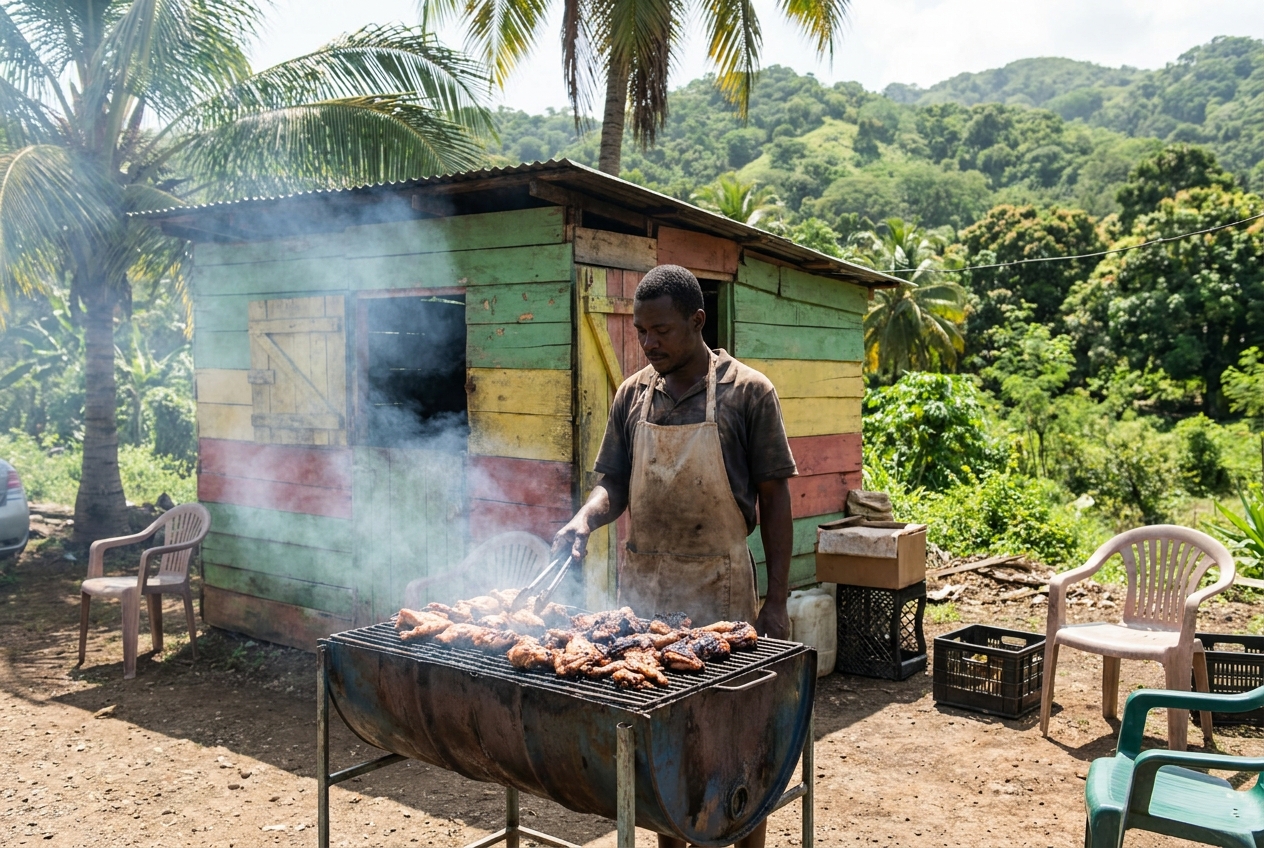
Underestimating transfer times: island miles are slow miles. Skipping the food outside the buffet: the national cuisine lives at smoking roadside drums, and it is the best thing many visitors bring home.
Choosing between them. Kingston or Montego Bay sets the two side by side on the points that decide it — the season, the cost of getting there and what each one closes off.
The last word
Jamaica asks a little more of its visitors than the postcard islands: a form before the flight, a plan for the roads, a clear-eyed read of the map. It repays the effort in a currency most destinations stopped printing — a place with an unmistakable self, where the beach is only the first chapter and the music, the mountains and the smoke-perfumed hills are the rest of the book. Come in the dry season, base by your temperament, and leave the resort at least once. That’s the whole secret.
Turn the map into a plan with the 7-day route or the 10-day version, solve the arrival in the transfer guide, and pack the right bag via the short list that works, with the lessons we wish someone had told us as the final briefing. The rest of the file is woven through the sections above.
Jamaica month by month. Each month has its own page with the station normals, the sea temperature, the daylight and how busy the month runs: January · February · March · April · May · June · July · August · September · October · November · December.
Sources & data for this guide
- Climate · 1991–2020 normals computed from ERA5 daily data, Montego Bay grid cell (Open-Meteo archive) · computed Sep 2, 2026
- US advisory · Level 2 « Exercise Increased Caution », updated Jan 17, 2026, with named area-specific warnings · travel.state.gov · checked Sep 2, 2026
- Hurricane Melissa (Oct 28, 2025) and recovery status · Jamaica Information Service and industry reporting: ~80% arrivals rebound early 2026, Negril most reopened, south coast slowest · checked Sep 2, 2026
- Entry · no visa for US citizens, online C5 immigration form (enterjamaica.gov.jm) · checked Sep 2, 2026
- Transfers · MBJ–Negril 75–90 min private / Knutsford Express coach service · operator listings · checked Sep 2, 2026
- Hurricane season June–November, peak August–October · NOAA