
Early in the morning, tamale vendors call out from the corners of the Roma, the first espresso machines hiss behind café doors, and a street sweeper works around the roots of a jacaranda. By noon the whole city is loud, generous and in motion. Mexico City is a high valley capital of museums, markets, ancient ruins and long tables, made for travelers who like to wander on foot and eat their way through neighborhoods.
Where is Mexico City and what is it like?
Mexico City sits in a high inland valley in the center of the country, far from any coast, with mountain towns, pyramids and colonial cities within a morning’s ride. It is a sprawling capital made of distinct neighborhoods, each with its own pace, rather than a single resort or a single old town.
The center is dense with colonial buildings and pedestrian streets, while Roma and Condesa are leafy and café-filled, Polanco is polished and quiet, and Coyoacán feels like a village of cobbled lanes. There are no beaches here, and no all-inclusive bubble. What you get is real city life, with street food on every corner.
It suits curious travelers who enjoy walking, museums and eating well. Those who want a slow beach week will find the traffic and the scale tiring, and the altitude can make the first day feel a little heavier than expected.
What is there to do in Mexico City?
The big reasons to come are the ancient past, the museums, the neighborhoods and the table. What sets the capital apart from its neighbors is that all of it can be reached without leaving town, from Mexica ruins beneath the modern streets to a boat ride on canals that predate the Spanish.
The historic center and the Mexica past
Everything begins at the Zócalo, the vast main square where flags, cathedral bells and crowds meet. Pedestrian streets fan out from it in every direction, lined with colonial façades, bookshops and old cantinas. The easiest way to see it is simply to walk, and the center is well served by Metro lines 1, 2 and 3.
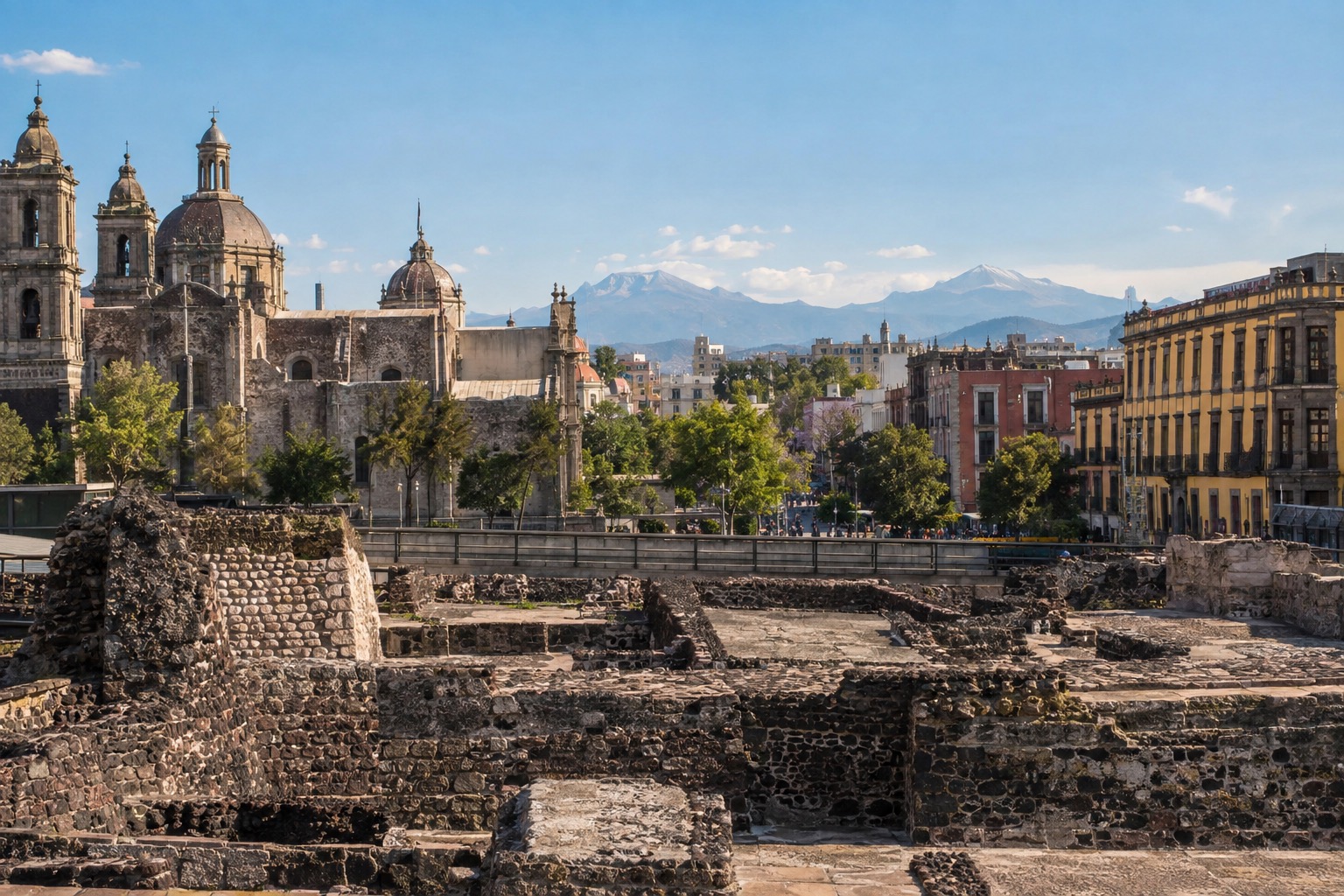
Just beside the square, the ruins of the Templo Mayor lie exposed next to a museum, remains of the Mexica capital Tenochtitlan. The Palacio de Bellas Artes, with its marble halls and murals, makes a fine detour for an afternoon. First-time visitors and history lovers will be happiest here.
| Site | Open | Admission |
|---|---|---|
| Templo Mayor and museum | Tuesday to Sunday, 9 a.m. to 5 p.m. | 210 pesos (105 pesos for Mexican nationals and foreign residents) |
| Museo Nacional de Antropología | Tuesday to Sunday, 9 a.m. to 6 p.m. | 210 pesos (105 pesos for Mexican nationals and foreign residents) |
| Chapultepec Castle and Museo Nacional de Historia | Tuesday to Sunday, 9 a.m. to 5 p.m. | 210 pesos (105 pesos for Mexican nationals and foreign residents) |
Chapultepec: museums in a park
Chapultepec is the city’s great green lung, and its museums make it an easy full day. The Museo Nacional de Antropología has two dozen halls of Mesoamerican treasures, enough to fill a morning on its own. Up on the hill, the castle tells the story of Mexican history from the conquest through the Revolution.
You can reach it by Metro Line 1 to Chapultepec station or on foot from Paseo de la Reforma. Between museums there is a lake with pedal boats and a botanical garden, and a small train carries visitors up the steep slope to the castle. Go early on a weekday, since the museums are quieter before noon and are closed on Mondays.
Coyoacán and Frida Kahlo
Coyoacán is a colonial village swallowed by the city, all cobblestones, shaded plazas and street musicians. The Casa Azul, the blue house where Frida Kahlo lived, draws the crowds, and Plaza Hidalgo and the Jardín Centenario are made for aimless strolling. Weekends bring a lively market with food stalls and crafts.
Metro Line 3 to Coyoacán station gets you there in about 20 to 30 minutes from the center. Tickets for the Casa Azul are sold online only, for a set time slot, and the house is closed Mondays, so plan this part of the trip before you arrive. Every Thursday evening, the Casa Azul has a late opening for Noches Azules.
| Site | Open | Admission |
|---|---|---|
| Museo Frida Kahlo (Casa Azul) | Closed Mondays; late opening Thursday evenings (Noches Azules). Online time-slot tickets only | 320 pesos |
Xochimilco and a night of lucha libre
On the city’s southern side, Xochimilco’s canals teem with colorful flat-bottomed trajineras that pass raised garden plots from Aztec times. Mariachi bands and food boats drift alongside, and a ride is best shared with a group of friends or family. Weekends are livelier, weekdays quieter.
Ride Metro Line 2 as far as Tasqueña, and from there catch the light rail into Xochimilco, unless a taxi sounds better to you. Bring small bills, and agree on the boat price before you step aboard. When darkness comes and you are craving a louder scene, lucha libre commands Arena México in the Doctores district, while sellers out front peddle masks and fans cheer every move made in the air.
How many days do you need in Mexico City?
A long weekend covers the essentials, and a week lets you slow down and add day trips.
In three or four days you can fit the historic center and Templo Mayor, a morning among the museums of Chapultepec, an afternoon in Coyoacán and a boat ride at Xochimilco. That already means a lot of walking, with long lunches built in.
With more time, the day trips start to pay off. Teotihuacán, about an hour to an hour and a half by road, is the great one, with its Avenue of the Dead and two huge pyramids seen from ground level.
Puebla and Cholula, around two to two and a half hours away by bus, add colonial churches, mole poblano and a pyramid with a church on top. Tepoztlán, about an hour and a half to two hours away, suits hikers, and silver-rich Taxco, about two and a half to three hours away, rewards shoppers and lovers of steep cobbled streets.
| Site | Open | Admission |
|---|---|---|
| Teotihuacán | Daily, 8 a.m. to 5 p.m. (last entry 4:30 p.m.) | 210 pesos (105 pesos for Mexican nationals and foreign residents) |
Where to stay in Mexico City
The historic center suits first-time visitors who want to walk to the major sights, with hostels, restored colonial boutique hotels and apartments. Roma is the bohemian choice, leafy and full of cafés and galleries, loved by couples, foodies and younger travelers. Condesa is elegant and tree-lined, with Art Deco buildings and two parks, and it works well for families and longer stays.
Polanco is polished and quiet, with luxury shopping and fine dining, and Chapultepec’s museums are within walking distance. Coyoacán offers guesthouses and converted colonial houses for a calmer, residential stay, though its plazas fill up on weekends. Whichever you pick, you are choosing a neighborhood rather than a resort.
How do you get to Mexico City and get around?
Most travelers touch down at the AICM, set within the city east of the center, where the Metro offers direct service at the Terminal Aérea station. A second airport, Felipe Ángeles, serves the north. By car or taxi, the ride to the historic center takes about 30 to 60 minutes depending on traffic, and the farther districts take longer, up to 80 minutes for Coyoacán.
Once in town, the Metro and Metrobús cover most of the center and the museum district with a rechargeable card, and Ecobici bikes help on short hops around Roma and Condesa. Ride-hailing apps and authorized taxis fill the gaps. For day trips, long-distance buses leave from the Terminal del Norte, Terminal del Sur and TAPO stations.
When is the best time to visit Mexico City?
The dry season from November to April is the most comfortable for long days of walking and museum-hopping. Mornings are bright, and the parks are most pleasant.
The rest of the year brings afternoon rain, usually in the second half of the day, so plan outdoor sights for the morning. Hikes such as Tepoztlán are best started early to avoid both the heat and the afternoon showers.
Día de Muertos, which runs from October 31 to November 2, decorates the city with marigolds and altars. December brings festive lights, and Holy Week moves every year, so check when it falls before you book.
Good to know before you go
The U.S. State Department rates Mexico City Level 2, Exercise Increased Caution, the same baseline level as most of the country.
Pesos are the currency, and small bills come in handy at markets, on boats and at small food stalls. Travelers do well to use authorized taxis or ride-hailing apps rather than hailing cars on the street. The city sits high, so a slow first day helps you adjust.
| Fee | Amount | Who pays |
|---|---|---|
| General admission, Templo Mayor, Antropología, Chapultepec Castle, Teotihuacán | 210 pesos | Foreign visitors |
| Reduced admission at the same sites | 105 pesos | Mexican nationals and foreign residents |
| Museo Frida Kahlo (Casa Azul) | 320 pesos | General admission |
Sources
- INAH, Zona Arqueologica Templo Mayor (inah.gob.mx/zonas/zona-arqueologica-templo-mayor), checked September 29, 2026
- Sistema de Informacion Cultural (sic.gob.mx), MNA sheet of 28/07/2026, checked October 3, 2026
- INAH, Museo Nacional de Antropologia, checked September 29, 2026
- INAH, Museo Nacional de Historia, Castillo de Chapultepec (inah.gob.mx/museos/museo-nacional-de-historia-castillo-de-chapultepec), checked September 29, 2026
- INAH, meme page, checked September 29, 2026
- INAH, Zona Arqueologica de Teotihuacan (inah.gob.mx/zonas/23-zona-arqueologica-de-teotihuacan), checked September 29, 2026
- Museo Frida Kahlo, museofridakahlo.org.mx (« NO CONTAMOS CON VENTA EN TAQUILLA », entrada general $320) et boletos.museofridakahlo.org.mx, checked October 3, 2026
- U.S. Department of State, Mexico Travel Advisory (travel.state.gov, date issued May 29, 2026), checked October 3, 2026
- ADO
- INAH lugares.inah.gob.mx
- Secretaría de Turismo de la Ciudad de México
- Secretaría de Turismo de Puebla
- Secretaría de Turismo de Guerrero
- Frida Kahlo Museum
- Arena México
All our pages
When to go
- Best Time to Visit Mexico City: Dry Season, Rainy Summers, Día de Muertos and Festivals
- Mexico City in January: Three Kings Bread, Crisp Winter Days and What to Do
- Mexico City in February: Dry Sunny Days, Candlemas Tamales, Museums and Parks
- Mexico City in March: Spring Equinox, Jacaranda Season, Weather and What to Do
- Mexico City in April: Jacaranda Season, Weather and What to Do
- Mexico City in May: Jacaranda Bloom, Afternoon Storms, Street Food and Day Plans
- Mexico City in June: Rainy-Season Afternoons, Mangoes and Mezcal, and the World Cup Mood
- Mexico City in July: Rainy-Season Afternoons, Guelaguetza Season, Street Food and What to Pack
- Mexico City in August: Rainy-Season Afternoons, Museums, Chiles en Nogada and What to Do
- Mexico City in September: Independence Day, Rainy Season Weather and Chiles en Nogada
- Mexico City in October: Weather, Day of the Dead Preparations and What to Do
- Mexico City in November: Día de Muertos, Dry Sunny Weather and What to Do
- Mexico City in December: Posadas, Winter Weather and Holiday Food
Things to do
- Things to Do in Mexico City: Museums, Pyramids, Xochimilco Boats and Street Food
- Day Trips from Mexico City: Teotihuacan, Xochimilco, Puebla, Tepoztlán and Taxco
- 3 Days in Mexico City: Templo Mayor, Chapultepec Museums, Coyoacán and a Day Trip to Teotihuacan
- Centro Historico, Mexico City: the Zócalo, Templo Mayor, Palacio de Bellas Artes and Where to Eat
- Chapultepec Castle, Mexico City: The Museum on the Hill, the Park and the Zoo
- Condesa, Mexico City: Art Deco Streets, Parque México, Cafés and Where to Stay
- Coyoacan, Mexico City: Plazas, Casa Azul, the Market and Where to Stay
- Visiting the Frida Kahlo Museum: The Casa Azul, Tickets and Hours, and What to Combine in Coyoacán
- Polanco, Mexico City: Masaryk Avenue, Museo Soumaya, Chapultepec's Museums and Where to Eat
- Roma Norte, Mexico City: Tree-Lined Streets, Art Nouveau Mansions, Cafés and Where to Eat
- Visiting the Templo Mayor: Aztec Ruins, the Coyolxauhqui Stone, Museum, Hours and Tickets
- Xochimilco, Mexico City: Trajinera Rides, Chinampas and Where to Eat on the Water