
On the night of September 15, the main square of nearly every Mexican town fills with families, paper flags and the smell of pozole and elote, until the mayor steps onto a balcony and shouts the Grito. Bells ring, fireworks go up, and the whole country seems to be in the street at once. September is the heart of the rainy season, with green hills, quiet beaches and a national party that makes it one of the most festive months to be in Mexico.
What is the weather like in Mexico in September?
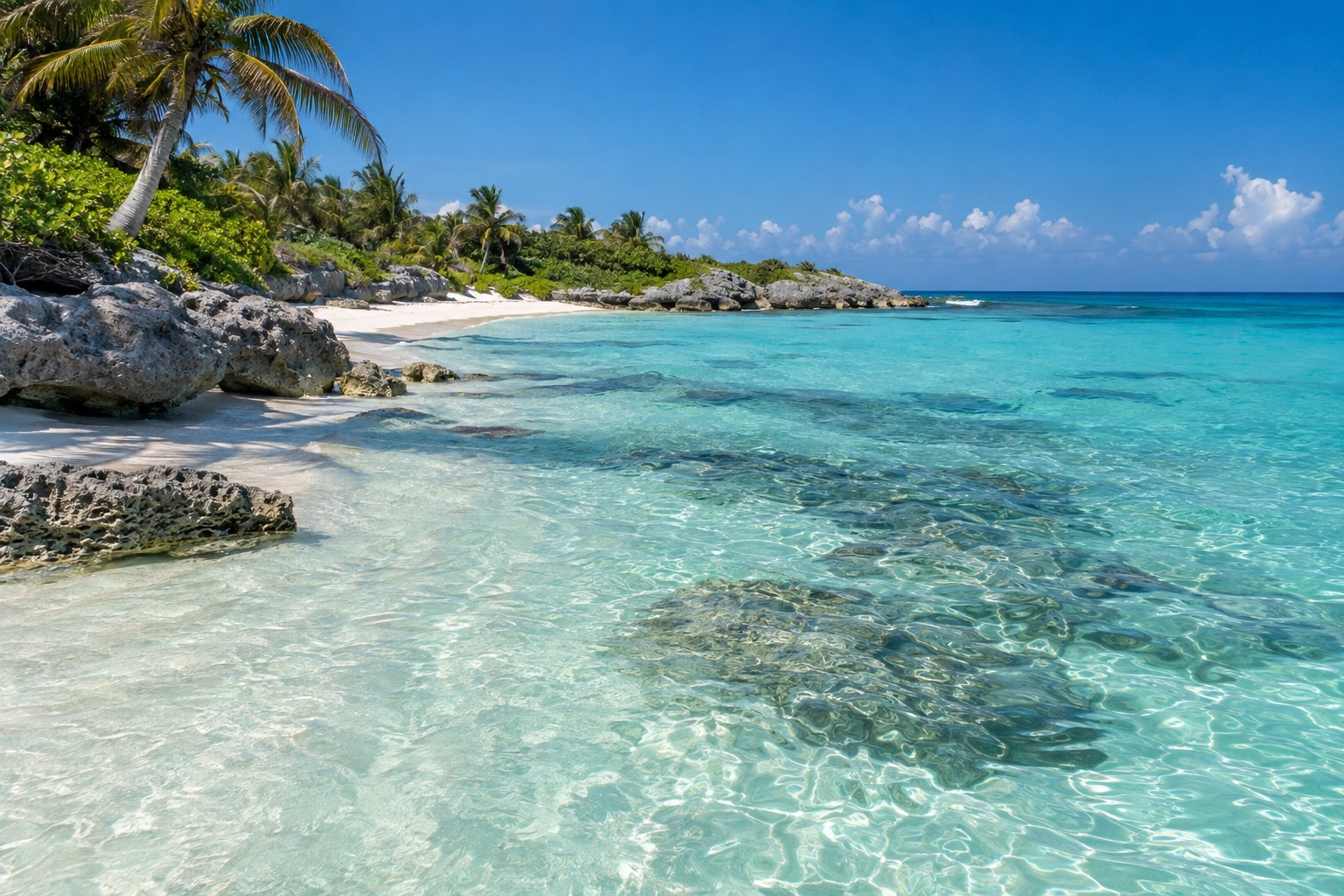
September is hot and humid on the coasts, warm and green in the mountains, and wet almost everywhere except the tip of Baja California, where the sun stays strong and showers are rare. Rain usually arrives as an afternoon downpour or a stormy evening, and the mornings are often bright.
| Place | Region | Average high (°F) | Average low (°F) | Rain (in) | Rain days | Sea (°F) |
|---|---|---|---|---|---|---|
| Cancun | Caribbean coast | 93.6 | 76.3 | 7.15 | 15.1 | 86.0 |
| Puerto Vallarta | Pacific coast | 88.2 | 70.9 | 17.24 | 23.4 | 89.3 |
| Cabo San Lucas | Baja California Sur | 92.7 | 73.9 | 4.33 | 4.0 | 86.2 |
| Mexico City | Central highlands | 74.7 | 55.6 | 6.22 | 18.2 | |
| Oaxaca | Southern highlands | 84.4 | 61.0 | 6.44 | 21.4 |
The biggest contrast is between Puerto Vallarta and Cabo San Lucas. Puerto Vallarta gets the heaviest rain of the five places, with showers on most days, while Cabo San Lucas stays dry on all but a handful of days and feels like desert heat meeting a warm sea. Cancun sits in between: very hot, with rain on about every other day.
In the highlands the heat is far gentler. Mexico City stays in the mid-70s by day and cools to the mid-50s at night, so a sweater is welcome after dark, and rain falls on most days. Oaxaca is warmer by day, with a cooler night and showers nearly every afternoon.
Where to go in Mexico in September
The Caribbean coast
In September, Cancun, Tulum, Playa del Carmen, Cozumel and Isla Mujeres are hot and humid, the sea is as warm as bathwater, and the beaches are far less crowded than in winter. Mornings are often clear, which suits the Maya ruins at Tulum and, inland in Yucatan, Chichen Itza, before the clouds build in the afternoon.
Showers can be heavy but usually pass, leaving time for cenotes and long lunches. This is also the thick of the Atlantic hurricane season, so the weather can turn, and it is wise to keep plans flexible. Along this coast, sargassum comes ashore from Cancun down through Tulum and Mahahual, although it usually reaches its peak earlier in summer.
Los Cabos and Baja California
Los Cabos is the driest and sunniest corner of Mexico this month. Cabo San Lucas has the celebrated arch and lively nightlife, while San Jose del Cabo is the calmer pick, with galleries and a charming old plaza. It is hot, so days are best spent on the water, by the pool or in the shade, with outings kept for early morning.
Because plenty of the beaches facing the Pacific around here have water too rough for swimming, seek out calmer coves and consult the beach flags. Los Cabos falls under the Eastern Pacific hurricane season, and September is part of it, so a storm can occasionally disrupt a trip.
Puerto Vallarta and the Pacific coast
Puerto Vallarta, on the Bay of Banderas, is at its greenest, with jungle hills draped in cloud behind the town. The sea is the warmest on our list. Rain falls on most days, often as a heavy late-day downpour, so mornings on the beach and the Malecon are the best bet, followed by long dinners under cover.
Riviera Nayarit towns such as Sayulita and Punta Mita are quiet and relaxed, a good fit for travelers who like empty sand and don’t mind a wet afternoon. These Pacific resorts lie beyond the Atlantic sargassum belt, yet they are still subject to the Eastern Pacific hurricane season.
The central highlands
Colonial centers, museums and food, not beaches, are what define Mexico City and Oaxaca, as well as Guadalajara and San Miguel de Allende. September is mild here and the countryside is lush. In Mexico City the days are comfortable for walking, with rain most often in the afternoon, so museums and markets fit naturally into the plan.
Oaxaca is a little warmer and just as green, ideal for mole, mezcal and market mornings before the rain. September also brings the patriotic decorations to the squares of every highland town, a lovely time to be in a main plaza.
What to do in Mexico in September
Independence Day and the Grito
Independence Day, September 16, is the big one, and the celebration starts the night before with the Grito de Dolores. In Mexico City the Zócalo fills for the ceremony and fireworks, but every town has its own version, with a band, a balcony and a crowd waving flags.
The food is part of it: pozole, chiles en nogada (which peak at this time of year), tostadas, tamales and plenty of tequila or mezcal. Streets are hung with green, white and red, and many people take the day off, so restaurants and plazas are lively. Some shops and offices close on the 16th.
Whale sharks
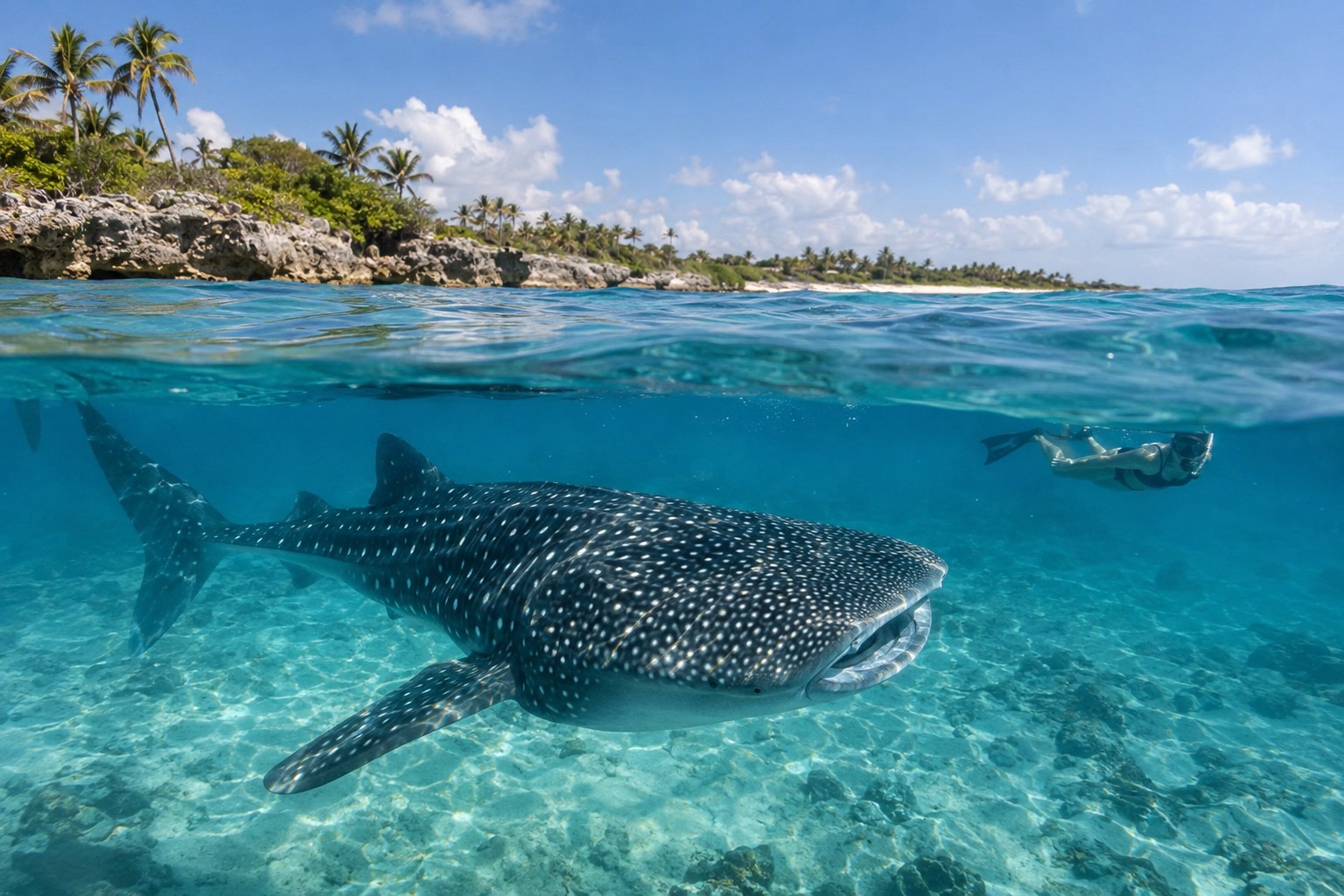
September is whale shark season on both sides of the country. From Holbox, Isla Mujeres and Cancun, guided excursions launch on the Caribbean side, where a guide enters the water with swimmers beside the shark, and the swimmers never touch it. It is among the most memorable days of a Quintana Roo trip.
In Baja California, the Bahia de los Angeles Biosphere Reserve receives whale sharks from June until December, so September falls within their stay. It is a remote spot for travelers who like wild places and calm waters.
Is Mexico busy in September?
No, September is one of the quietest months, apart from the Independence Day weekend. Summer vacation is over for most U.S. families, so the beach resorts empty out and rooms are easier to find.
Mexicans do travel around September 16, so popular towns, plazas and highway routes feel busier, and the main squares of Mexico City, Guanajuato and San Miguel de Allende fill up on the night of the Grito. Away from the festivities, the coasts and the highland cities are calm.
What to pack for Mexico in September
Pack for rain everywhere and for heat on the coasts, with a warm layer for the highlands, where evenings turn cool.
- Pack a lightweight raincoat or a small umbrella for afternoon showers.
- Lightweight, quick-drying clothes for the humid coasts
- For evenings in Mexico City and Oaxaca, a light jacket or sweater
- Sandals that can get wet, plus comfortable shoes for cobblestones
- Sunscreen and a hat, especially for Los Cabos
- Swimsuit and reef-safe sunscreen for the sea and cenotes
Good to know before you go
September falls within both hurricane seasons, with the Atlantic season that rules the Caribbean coast running June 1 through November 30, and the Eastern Pacific season that rules Los Cabos, Puerto Vallarta and the remaining Pacific coast running May 15 through November 30. Sargassum affects the Caribbean beaches but not the Pacific resorts.
The U.S. Since the State Department places Mexico at Level 2, meaning exercise increased caution, and gives each state its own level, check the level for each region you intend to visit. Quintana Roo, Baja California Sur, Mexico City and Oaxaca are Level 2, while Jalisco, home to Puerto Vallarta, is Level 3.
Is September a good time to visit Mexico?
Yes, for travelers who accept some rain in exchange for green landscapes, fewer crowds and a real celebration, and the best region this month is the highlands, with Los Cabos the pick for a beach stay with the least rain.
Compared with August, the coasts are a little cooler and the highlands drier. Cancun gets more rain than in August, and Mexico City is slightly less wet. October is the turning point: the highlands dry out sharply, though the Caribbean coast gets wetter and Cabo San Lucas cools and dries. What sets September apart is the Grito, that evening when a whole country gathers in its squares, and the green, quiet land around it.
Sources
- Servicio Meteorologico Nacional (CONAGUA), normales climatologicas 1991-2020, estacion 23155 (Cancun, Benito Juárez), checked September 29, 2026
- Open-Meteo Marine API, average 2015-2024, checked September 8, 2026
- Servicio Meteorologico Nacional (CONAGUA), normales climatologicas 1991-2020, estacion 09048 (Tacubaya Central (Obs), Miguel Hidalgo), checked September 29, 2026
- sunrise-sunset.org, sunrise and sunset on the 15th of the month, checked September 8, 2026
- Servicio Meteorologico Nacional (CONAGUA), normales climatologicas 1991-2020, estacion 03005 (Cabo San Lucas, Los Cabos), checked September 29, 2026
- Servicio Meteorologico Nacional (CONAGUA), normales climatologicas 1991-2020, estacion 14339 (El Cuale, Puerto Vallarta), checked September 29, 2026
- Servicio Meteorologico Nacional (CONAGUA), normales climatologicas 1991-2020, estacion 20079 (Oaxaca, Oaxaca De Juárez), checked September 29, 2026
- NOAA National Hurricane Center, "Tropical Cyclone Climatology", nhc.noaa.gov, checked September 29, 2026
- University of South Florida, Optical Oceanography Lab, "Sargassum Watch System (SaWS)", optics.marine.usf.edu, checked September 29, 2026
- U.S. Department of State, Mexico Travel Advisory (main, level banner), travel.state.gov, read live via browser (protected by Cloudflare, direct fetching blocked with 403) on 29 September 2026
- U.S. Department of State, Mexico Travel Advisory (reissued May 29, 2026), section « Risks in specific areas », travel.state.gov/en/international-travel/travel-advisories/mexico.html, read via browser (Cloudflare blocks curl) on 29 September 2026
- CONANP (Comision Nacional de Areas Naturales Protegidas), "Inicia la temporada de tiburon ballena en la Reserva de la Biosfera Bahia de los Angeles", gob.mx/conanp, checked September 29, 2026
To plan your stay
- Things to Do in Mexico: Ruins, Beaches, Day of the Dead and Street Food
- Where to Stay in Mexico: Riviera Maya, Los Cabos, Puerto Vallarta, Mexico City and All-Inclusive Areas
- Getting Around Mexico: Buses, the Tren Maya, Taxis and Driving Your Own Car
- Mexico Travel Tips: Dollars, Tourist Tax, Tipping, Tap Water, Driving and Safety by State