
Late in the afternoon, the plazas of Queretaro fill with people drifting between the arcades, and the stone of the old convents turns the color of honey. Cobblestone streets carry the sound of guitars and cutlery from restaurant terraces well into the night. This is a colonial city with a local, lived-in feel, made for walking, eating and lingering, and a good base for couples, food lovers and anyone who likes culture without a beach nearby.
Where is Queretaro and what is it like?
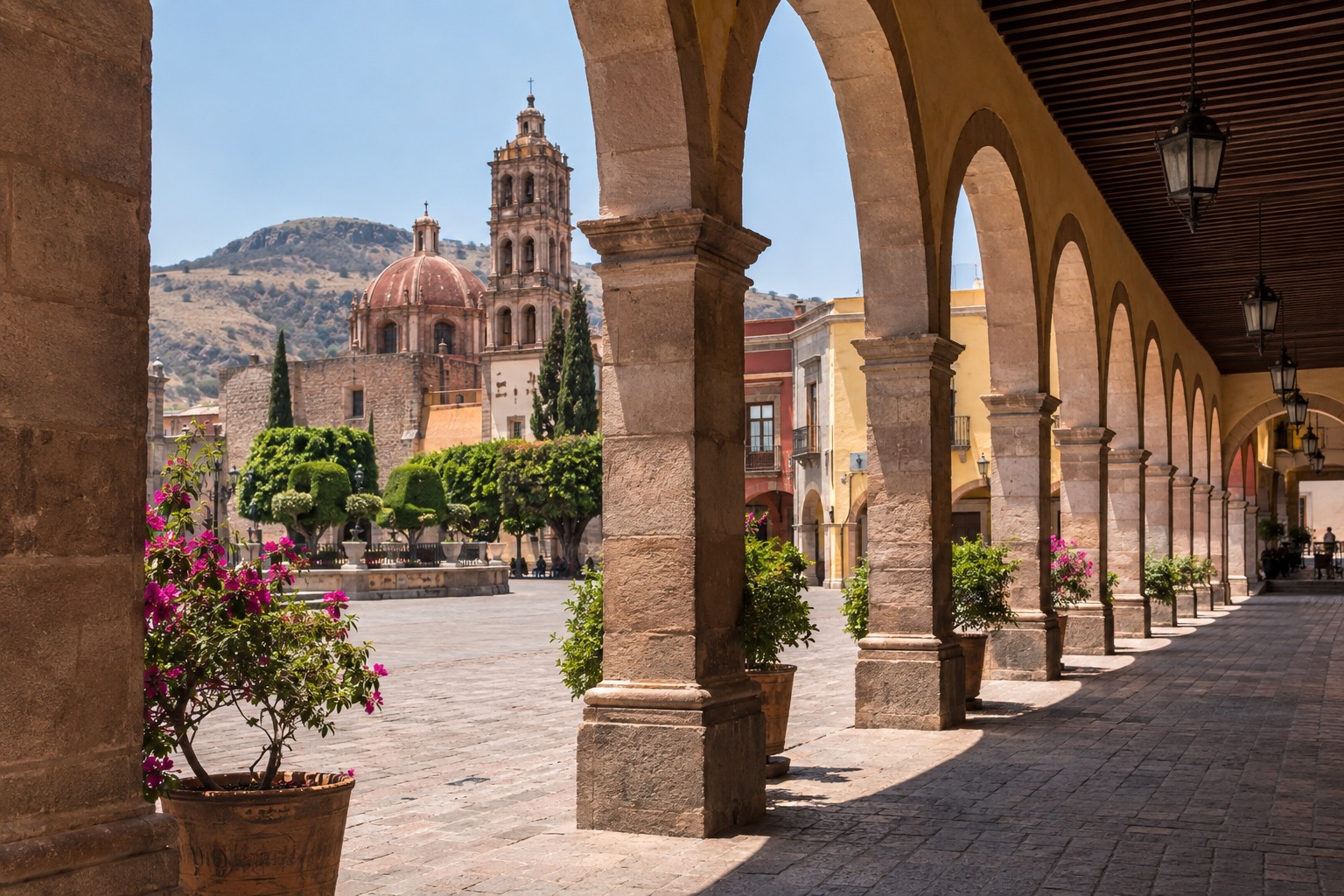
Queretaro sits in the highlands of central Mexico, an inland city with no coast, and the Pueblo Mágico of Bernal lies not far away. Its heart is a historic center of irregular colonial plazas joined by arcaded pedestrian streets, part of a UNESCO-listed core.
The pace is unhurried but never sleepy. Evenings revolve around Plaza de Armas and Jardín Guerrero, where restaurants and bars stay open late. Around the old center, the city turns modern and spreads north into quiet residential and business districts.
It suits walkers, couples, solo travelers and anyone who likes to organize a day around meals and plazas. If you want surf, sand or an all-inclusive resort, look elsewhere.
What is there to do in Queretaro?
The big reasons to come are the colonial center, a handful of museums and landmarks, the evening scene and a day out to Bernal. What sets Queretaro apart from its neighbors is how compact and walkable the old town is, with no resort layer on top.
The historic center
Plan on simply wandering. Plazas open one after another, linked by arcaded streets where you can duck in for coffee, browse a shop or sit and watch the evening paseo. Colonial façades, balconies and courtyards reward a slow pace more than any checklist.
It is all within walking distance of the central hotels. Late afternoon into evening is when the plazas feel liveliest, and Plaza de Armas and Jardín Guerrero are the natural places to end the day over dinner.
Museums and landmarks
The Museo Regional de Queretaro occupies the former Convento de San Francisco, a building that became a museum in the 1930s. Its cloisters and galleries tell the region’s story in a calm, shaded setting that makes a good midday pause.
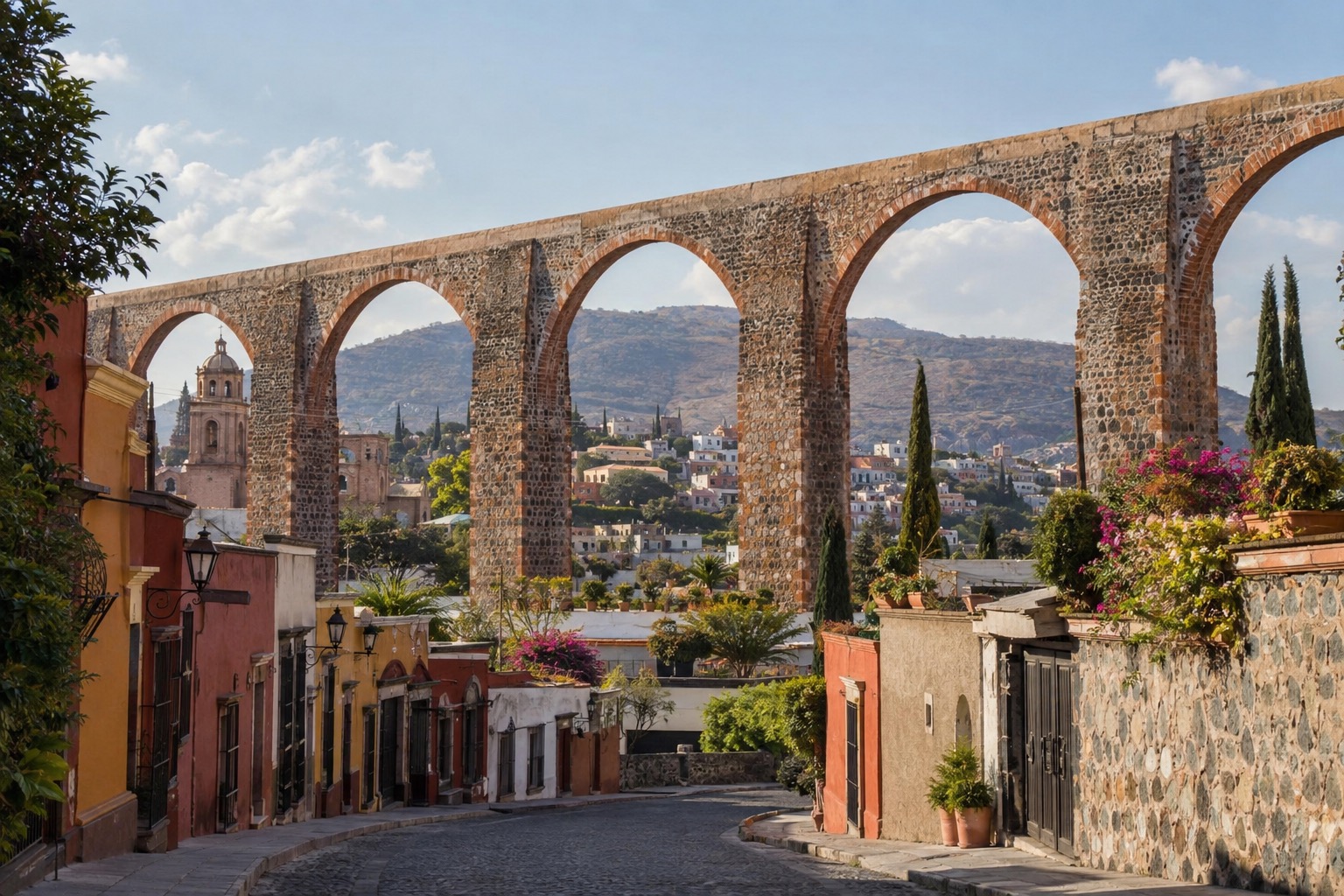
East of the center, the stone aqueduct strides through the Los Arcos neighborhood on tall rounded arches, an easy photo stop. On the west side, the Cerro de las Campanas marks where Emperor Maximilian was executed, now a chapel and a monument on a hill.
| Site | Open | Admission |
|---|---|---|
| Museo Regional de Queretaro | Tuesday to Sunday, 9 a.m. to 6 p.m., closed Monday | 210 pesos general; 105 pesos for Mexican nationals and foreign residents |
Bernal and its monolith
La Peña de Bernal is a huge rock monolith rising above the small Pueblo Mágico of Bernal, and it is the classic day trip from the city. The village below has narrow streets, craft stalls and places to eat, with the rock looming over every view.
Go for a relaxed day rather than a packed one, wandering the village and looking up at the monolith. It suits almost anyone who likes a change of pace from the city.
How many days do you need in Queretaro?
A long weekend is enough to feel the city, and a few extra days let you slow down and add a day trip.
With two or three days you can cover the plazas, the Museo Regional, the aqueduct and Cerro de las Campanas, with long dinners around Jardín Guerrero. The sights are close together, so no day needs to feel rushed.
With more time, give a full day to Bernal and its monolith, and leave an unscheduled day to wander, shop and eat. Business travelers and long-stay visitors may settle into the northern districts for longer.
Where to stay in Queretaro
Most visitors want the historic center, where boutique hotels, guesthouses and apartments fill restored colonial buildings and everything is on foot. It is lively at night, so a room with an interior courtyard or double-glazed windows helps with plaza and bar noise.
Farther north, Juriquilla is a quiet, upscale residential and business district suited to families and longer stays. Zibatá, a planned community northeast of the center, offers modern hotels and apartments in a calm suburban setting. El Refugio, around the Antea Lifestyle Center, has chain hotels and wide avenues that suit shoppers and business travelers. All three are car-oriented, with restaurants and services spread out.
How do you get to Queretaro and get around?
Most visitors arrive via Querétaro Intercontinental Airport, about 30 to 40 minutes by car or taxi from the historic center.
In the center you walk, with taxis, ride-hailing apps and local buses for longer hops. The northern districts are another story: Juriquilla is roughly 20 to 30 minutes from the center and 40 to 50 minutes from the airport, Zibatá about 20 to 30 minutes from the center, and El Refugio about 15 to 25 minutes, all depending on traffic. Taxis and ride-hailing work there, while public buses are limited, so renting a car gives flexibility if you stay in one of these areas.
When is the best time to visit Queretaro?
As a walking city, Queretaro is easiest from October to April, when rain falls on only a few days a month; May is the warmest month, and June to September brings rain on about one day in three, mostly as afternoon storms. Weekends bring more local visitors to the center, so the plazas feel busier and livelier then, while weekdays are calmer for museums and quiet streets.
Good to know before you go
The U.S. State Department rates the state of Queretaro at Level 2, Exercise Increased Caution, the same baseline level as most of the country.
Pesos are the currency to carry for small purchases, and ride-hailing apps make getting around easy. The usual habits of a big city apply in Queretaro: keep an eye on your belongings in crowded plazas and at night.
Sources
- INAH, Museo Regional de Queretaro (inah.gob.mx/museos/museo-regional-de-queretaro), checked September 29, 2026
- INAH, meme page, checked September 29, 2026
- US Department of State, Mexico Travel Advisory (travel.state.gov), advisory of May 29, 2026, checked September 29, 2026 (date issued May 29, 2026)