
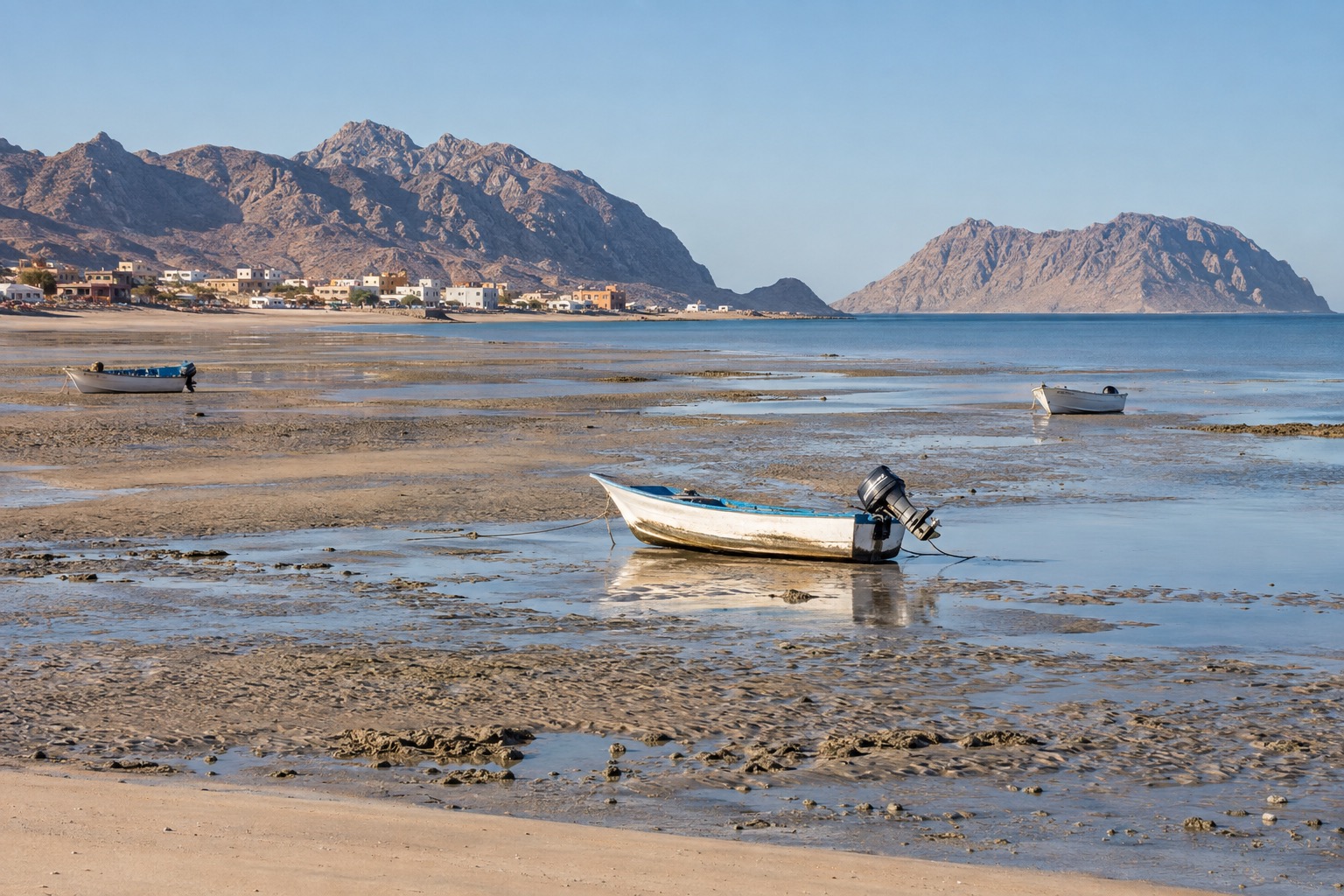
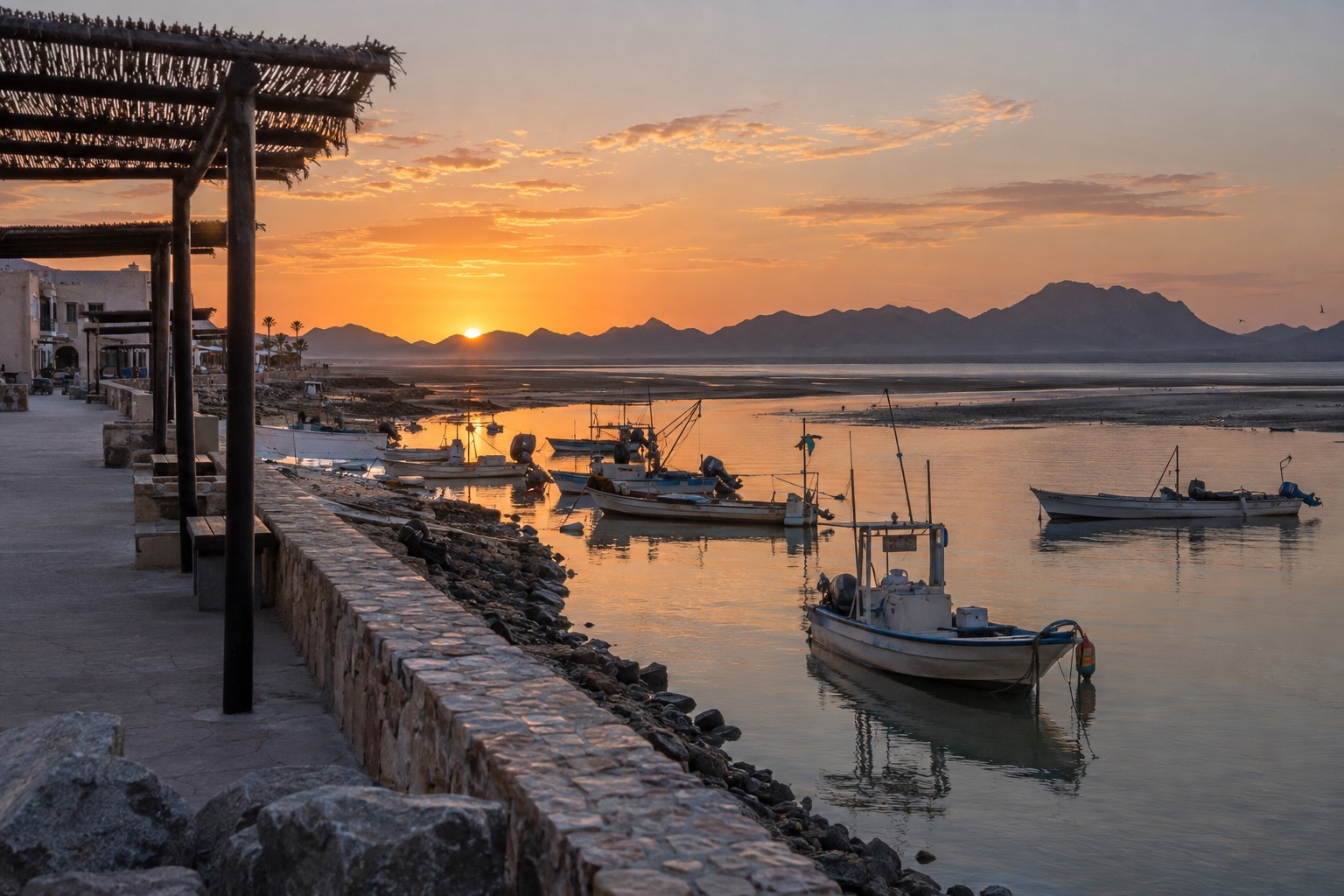
At low tide in San Felipe, shrimp boats lean on the sand and pelicans work the shallows while families stroll the malecon with paletas in hand. The Sea of Cortez glows copper at sunset against the desert mountains. This is a laid-back fishing town on Baja California’s gulf coast, made for slow days, fresh seafood and a sea that keeps changing its shape.
Where is San Felipe and what is it like?
San Felipe sits on the Sea of Cortez side of northern Baja California, where the desert runs right down to the water. It is a fishing town built around shrimp, with a malecon, the seafront promenade, serving as its social center.
The pace is unhurried. Mornings belong to the boats and the fish sellers, afternoons to long seafood lunches, and evenings to the promenade, where vendors and strollers share the walkway. It suits travelers who like simple places, desert scenery and a beach town that has not been polished into a resort.
It may disappoint anyone looking for nightlife, big-name hotels or a postcard turquoise bay. The water here is a working sea, and the charm is in the town’s everyday rhythm.
What is there to do in San Felipe?
The big reasons to come are the extraordinary tides, the seafood and the malecon, and the desert that surrounds the town. Together they make San Felipe feel different from the busier Baja resorts on the Pacific side.
The tides and the open flats
The bay has some of the most dramatic tides you will see anywhere. Spring tides can rise and fall close to 20 feet, and the shoreline advances and retreats by hundreds of meters between low and high water. A beach you walked on in the morning can be under the sea by evening.
At low tide the sand flats stretch far out, perfect for beachcombing, watching shorebirds and seeing boats sitting on dry ground. Plan your beach time around the tide rather than the clock, and keep your belongings well above the waterline. When the waves are up, check the beach flags before swimming.
The malecon and the seafood
The malecon is where the town gathers. Restaurants line the seafront with shrimp in every form, from garlic-butter plates to tacos, plus fish tacos, ceviche and cold beer, all with the gulf as the backdrop. Small stands sell crafts, snacks and sweets.
Go for lunch or for the hour before sunset, when the light turns the water gold and the promenade fills with families. Shrimp is the thing to order, since this is a shrimping town at heart.
Desert, dunes and open road
Beyond the last streets, the Sonoran desert opens up, with rocky mountains, cactus and long empty tracks. The area has a strong off-road culture, and many visitors come to explore by ATV or dune buggy, or simply to drive out and look at the stark landscape.
Early morning and late afternoon give the best light and kinder temperatures for any time outside. It suits adventurous travelers and anyone who loves big, quiet scenery, less so those who want everything within a short stroll.
How many days do you need in San Felipe?
A long weekend is enough to feel San Felipe: two or three days to walk the malecon, eat well, watch the tide change and spend an afternoon in the desert.
With a few more days, the town turns into a place to unwind. You can fish or take a boat out on the gulf, return to the flats at different tides and spend longer in the desert landscape. A week suits people who want to do very little, and do it well.
Where to stay in San Felipe
Staying near the malecon puts restaurants, the sunset walk and the boats within easy reach, and it suits first-time visitors and anyone who wants to leave the car parked. The beachfront stretches along the bay suit travelers who want the sea at the door and a quieter evening.
Because of the tides, the water in front of your lodging will look very different from morning to night, so a sea view is a changing one. Away from the center, the desert edges offer more space and silence.
How do you get to San Felipe and get around?
Most travelers reach San Felipe by road, driving down the highway to the gulf coast through desert scenery that is part of the trip itself.
Once in town, the center is easy on foot, especially along the malecon and its restaurants. Taxis cover the longer hops, and having a car gives you freedom to reach beaches and desert tracks outside town.
When is the best time to visit San Felipe?
The cooler months, from late autumn through spring, are the most comfortable for beach walks, desert outings and lingering outdoors. Summers in this part of the Baja desert are intensely hot, and the days call for shade, siestas and early starts.
The eastern Pacific hurricane season, which governs the Gulf of California too, runs from mid-May to the end of November, so early autumn still falls inside it. Plans made in those months deserve a look at the forecast.
Holiday weekends, and Holy Week when it falls in spring, bring the biggest crowds, with the beaches and malecon busy and rooms harder to find. Off-road racing events also draw visitors in some seasons. Outside those weeks, San Felipe is calm.
Good to know before you go
Pesos are the everyday currency, and small seafront stands and taxis are happiest with cash. Use the usual travel habits, keep valuables out of sight on the beach and watch the tide before you leave anything on the sand. Hotels in Baja California add a lodging tax to the room rate.
| Fee | Amount | Who pays |
|---|---|---|
| Lodging tax, hotels | 5% | Hotel guests |
| Lodging tax, moteles | 7% | Motel guests |
| Lodging tax, digital booking platforms | 5% | Guests booking online |
Sources
- Secretaria de Marina, DIREDIMOAT (Direccion General de Oceanografia, Hidrografia y Meteorologia), carta "San Felipe, Baja California", diredimoat.semar.gob.mx, checked September 29, 2026
- Ley de Hacienda del Estado de Baja California, chapter V "Impuesto sobre Servicios de Hospedaje" (mirror Congreso del Estado de Baja California, congresobc.gob.mx); 2026 rates confirmed by El Contribuyente and J.A. Del Rio, ISH 2026 tables, elcontribuyente.mx / jadelrio.com, read on September 29, 2026
- U.S. Department of State, Mexico Travel Advisory (reissued May 29, 2026), section "Risks in specific areas" / State of Baja California, travel.state.gov, read live via browser on 29 September 2026
- NOAA National Hurricane Center, official Eastern Pacific season (nhc.noaa.gov), checked October 5, 2026