
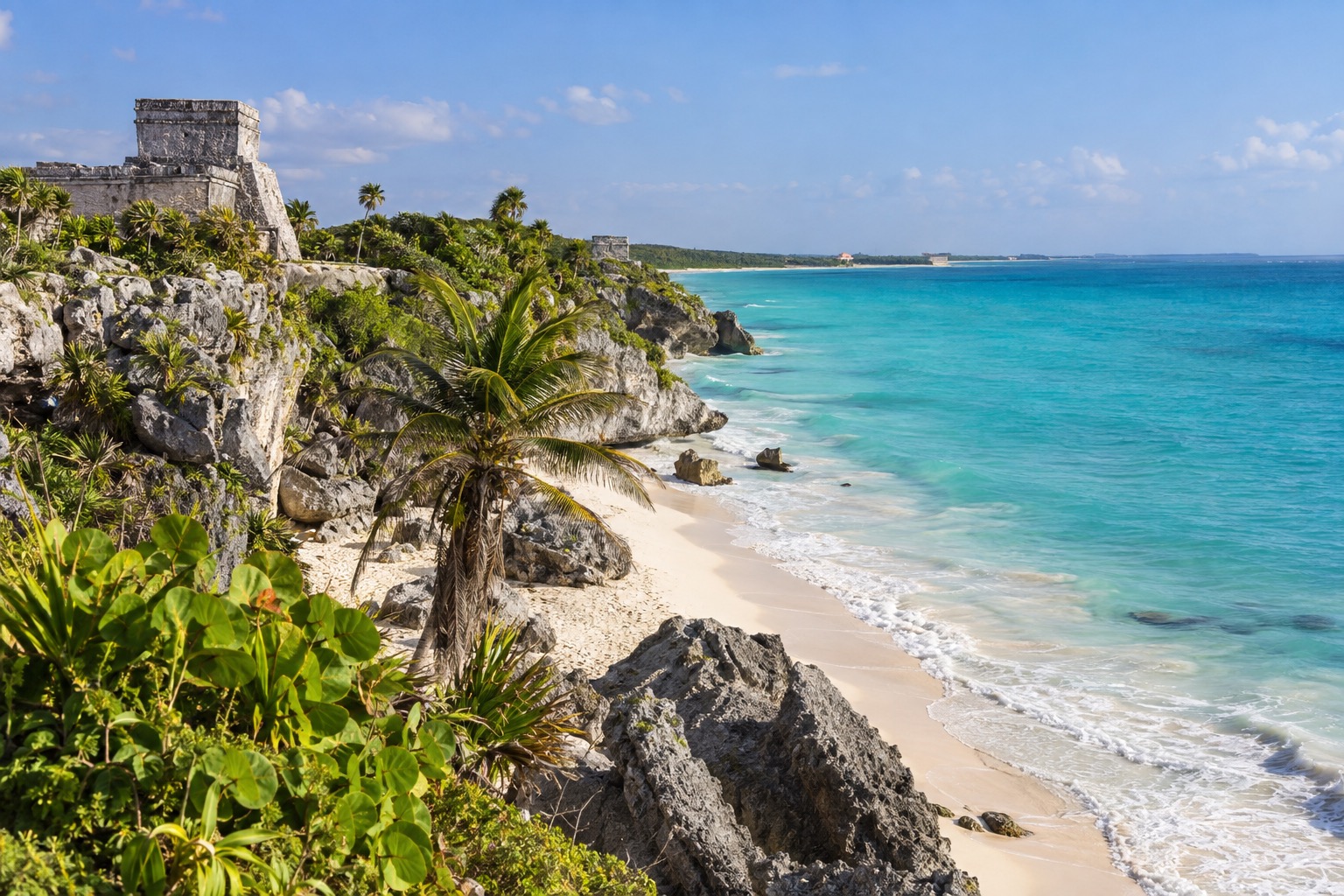
Early in the morning, before the tour groups arrive, the gray stone of El Castillo catches the first light above a sea gone turquoise, and iguanas sun themselves on the walls. Later the day moves to cenote swims, tacos in town and barefoot dinners under palapas on the beach road. Tulum is a small Caribbean town with Maya ruins on its cliff, a jungle full of freshwater pools and a shoreline that draws couples, nomads and nature lovers.
Where is Tulum and what is it like?
Tulum sits on the Caribbean coast of Quintana Roo, on the Riviera Maya south of Playa del Carmen, with Cancun to the north and the Sian Ka’an reserve just down the coast. It is really three places in one: the inland town (Tulum Pueblo), the beachfront strip and the newer residential districts in between.
The beach zone is low-rise and barefoot, a narrow road lined with small hotels, beach clubs and restaurants, more yoga mat than dance floor. The town is busier and more Mexican, with market stalls, street food and a main avenue that stays lively into the evening. The municipality is young, and much of its population works in tourism, so growth is visible everywhere.
Couples and travelers who want to be on the sand will love it. Those looking for big all-inclusive resorts, bargain beachfront rooms or a quiet, undeveloped coast may find it more polished and pricier than they expected.
What is there to do in Tulum?
The big draws are the cliff-top ruins, the cenotes, the reserve of Sian Ka’an and the beach itself. What sets Tulum apart from its neighbors is that all four sit within easy reach of each other, in a town that is still small enough to cross by bicycle.
The ruins above the sea
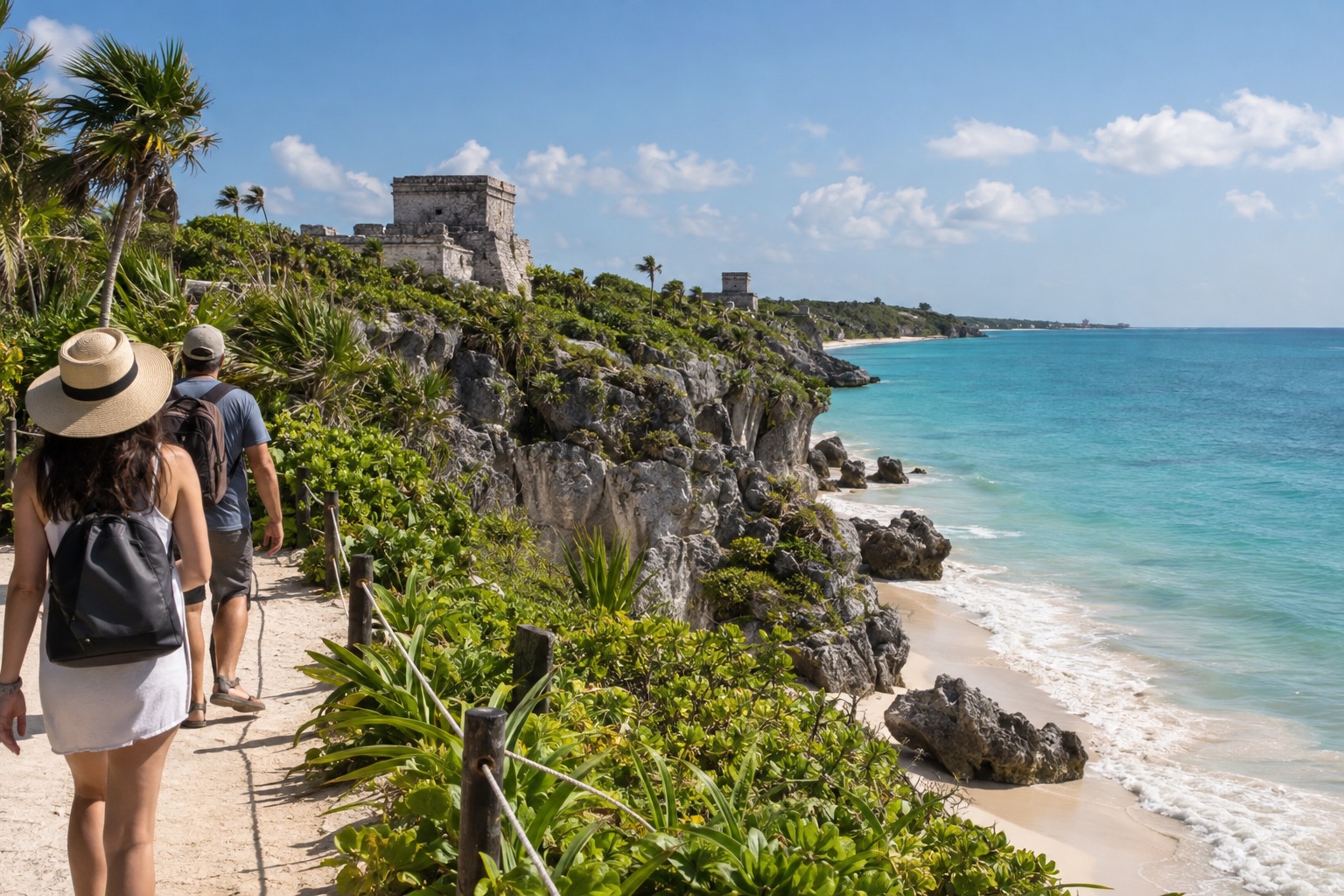
Tulum is one of the few Maya sites built right on the coast. The walled city stands on low cliffs directly above the Caribbean, and the views of the water from El Castillo and the small temples are the reason for the fame. You walk among the stone buildings and along the cliff edge, and iguanas are everywhere.
The site lies on the highway just outside town, and it is easy to reach from the beach zone or Tulum Pueblo by taxi, bicycle or colectivo. Go as early as the gate opens, when the light is soft and the paths are quiet, and bring a hat because shade is scarce. A short stay needs only a couple of hours here.
| Site | Open | Admission |
|---|---|---|
| Tulum archaeological zone | Daily, 8:00 a.m. to 5:00 p.m. (last entry 3:30 p.m.) | $265 pesos foreign visitors, $80 pesos Mexican nationals. Free Sundays for Mexican nationals and foreign residents of Mexico; free for children under 13 and visitors 60 and older |
Cenotes
The limestone jungle around Tulum hides sinkholes filled with clear, cool freshwater, and visiting a few is the classic day out. Among commercial cenotes, Gran Cenote and the Dos Ojos system draw the most fame, offering stalactites, beams of sunlight, and fish that glide through the water. Each is run independently by a private operator or ejido, so the experience and the entry arrangements differ from one to the next.
They lie a short trip from town by taxi, bicycle or car. Mornings tend to be calmer, and a visit pairs well with lunch back in the Pueblo. They suit anyone who likes swimming in unusual places, with the usual rule to follow the staff’s instructions at each site.
Sian Ka’an Biosphere Reserve
South of town, Sian Ka’an protects a huge stretch of wetlands, jungle, mangroves and reef, and is a UNESCO World Heritage site. It is the place to see birdlife and quiet water, and to get a sense of how wild this coast once was.
Independent car access is limited and the interior roads are unpaved, so most visitors go by boat or kayak tour run by local cooperatives, usually from Muyil or Punta Allen. It is a good choice for nature lovers who want a slower day away from the beach clubs.
The beach and the town
The long white beach is the other half of the picture. Days run on beach clubs, daybeds, seafood lunches and sunset drinks, with restaurants along the strip. Check the beach flags before swimming, since the sea can turn rough.
In the Pueblo, evenings mean taco stands, local restaurants and a busier, cheaper scene. Many visitors split their time, beach by day and town for dinner.
How many days do you need in Tulum?
A long weekend covers the essentials, and a week lets Tulum settle into a slower rhythm. In a short stay you can fit the ruins in the morning, a cenote swim, an afternoon on the beach and an evening in town.
With more time, add a boat or kayak tour in Sian Ka’an, a second and third cenote, and unhurried days at the beach clubs. Longer stays also leave room for day trips up the coast, such as Playa del Carmen or Cancun, though many visitors find Tulum itself plenty.
Where to stay in Tulum
The beach zone suits couples, honeymooners and anyone who wants to step straight onto the sand. Lodging there is mostly small boutique hotels, cabanas and eco-chic properties, often built with local materials, and rates run high. Tulum Pueblo is the choice for budget travelers, backpackers and long stays, with hostels, guesthouses and family-run hotels, many near the ADO bus station.
Aldea Zama, between town and beach, is a planned development of modern condos with shared pools, good for families and digital nomads who want comfort and quiet. La Veleta, south of town, is more raw and transitional, with apartments, casitas and guesthouses that appeal to long-term renters on a tighter budget. Both are away from the water, so a bicycle or scooter helps.
How do you get to Tulum and get around?
The closest airport is Tulum International (TQO), which opened in December 2023 about 12 miles southwest of town. Cancun International Airport is the other main gateway, about 80 miles north, and the drive to Tulum usually takes 90 minutes to 2 hours by car or private transfer. The direct ADO bus from Cancun airport to Tulum Pueblo takes about 2 to 2.5 hours.
In the Pueblo, you can walk around Avenida Tulum, and colectivos run frequently to the beach and the ruins. The beach zone is about 3 to 6.2 miles from town, 10 to 20 minutes by taxi or 20 to 35 minutes by bicycle.
Along the beach road, walking and cycling are the norm, since the road is narrow and parking is scarce. In Aldea Zama and La Veleta, bicycles, scooters and taxis are the easiest options.
When is the best time to visit Tulum?
The high season runs from December to April, when beach clubs and restaurant tables fill up and booking ahead matters. It is the most comfortable stretch for days on the sand and long walks through the ruins.
Atlantic hurricane season runs from June 1 through November 30, and its busiest stretch falls between mid-August and mid-October. That means early October, when this is written, still falls within the heart of it, and travelers in those months should keep an eye on forecasts. Summer brings heat, humidity and sudden rain, and the jungle turns very green.
Día de Muertos at the start of November and the Christmas and New Year weeks bring extra crowds and peak-season rates. Holy Week, whenever it falls in the spring, is also a busy time on the coast.
Good to know before you go
The U.S. State Department rates the state of Quintana Roo Level 2, ‘Exercise increased caution,’ due to terrorism and crime.
Bring some cash, since a few smaller beach spots have card minimums or no card machine. Once night falls, stay aware of what is around you, keep to brightly lit streets and areas where visitors gather, and remember that the Tourist Assistance Module in Tulum can provide emergency numbers, legal guidance, and help with police reports. Foreign visitors to Quintana Roo pay an environmental fee called Visitax.
| Fee | Amount | Who pays |
|---|---|---|
| Visitax (state tourist fee) | About 293 pesos (2.50 UMA), paid online at visitax.gob.mx | Foreign tourists in Quintana Roo |
| Tulum ruins admission | $265 pesos | Foreign visitors |
Sources
- INAH, official for the Tulum archaeological zone, inah.gob.mx/zonas/99-zona-arqueologica-de-tulum, checked September 29, 2026
- Wikipedia, "Tulum", en.wikipedia.org, checked September 29, 2026 (source secondaire)
- INAH, inah.gob.mx/zonas-arqueologicas, checked September 29, 2026
- UNESCO World Heritage Centre, record 410, whc.unesco.org/en/list/410, checked September 29, 2026
- reserve de sourcage (CONANP dediee non atteinte, 404), aucun chiffre affirme
- common knowledge; no single official source available
- Wikipedia, "Tulum International Airport", en.wikipedia.org, checked September 29, 2026 (secondary source; the group’s official site not reachable that day)
- Wikipedia, "Tulum Municipality", en.wikipedia.org, checked September 29, 2026 (source secondaire)
- U.S. Department of State, Bureau of Consular Affairs, Mexico Travel Advisory, travel.state.gov, checked September 29, 2026 (date issued May 29, 2026) (date issued May 29, 2026)
- Gobierno del Estado de Quintana Roo, portal visitax.gob.mx, checked September 29, 2026 (amount unconfirmed)
- NOAA National Hurricane Center, checked September 29, 2026
- Ley de Derechos del Estado de Quintana Roo, art. 51-Octies, congresoqroo.gob.mx, checked September 29, 2026
All our pages
When to go
- Best Time to Visit Tulum: Weather by Month, Crowds, Sargassum and Festivals
- Tulum in January: Cool Mornings, Three Kings Day, Beach Days and Jungle Outings
- Tulum in February: Carnaval Season, Dry Beach Days and Cenote Mornings
- Tulum in March: Spring Equinox, Cenotes, Beach Days and Weather
- Tulum in April: Weather, Cenotes, Easter Week and Beach Days
- Tulum in May: Hot Days, Warm Sea, Cenotes and Early-Summer Quiet
- Tulum in June: Warm Seas, Green Jungle, Cenotes and Summer Showers
- Tulum in July: Weather, Sea Swims, Cenotes and Summer Mood
- Tulum in August: Turtle Nesting, Cenotes After the Rain and Summer Crowds
- Tulum in September: Hurricane Season, Green Jungle, Warm Sea and What to Do
- Tulum in October: Día de Muertos Build-Up, Rainy-Season Weather and Cenote Days
- Tulum in November: Día de Muertos, Cooling Weather and Cenote Days
- Tulum in December: Holiday Season, Warm Seas, Cenotes and Beach Days
Things to do
- Things to Do in Tulum: Ruins, Beaches, Cenotes and Sian Ka'an
- Day Trips from Tulum: Cenotes, Sian Ka'an, Coba and Beyond
- 3 Days in Tulum: Ruins, Sian Ka'an, Cenotes and Beach Days
- Visiting the Tulum Ruins: Clifftop Temples, Hours and Tickets, and How to Get There