
On the spring equinox, thousands of visitors in white gather before the pyramids of Teotihuacán to lift their arms to the first sun, while in Oaxaca the jacaranda-colored evenings smell of mole and mezcal. March in Mexico is the hinge between winter and the heat to come, with dry beaches, warm highland days and a calendar that starts to lean toward Holy Week. It suits travelers who want to pair a coast with a colonial city.
What is the weather like in Mexico in March?
March is warm to hot almost everywhere and mostly dry, but the character changes sharply by region: humid and tropical on the Caribbean, desert-dry in Baja, hot by day and cool at night in the highlands.
| Place | Region | Average high (°F) | Average low (°F) | Rain (in) | Rain days | Sea (°F) |
|---|---|---|---|---|---|---|
| Cancun | Caribbean coast | 88.7 | 70.5 | 1.52 | 5.4 | 80.7 |
| Cabo San Lucas | Baja California | 83.3 | 57.0 | 0.06 | 0.3 | 71.3 |
| Puerto Vallarta | Mainland Pacific | 81.1 | 57.6 | 0.46 | 7.9 | 77.6 |
| Mexico City | Central highlands | 79.2 | 52.0 | 0.46 | 3.8 | |
| Oaxaca | Central highlands | 91.9 | 56.5 | 0.69 | 4.1 |
Oaxaca is the hottest afternoon on the list at 91.9°F, yet its nights fall to the mid-50s, so you can stroll the markets in the sun and want a layer after dinner. Mexico City is gentler by day, in the upper 70s, and cooler still before dawn.
On the water, Cancun’s sea sits near 80.7°F, comfortable for a long swim, while Cabo San Lucas stays at 71.3°F and feels brisk. Puerto Vallarta, with the most rain days of the group at 7.9, still sees only light totals, so expect the odd passing shower rather than a gray week.
Where to go in Mexico in March
The Caribbean coast
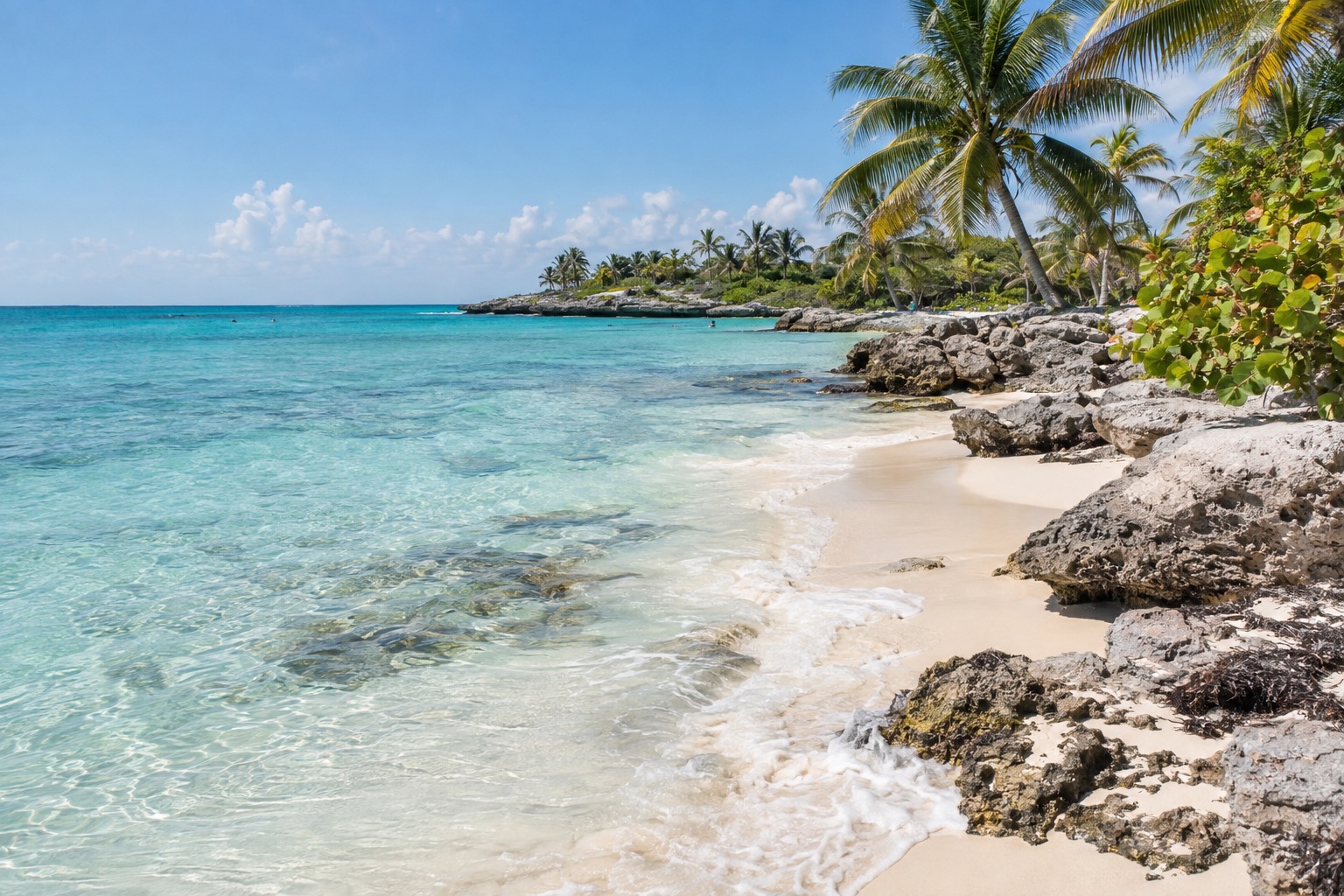
Cozumel, Isla Mujeres, Tulum, Playa del Carmen and Cancun pair the region’s famous warm turquoise water with afternoons so hot they can send you to a beach club or a cenote. Days run in the high 80s and the sea is pleasantly warm, so snorkeling off Cozumel or a ferry to Isla Mujeres makes an easy plan.
Inland, Chichén Itzá and the Maya ruins are best seen early, before the sun climbs. Seaweed is usually at a low ebb in the winter months and builds toward a summer peak, though some years carry plenty even in winter, so the beaches from Cancun to Mahahual are worth a look the morning you go.
The Pacific coast: Puerto Vallarta and Riviera Nayarit
Behind the Malecón, green hills rise, and Puerto Vallarta wraps itself around the Bay of Banderas, while March brings sunny days, water warm enough to enjoy, and mild evenings perfect for dinner on a terrace. A little farther along the coast, Sayulita and Punta Mita, both in Riviera Nayarit, serve surf-town lunches and quieter sand.
Puerto Vallarta is in Jalisco, a state rated Level 3, though U.S. government employees face no travel restrictions in Puerto Vallarta itself. Riviera Nayarit lies in the neighboring state of Nayarit, rated Level 2. The Pacific resorts sit outside the Atlantic seaweed belt.
Los Cabos and Baja California Sur
At the tip of Baja, desert cliffs meet the sea, and March delivers nearly cloudless skies. Cabo San Lucas is the lively end, with boats running out to the rock arch and a marina that keeps going after dark. San José del Cabo is more laid-back, with a little plaza and art galleries at its heart.
The water is cool, so many people come for boat trips and desert scenery rather than long swims, and many Pacific-facing beaches have surf too rough for swimming. Mornings and evenings can feel crisp, which suits walking and sunset drinks.
The central highlands
In Mexico City, Oaxaca and Guadalajara, as well as San Miguel de Allende, beaches give way to museums, markets and long lunches. In March the weather cooperates: clear skies, little rain and the first spring blooms in the plazas. Mexico City’s tree-lined avenues are at their easiest before the rainy months arrive.
Oaxaca gets hot in the afternoon, so plan mezcal tastings, market stalls and ruins visits for morning, then retreat to shaded courtyards. Guadalajara is in Jalisco, rated Level 3, with battles between criminal groups reported in tourist areas, so check the state levels before choosing your route.
What to do in Mexico in March
Spring equinox and the run-up to Holy Week
The spring equinox in late March draws crowds to Teotihuacán and Chichén Itzá, where visitors gather at the ruins to welcome the sun. Many dress in white, and the atmosphere is part pilgrimage, part festival.
Benito Juárez’s birthday is observed as a public holiday on the third Monday of March, which makes for a long weekend in many cities. Holy Week moves every year, so when it falls in late March, processions and church services begin to fill town centers, especially in colonial cities.
Whales in Baja
Gray whales spend the season breeding and calving in two lagoons of the El Vizcaíno reserve, San Ignacio and Ojo de Liebre. The watching season runs from mid-December through April, and March is the heart of it, with mothers and calves often drifting up to the small boats. Winter brings tour boats that watch humpbacks in the Bay of Banderas and off Los Cabos, a gentler option for anyone already based on the coast.
Monarch butterflies
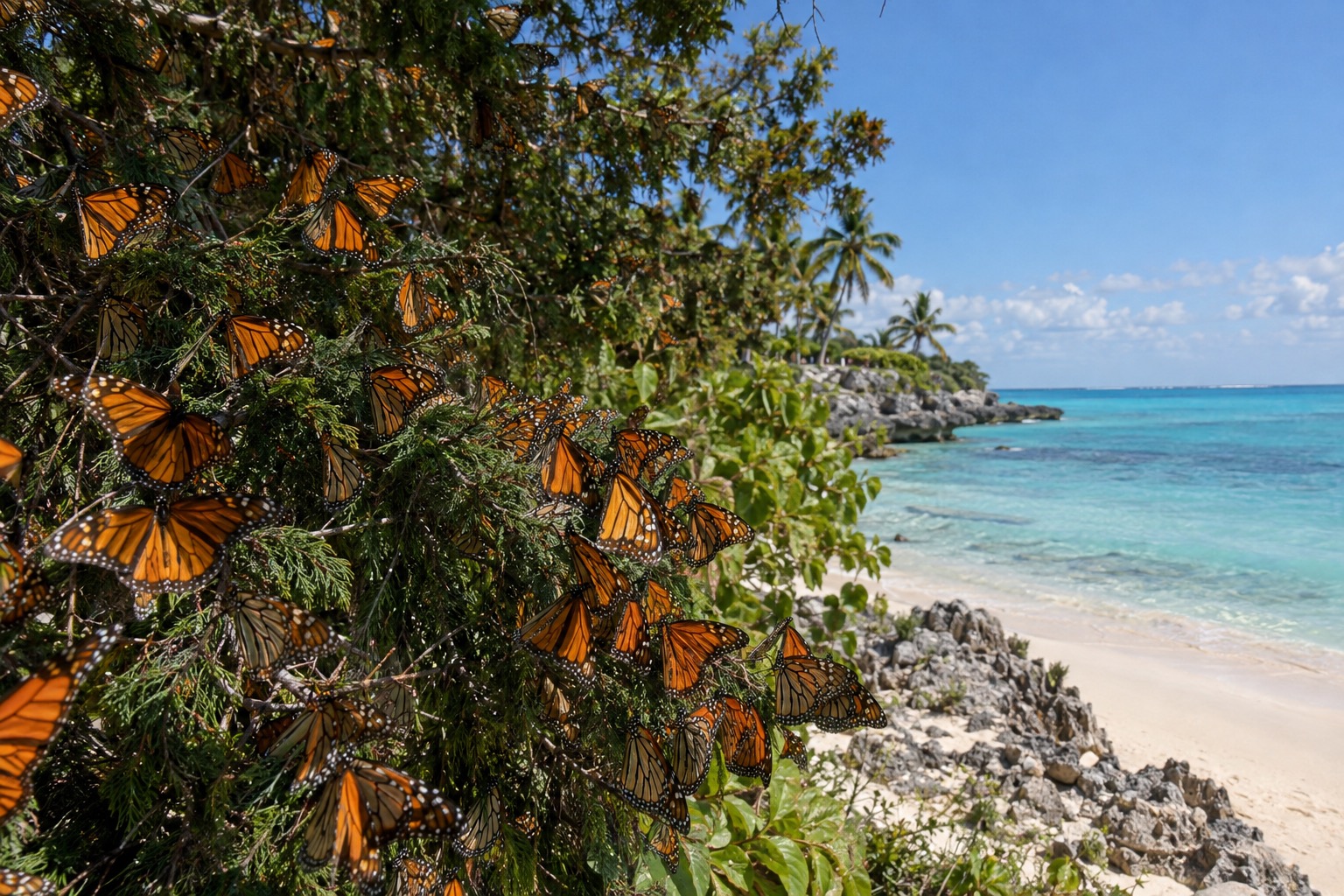
March is usually the final stretch of the monarch season, so check the current sanctuary dates before going. Among them, Piedra Herrada is the sole sanctuary in a Level 2 state, and it is located in the State of Mexico. The remaining three, El Rosario, Senguio and Sierra Chincua, are in Michoacán, which holds a Level 4, Do Not Travel rating, and the advisory puts the Monarch Butterfly Reserve on the list of places U.S. government employees may not enter.
Is Mexico busy in March?
Yes, March is busy in the beach destinations, because U.S. spring break sends crowds to Cancun, Playa del Carmen, Cabo San Lucas and Puerto Vallarta, with lively nights and full resorts.
Mexican school vacation tends to center on Holy Week, so when it falls late in the month, domestic travelers add to the crowds at beaches and colonial towns. Oaxaca and Mexico City stay more relaxed outside festival days, and Isla Mujeres and Cozumel can feel calmer on weekdays. Book early for anything that overlaps spring break or Holy Week.
What to pack for Mexico in March
Bring gear for two climates: beachwear along the coasts, layers for evenings in the highlands and Baja, and serious sun protection wherever you go.
- Swimsuit and a cover-up for Cancun and Puerto Vallarta
- Sunscreen, a hat and sunglasses for the strong spring sun
- A sweater for evenings in Mexico City, Oaxaca and Los Cabos
- Comfortable walking shoes for cobblestones and ruins
- A light rain jacket if Puerto Vallarta is on the route
Good to know before you go
Both hurricane seasons start later in the year, the Pacific one in mid-May and the Atlantic one in June, so March sits outside the official hurricane season on either coast. Seaweed on the Caribbean beaches usually eases in winter, though it can linger.
The U.S. State Department rates Mexico Level 2, exercise increased caution. Levels differ by state, from Level 1 up to Level 4, so check the rating for each region on your route.
Is March a good time to visit Mexico?
Yes, March is a strong month for the Caribbean coast and Baja, with dry weather, warm seas in Quintana Roo and whales in the lagoons, and a good one for the highlands too.
Compared with February, days are a few degrees warmer and nights milder, especially in Mexico City. April is hotter still, with Cancun in the low 90s and Mexico City seeing more rain days. March catches the balance, comfortable in the cities and sunny on the coast. It is also the month when the equinox sun hits the pyramids, the last monarchs leave their forests and Holy Week is just around the corner.
Sources
- Servicio Meteorologico Nacional (CONAGUA), normales climatologicas 1991-2020, estacion 23155 (Cancun, Benito Juárez), checked September 29, 2026
- Open-Meteo Marine API, average 2015-2024, checked September 8, 2026
- Servicio Meteorologico Nacional (CONAGUA), normales climatologicas 1991-2020, estacion 09048 (Tacubaya Central (Obs), Miguel Hidalgo), checked September 29, 2026
- sunrise-sunset.org, sunrise and sunset on the 15th of the month, checked September 8, 2026
- Servicio Meteorologico Nacional (CONAGUA), normales climatologicas 1991-2020, estacion 03005 (Cabo San Lucas, Los Cabos), checked September 29, 2026
- Servicio Meteorologico Nacional (CONAGUA), normales climatologicas 1991-2020, estacion 14339 (El Cuale, Puerto Vallarta), checked September 29, 2026
- Servicio Meteorologico Nacional (CONAGUA), normales climatologicas 1991-2020, estacion 20079 (Oaxaca, Oaxaca De Juárez), checked September 29, 2026
- NOAA National Hurricane Center, "Tropical Cyclone Climatology", nhc.noaa.gov, checked September 29, 2026
- University of South Florida, Optical Oceanography Lab, "Sargassum Watch System (SaWS)", optics.marine.usf.edu, checked September 29, 2026
- U.S. Department of State, Mexico Travel Advisory (main, level banner), travel.state.gov, read live via browser (protected by Cloudflare, direct fetching blocked with 403) on 29 September 2026
- U.S. Department of State, Mexico Travel Advisory (reissued May 29, 2026), section « Risks in specific areas », travel.state.gov/en/international-travel/travel-advisories/mexico.html, read via browser (Cloudflare blocks curl) on 29 September 2026
- CONANP (Comision Nacional de Areas Naturales Protegidas), "Inicia la temporada de avistamiento de ballena gris en la Reserva de la Biosfera El Vizcaino", gob.mx/conanp, checked September 29, 2026 (window confirmed over several seasons, including the 2025-2026 announcement)
- CONANP (Comision Nacional de Areas Naturales Protegidas), "Inicia la temporada de visitacion a los santuarios de Mariposa Monarca, periodo 2024-2025", gob.mx/conanp, checked September 29, 2026
To plan your stay
- Things to Do in Mexico: Ruins, Beaches, Day of the Dead and Street Food
- Where to Stay in Mexico: Riviera Maya, Los Cabos, Puerto Vallarta, Mexico City and All-Inclusive Areas
- Getting Around Mexico: Buses, the Tren Maya, Taxis and Driving Your Own Car
- Mexico Travel Tips: Dollars, Tourist Tax, Tipping, Tap Water, Driving and Safety by State