
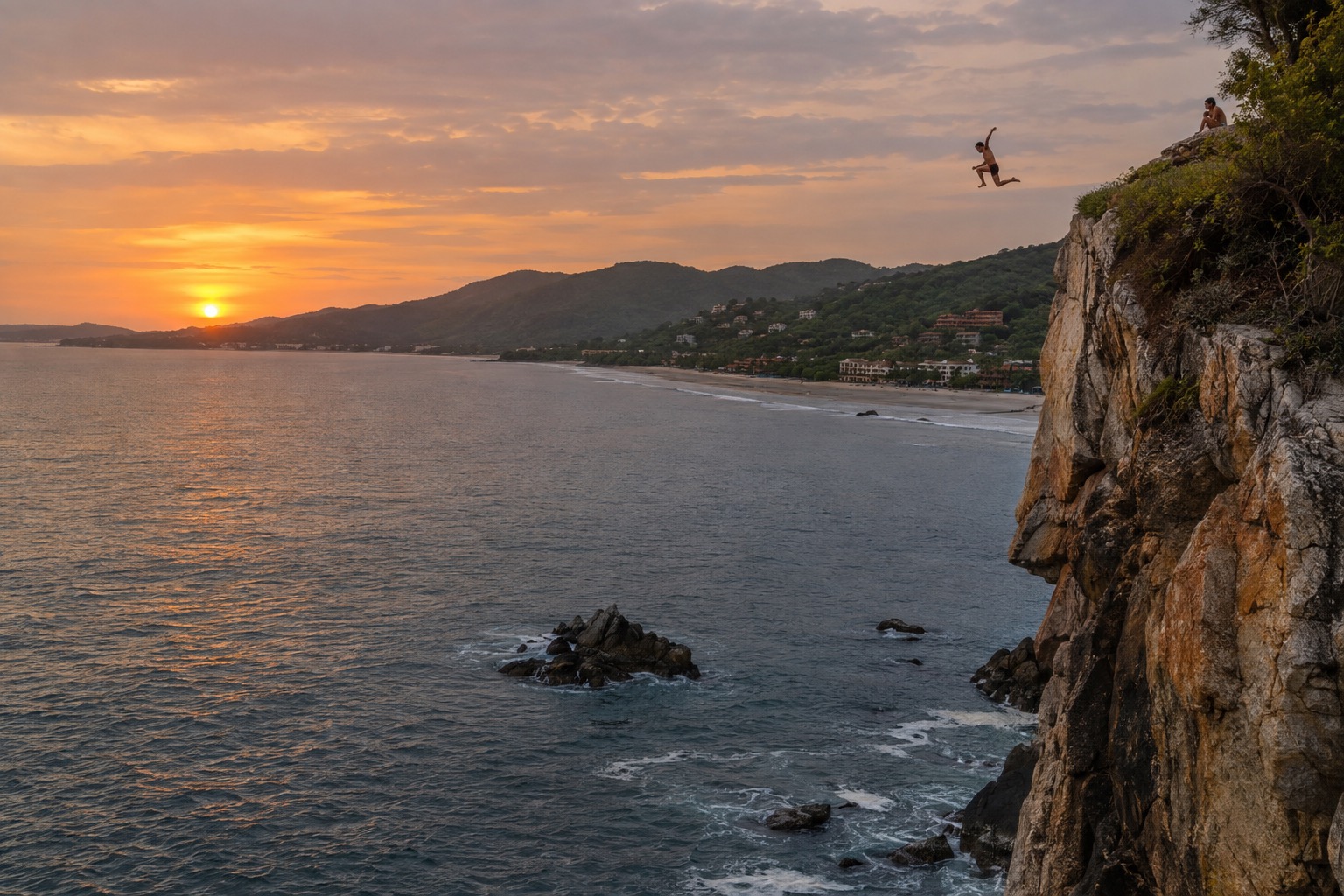
As night falls over the old end of the bay, crowds gather on a rocky ledge to watch a diver pause above the open sea, then drop into the dark water below. Acapulco is a big, loud, sunny Pacific resort city built around a wide bay, with beach clubs, late dinners and a long history as a getaway. It suits travelers who like energy, warm water and a city that is still rebuilding after a hard blow.
Where is Acapulco and what is it like?
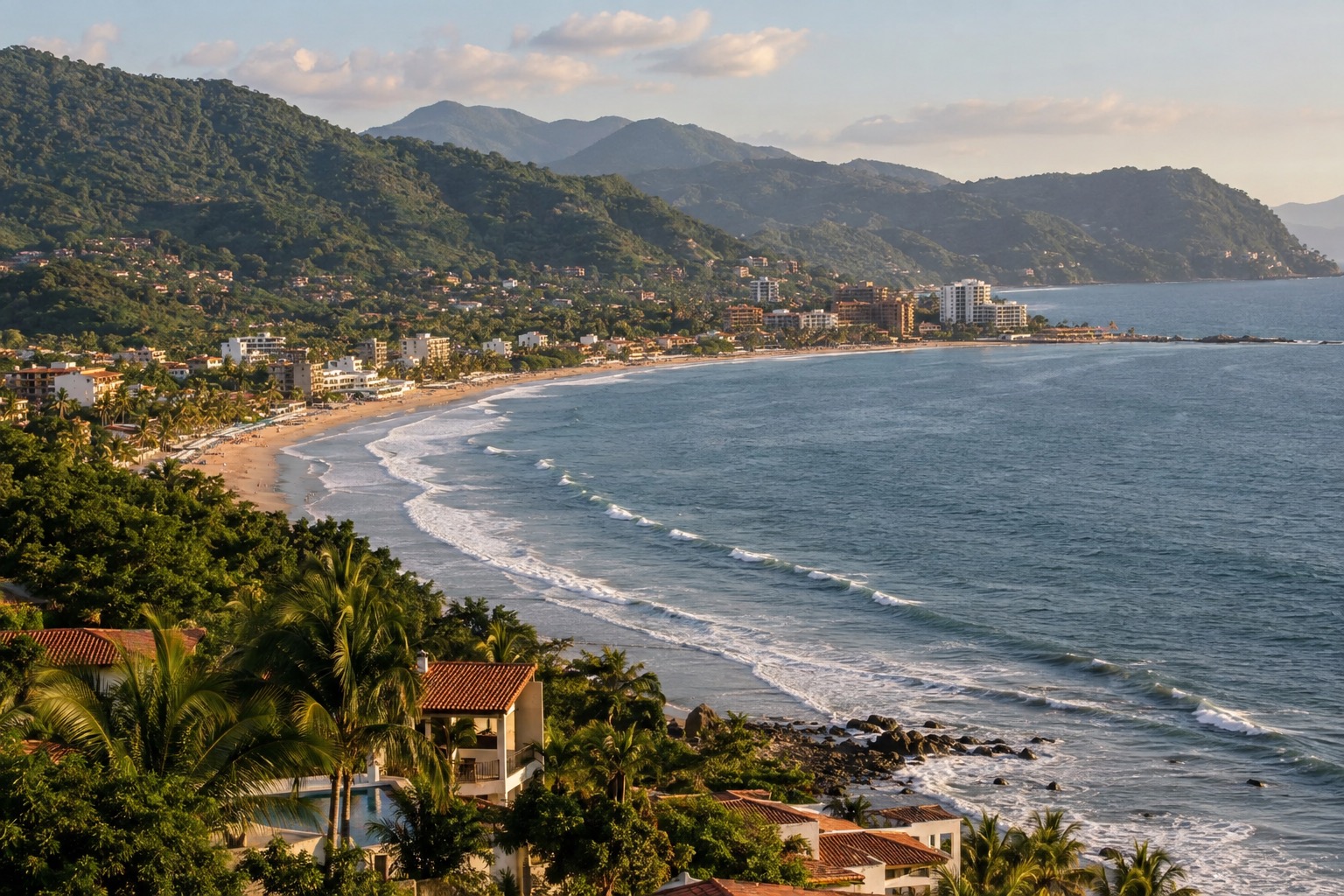
Acapulco sits on Mexico’s Pacific coast in the state of Guerrero, curled around a deep natural bay with green hills behind it. The old town and La Quebrada lie at the western end, while the Costera hotel strip curves east along the water, and further beyond are the more modern resort districts.
The pace depends on where you stand. The Costera is busy, with high-rise hotels, restaurants, shops and nightlife. The older neighborhoods feel more local, with a working waterfront and small guesthouses. Farther out, quiet strips of sand give you a rustic escape.
People who love lively beach cities will feel at home. For travelers seeking a tidy, polished resort, Acapulco can feel rougher around the edges, because rebuilding after Hurricane Otis, a Category 5 storm that hit in October 2023, remained ongoing in areas of the city. Check current conditions before planning a trip.
What is there to do in Acapulco?
Acapulco’s draws are the cliff divers, the bay beaches, a colonial fort and the quiet sunsets of a sandbar town nearby. What sets it apart from other Pacific resorts is the mix: a real city with history and nightlife, sitting on the same bay as the sand.
La Quebrada and the cliff divers
The divers perform nightly from a rock face above the open sea, a tradition going back decades. You watch from the viewing platforms and ledges as they climb, pause, and leap into the narrow channel below, with the waves surging between the rocks.
It is in the old town at the western end of the bay, a short ride from the zócalo. Go in the evening and arrive early to secure a good spot. It suits nearly everyone, couples and families alike, and it is one of the sights people remember longest.
Bay beaches
The Dorado stretch along Costera Miguel Alemán has wide sandy beaches and generally calm bay water suitable for swimming, with restaurants and beach clubs right behind the sand. Caleta and Caletilla, near the old town, are small beaches with generally calm, protected water and a more local feel.
Farther east, Puerto Marqués is a sheltered bay, while Revolcadero faces the open ocean and has stronger surf. Pick the beach to match your mood, and keep an eye on the flags where waves are big.
History at the Fuerte de San Diego
The colonial Fuerte de San Diego stands near the zócalo, so you can walk there from the old town or take a short ride from the Costera. Inside, the Museo Histórico de Acapulco tells the story of the port, and the thick walls give you a view across the harbor.
It is a good choice for a hot midday, when you want shade and something to learn, and it pairs easily with a stroll around the zócalo and an evening at La Quebrada. Plan an hour or two. It suits history lovers and families with older children.
| Site | Open | Admission |
|---|---|---|
| Museo Histórico de Acapulco (Fuerte de San Diego) | Tuesday to Sunday, 9:00 a.m. to 5:00 p.m. | 85 pesos for Mexican visitors |
Pie de la Cuesta at sunset
Pie de la Cuesta is a quiet strip between the open Pacific and the calm Laguna de Coyuca, famous for spectacular sunsets. Seafood places and hammock spots line the sand, and the mood is slow and rustic.
A single road links it to Acapulco, and local buses or taxis from the center take about 30 to 40 minutes. Swim in the calmer lagoon rather than directly in the Pacific, because the ocean side has strong currents and undertow. It suits couples and anyone wanting a break from the city.
How many days do you need in Acapulco?
A long weekend covers the essentials, and a week lets you settle into the rhythm of the bay.
In a short stay you can fit a beach day on the Costera, an afternoon at the fort and an evening watching the divers at La Quebrada. With more days, add a sunset at Pie de la Cuesta, a day at Puerto Marqués or Revolcadero, and slower mornings at Caleta.
Where to stay in Acapulco
The Dorado, along the Costera, is dominated by high-rise hotels and all-inclusive resorts, with some older condominium-style lodgings. It suits families and couples who want restaurants, shops and nightlife close by. The traditional center has small guesthouses, older inns and budget hotels, a fit for backpackers and anyone wanting a local, non-resort atmosphere.
The Diamante zone has large modern resorts, golf courses and a quieter, more spread-out setting, with few budget options. Pie de la Cuesta offers small family-run hotels and cabanas, often with ocean or lagoon views, for a peaceful escape.
How do you get to Acapulco and get around?
Most visitors fly into Juan N. Alvarez International Airport. From the airport, the Dorado is about 20 to 30 minutes by car, the Diamante zone 10 to 20 minutes, the old center 30 to 45 minutes, and Pie de la Cuesta 45 to 60 minutes.
Along the Costera, frequent blue-and-white buses and combis run all day, and taxis are easy to hail. Use the local buses for short trips to save money. In the old town, the zócalo is within a short walk or a short ride. In the Diamante zone, public buses are less frequent, so a rental car or a taxi budget makes sense because attractions are spread out.
When is the best time to visit Acapulco?
The dry months from November through April are the best bet. Rain is scarce, with February through April nearly without a rainy day, and afternoons stay hot, around 90°F.
June through September is the wettest stretch, with showers on more than half the days in September. It is also the heart of the eastern Pacific hurricane season, which officially runs from May 15 to November 30. October is easing out of the rains but still within the season.
Heat is constant all year, so the real choice is between sun and showers. Holiday weeks around Christmas, New Year and Holy Week, which moves every year, are the busiest times on the Costera.
Good to know before you go
The U.S. State Department’s Mexico travel advisory rates Guerrero at Level 4, ‘Do not travel’.
Pesos are the currency to carry for buses, taxis and small beach restaurants. In some neighborhoods, rebuilding after Hurricane Otis was still ongoing, so check today’s conditions before you reserve. Guerrero adds a lodging tax to hotel bills.
| Fee | Amount | Who pays |
|---|---|---|
| Lodging tax (Impuesto Sobre Hospedaje) | 4% | Hotel guests |
| Lodging tax on bookings through digital platforms | 5% | Hotel guests |
Sources
- NOAA National Hurricane Center, Tropical Cyclone Report on Hurricane Otis, publie le 7 mars 2024, checked September 29, 2026
- The Weather Channel, « Cat. 5 Hurricane Otis Mexico's Record-Costliest », 7 mars 2024, checked September 29, 2026
- INAH, Lugares INAH, page for Museo Historico de Acapulco Fuerte de San Diego, checked September 29, 2026
- U.S. Department of State, Mexico Travel Advisory (travel.state.gov), updated/issued on August 11, 2026, checked September 29, 2026
- El Contribuyente and J.A. del Rio, ISH tables by State 2026; Ley Numero 419 de Hacienda del Estado de Guerrero (Article 57, purpose of the tax), read on 29 September 2026
- SECTUR, gob.mx blog, actualite « Acapulco amplia su conectividad aerea y fortalece su actividad turistica », 24 September 2026, checked September 29, 2026
- NOAA National Hurricane Center, official Eastern Pacific season (nhc.noaa.gov), checked October 5, 2026
- Servicio Meteorologico Nacional (CONAGUA), normales climatologicas 1991-2020, estacion 12002 (Acapulco De Juarez (Obs), Acapulco De Juárez), checked September 29, 2026