
On the morning of a flight to Cancun, the suitcase is open on the bed and the question is always the same: shorts or a sweater, or both? Mexico covers hot coasts, a high-altitude capital that gets chilly after dark and a southern valley with sharp swings between day and night. The short answer is light clothes for the sun, one warm layer for the evenings in the highlands, and a rain jacket in summer.
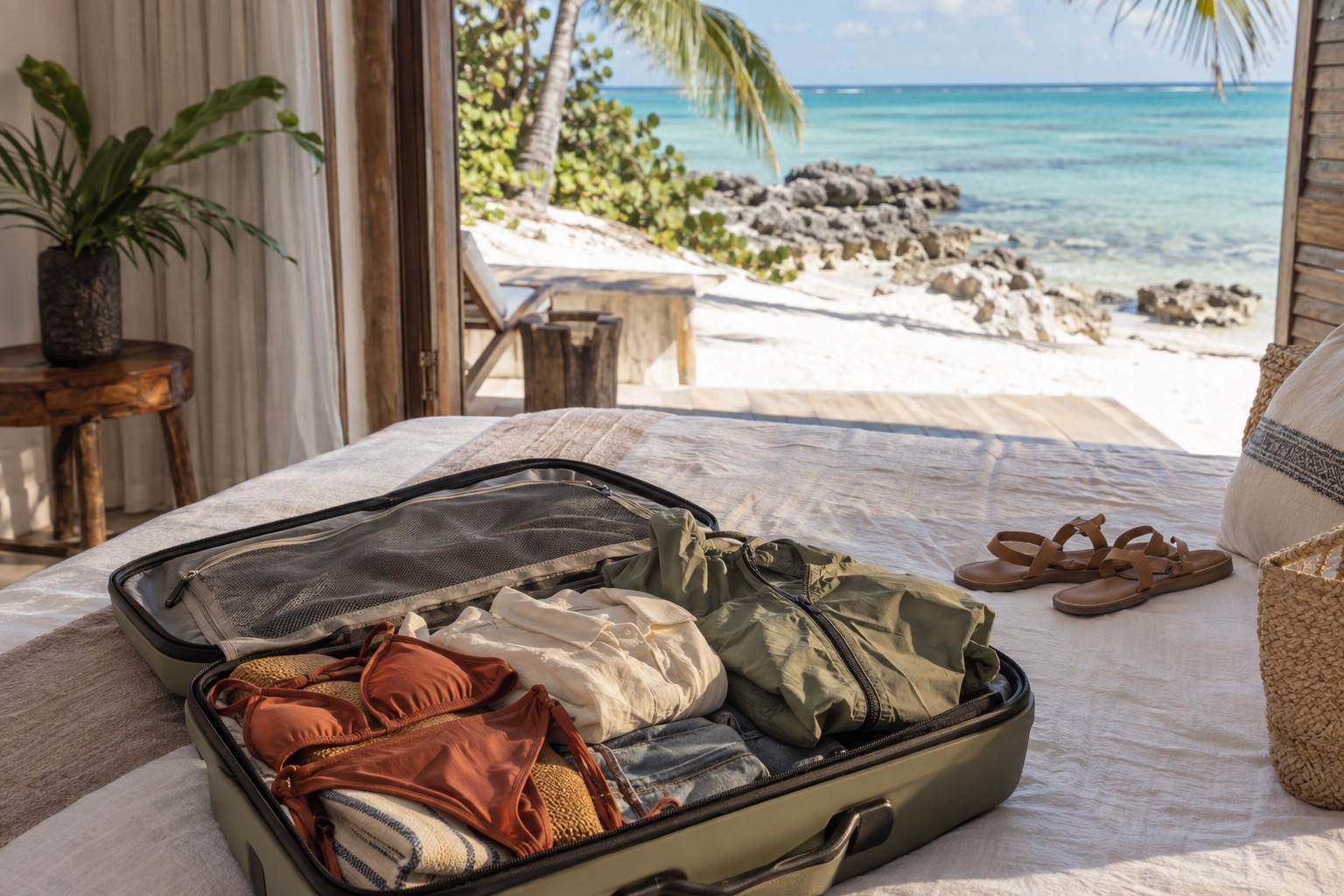
What to pack for a beach vacation in Mexico
For a beach vacation, pack light, breathable clothes, a swimsuit or two, a hat and strong sunscreen, and leave the heavy layers at home. Evenings on the coast are relaxed, so a sundress, linen shirt and sandals cover most dinners, with a thin cover-up for air-conditioned restaurants.
Caribbean coast: Cancun and its neighbors
Cancun in winter is warm enough for beach days and for dinner outside in a short-sleeved shirt, with the occasional gray, showery spell. Summer turns hot and sticky, so pack fabrics that dry quickly and a light rain layer for the afternoon downpours that pass through.
Reef-safe sunscreen, a rash guard and water shoes make the days easier. The Caribbean side sits in the Atlantic hurricane season, and the seaweed that sometimes piles up on the sand tends to be at its heaviest in early summer, so sandals you do not mind getting wet are a good idea.
The Pacific resorts follow a different rhythm. Los Cabos is dry nearly all year, with cool-ish evenings in winter that call for a light sweater, while Puerto Vallarta turns very wet in summer, with storms that arrive most afternoons. Pack a compact umbrella or poncho for Vallarta, and quick-dry clothes you can rewear.
| Beach | January high / low (°F) | July high / low (°F) | Sea in January / July (°F) |
|---|---|---|---|
| Cancun | 83.7 / 68.0 | 94.6 / 77.0 | 80.7 / 85.0 |
| Cabo San Lucas | 79.9 / 55.0 | 93.9 / 72.3 | 73.6 / 84.5 |
| Puerto Vallarta | 80.1 / 56.7 | 88.0 / 70.9 | 78.2 / 86.9 |
What to pack for Mexico City
Mexico City calls for layers: a T-shirt for the afternoon, a sweater or light jacket for the evening, and comfortable shoes for long days on pavement. The capital sits high, so the sun is strong at midday and the air cools quickly once it sets.
In winter the days are pleasantly mild and dry, but mornings and nights are properly cold, enough for a warmer coat when you walk home from dinner in Roma or Condesa. Closed shoes and long pants fit the mood of the city better than beachwear.
In summer, expect rain on most days, usually a heavy shower in the afternoon. A light waterproof jacket and shoes with good grip on slick cobblestones matter more than an umbrella you will fight with in the wind. Keep a sweater in the bag even then.
| Month | Average high (°F) | Average low (°F) | Rain days |
|---|---|---|---|
| January | 72.0 | 46.9 | 2.7 |
| July | 76.5 | 55.4 | 21.8 |
What to wear in Oaxaca
In Oaxaca, wear light, breathable clothes for the day and bring a real layer for the night. Winter afternoons feel properly warm, yet the evenings drop to the point where a jacket or a wrap feels good at an outdoor mezcalería.
Summer is milder at night and wetter by day, with rain on most days, so a light rain jacket and shoes that handle wet cobbles are worth the space. The market stalls, the churches and the walks between the plazas all reward sturdy, comfortable sandals or sneakers.
A wide-brimmed hat and sunscreen help on sunny days among the ruins and artisan villages outside town. Covered shoulders are a courtesy inside churches, so a light scarf earns its place in the bag.
| Month | Average high (°F) | Average low (°F) | Rain days |
|---|---|---|---|
| January | 84.0 | 50.5 | 1.4 |
| July | 86.2 | 60.6 | 20.4 |
Travel documents to bring to Mexico
Bring your U.S. passport and your immigration form, the FMM, which every foreign tourist entering Mexico needs. If you fly, the airline handles the payment for you, and the form is digital now.
A passport card works only for land and sea returns to the United States and is not valid for flying abroad, so it does not replace the passport book for a beach flight. An adult pays 65 USD for a first card and a child pays 50 USD, and it stays good for 10 years for adults.
Traveling with children
Children need their own passport when flying, so check each one before booking. For trips by land or sea, the rules are looser, and a birth certificate or another proof of citizenship is enough for kids younger than 16.
Keep every document in one folder in your carry-on, with a photocopy stored separately from the originals. That way a lost bag or a wet beach day never turns into a problem at the airport.
What to pack for Mexico in hurricane season
In hurricane season, pack for rain and for flexibility: a light waterproof jacket, quick-dry clothes, a dry bag for phone and documents, and a small portable charger. The Atlantic season, which covers the Caribbean coast, runs from June 1 to November 30, and the Pacific season, covering Los Cabos and Puerto Vallarta, from May 15 to November 30.
Most summer days on the coast still bring sun, with showers that come and go. Puerto Vallarta in July is the wettest of the beach spots here, while Cabo stays dry. Pack a second pair of sandals so one pair can dry overnight.
Leave room for a change of plans too. Keep chargers, medications and a printed copy of your lodging details in your carry-on, and bring a waterproof pouch for the beach.
Good to know before you go
Carry some pesos for markets, taxis and small restaurants, and keep a card for hotels and larger shops. Pack a refillable bottle, a hat and a small daypack with a zipper, and keep valuables out of sight in crowded places. Inland, the altitude of Mexico City can make the first day feel tiring, so go easy on the schedule.
Sources
- Servicio Meteorologico Nacional (CONAGUA), normales climatologicas 1991-2020, estacion 23155 (Cancun, Benito Juárez), checked September 29, 2026
- Open-Meteo Marine API, average 2015-2024, checked September 8, 2026
- Servicio Meteorologico Nacional (CONAGUA), normales climatologicas 1991-2020, estacion 09048 (Tacubaya Central (Obs), Miguel Hidalgo), checked September 29, 2026
- Servicio Meteorologico Nacional (CONAGUA), normales climatologicas 1991-2020, estacion 03005 (Cabo San Lucas, Los Cabos), checked September 29, 2026
- Servicio Meteorologico Nacional (CONAGUA), normales climatologicas 1991-2020, estacion 14339 (El Cuale, Puerto Vallarta), checked September 29, 2026
- Servicio Meteorologico Nacional (CONAGUA), normales climatologicas 1991-2020, estacion 20079 (Oaxaca, Oaxaca De Juárez), checked September 29, 2026
- U.S. Department of State, "Compare a Passport Card and Book", travel.state.gov, updated on 28 September 2026, read live via browser on 29 September 2026
- Ley Federal de Derechos, art. 8-I (current text, APTA CE mirror, update 91), apta.com.mx ; supplemented by Instituto Nacional de Migracion, "Forma Migratoria Multiple Digital (FMMd)", gob.mx/inm, checked September 29, 2026
- U.S. Customs and Border Protection, « Western Hemisphere Travel Initiative », cbp.gov/travel/us-citizens/western-hemisphere-travel-initiative, checked September 29, 2026
- University of South Florida, Optical Oceanography Lab, "Sargassum Watch System (SaWS)", optics.marine.usf.edu, checked September 29, 2026
- NOAA National Hurricane Center, "Tropical Cyclone Climatology", nhc.noaa.gov, checked September 29, 2026
To plan your stay
- Best Time to Visit Mexico: Weather by Region, Crowds, Hurricane Season and Festivals
- Things to Do in Mexico: Ruins, Beaches, Day of the Dead and Street Food
- Where to Stay in Mexico: Riviera Maya, Los Cabos, Puerto Vallarta, Mexico City and All-Inclusive Areas
- Mexico Travel Tips: Dollars, Tourist Tax, Tipping, Tap Water, Driving and Safety by State