
On the night of November 1, cemeteries across Mexico glow with candles, and families sit beside graves covered in marigold petals, sharing the favorite dishes of the people they miss. Mexico is a country of many countries: Caribbean sand and Maya ruins, desert meeting the sea in Baja, colonial highland cities built around markets and museums. It suits travelers who want to eat well, wander old streets and spend some days in warm water.
What are the best things to do in Mexico?
The best of Mexico is a mix of ancient sites, coastline and food, and most trips pick two or three of the regions rather than trying to see them all.
- Walk the Maya ruins of Tulum and Chichén Itzá, one on a cliff above the Caribbean, the other deep in Yucatán.
- Take in the museums and colonial centers of Mexico City, plus those in Oaxaca, Guadalajara and San Miguel de Allende.
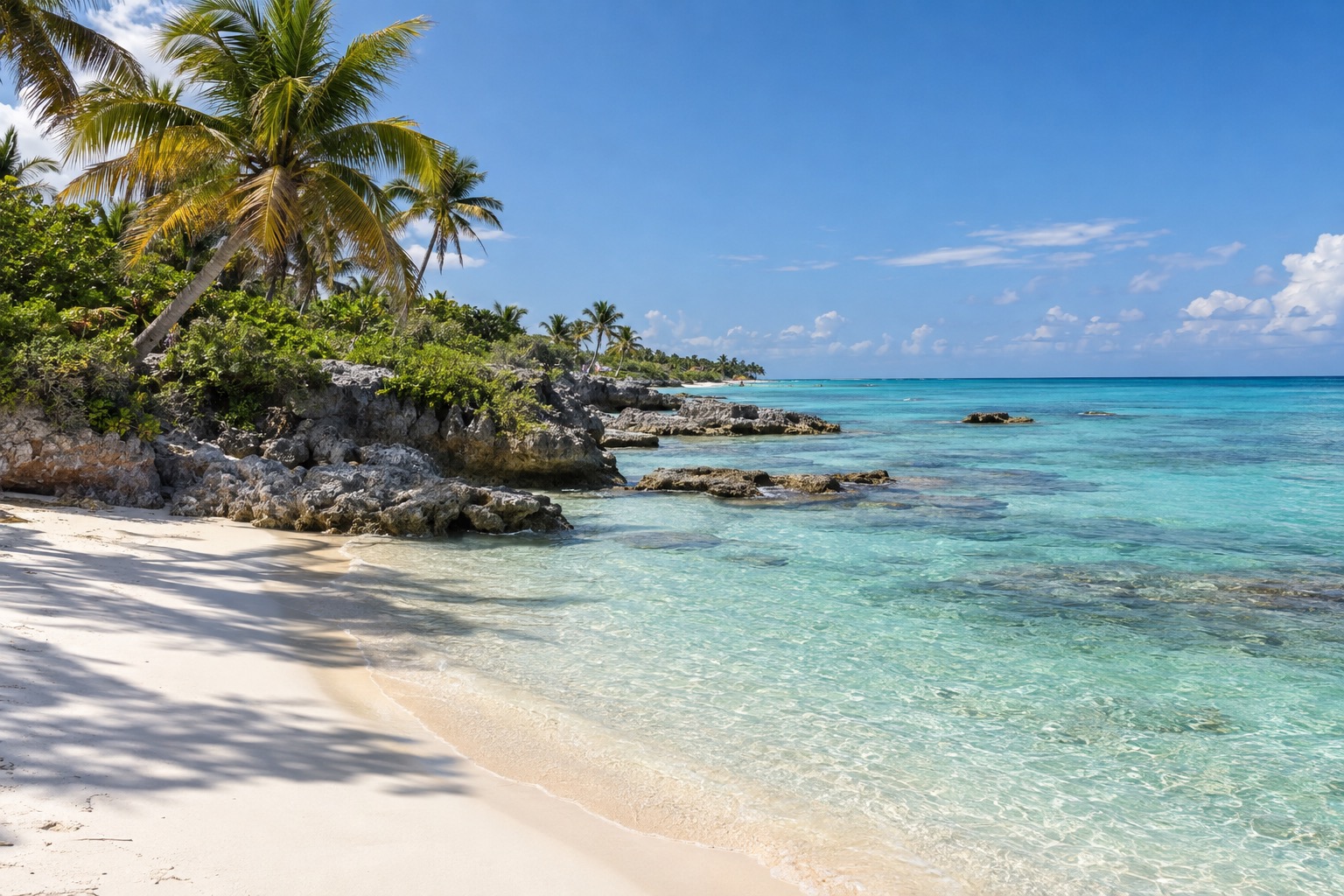
- Swim, snorkel and laze on the white-sand beaches of Quintana Roo.
- Float in a cenote, one of the limestone sinkholes of the Yucatán.
- Watch whales: gray whales in Baja lagoons in winter, humpbacks off Los Cabos and Puerto Vallarta, whale sharks in summer.
- See the Day of the Dead in Oaxaca, Pátzcuaro or Mexico City.
- Eat your way through markets, taquerías and street stalls.
- See the monarch butterflies wintering in the central mountains.
Sights and landmarks in Mexico
Mexico’s landmarks are spread across very different landscapes, from Maya stone cities on the Caribbean side to colonial plazas in the cool highlands.
Mexico City
The capital is built on the bones of the Aztec city, and the Zócalo, one of the largest public squares in the world, still anchors it, with the cathedral on one side and the National Palace on another. Around it, streets run toward markets, murals and museums, and you could spend a week without repeating yourself.
Beyond the center, leafy neighborhoods such as Coyoacán and Roma suit slow afternoons of cafés, bookshops and parks. The city sits high in the mountains, so evenings turn cool and a sweater is useful, and the rainy afternoons of summer often arrive as sudden downpours. It rewards travelers who like to walk, eat and visit museums.
Oaxaca
Oaxaca is a city of green-stone churches, courtyards with bougainvillea and a market culture that is among the richest in the country. Mornings start with chocolate and pan de yema, afternoons drift between craft shops, and the zócalo fills at dusk with music and balloon sellers.
Nearby villages specialize in weaving, black pottery and mezcal, and the city is a favorite base for Day of the Dead, when comparsas, or costumed processions, wind through the streets. Days are warm and nights cool, which suits long walks.
Tulum and Chichén Itzá
Tulum is a walled Maya port perched above a turquoise sea, small enough to see in a morning and photogenic from every angle. Chichén Itzá, inland in Yucatán, is the grander stage, with the stepped pyramid of Kukulcán at its heart and a huge ball court nearby.
Both are hot and exposed, so go early or late in the day and bring a hat and water. Tulum pairs naturally with a beach afternoon, while Chichén Itzá is often combined with a cenote swim on the way back. Other colonial cities, Guadalajara with its mariachi and tequila heritage and San Miguel de Allende with its pink Gothic-style parish church, make good extra stops for architecture and food lovers.
Beaches and outdoor things to do in Mexico
Mexico’s best beaches are on the Caribbean coast of Quintana Roo, with white sand and warm water, while the Pacific side is wilder and often rougher.
The Caribbean coast
Cancún, Cozumel, Playa del Carmen, Tulum and Isla Mujeres all have sand as fine as powder and water you can see through, yet each one has a mood all its own. Cancún is the big resort strip, Playa del Carmen is walkable with a lively pedestrian street, Tulum is barefoot and bohemian, and Isla Mujeres is the easygoing island you reach by boat.
Cozumel is known for diving and snorkeling along its reefs, and the mainland coast hides cenotes where you float in clear freshwater under rock ceilings. On the Caribbean side, whale shark tours leave from Holbox, Isla Mujeres and Cancún, with swimmers entering the water beside the shark with a guide and never touching it. The Caribbean follows the Atlantic hurricane season, and sargassum seaweed can pile up on some beaches at times.
Los Cabos and Baja
At the tip of Baja California, desert meets the sea in a landscape of cactus, cliffs and rock formations. With nightlife and boat rides to its famous arch, Cabo San Lucas is the energetic end, while San José del Cabo is calmer, built around an art-gallery center.
A lot of the beaches here that face the Pacific are too rough for swimming, so keep an eye on the beach flags and pick the calmer coves. Between mid-December and the end of April, gray whales return to the lagoons at Ojo de Liebre and San Ignacio to breed and calve, while in winter, off Los Cabos, humpbacks are viewed from tour boats. Whale sharks appear in the Bahía de los Ángeles from June to December.
Puerto Vallarta and Riviera Nayarit
Jungle hills rise behind Puerto Vallarta, while the city curves around the Bay of Banderas and holds a cobbled old town plus a seafront promenade adorned with sculptures. Nearby beach towns such as Sayulita and Punta Mita have surf, small cafés and a laid-back feel.
Humpback whales are watched from boats in the bay in winter. The Pacific hurricane season has its own calendar, and summer here brings heavy, steamy rains.
Day trips from Mexico
The classic day trips from Mexico follow its regions: ruins and cenotes from the Caribbean coast, mountains and butterflies from the capital, islands from the beach towns.
Chichén Itzá from the Caribbean coast
Tour buses leave from Cancún and Playa del Carmen for the pyramid of Kukulcán, and the day is long but rewarding. You walk the plaza, the ball court and the sacred cenote area, then usually stop at a cenote for a swim and a buffet lunch.
It suits travelers who want one great ruin without changing hotels. Arrive early to beat the heat and the biggest groups, and wear sunscreen and a hat.
Isla Mujeres and Holbox by boat
Boats cross from the Cancún area to Isla Mujeres, where you can rent a bike or cart around, snorkel and eat grilled fish on the sand. Holbox, a car-free island with sandy streets, is the quieter choice for a slower day and sunsets.
Both suit beach lovers and families, and the whale shark season brings boat trips from these shores. Go with sun protection and plan to be back before dark.
Monarch butterflies from Mexico City
In winter, millions of monarchs cluster on fir trees in the mountains west of the capital. Each season, four sanctuaries open their gates: in Michoacán, El Rosario, Senguio and Sierra Chincua, plus Piedra Herrada in the State of Mexico, and they welcome visitors from mid-November through March, every day between 8 a.m. and 5 p.m.
The U.S. government rates Michoacán Level 4, Do Not Travel, and names parts of the Monarch Butterfly Reserve there among the areas its employees may not enter. Piedra Herrada, in the State of Mexico, sits in a Level 2 state, which is why many travelers look there. The walk is uphill at altitude, so go slowly and dress in layers. From the highlands, other popular outings include the pyramids of Teotihuacán near Mexico City and the mezcal villages and ruins around Oaxaca.
What to eat in Mexico
Eating in Mexico starts with the taco, but it goes much further: every region has its own table. Mexico City is the place for tacos al pastor, shaved from a spit with pineapple, plus tamales, quesadillas and tortas. Oaxaca is known for its seven moles, tlayudas (big crisp tortillas with beans and cheese), quesillo and chapulines. In Yucatán, cochinita pibil, slow-roasted pork in achiote, and sopa de lima are the stars, while the coasts serve ceviche, shrimp tacos and whole grilled fish.
Markets are the best classrooms, with stalls of fresh juices, tamales, barbacoa and mole by the ladle. Drinks run from horchata and agua de jamaica to mezcal, tequila and a cold michelada. Around Day of the Dead, pan de muerto and sugar skulls fill the bakeries.
Things to do in Mexico at night
Evenings in Mexico revolve around the plaza, the table and the music. In the colonial cities, families, vendors and mariachi bands fill the main square, and taco stands and street carts stay busy late. Mexico City has everything from mezcalerías and cantinas to live music and theater, while Guadalajara is the home of mariachi. Cabo San Lucas is the nightlife hub of Baja, and Playa del Carmen has beach clubs and bars along its main walking street.
For a quieter evening, try a sunset on the Puerto Vallarta seafront, a seafood dinner on the sand in Isla Mujeres, or a slow stroll around Oaxaca’s zócalo. On Day of the Dead, cemeteries fill with families at night, and visitors are welcome as long as they stay respectful.
Things to do in Mexico with kids
Children usually enjoy Mexico for its animals, boats and beaches, and for the food, which is easy to share. On the Caribbean coast, snorkeling in shallow reefs, boat rides to Isla Mujeres and cenotes with clear water keep them busy, and ruins like Tulum feel like an adventure. Mexico City has Chapultepec Park with its zoo and lake, plus interactive museums, and the floating gardens of Xochimilco offer a colorful boat ride. Whale watching in season is a highlight for older kids.
Keep in mind the strong sun, the heat at ruins and the waves on Pacific beaches, where the flags matter. In Mexico City and the highlands, altitude can tire little ones in the first days, so keep plans light.
Good to know before you go
Mexico is large, so most travelers fly between regions and then use taxis, ride apps, buses or tours locally. The advisory varies by state, so check the level for each place you plan to visit, and remember the Caribbean and Gulf follow the Atlantic hurricane season while the Pacific coast has its own, which starts in mid-May. Sargassum can affect some Caribbean beaches.
Sources
- CONANP (Comision Nacional de Areas Naturales Protegidas), "Inicia la temporada de avistamiento de ballena gris en la Reserva de la Biosfera El Vizcaino", gob.mx/conanp, checked September 29, 2026 (window confirmed over several seasons, including the 2025-2026 announcement)
- CONANP (Comision Nacional de Areas Naturales Protegidas), "Inicia la temporada de tiburon ballena en la Reserva de la Biosfera Bahia de los Angeles", gob.mx/conanp, checked September 29, 2026
- CONANP (Comision Nacional de Areas Naturales Protegidas), "Inicia la temporada de visitacion a los santuarios de Mariposa Monarca, periodo 2024-2025", gob.mx/conanp, checked September 29, 2026
- UNESCO, "Indigenous festivity dedicated to the dead", ich.unesco.org, checked September 29, 2026
- Servicio Meteorologico Nacional (CONAGUA), normales climatologicas 1991-2020, estacion 23155 (Cancun, Benito Juárez), checked September 29, 2026
- Open-Meteo Marine API, average 2015-2024, checked September 8, 2026
- Servicio Meteorologico Nacional (CONAGUA), normales climatologicas 1991-2020, estacion 09048 (Tacubaya Central (Obs), Miguel Hidalgo), checked September 29, 2026
- Servicio Meteorologico Nacional (CONAGUA), normales climatologicas 1991-2020, estacion 03005 (Cabo San Lucas, Los Cabos), checked September 29, 2026
- Servicio Meteorologico Nacional (CONAGUA), normales climatologicas 1991-2020, estacion 14339 (El Cuale, Puerto Vallarta), checked September 29, 2026
- Servicio Meteorologico Nacional (CONAGUA), normales climatologicas 1991-2020, estacion 20079 (Oaxaca, Oaxaca De Juárez), checked September 29, 2026
- U.S. Department of State, Mexico Travel Advisory (main, level banner), travel.state.gov, read live via browser (protected by Cloudflare, direct fetching blocked with 403) on 29 September 2026
- U.S. Department of State, Mexico Travel Advisory, section "Risks in specific areas" / State of Guerrero, travel.state.gov, read live via browser on September 29, 2026
- U.S. Department of State, Mexico Travel Advisory, section "Risks in specific areas" / State of Baja California, travel.state.gov, read live via browser on September 29, 2026
- U.S. Department of State, Mexico Travel Advisory, section "Risks in specific areas" / State of Baja California Sur, travel.state.gov, read live via browser on September 29, 2026
- U.S. Department of State, Mexico Travel Advisory, section "Risks in specific areas" / State of Sonora, travel.state.gov, read live via browser on September 29, 2026
- U.S. Department of State, Mexico Travel Advisory, section "Risks in specific areas" / State of Michoacan, travel.state.gov, read live via browser on September 29, 2026
- U.S. Department of State, Mexico Travel Advisory, section "Risks in specific areas" / State of Quintana Roo, travel.state.gov, read live via browser on September 29, 2026
- U.S. Department of State, Mexico Travel Advisory, section "Risks in specific areas" / State of Mexico (Estado de Mexico), travel.state.gov, read live via browser on September 29, 2026
- U.S. Department of State, Mexico Travel Advisory (reissued May 29, 2026), section « Risks in specific areas », travel.state.gov/en/international-travel/travel-advisories/mexico.html, read via browser (Cloudflare blocks curl) on 29 September 2026
To plan your stay
- Best Time to Visit Mexico: Weather by Region, Crowds, Hurricane Season and Festivals
- Where to Stay in Mexico: Riviera Maya, Los Cabos, Puerto Vallarta, Mexico City and All-Inclusive Areas
- Getting Around Mexico: Buses, the Tren Maya, Taxis and Driving Your Own Car
- Mexico Travel Tips: Dollars, Tourist Tax, Tipping, Tap Water, Driving and Safety by State