
Around sunset in Loreto, fishermen hose down their boats at the waterfront, couples drift along the malecón, and the smell of grilled fish and fresh tortillas rises from the side streets. Behind the town the Sierra de la Giganta turns copper in the last light. Loreto is a laid-back corner of Baja California Sur for travelers who want a quiet sea, a town they can cross on foot and very little hurry.
Where is Loreto and what is it like?
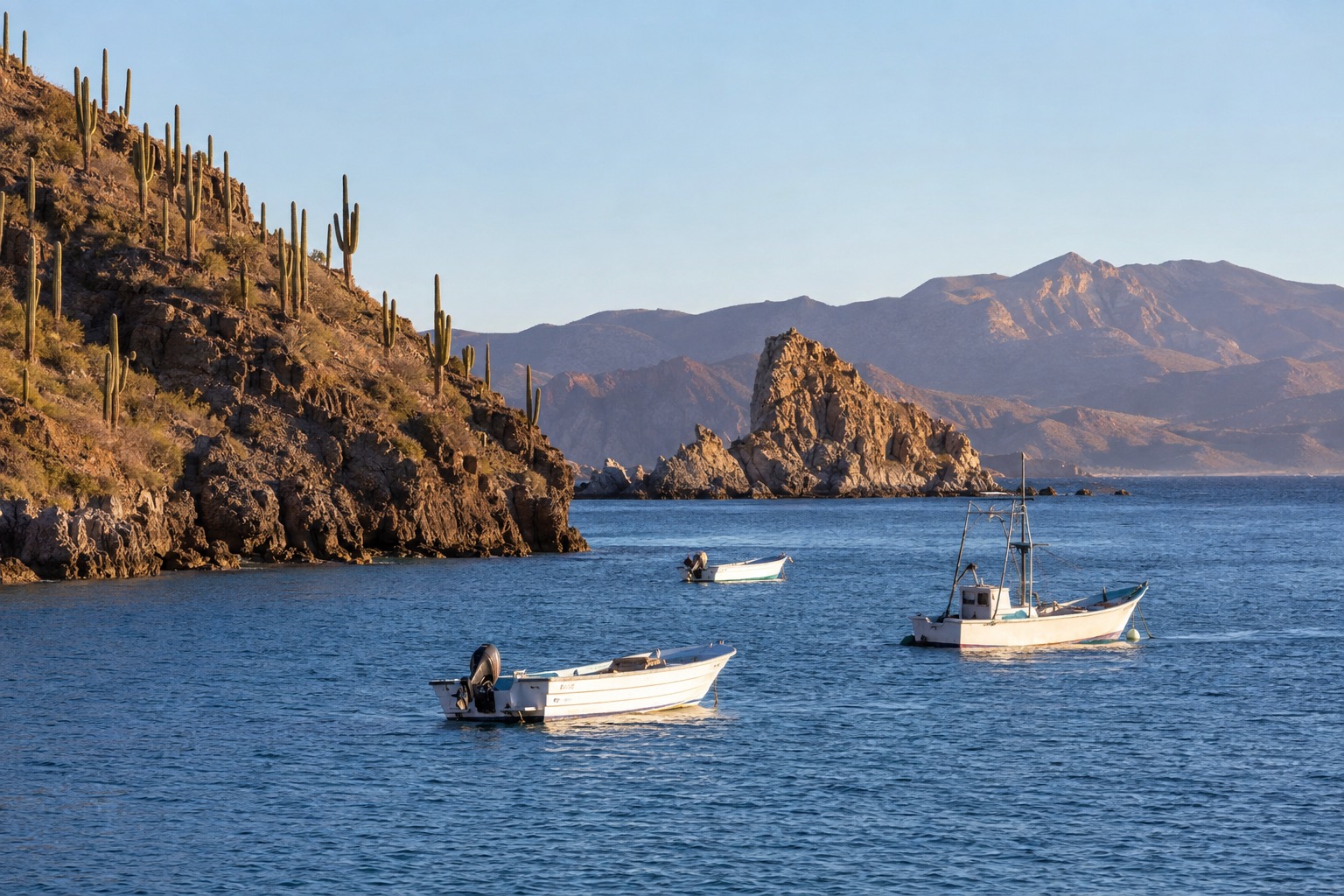
Loreto sits on the Sea of Cortez side of the Baja California peninsula, in Baja California Sur, squeezed between the gulf and a wall of dry mountains. It is a small coastal town rather than a resort city, with a colonial-flavored center, a working waterfront and a few quiet resort pockets spread to the south.
The pace is slow. Streets stay mostly quiet except around the plaza and the malecón, where evenings get livelier on weekends and during festivals. The town beach is narrow and pebbly, so the sea is something you go out on rather than lie beside. That suits anglers, kayakers, couples and families who like to be on the water by morning.
If you want big nightlife, wide sandy beaches in front of your hotel or a long list of shopping, Loreto may feel too modest. If you want elbow room and a sea full of islands, that modesty is the appeal.
What is there to do in Loreto?
The big reasons to come are the water, the mission, the town’s easy rhythm and the chance to settle into a quiet stretch of coast. What sets Loreto apart from its Baja neighbors is how close protected sea and old history sit to each other, all within a walkable town.
The bay and its islands
Established by decree in 1996, Bahía de Loreto National Park takes in an enormous expanse of sea plus five islands, and it forms part of the UNESCO World Heritage Site encompassing the Gulf of California’s islands and protected areas. This is the main draw: boat trips leave from the waterfront, and the marina at Puerto Escondido to the south gives access to the same islands.
Out on the water you can look for sea life, drift past rocky island shores and stop for snorkeling or a seafood lunch. It suits nearly everyone, from families to couples, and mornings are usually the most pleasant time to go out.
The mission and the old center
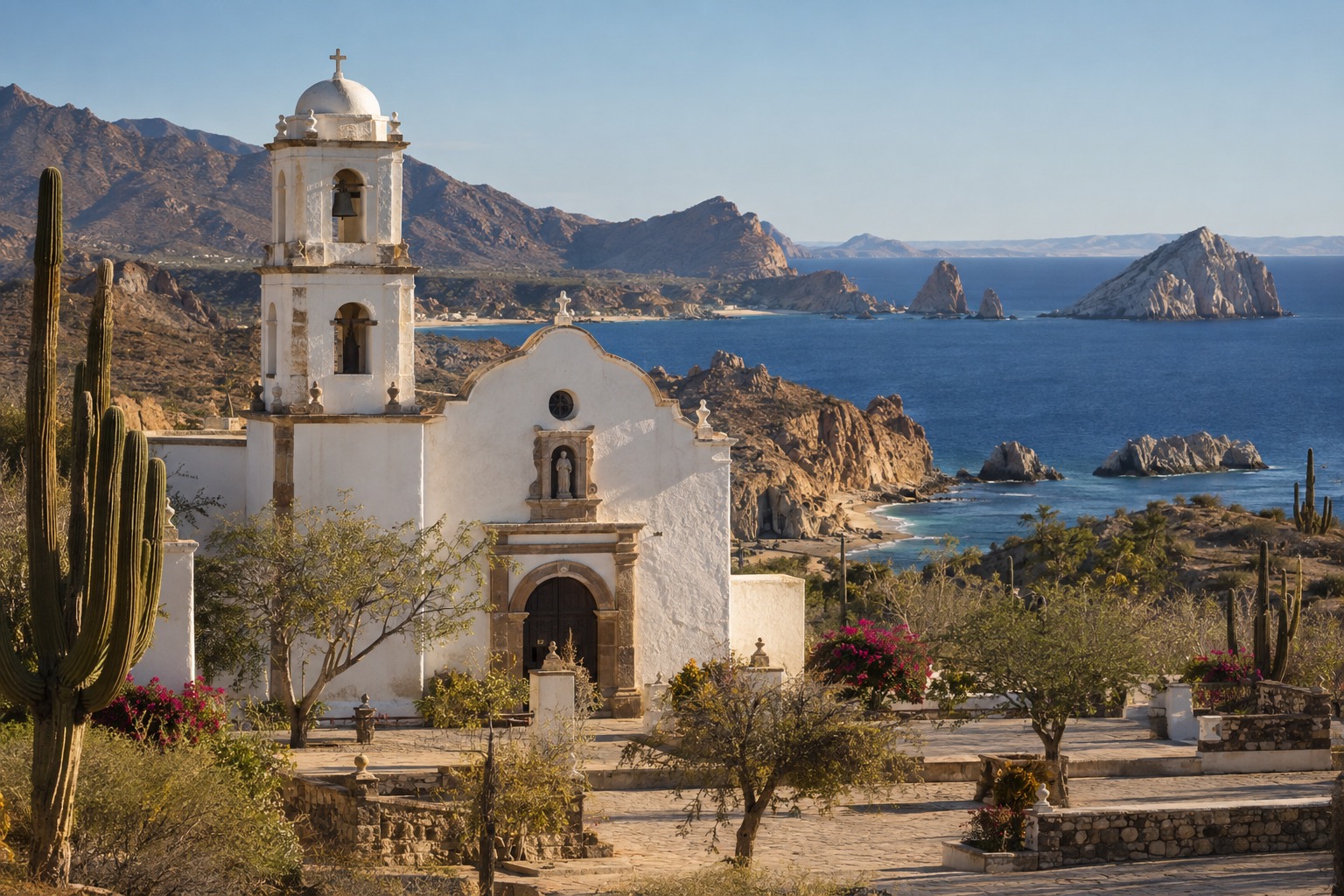
The mission church anchors the center. Founded in 1697, it was the first permanent mission in the Californias, which explains why a town this small carries so much weight in the peninsula’s story. Around it, the plaza, shady benches and cafés make an easy loop on foot.
Plan a slow wander rather than a checklist. Late afternoon, when the stone warms and the plaza fills with families, is a lovely time to sit with a cold drink and watch the town settle in.
The malecón and the table
The waterfront path along the Sea of Cortez is where Loreto strolls, jogs and watches boats. Restaurants nearby serve the local catch, grilled or in tacos and ceviche, and the walk back after dinner is half the pleasure.
South of town, the Nopoló area adds a sandy beach and a golf course for those who want a calmer, resort-style day. The sea there is generally calm and swimmable, though stingrays can be present.
How many days do you need in Loreto?
Three to four days is a comfortable stay, and a week suits anyone who wants to slow down properly.
A short stay fits a boat trip to the islands, an afternoon around the mission and plaza, and a couple of dinners on the malecón. It is enough to feel the town without rushing.
With more time, add a second day on the water, a beach day at Nopoló and a drive south to the quiet harbor of Puerto Escondido, where the setting is remote and the boats outnumber the people. Longer stays also leave room for doing nothing, which is a fair way to spend a week here.
Where to stay in Loreto
The historic center has small boutique hotels, family-run guesthouses and rental apartments, with no big all-inclusive resorts. It suits budget travelers, couples and anyone who wants to walk to restaurants, shops and boat tours without a car. Weekend evenings and festivals can be lively, so a hotel a few blocks from the plaza is the better pick for light sleepers.
Nopoló, south of town, is a planned, low-rise community of villas, condos and a few resort-style hotels, some with optional all-inclusive plans. It suits families, couples and long stays built around golf and relaxation. Puerto Escondido is more secluded still, with a few small inns, casitas and rentals near the marina, best for boaters and people who want real seclusion.
How do you get to Loreto and get around?
Most visitors fly into Loreto International Airport, a short ride south of town, which handles a modest number of passengers and keeps arrivals simple.
In the center you can do almost everything on foot, from the plaza to the malecón and the boat departures. Nopoló is spread out, so you need a rental car or a taxi, though some resorts run a shuttle into town. Puerto Escondido has little or no public transportation, so arrange your own car or a taxi from town or the airport.
Rental cars can run short in high season, so reserve ahead if you plan to stay outside the center. Before heading to Puerto Escondido, stock up on groceries and cash in Loreto, since services there are scarce.
When is the best time to visit Loreto?
The cooler months, roughly late fall through spring, are the natural choice for time on the water and long walks, and they are also when rental cars and rooms get tighter.
Summer on the Sea of Cortez is hot, and the eastern Pacific hurricane season, which governs the Gulf of California, officially runs from May 15 to November 30. Early autumn falls inside it, so keep an eye on forecasts if you travel then.
Festivals bring the town out into the plaza and fill the center with music and food. Around the anniversary of the mission’s founding in late October, the old town feels especially lively.
Good to know before you go
Pesos are handy for small restaurants and taxis, and it is smart to carry some cash since services outside town are thin. Use the usual city habits with valuables and at night. The hurricane season runs through the end of November, so autumn trips deserve a glance at the forecast.
| Fee | Amount | Who pays |
|---|---|---|
| Lodging tax (Baja California Sur) | 4% | Guests, added to the lodging bill |
Sources
- CONANP, "Aviso" and documents of Parque Nacional Bahia de Loreto, conanp.gob.mx (pdf/aviso_loreto), checked September 29, 2026
- Centro INAH Baja California Sur (official Facebook) and Secretaria de Turismo y Economia de l'Etat de BCS (setuesbcs.gob.mx, "Mision de Nuestra Senora de Loreto Conchó"), checked September 29, 2026
- Aeropuertos y Servicios Auxiliares (ASA), official press releases (gob.mx/asa/prensa) on the growth in traffic at Loreto airport, read on 29 September 2026
- Ley de Hacienda del Estado de Baja California Sur, art. 13 (mirror Secretaria de la Contraloria y Transparencia Gubernamental de BCS, contraloria.bcs.gob.mx); 2026 rate confirmed by El Contribuyente, ISH 2026 table, elcontribuyente.mx, read on September 29, 2026
- U.S. Department of State, Mexico Travel Advisory (reissued May 29, 2026), section "Risks in specific areas" / State of Baja California Sur, travel.state.gov, read live via browser on 29 September 2026
- NOAA National Hurricane Center, official Eastern Pacific season (nhc.noaa.gov), checked October 5, 2026