
Picture a table set on the sand at dusk, a mezcal cocktail sweating beside the candle, and the last light turning the water from turquoise to copper. That scene plays out all along Mexico’s coasts, from the Caribbean to the Pacific, and each shore gives it a different mood. This is Mexico for newlyweds: where to stay, when the weather suits you, and how to choose between the big resort names.
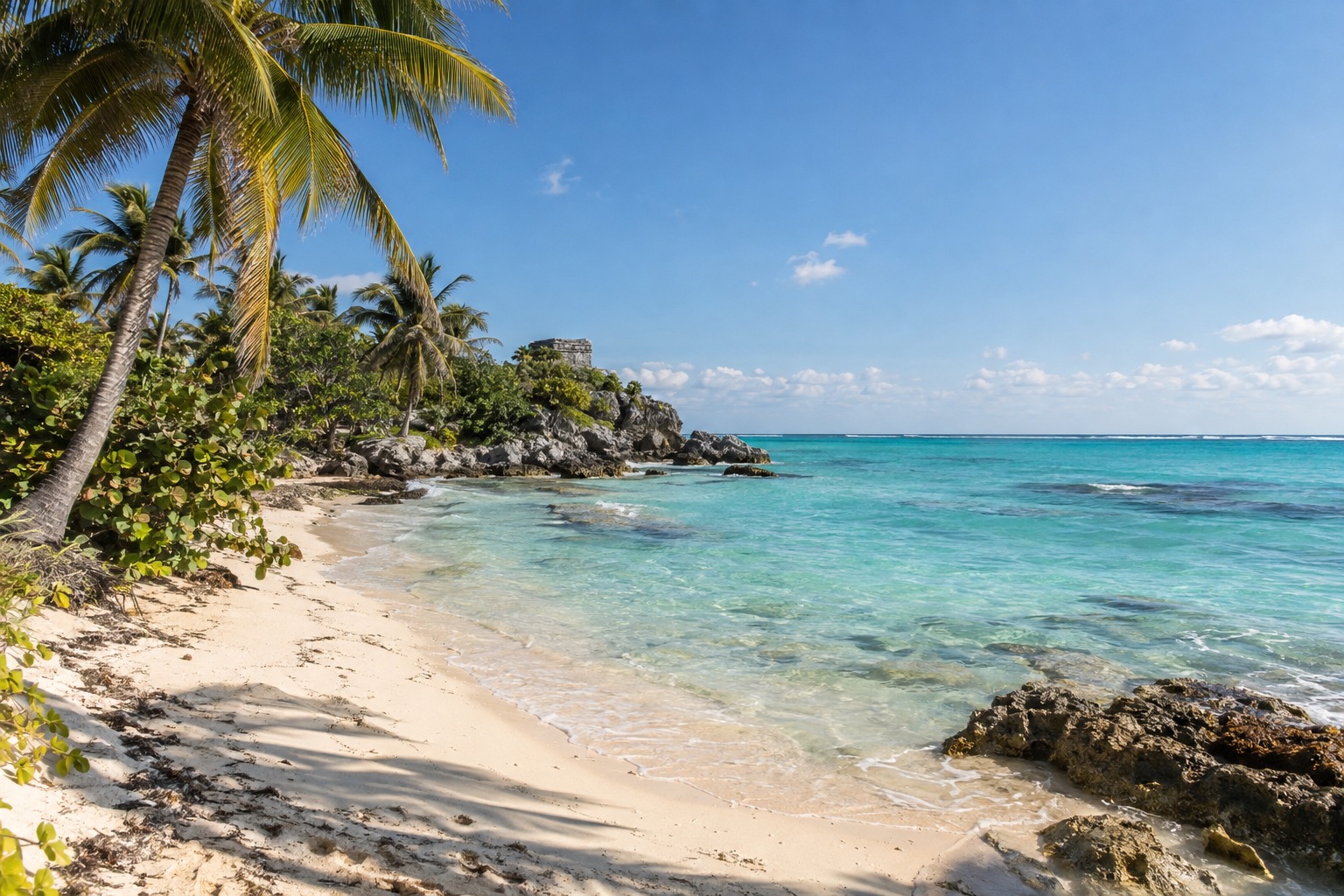
Best places in Mexico for a honeymoon
The best place depends on the honeymoon you imagine, and Mexico offers three clear versions: the Caribbean coast, Los Cabos and the Pacific jungle coast around Puerto Vallarta. Each has resorts built for couples, and the differences come down to scenery and pace.
The Caribbean coast: turquoise water and cenotes
This is the classic picture-postcard choice. The water is warm and brilliantly colored, the sand is pale, and adults-only resorts are common from Cancun through the Riviera Maya. Days can mix lazy beach hours with a swim in a cenote, those freshwater sinkholes set in the jungle, if you go with an operator that runs them.
Couples who find big resorts too busy often head for Tulum or Holbox instead. Both lean toward small boutique hotels, with barefoot dinners, hammocks and a slower rhythm. Sargassum seaweed can wash up along this coast, so the beach you imagined is not always the beach you get on a given week.
Los Cabos: desert, sunsets and luxury
At the tip of Baja California, the desert runs straight into the sea. Cabo is about cliffs, golden sunsets, rooftop bars and polished luxury resorts, with a drier, more dramatic landscape than anywhere on the Caribbean side. It suits couples who want glamour, good restaurants and the feel of a getaway rather than a jungle retreat.
Beaches here are often more about the view than the swim, since surf can be strong on the open Pacific side. Look at the beach flags before you wade in. The Atlantic sargassum belt does not reach Los Cabos, which is one thing less to think about.
Puerto Vallarta and the Pacific jungle coast
Here green mountains tumble down to the bay, and the mood is more Mexican town than resort strip. You can wander cobbled streets, watch the sunset from the seafront, and then settle into a jungle-edged hotel. Riviera Nayarit to the north adds quieter resort stretches.
It is a good middle path for couples who want both a lively evening stroll and a calm beach morning. The Pacific side is also outside the sargassum belt, so the shoreline stays clear of that concern.
Best time for a honeymoon in Mexico
Winter is the easiest time for most couples, with July the season to approach with more care, especially on the Pacific coast. The two months below show the contrast.
| Destination | January high (°F) | January low (°F) | July high (°F) | July low (°F) | Sea in January (°F) | Sea in July (°F) |
|---|---|---|---|---|---|---|
| Cancun | 83.7 | 68.0 | 94.6 | 77.0 | 80.7 | 85.0 |
| Cabo San Lucas | 79.9 | 55.0 | 93.9 | 72.3 | 73.6 | 84.5 |
| Puerto Vallarta | 80.1 | 56.7 | 88.0 | 70.9 | 78.2 | 86.9 |
In January, Cancun is warm enough for the beach all day and for dinner outside at night, though showers pass through on about ten days. Cabo is nearly rain-free but the sea is cooler, and evenings call for a light layer. Puerto Vallarta sits between the two, with pleasant days and some rain.
July is hot everywhere on the coast, and the sea feels like a warm bath. Puerto Vallarta turns very wet, with rain on most days, so expect heavy afternoon downpours. Cancun gets less rain, but sargassum typically peaks around June or July on the Caribbean shore. Cabo stays dry and very hot.
Hurricane seasons also matter when you pick dates. The Caribbean coast follows the Atlantic season, from June 1 to November 30, while the Pacific coast, including Los Cabos and Puerto Vallarta, follows its own, from May 15 to November 30. Winter and early spring fall outside both.
Are all-inclusive resorts good for a honeymoon?
Yes, for many couples they are, because meals, drinks and the logistics are settled once and you simply relax. Usually, your fee includes lodging, food, beverages, and non-motorized water sports, which means you won’t have to pull out your wallet for each sunset cocktail.
Adults-only resorts are common in the Cancun Hotel Zone, the Riviera Maya between Playa del Carmen and Tulum, Los Cabos and Riviera Nayarit north of Puerto Vallarta. That gives you quiet pools, couples’ dinners and an atmosphere pitched to romance.
What changes the experience is the fine print on extras. Spa treatments, premium drinks, excursions and some a la carte restaurants often cost extra, and the list varies from one resort to the next. Couples who like to wander, eat at small local places and explore towns may prefer a boutique hotel in Tulum, Holbox or Puerto Vallarta, then splurge on a few special dinners.
Cabo or Cancun for a honeymoon
Choose Cancun and the Riviera Maya for warm turquoise water and cenotes, and choose Cabo for desert drama, sunsets and a more polished, dressy feel. Cancun is about the water itself: soft sand, shades of blue and a long list of adults-only resorts. The sea there stays warm all year, and it works for couples who want to float, snorkel and unwind. The tradeoff is seaweed on some beaches, particularly in summer.
Cabo is about the setting. Rock arches, golden evenings and luxury resorts give it a more glamorous edge, and winter days are dry with almost no rain. The sea is cooler in January, which makes it better for gazing than long swims, while summer brings very hot days and warm water.
Good to know before you go
Dollars are widely accepted at resorts, but pesos are handy in small towns, markets and boutique hotels. Take the usual care with your belongings and with beach conditions, and check the flags before swimming. If your dates fall between late spring and November, keep an eye on the hurricane forecast for your coast, and travel insurance is worth a look.
Sources
- Servicio Meteorologico Nacional (CONAGUA), normales climatologicas 1991-2020, estacion 23155 (Cancun, Benito Juárez), checked September 29, 2026
- Open-Meteo Marine API, average 2015-2024, checked September 8, 2026
- Servicio Meteorologico Nacional (CONAGUA), normales climatologicas 1991-2020, estacion 09048 (Tacubaya Central (Obs), Miguel Hidalgo), checked September 29, 2026
- Servicio Meteorologico Nacional (CONAGUA), normales climatologicas 1991-2020, estacion 03005 (Cabo San Lucas, Los Cabos), checked September 29, 2026
- Servicio Meteorologico Nacional (CONAGUA), normales climatologicas 1991-2020, estacion 14339 (El Cuale, Puerto Vallarta), checked September 29, 2026
- Servicio Meteorologico Nacional (CONAGUA), normales climatologicas 1991-2020, estacion 20079 (Oaxaca, Oaxaca De Juárez), checked September 29, 2026
- NOAA National Hurricane Center, "Tropical Cyclone Climatology", nhc.noaa.gov, checked September 29, 2026
- University of South Florida, Optical Oceanography Lab, "Sargassum Watch System (SaWS)", optics.marine.usf.edu, checked September 29, 2026
To plan your stay
- Best Time to Visit Mexico: Weather by Region, Crowds, Hurricane Season and Festivals
- Where to Stay in Mexico: Riviera Maya, Los Cabos, Puerto Vallarta, Mexico City and All-Inclusive Areas
- Getting Around Mexico: Buses, the Tren Maya, Taxis and Driving Your Own Car
- Mexico Travel Tips: Dollars, Tourist Tax, Tipping, Tap Water, Driving and Safety by State