
Halfway through the trip, you are standing in a Oaxaca market at mid-morning, tearing a warm tlayuda in half while the smell of chocolate being ground drifts over from the next stall. A few days earlier you were barefoot on Caribbean sand. This route pairs the white beaches of the Yucatán coast with the colonial streets, museums and kitchens of the central highlands, and it suits anyone who wants both the sea and the soul of the country in one vacation.
Is 10 Days enough for Mexico?
Ten days is enough for a first taste of two very different Mexicos, as long as you accept that you will see only a slice of the country. The route here covers the Caribbean coast around Cancún and Tulum, then Mexico City and Oaxaca in the highlands.
It leaves out the Pacific beach towns around Puerto Vallarta, the desert shores of Los Cabos, Guadalajara and San Miguel de Allende. Those belong to another trip, and the distances between regions are the reason: flying is the sensible way to link them, and driving would take days.
The itinerary stage by stage
Days 1 to 3: Cancún and the Riviera Maya coast
Land in Cancún and head south the same day. Playa del Carmen makes an easy base, with a walkable pedestrian avenue, beach clubs and plenty of restaurants for a first dinner of tacos al pastor or fresh ceviche. Spend the first day doing very little: a long swim, a hammock, a cold drink as the light fades over the water.
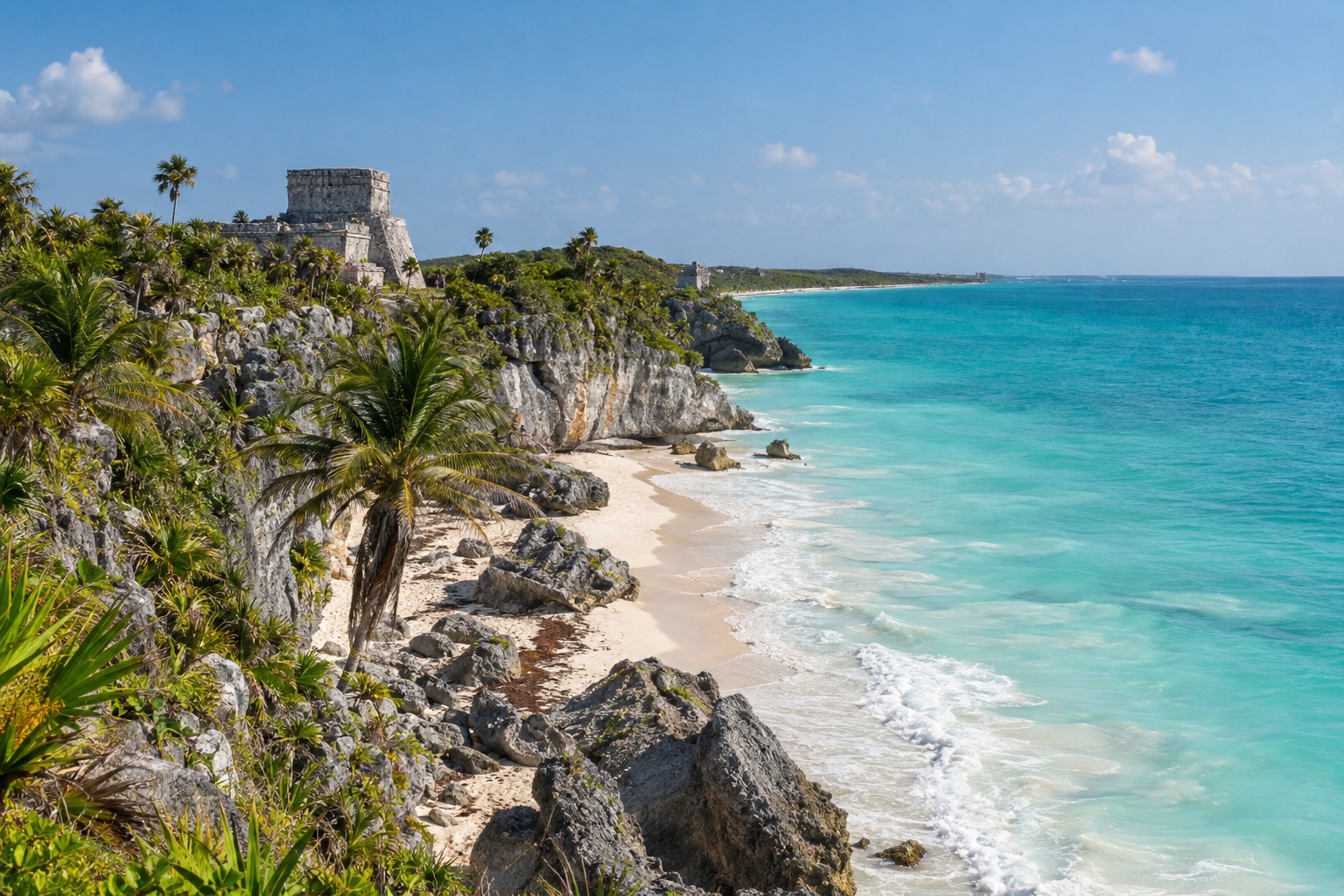
On day two, go on to Tulum. The ruins sit on a low cliff above the turquoise Caribbean, and the setting is the whole point: gray stone temples, iguanas sunning on the walls, a small beach at the foot of the site. Go early, before the heat builds. Afterward, the town and the beach road offer cafés, mezcal bars and a slower pace.
Day three can go to Chichén Itzá, a long outing that suits early risers. The drive from Cancún runs a few hours each way, so you leave at dawn and return in the evening, tired and full of stories about the great pyramid of Kukulcán. Sleep near the coast again before the move to the highlands, which means a flight from Cancún airport to Mexico City.
Days 4 to 7: Mexico City
Mexico City is the shift in gear. You trade sea breeze for cool highland air, and the days fill with museums, markets and street food. Stay in Roma, Condesa or the historic center, neighborhoods where you can walk to breakfast, coffee and a good dinner without a car.
Give one day to the Zócalo, the cathedral and the murals of the old center, and another to the great museums, with the anthropology collection a natural first choice. Teotihuacán, with the Avenue of the Dead running beneath the Pyramid of the Sun, makes a fine half-day outing from the city.
Eat as much as you can: tacos de suadero, tamales for breakfast, a long lunch of mole or pozole, churros dipped in chocolate. Evenings are cool because of the altitude, so a light jacket earns its place in the bag. On day seven, fly or take an overnight bus to Oaxaca.
Days 8 to 10: Oaxaca
Oaxaca is a compact colonial city of stone churches, courtyards and a food culture people cross the country for. Base yourself in the historic center so you can wander on foot between the Santo Domingo church, the craft shops and the markets.
Spend a morning at the Benito Juárez market and the nearby food stalls, where you can try tlayudas, quesillo, chapulines and the region’s famous moles. In the afternoon, sip a mezcal tasting or a cup of hot chocolate whisked until frothy. Nights are cool, and the plazas fill with music and families.
Use the last full day for a slow walk, a cooking class or a last round of shopping for textiles and black pottery. On day ten, you fly out, usually connecting through Mexico City.
Getting between stops
| Leg | How | Time |
|---|---|---|
| Cancún airport to Playa del Carmen | ADO bus | About 1 hour |
| Cancún airport to Tulum | ADO bus | About 2 hours |
| Cancún to Chichén Itzá | Road, each way | About 2.5 to 3 hours |
Between regions, flights do the work: Cancún, Mexico City and Oaxaca are all linked by domestic routes, and many of them pass through Mexico City. Along the Yucatán coast, first-class ADO buses are the everyday choice, and the Tren Maya also links Cancún and Tulum with towns such as Valladolid and Mérida.
Driving from Cancún to Tulum means Federal Highway 307, which is not a toll road, and speed bumps are common on town approaches. The overnight bus from Mexico City to Oaxaca is a cheaper alternative to the flight for those who sleep well on the road.
Adapting the route
With fewer days, drop Oaxaca and spend the extra time in Mexico City, or skip the capital and stay on the Caribbean coast with Cozumel or Isla Mujeres added by ferry. With more days, a beach region such as Puerto Vallarta fits after Mexico City by domestic flight.
Season changes the feel. In July the Yucatán coast is hot and the sea is bathwater-warm, while Mexico City and Oaxaca see rain on most days, usually as afternoon downpours. January is the opposite: drier in the highlands, with cool nights, and pleasant on the coast. The hurricane season on the Caribbean side follows the Atlantic calendar, so travel in summer and early fall with flexible plans.
Families will probably prefer the coast and Mexico City, with shorter hops and fewer one-night stops. A slower trip could trim the Chichén Itzá day and give each city an extra night to wander without a plan.
Good to know before you go
Carry some pesos for markets, buses and small restaurants, and use official taxi booths inside airport terminals when you land. Avoid unnecessary night driving outside cities. Mexico City and Oaxaca sit at altitude, so drink water, pace the first day and keep a layer for the evening.
Sources
- CONANP (Comision Nacional de Areas Naturales Protegidas), "Inicia la temporada de avistamiento de ballena gris en la Reserva de la Biosfera El Vizcaino", gob.mx/conanp, checked September 29, 2026 (window confirmed over several seasons, including the 2025-2026 announcement)
- CONANP (Comision Nacional de Areas Naturales Protegidas), "Inicia la temporada de tiburon ballena en la Reserva de la Biosfera Bahia de los Angeles", gob.mx/conanp, checked September 29, 2026
- CONANP (Comision Nacional de Areas Naturales Protegidas), "Inicia la temporada de visitacion a los santuarios de Mariposa Monarca, periodo 2024-2025", gob.mx/conanp, checked September 29, 2026
- Servicio Meteorologico Nacional (CONAGUA), normales climatologicas 1991-2020, estacion 23155 (Cancun, Benito Juárez), checked September 29, 2026
- Open-Meteo Marine API, average 2015-2024, checked September 8, 2026
- Servicio Meteorologico Nacional (CONAGUA), normales climatologicas 1991-2020, estacion 09048 (Tacubaya Central (Obs), Miguel Hidalgo), checked September 29, 2026
- Servicio Meteorologico Nacional (CONAGUA), normales climatologicas 1991-2020, estacion 03005 (Cabo San Lucas, Los Cabos), checked September 29, 2026
- Servicio Meteorologico Nacional (CONAGUA), normales climatologicas 1991-2020, estacion 14339 (El Cuale, Puerto Vallarta), checked September 29, 2026
- Servicio Meteorologico Nacional (CONAGUA), normales climatologicas 1991-2020, estacion 20079 (Oaxaca, Oaxaca De Juárez), checked September 29, 2026
To plan your stay
- Best Time to Visit Mexico: Weather by Region, Crowds, Hurricane Season and Festivals
- Where to Stay in Mexico: Riviera Maya, Los Cabos, Puerto Vallarta, Mexico City and All-Inclusive Areas
- Getting Around Mexico: Buses, the Tren Maya, Taxis and Driving Your Own Car
- Mexico Travel Tips: Dollars, Tourist Tax, Tipping, Tap Water, Driving and Safety by State