
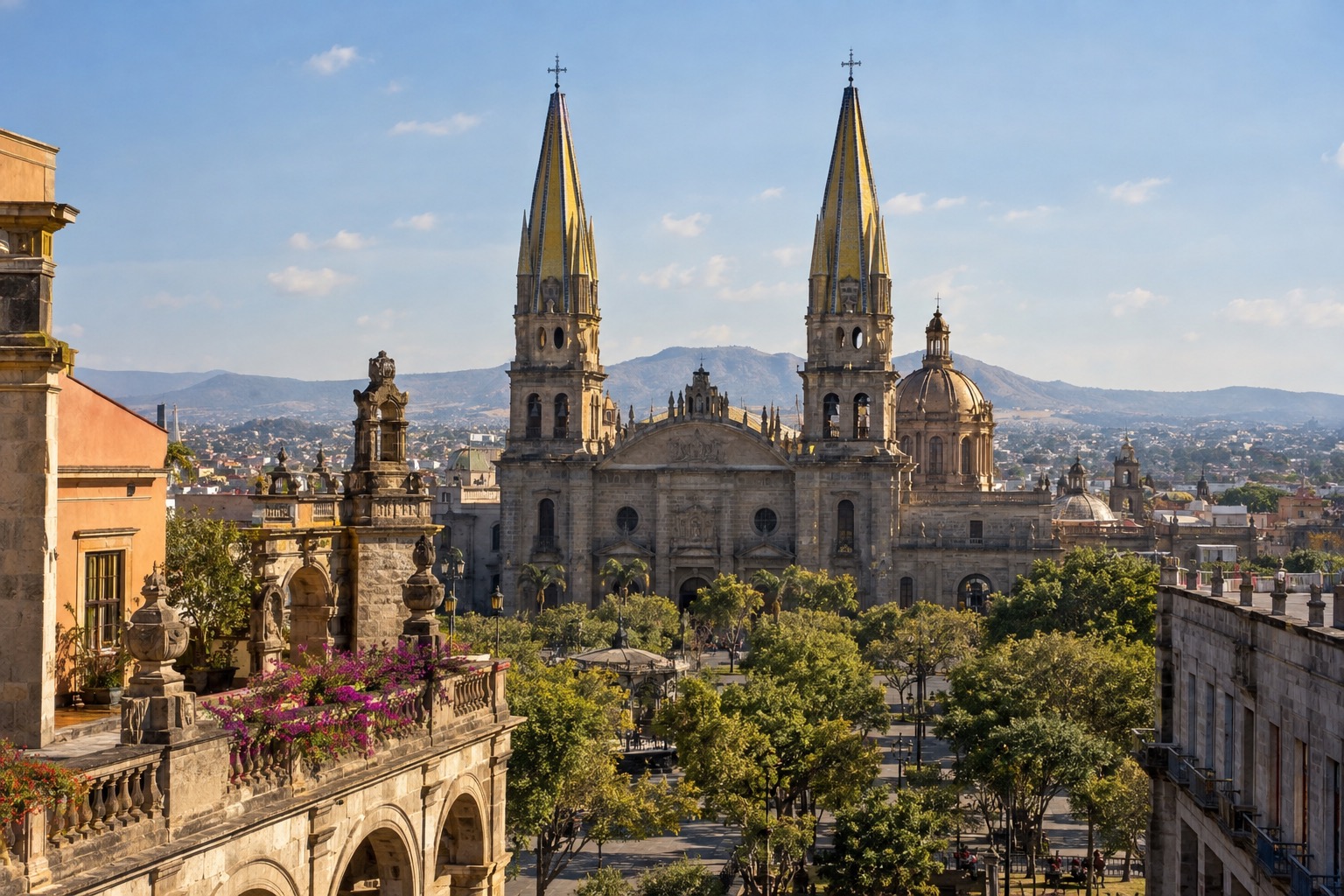
Under the twin yellow spires of the cathedral, the Plaza de Armas fills at dusk with families, shoe-shiners and the sound of a mariachi tuning up somewhere nearby. Guadalajara is the big, easygoing city of Jalisco, the home of mariachi, tequila and tortas ahogadas. It is a place for travelers who like to walk, eat well and spend their days among plazas, markets and craft towns.
Where is Guadalajara and what is it like?
Guadalajara sits inland in the state of Jalisco, in western Mexico, with the agave fields of Tequila to the west and the craft towns of Tlaquepaque and Tonalá just to the south and east of the center. There is no beach here. This is a city of colonial architecture, shaded plazas and pedestrian streets, and it is the main urban base for exploring the region.
The pace is that of a large Mexican city with a strong local identity. Around the cathedral the streets are busy with locals and visitors all day, and the noise is moderate to high. Out in the neighborhoods, the mood softens: tree-lined avenues, café terraces, and bars that stay lively into the night.
Culture lovers, food-focused travelers and anyone who likes a city with real daily life will feel at home. If you are after resorts, a beach or a quiet retreat, Guadalajara will feel like the wrong trip.
What is there to do in Guadalajara?
The big reasons to come are the historic center, the craft towns of Tlaquepaque and Tonalá, the markets, and a day among the distilleries of Tequila. What sets Guadalajara apart from its neighbors is that it is a working city with deep traditions rather than a resort: the culture here is something you walk through, not something staged for you.
The historic center
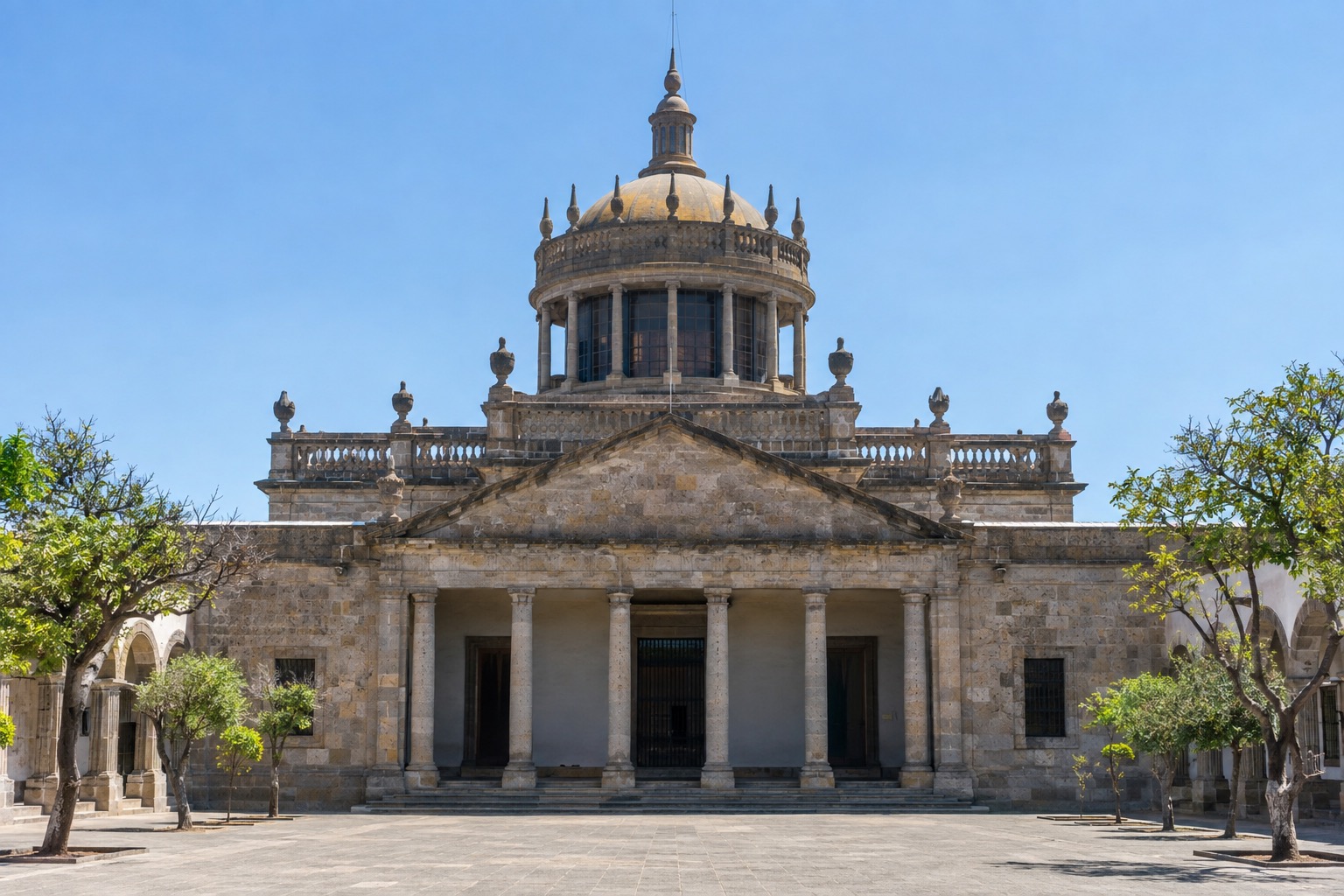
Begin at the cathedral that stands on the Plaza de Armas, whose twin spires are covered in yellow tiles, then walk over to the Teatro Degollado, the historic opera house of the city, which faces it. The Museo Regional de Guadalajara is in the same part of town, and the Plaza Tapatía carries you on foot from the cathedral area past the Rotonda de los Jaliscienses Ilustres toward the Hospicio Cabañas.
The Hospicio Cabañas is a UNESCO World Heritage Site, a Neoclassical complex that now houses the Instituto Cultural Cabañas. The chapel there is home to murals by José Clemente Orozco from the late 1930s, and they draw many visitors. The whole center is easy to cover on foot, and the light rail, buses and taxis fill in any gaps.
| Site | Open | Admission |
|---|---|---|
| Museo Regional de Guadalajara | Tuesday to Sunday, 9 a.m. to 4 p.m. | 210 pesos (105 pesos for Mexican nationals and foreign residents) |
Tlaquepaque and Tonalá
Tlaquepaque is just south of central Guadalajara, about 15 to 25 minutes from the center by car or bus. Its cobblestone streets are lined with galleries, pottery, blown glass and restaurants, and mariachi music drifts out of the plazas. Couples, shoppers and families who like a stroll with atmosphere all enjoy it.
Right next door, Tonalá feels more like a market town where locals work, and it holds a big market for pottery and crafts on Thursdays and Sundays. Go on a weekday or early on a weekend in Tlaquepaque to enjoy the shops and restaurants with fewer people around.
Markets and food
Also called Mercado Libertad, the Mercado San Juan de Dios is a big covered market laid out across multiple levels, where stalls sell food, leather and crafts. Come hungry and wander: this is the place to try the city’s street food in a setting where locals do their own shopping.
Birria, tortas ahogadas and fresh agua de tejuino are the flavors most associated with the city, and you will find them from market counters to neighborhood restaurants. The Colonia Americana, with its cafés and international kitchens, adds a more modern side to the food scene.
Tequila
The town of Tequila lies west of Guadalajara among the agave fields, and it is where the region’s namesake spirit is distilled. Several distilleries can be toured, and you walk through fields of blue agave, see how the hearts are cooked and taste the results.
It makes a full day out from the city and suits anyone curious about how tequila is made. Plan the day around the distillery visits and leave time to wander the town itself.
How many days do you need in Guadalajara?
A long weekend is enough to see the essentials, and a few extra days let the city unfold at its own pace. In a short stay you can cover the cathedral, the Teatro Degollado, the Plaza Tapatía and the Hospicio Cabañas on foot, then spend an afternoon in Tlaquepaque and an evening among the bars and restaurants of Colonia Americana.
With more time, add a day in Tequila, a Thursday or Sunday at the Tonalá market, and slower hours in the Mercado San Juan de Dios. A week gives room for all of it, plus the kind of unplanned café stops and plaza evenings that make the city memorable.
Where to stay in Guadalajara
The historic center suits budget travelers, culture lovers and short stays, since so many sights are within walking distance. It has restored colonial boutique hotels, hostels and guesthouses but no large resorts, and a room facing an interior courtyard keeps street noise away at night.
Colonia Americana, around Avenida Chapultepec, is the choice for younger travelers, couples and foodies who want nightlife, street art and converted early-20th-century houses. A room a block or two off the avenue is quieter.
Tlaquepaque is a charming base for couples and families who like cobblestones, crafts and traditional atmosphere, with boutique hotels and colonial-style guesthouses. Providencia is a calm, residential, tree-lined area for families and longer stays, with apartments and extended-stay suites. Zona Minerva is upscale and car-oriented, with mostly business hotels, and it works for business travelers or couples wanting a central base for a short stay.
How do you get to Guadalajara and get around?
Most visitors arrive at Guadalajara International Airport, which is roughly 20 to 35 minutes by car or taxi from the historic center, depending on traffic. Tlaquepaque is closer to the airport, at about 15 to 25 minutes, while Colonia Americana, Providencia and Zona Minerva are each about 25 to 40 minutes away.
In the historic center and in Tlaquepaque you can do most things on foot, and the center is also served by the light rail, buses and taxis. Taxis and ride-hailing link the neighborhoods, and buses run along main avenues such as Providencia and Terranova. A car is handy in Providencia and Zona Minerva, but weekday rush hours bring heavy traffic around the Minerva roundabout.
When is the best time to visit Guadalajara?
Guadalajara works as a year-round city, since its appeal lies in plazas, markets, museums and restaurants rather than in beach weather. The cobblestone walks and market mornings are pleasant in most months, with summer storms the main weather to plan around.
Festivals add color through the year. Mariachi is part of everyday life in the plazas, and the big craft markets of Tonalá on Thursdays and Sundays give a regular rhythm to the week. For crowds, expect the center to be busiest on weekends and around national holidays, while weekdays are calmer, especially in Tlaquepaque.
Good to know before you go
The U.S. State Department rates the state of Jalisco at Level 3, Reconsider Travel.
Pesos are the currency to carry, especially for markets and small restaurants. As in any big city, use ordinary urban habits, stay aware of your surroundings in crowded areas and in the late-night bar districts, and use taxis or ride-hailing after dark. The Museo Regional charges admission, and the lower rate applies to Mexican nationals and foreign residents.
Sources
- UNESCO World Heritage Centre, Hospicio Cabanas Guadalajara (whc.unesco.org/en/list/815), checked September 29, 2026
- INAH, Museo Regional de Guadalajara (inah.gob.mx/museos/museo-regional-de-guadalajara), checked September 29, 2026
- US Department of State, Mexico Travel Advisory (travel.state.gov), advisory of May 29, 2026, checked September 29, 2026 (date issued May 29, 2026)
All our pages
When to go
- Best Time to Visit Guadalajara: Weather by Month, Rainy Season, Crowds and Festivals
- Guadalajara in January: Rosca de Reyes, Cool Mornings and Sunny Afternoons
- Guadalajara in February: Dry Sunny Days, Charreada Season and Tequila Country Outings
- Guadalajara in March: Spring Blooms, Craft Towns, Tapatío Food and Dry Warm Weather
- Guadalajara in April: Dry Heat, Spring Blooms, Markets and Day Trips
- Guadalajara in May: Dry Heat, Jacaranda Streets, Tejuino and Day Trips
- Guadalajara in June: Rainy-Season Afternoons, Tejuino, Mariachi Plazas and Where to Duck Out of a Storm
- Guadalajara in July: Rainy-Season Afternoons, Street Food and Day Trips
- Guadalajara in August: Rainy-Season Afternoons, Street Food and Day Trips
- Guadalajara in September: Rainy-Season Afternoons, Mariachi Month, Tortas Ahogadas and Plaza Life
- Guadalajara in October: Fiestas de Octubre, Rain's Retreat and Cooler Evenings
- Guadalajara in November: Día de Muertos, Dry Sunny Weather and What to Do
- Guadalajara in December: Posadas, Weather, Food and Things to Do
Things to do
- Things to Do in Guadalajara: Historic Center, Tequila, Tlaquepaque and Tapatío Food
- Day Trips from Guadalajara: Tlaquepaque, Tonalá, Tequila and Lake Chapala
- 3 Days in Guadalajara: Historic Center, Tlaquepaque, Tequila and Where to Stay