
Late in the afternoon, the benches around the Plaza Grande fill up, and the cathedral’s stone front turns the color of honey while vendors pass with balloons and cold drinks. Merida is the white colonial capital of the Yucatan, a city of shaded courtyards, grand avenues and slow evenings. It suits travelers who like to walk, eat well and take in Maya and Spanish history without a beach in sight.
Where is Merida and what is it like?
Merida sits in the northwest of the Yucatan Peninsula, the historical heartland of the Maya civilization, a flat inland city that is the capital of the state of Yucatan. Spanish conquistadors founded it in 1542 on top of the Maya city of T’ho, and you can still feel both layers in the streets, the markets and the food.
It is a big city, with well over a million people in the metropolitan area, yet it moves at an easy pace. Mornings belong to errands and shady cafés, midday is for long lunches, and evenings spill into the parks. Visitors often mention how safe it feels, and the city was certified an International Safe Community by Sweden’s Karolinska Institute in 2015.
There is no beach here, and that is the honest limit. If you want sand and turquoise water as the main event, Merida works as a cultural base rather than a resort. If you want a real city with its own kitchen, music and daily rhythm, it is hard to beat in this part of Mexico.
What is there to do in Merida?
The historic center and the Plaza Grande
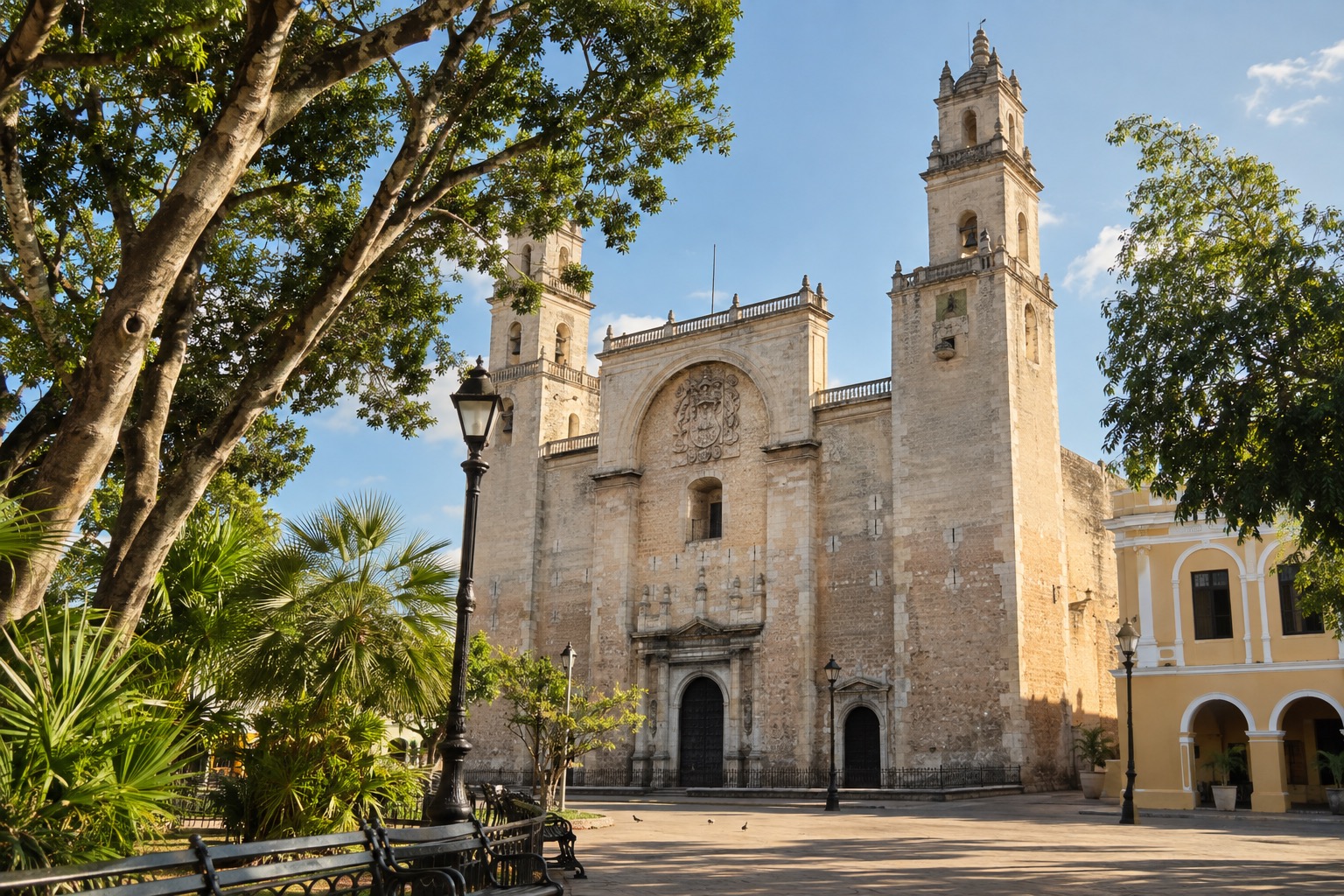
The Centro Histórico is the colonial heart of the city, with narrow streets, colorful façades and lively squares. The Cathedral of San Ildefonso, dating to 1598, was the first cathedral built in continental North America, and it faces the Plaza Grande, where the city gathers to talk, people-watch and listen to music in the evening.
Everything here is made for walking, from churches and museums to markets. The area gets noisy at night because of restaurants, bars and cultural events, so a room on an interior courtyard helps if you like to sleep early. It suits couples and solo travelers especially well.
Paseo de Montejo and the Maya world museum
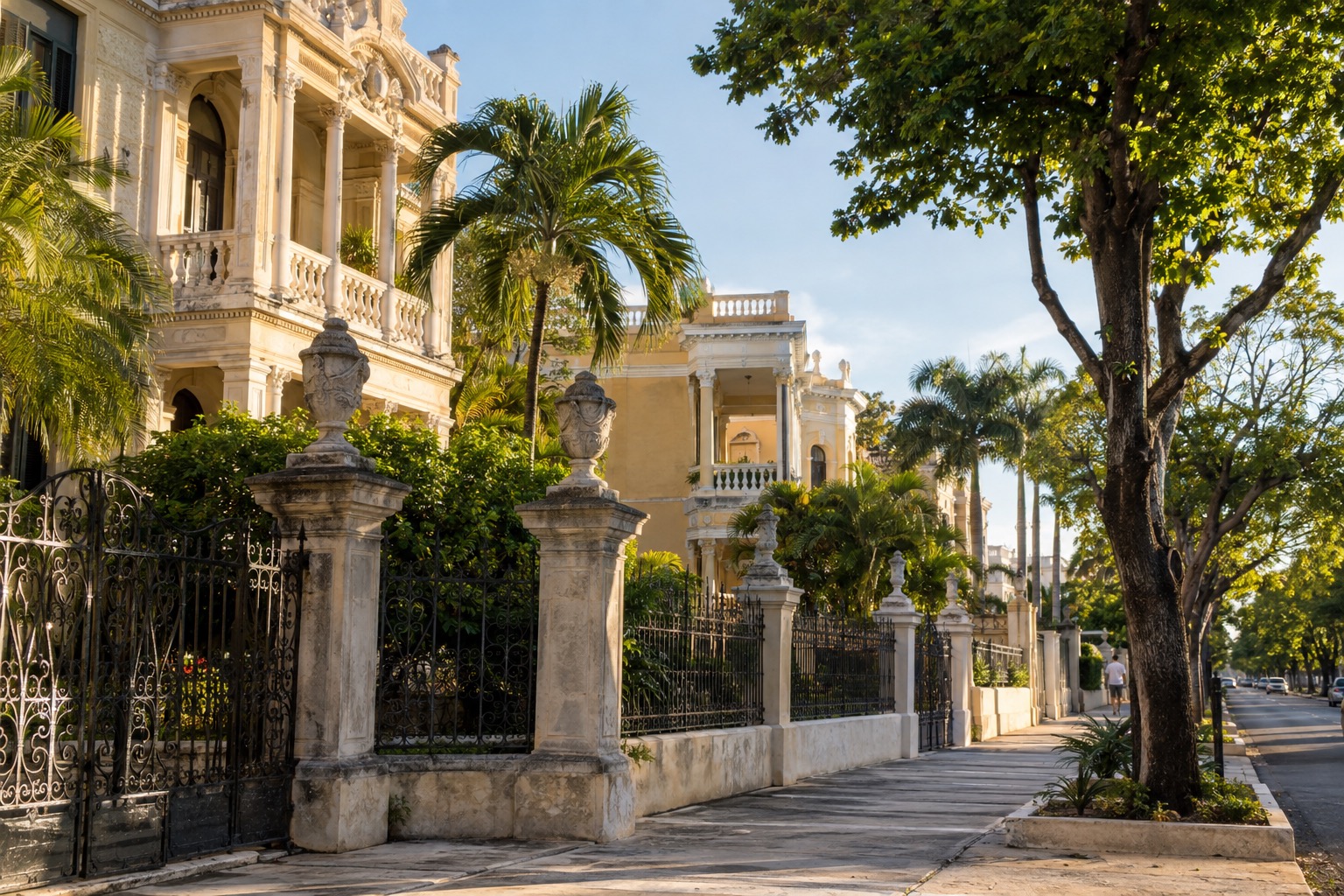
Paseo de Montejo is the city’s signature avenue, a wide, tree-lined boulevard of early 20th-century mansions and original sculpture. Las Casas Gemelas, the Twin Houses, were completed in 1911 and show how much wealth once flowed through the city. The walk is gentle and pleasant, and the avenue has a calm, residential feel with a few quiet restaurants and cafés.
On Sunday mornings the avenue is closed to cars and given over to cyclists and walkers, which is the best moment to see it. A bike path runs along it the rest of the week. The Gran Museo del Mundo Maya adds the deeper story of the people who built this region.
| Site | Open |
|---|---|
| Gran Museo del Mundo Maya | Wednesday to Monday, 9:00 a.m. to 5:00 p.m. (closed Tuesdays) |
Eating in the neighborhoods
Santa Ana is a trendy local neighborhood around a shaded park, with cafés, restaurants and a market. Its market is a good place to taste Yucatecan cooking at modest cost, and the mood stays lively but relaxed through the day and early evening. Food lovers tend to settle in here.
Santiago, around its own park and church, feels more residential and quiet. The park comes alive in the late afternoon, a good time to watch ordinary Merida life go by. What sets Merida apart from the beach towns of the peninsula is exactly this: it is a working, lived-in city with colonial architecture and a deep food culture, not a resort built around the sea.
How many days do you need in Merida?
A long weekend covers the essentials, and a week lets the city sink in. In a short stay you can walk the Plaza Grande and the cathedral, stroll Paseo de Montejo, spend a morning at the Maya world museum and eat your way through a market.
With more time, add slower days in Santa Ana and Santiago, a Sunday on the closed-off avenue, and evenings simply sitting in the parks. Longer stays are a natural fit here, since the city rewards routine, and with extra days you can use Merida as a base for exploring the rest of the Yucatan Peninsula.
Where to stay in Merida
The Centro Histórico is the most convenient base, with boutique hotels in colonial houses, hostels, guesthouses and apartments, and the Plaza Grande just minutes away on foot. Expect some evening noise. Paseo de Montejo is calmer and more upscale, with boutique hotels in old mansions, and it suits couples and business travelers.
Santa Ana appeals to food lovers, solo travelers and remote workers who like an authentic setting, with renovated houses turned into guesthouses and apartments. Santiago is the quiet residential choice, with small hotels and rentals that suit families, moderate budgets and longer stays. Both are a short walk from the historic center.
How do you get to Merida and get around?
Most visitors arrive at Merida International Airport, which lies less than five kilometers southwest of downtown. It is about a 20 to 30 minute drive to the Centro Histórico, Paseo de Montejo, Santa Ana or Santiago.
Once in town, walking is the main way to see the center, and the Plaza Grande is within a few minutes of most lodgings there. Santa Ana and Santiago are a 10 to 15 minute walk from the center, and Paseo de Montejo is about 20 to 25 minutes on foot. Taxis, Uber and local buses fill the gaps, and cycling is easy in Santa Ana and along the avenue.
When is the best time to visit Merida?
Merida is a city to enjoy outdoors in the evenings, and the walkable plazas and avenues make most of the year workable. Because there is no beach to plan around, the choice of month matters less for the sea and more for how comfortable you want your walks to be.
The Atlantic hurricane season runs from June 1 to November 30, with most activity between mid-August and mid-October. Merida sits inland, but it is worth keeping the season in mind when you book, particularly for flights and any trips toward the coast.
Good to know before you go
The U.S. State Department rates the state of Yucatan Level 1, ‘Exercise normal precautions’.
Merida is known as one of Mexico’s calmer cities, and the usual city habits are enough. Taxis and Uber are easy to find, and the airport is close to downtown, which makes arrival simple. A courtyard-facing room helps with noise in the center.
Sources
- Wikipedia, "Merida, Yucatan", en.wikipedia.org, checked September 29, 2026 (source secondaire)
- Gran Museo del Mundo Maya (exploitant), granmuseodelmundomaya.com.mx, checked September 29, 2026
- U.S. Department of State, Bureau of Consular Affairs, Mexico Travel Advisory, travel.state.gov, checked September 29, 2026 (date issued May 29, 2026) (date issued May 29, 2026)
- Wikipedia, "Manuel Crescencio Rejon International Airport", en.wikipedia.org, checked September 29, 2026 (source secondaire, citant les statistiques de la Agencia Federal de Aviacion Civil)
- EBSCO Research Starters (INEGI data), confirmed by Geo-Mexico, checked September 29, 2026
- NOAA National Hurricane Center, checked September 29, 2026
- Office du tourisme du Yucatán
All our pages
When to go
- Best Time to Visit Merida: Cool Dry Winters, Hot Wet Summers, Swimming and Festivals
- Merida in January: Weather, Festivals, Food and Things to Do
- Merida in February: Carnaval, Weather and What to Do
- Merida in March: Equinox at Chichén Itzá, Spring Heat and What to Do
- Merida in April: Heat, Holy Week Traditions and Yucatecan Food
- Merida in May: Heat, First Rains, Mango Season and What to Do
- Merida in June: Rainy-Season Afternoons, Yucatecan Food and Evening Plazas
- Merida in July: Rainy-Season Afternoons, Yucatecan Food and Evenings on the Plazas
- Merida in August: Rainy-Season Afternoons, Yucatecan Food and Evening Strolls
- Merida in September: Rainy-Season Afternoons, Independence Day and What to Do
- Merida in October: Hanal Pixán, Rainy-Season Weather and What to Do
- Merida in November: Día de Muertos, Pleasant Weather and What to Do
- Merida in December: Christmas Posadas, Cool Evenings and What to Do