
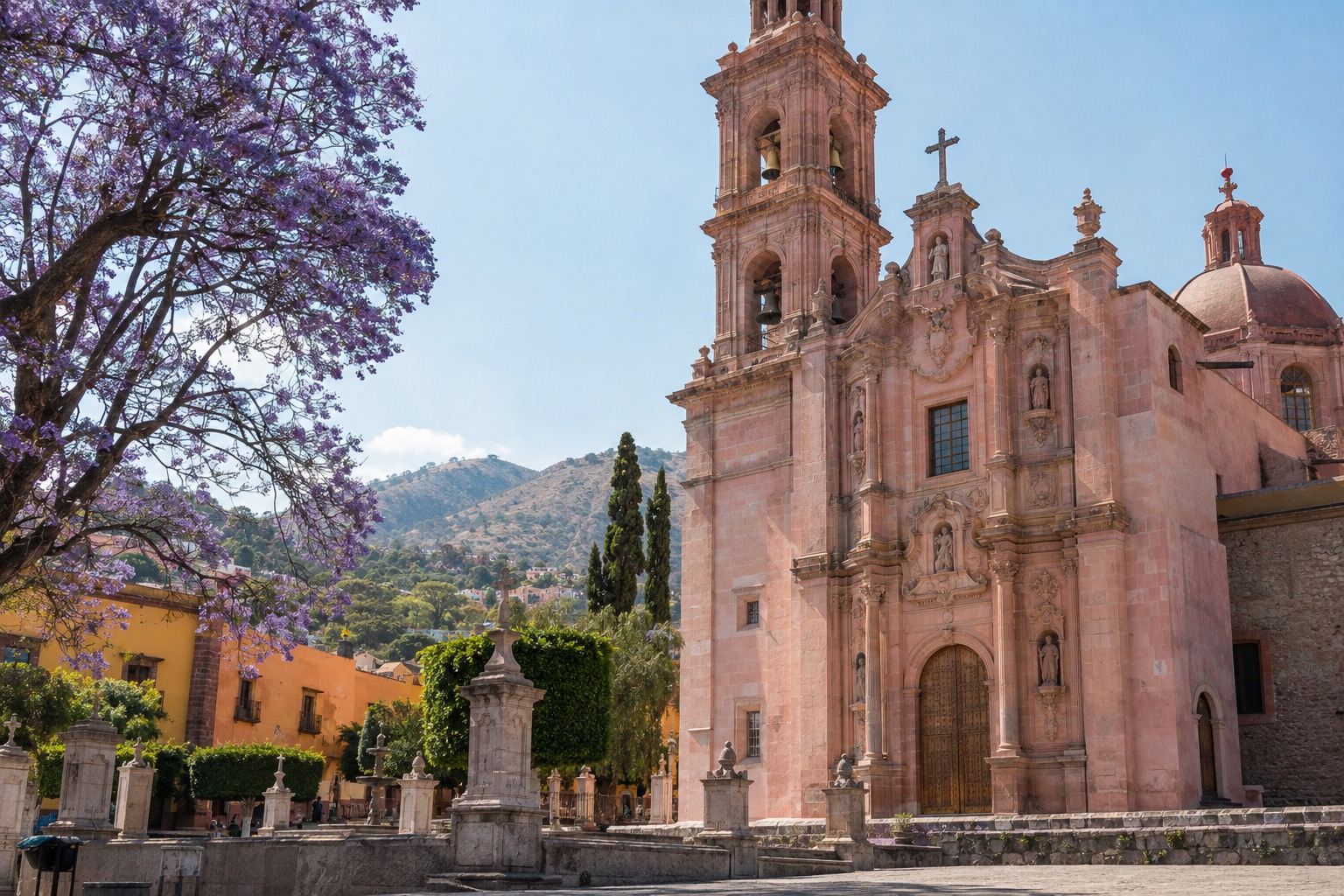
Late in the afternoon the bells of the cathedral ring over the Plaza de Armas, and the pink and grey stone of the old center takes on a warm glow. Families gather on the benches, vendors push carts of fruit with chile, and the evening begins slowly. San Luis Potosi is a colonial city of the Mexican highlands, made for walkers who like museums, plazas and a good table, and for travelers heading on toward the Huasteca.
Where is San Luis Potosi and what is it like?
San Luis Potosi sits on the high plateau of central Mexico, in the state of the same name, with the green and tropical Huasteca region spreading out to the east. It is a working city with a handsome colonial heart, more a place for strolling than a resort, and it feels lived in rather than staged for visitors.
The historic center is built of the same pink and grey stone across its plazas and churches, which gives the streets a calm, unified look. Evenings are for sitting on a plaza, and meals lean toward regional cooking, with enchiladas potosinas a dish to look for.
People who like architecture, quiet pacing and local life will be happy here. Travelers who want beaches, nightlife or a long list of headline sights may find it low-key.
What is there to do in San Luis Potosi?
The big reasons to come are the colonial center, its museums and the doorway it offers to the Huasteca. What sets the city apart from its better-known colonial neighbors is its relaxed scale: you can see a great deal on foot without fighting crowds.
The historic center on foot
Start at the Plaza de Armas and let the streets lead you from one plaza to the next. Baroque church facades, shaded squares and arcades all share the pink and grey stone that defines the center. Cafés and small shops fill the ground floors of old buildings.
Late afternoon is the best time, when the light warms the stone and the plazas fill with people. It suits almost everyone, including those who dislike a rigid plan. A tip: wander without a destination for an hour, since the best corners are often the side streets between the main squares.
Museo Regional Potosino
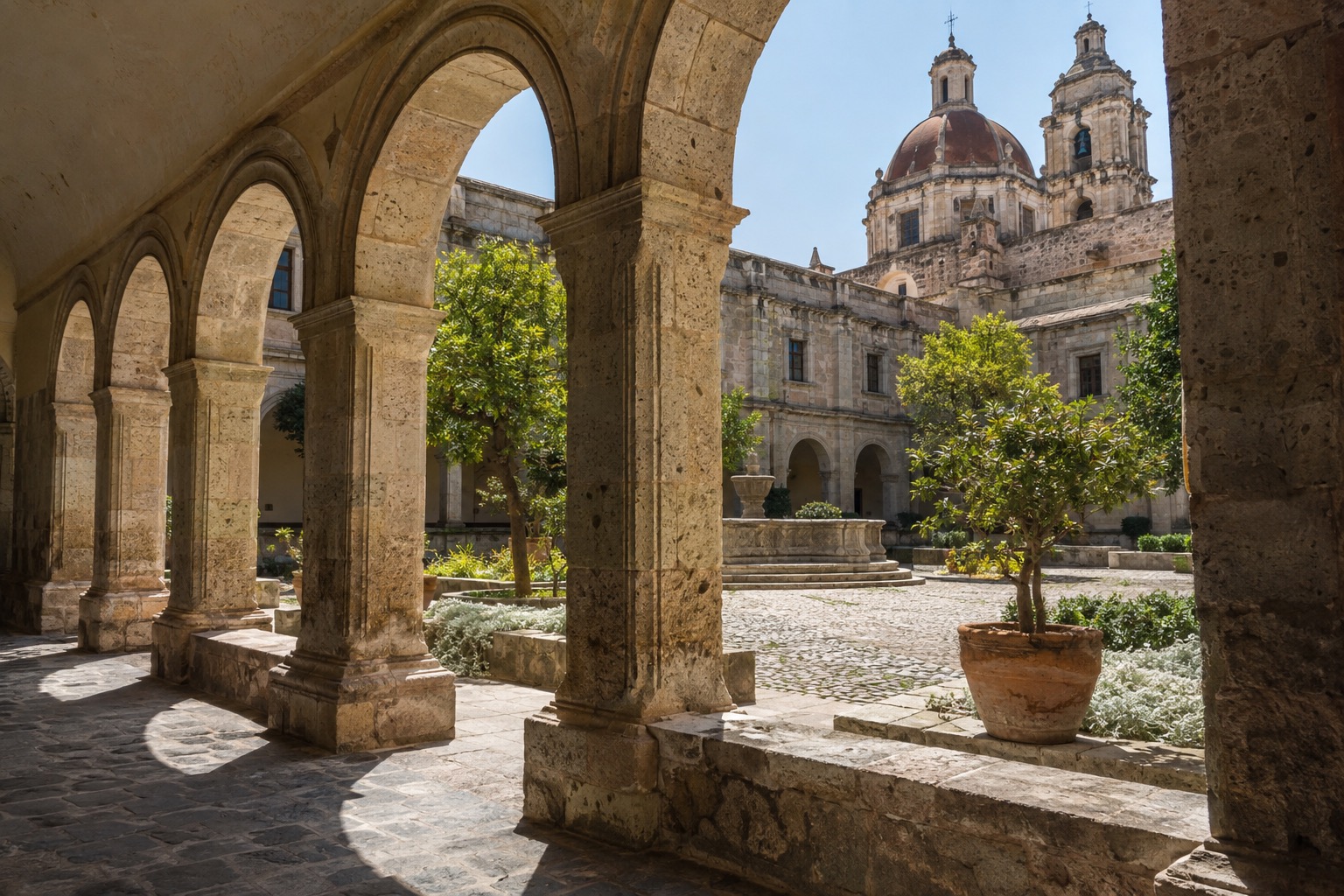
The museum occupies a former convent on the Plaza de Aranzazu, begun in the late sixteenth century in a city founded not long after. Its cloisters and galleries make the building as interesting as what is inside, and it is a calm place to spend a hot or rainy hour.
It suits history lovers and anyone who enjoys old convent architecture. Plan it for a morning, and keep in mind that it is closed Mondays.
| Site | Open | Admission |
|---|---|---|
| Museo Regional Potosino | Tuesday to Sunday, 9 a.m. to 6 p.m. | 145 pesos; 80 pesos for Mexican nationals and foreign residents |
Tamtoc and the Huasteca
Tamtoc is a Huastec archaeological site near Tamuin, about three hours from the city. It is a full-day outing that takes you down from the plateau toward the greener lowlands, and it is the most distinctive excursion the city offers.
The site currently opens on Sundays only, so the day has to be planned around that. It suits travelers curious about pre-Hispanic cultures beyond the usual Maya and Aztec stories.
| Site | Open | Admission |
|---|---|---|
| Tamtoc | Sundays only, 9 a.m. to 6 p.m., last entry 5 p.m. | 145 pesos; 80 pesos for Mexican nationals and foreign residents |
How many days do you need in San Luis Potosi?
A long weekend is enough to enjoy the city itself. That gives you time for the plazas, the churches, the museum and a few slow meals without rushing.
With more time, add the Tamtoc day trip, which needs a full day and a Sunday. Travelers continuing into the Huasteca can treat the city as the first stop of a longer route.
Where to stay in San Luis Potosi
The historic center is the natural base for most visitors. You can walk to the plazas, the churches and the Museo Regional Potosino, and evenings on the squares are right outside your door. Staying outside the center can suit travelers arriving by car who want easier parking, though you give up the pleasure of strolling out for dinner and back.
How do you get to San Luis Potosi and get around?
Most visitors arrive by road or by air from elsewhere in central Mexico, and the Tamtoc excursion takes roughly three hours each way from the city.
Inside the center, walking is the best way to get around, since the main sights sit close together. Taxis cover longer hops, and a car is most useful for the trip toward Tamuin and the Huasteca.
When is the best time to visit San Luis Potosi?
The city works as a destination across the year, since its appeal is walking, museums and food rather than beach weather. Pick days when you can comfortably spend hours outdoors in the plazas.
Because Tamtoc is open only on Sundays, a trip is easiest to build around a weekend. Mexican holiday weeks bring more local visitors, so book early if your dates fall near one.
Good to know before you go
The U.S. State Department rates the state of San Luis Potosi at Level 2, Exercise Increased Caution, the same baseline level as most of the country.
Pesos are the currency for museums, sites and most small purchases. Use ordinary city habits: keep valuables out of sight and stay aware in crowded plazas. The inland location means there is no hurricane concern for the city itself.
| Fee | Amount | Who pays |
|---|---|---|
| Museo Regional Potosino admission | 145 pesos | General visitors |
| Museo Regional Potosino admission | 80 pesos | Mexican nationals and foreign residents |
| Tamtoc admission | 145 pesos | General visitors |
| Tamtoc admission | 80 pesos | Mexican nationals and foreign residents |
Sources
- INAH, Museo Regional Potosino (inah.gob.mx/museos/museo-regional-potosino), checked September 29, 2026
- INAH, meme page, checked September 29, 2026
- INAH, Zona Arqueologica de Tamtoc (inah.gob.mx/zonas/115-zona-arqueologica-de-tamtoc), checked September 29, 2026
- US Department of State, Mexico Travel Advisory (travel.state.gov), advisory of May 29, 2026, checked September 29, 2026 (date issued May 29, 2026)