
On a Good Friday morning in a Mexican town, the church bells go quiet and a procession winds through the cobbled streets, the faithful following a bleeding Christ and women in black mantillas. A few hours away the beaches are packed with families and the smell of grilled fish drifts from palapa kitchens. April in Mexico is the end of the dry season, with sun on the coasts, jacaranda and heat in the highlands, and the country’s biggest spring celebrations.
What is the weather like in Mexico in April?
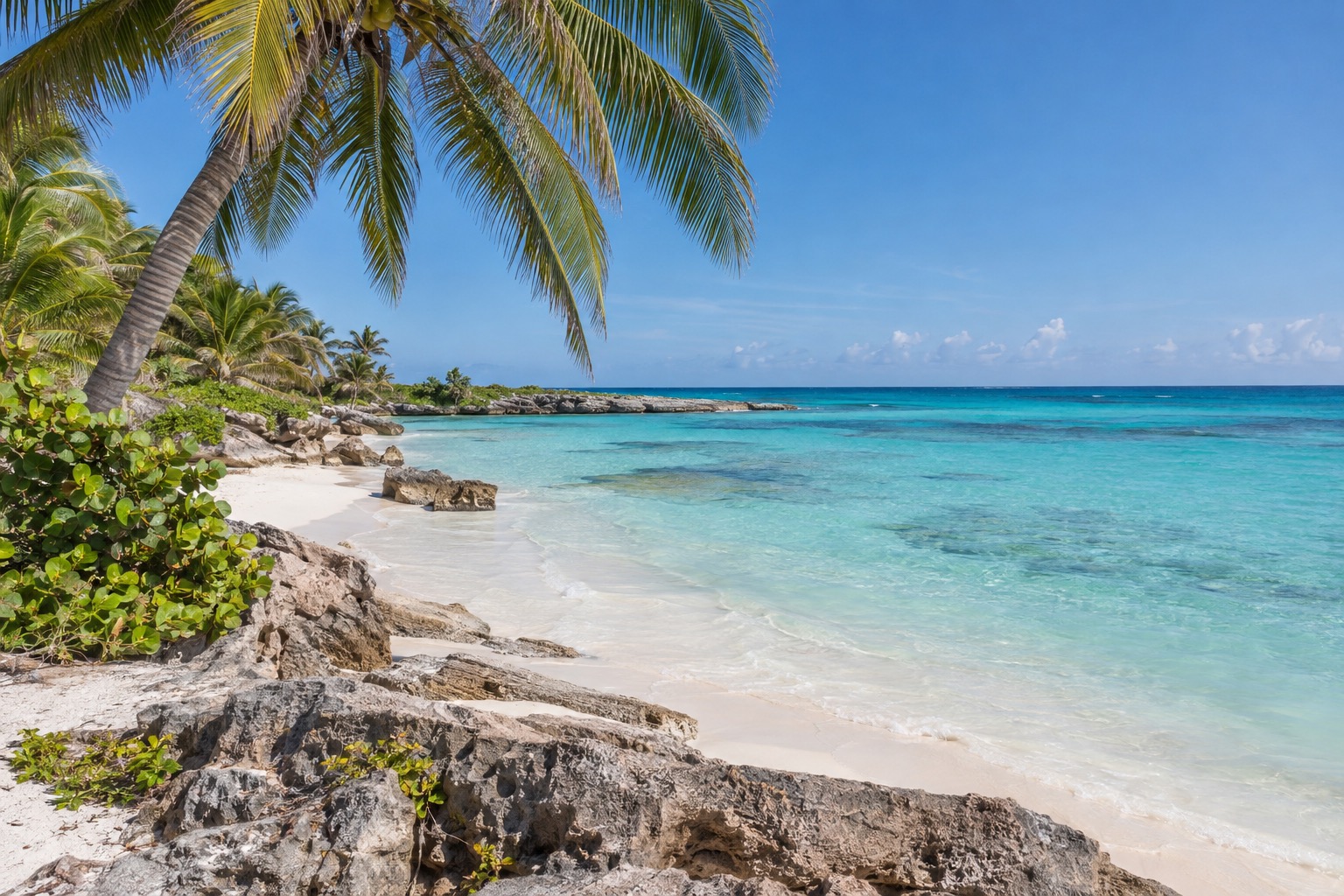
April is hot and mostly dry almost everywhere: the Caribbean coast is steamy, the Pacific coast and Los Cabos are sunny and rain-free, and the central highlands are warm by day with cool nights.
| Place | Region | Average high (°F) | Average low (°F) | Rain (in) | Rain days | Sea (°F) |
|---|---|---|---|---|---|---|
| Cancun | Caribbean coast | 91.6 | 73.2 | 1.67 | 4.2 | 81.6 |
| Puerto Vallarta | Pacific coast | 82.9 | 59.9 | 0.15 | 5.1 | 76.8 |
| Cabo San Lucas | Baja California Sur | 86.2 | 59.7 | 0.00 | 0.0 | 72.7 |
| Mexico City | Central highlands | 81.5 | 55.6 | 0.95 | 6.7 | |
| Oaxaca | Central highlands | 94.8 | 60.4 | 1.86 | 7.6 |
The contrasts are in the nights and the water. Cancun stays muggy after dark, with a low of 73.2°F, and the sea is bathwater warm at 81.6°F. Cabo San Lucas cools to 59.7°F at night and its sea, at 72.7°F, is bracing, while Puerto Vallarta sits in between at 76.8°F.
Inland, Oaxaca is the hottest of the group by day, at 94.8°F, yet its evenings cool off. Mexico City is gentler at 81.5°F, and its 6.7 rain days mean the first afternoon showers start to appear. They usually arrive as short storms rather than gray, all-day rain, and they grow more frequent into May.
Where to go in Mexico in April
The Caribbean coast
Quintana Roo is made for April: white-sand beaches in Cancun, Playa del Carmen and Tulum, boat rides to Isla Mujeres and Cozumel, and cenotes that feel wonderfully cool after a hot morning. Rain is limited to a few brief showers, and the sea is warm enough that you stay in the water for hours.
The Maya ruins at Tulum, and Chichén Itzá inland in Yucatan, are best visited early, before the sun is high, because the heat builds fast across open plazas. April is also before the Atlantic hurricane season, which starts in June.
Sargassum washes up from Cancun down through Playa del Carmen, Tulum and Mahuhual, and it typically peaks in June or July, so April is usually earlier in the cycle, though some years bring a lot of it even in winter. The Caribbean suits beach lovers, families and anyone who likes to combine sand with ruins.
The Pacific coast and Puerto Vallarta
Jungle-covered hills rise behind Puerto Vallarta, which stretches along the Bay of Banderas, and April brings warm days without the Caribbean’s sticky feel. You can wander the Malecón at sunset, eat fresh seafood on the sand, and take a day trip to Sayulita or Punta Mita in Riviera Nayarit for surf and a slower pace.
Rain is nearly absent, though a few cloudy days happen. The official Pacific hurricane season does not start until mid-May, so April falls outside it. Jalisco carries a stricter State Department level than most beach states, so it is worth reading the advisory for the region before planning, including its notes on Puerto Vallarta and Riviera Nayarit.
Los Cabos and Baja California Sur
At the tip of Baja, desert meets sea. For nightlife, boat outings to the famous arch, and sportfishing, Cabo San Lucas is the spot, whereas San José del Cabo moves at a quieter pace, with galleries and a well-kept old center. The sky is reliably clear in April and rain is essentially absent.
On the Pacific side, lots of beaches are too rough for a swim, so seek out sheltered coves and take note of the beach flags. The water is cooler than on the Caribbean, which suits boat days more than long swims. Los Cabos is also close to April’s whale season, and the gray whale lagoons farther up the peninsula are in their final weeks.
The central highlands
Mexico City, Guadalajara and Oaxaca, along with San Miguel de Allende, draw visitors not for beaches but for colonial centers, museums and food. In April the capital’s streets are lined with purple jacarandas, and the days suit walking the Zócalo, Coyoacán and the markets, with a jacket for the cool mornings and nights.
Oaxaca is much hotter by day, so plan the market, the churches and the mezcal tastings for morning and evening, and rest in the afternoon. Expect an occasional afternoon shower in both cities. Guadalajara sits in Jalisco, so check that state’s advisory level before you go.
What to do in Mexico in April
Semana Santa and Easter
Holy Week, Semana Santa, is the big event, and when it falls in April it shapes the whole month. Towns stage processions and passion plays, with the Good Friday reenactments among the most moving. Families take their vacation, and beaches and colonial towns fill with Mexican visitors.
In the highlands, San Miguel de Allende and Oaxaca hold solemn processions by candlelight, while Mexico City’s Iztapalapa neighborhood is known for its massive Passion reenactment. Holy Week and Easter move every year, so the dates change, and some weeks of the following Pascua can also be festive.
Whale watching in Baja
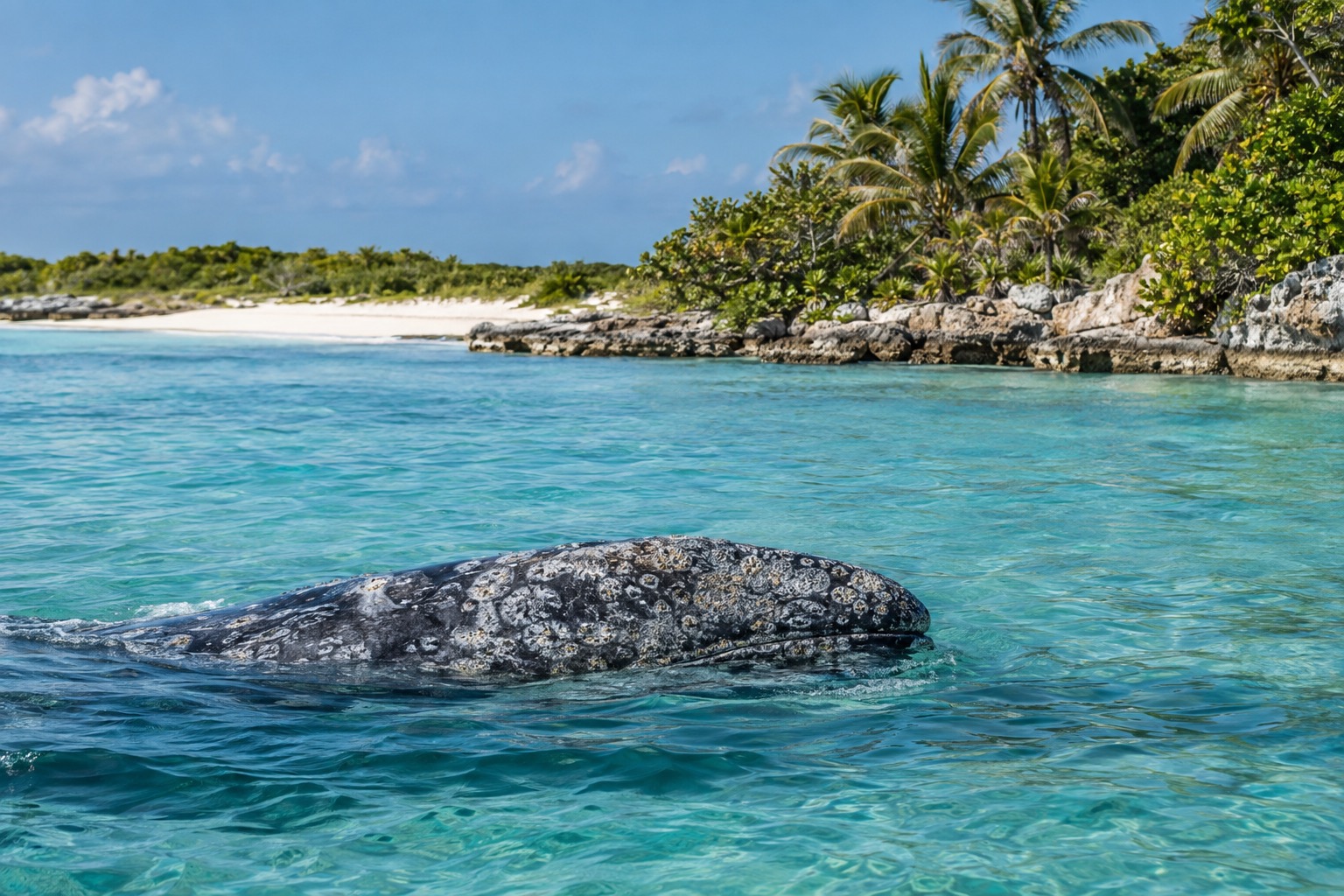
April closes the season in the lagoons of El Vizcaíno, and the whales still in Ojo de Liebre and San Ignacio are mostly mothers with calves getting ready for the trip north. The season runs until April 30, so April is the final stretch to see mothers and calves from small boats, sometimes close enough to touch.
In winter, tour boats also carry whale watchers to see humpback whales off Los Cabos and at Puerto Vallarta, in the Bay of Banderas. Late in the season sightings thin out, so April suits flexible travelers more than those who want a guaranteed encounter.
Is Mexico busy in April?
Yes, particularly around Holy Week, when Mexican families on school vacation fill beach towns and many U.S. travelers arrive for spring break and Easter.
Cancun, Playa del Carmen, Puerto Vallarta and Los Cabos see the heaviest crowds, with busy beaches, full hotels and packed restaurants. Colonial towns like San Miguel de Allende and Oaxaca draw visitors for the processions. Outside Holy Week, April is calmer, and the weeks after Easter feel noticeably more relaxed. Mexico City empties a little during Holy Week as residents leave for the coast.
What to pack for Mexico in April
Pack for heat on the coasts and for big swings between day and night in the highlands, where a layer matters in Mexico City and in Los Cabos after dark.
- Light, breathable clothing and a hat for the coast and Oaxaca
- A light jacket or sweater for cool nights in Mexico City and Baja
- Reef-safe sunscreen and sunglasses
- Comfortable walking shoes for ruins and cobblestones
- A compact umbrella or rain jacket for highland afternoons
Good to know before you go
April sits outside both official hurricane seasons: the Atlantic season, which covers the Caribbean coast, starts June 1, and the Pacific season, covering Los Cabos and Puerto Vallarta, starts May 15. Sargassum can reach the Caribbean beaches from Cancun to Mahahual, but it is not a Pacific concern. The U.S. State Department rates Mexico Level 2, exercise increased caution, and sets different levels by state, so check the level for each region you plan to visit.
Is April a good time to visit Mexico?
Yes, April is a very good month for beaches and for Los Cabos, Puerto Vallarta and the Caribbean coast, while the highlands are pleasant if you plan around the afternoon heat.
Compared with March, April is warmer, with Cancun’s highs climbing from the high 80s to the low 90s and the sea gaining a degree. Compared with May, it is drier and less humid: rain days roughly double in Cancun and nearly double in Mexico City by then, and Los Cabos gets hotter. The Pacific hurricane season also begins in mid-May. What sets April apart is the mix of Holy Week processions, the last gray whales in Baja and the jacarandas in bloom, all under dependable sun.
Sources
- Servicio Meteorologico Nacional (CONAGUA), normales climatologicas 1991-2020, estacion 23155 (Cancun, Benito Juárez), checked September 29, 2026
- Open-Meteo Marine API, average 2015-2024, checked September 8, 2026
- Servicio Meteorologico Nacional (CONAGUA), normales climatologicas 1991-2020, estacion 09048 (Tacubaya Central (Obs), Miguel Hidalgo), checked September 29, 2026
- sunrise-sunset.org, sunrise and sunset on the 15th of the month, checked September 8, 2026
- Servicio Meteorologico Nacional (CONAGUA), normales climatologicas 1991-2020, estacion 03005 (Cabo San Lucas, Los Cabos), checked September 29, 2026
- Servicio Meteorologico Nacional (CONAGUA), normales climatologicas 1991-2020, estacion 14339 (El Cuale, Puerto Vallarta), checked September 29, 2026
- Servicio Meteorologico Nacional (CONAGUA), normales climatologicas 1991-2020, estacion 20079 (Oaxaca, Oaxaca De Juárez), checked September 29, 2026
- NOAA National Hurricane Center, "Tropical Cyclone Climatology", nhc.noaa.gov, checked September 29, 2026
- University of South Florida, Optical Oceanography Lab, "Sargassum Watch System (SaWS)", optics.marine.usf.edu, checked September 29, 2026
- U.S. Department of State, Mexico Travel Advisory (main, level banner), travel.state.gov, read live via browser (protected by Cloudflare, direct fetching blocked with 403) on 29 September 2026
- U.S. Department of State, Mexico Travel Advisory (reissued May 29, 2026), section « Risks in specific areas », travel.state.gov/en/international-travel/travel-advisories/mexico.html, read via browser (Cloudflare blocks curl) on 29 September 2026
- CONANP (Comision Nacional de Areas Naturales Protegidas), "Inicia la temporada de avistamiento de ballena gris en la Reserva de la Biosfera El Vizcaino", gob.mx/conanp, checked September 29, 2026 (window confirmed over several seasons, including the 2025-2026 announcement)
To plan your stay
- Things to Do in Mexico: Ruins, Beaches, Day of the Dead and Street Food
- Where to Stay in Mexico: Riviera Maya, Los Cabos, Puerto Vallarta, Mexico City and All-Inclusive Areas
- Getting Around Mexico: Buses, the Tren Maya, Taxis and Driving Your Own Car
- Mexico Travel Tips: Dollars, Tourist Tax, Tipping, Tap Water, Driving and Safety by State