
Before the sun is fully up, the first boards are already crossing the sand toward the break, and the town behind them is only starting to clatter awake. Puerto Escondido sits on Oaxaca’s Pacific coast, a surf town that has grown into a relaxed beach base with a rough edge and a lot of heart. It suits surfers, slow travelers and anyone who likes a coast where the day is organized around the water.
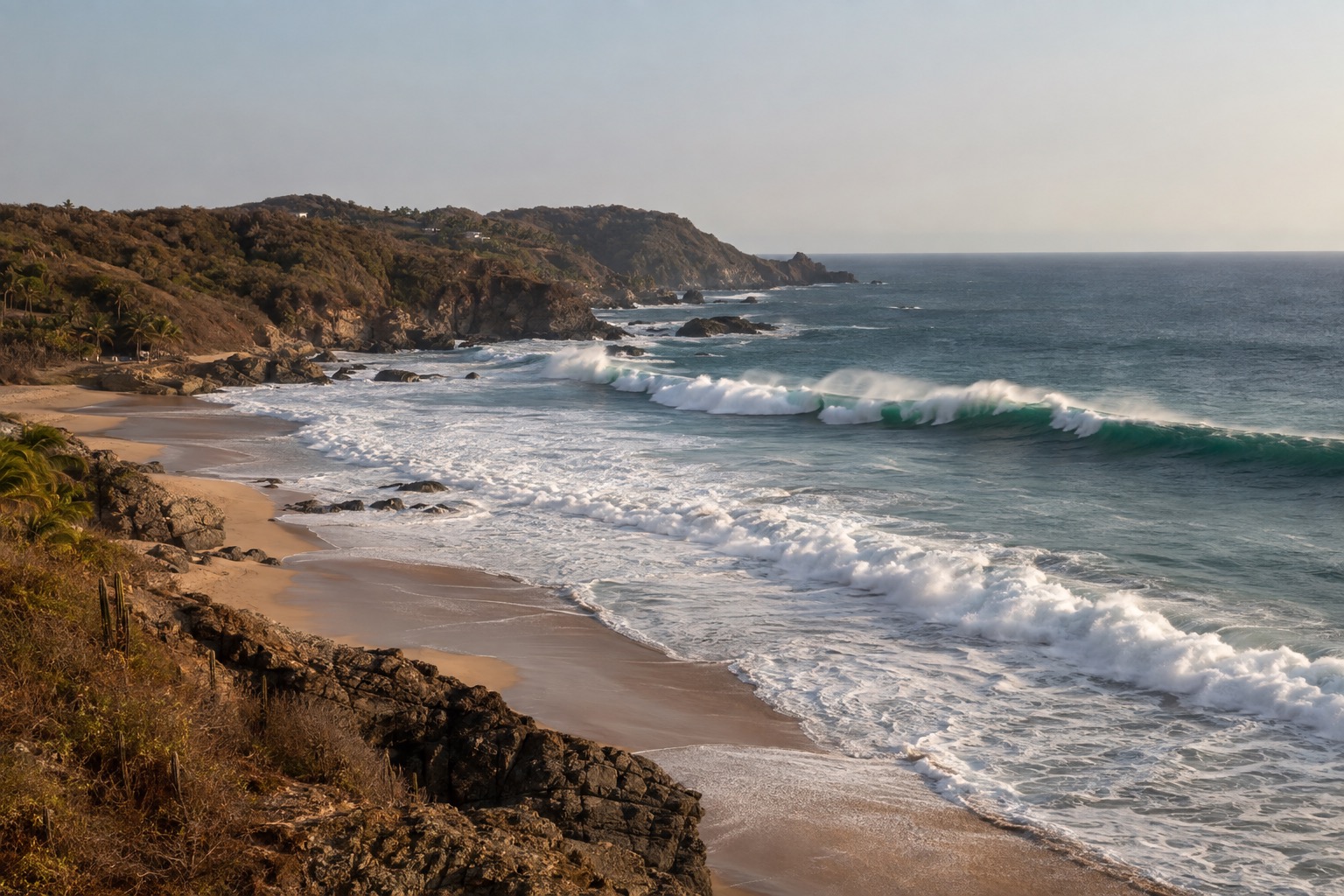
Where is Puerto Escondido and what is it like?
Puerto Escondido lies on the Pacific coast of Oaxaca, with Laguna de Manialtepec and the Chacahua lagoons to the west and the turtle beaches of Mazunte and Escobilla along the same shoreline. It is a working town with a surf scene attached, not a resort built from scratch, and there are no large all-inclusive complexes here.
The mood changes from one stretch of sand to the next. Zicatela is loud, sporty and lively, La Punta is rustic and bohemian, Rinconada is calm and a little upscale, and Bacocho is wide, spread out and peaceful.
People who love simple beach towns, cheap meals and long afternoons by the water feel at home. Those who want polished resort service, or nightlife-free quiet right next to the surf, may find it too rough and scattered.
What is there to do in Puerto Escondido?
The big reasons to come are the surf, the small coves, the lagoons and the turtles. What sets Puerto Escondido apart from its neighbors is the size of its waves: this is a serious surf town first, with gentler pleasures tucked around it.
Zicatela and the surf
For five decades, surfers have flocked to Zicatela, a mighty beach break known as the Mexican Pipeline, and the land around it sits on the World Surfing Reserves list. Whether or not you ever pick up a surfboard, the spectacle deserves a spot at an oceanfront eatery, with a row of bars and shops lining the main road.
The waves and currents are dangerous for casual swimmers, so this is a beach for watching, walking and surfing if you are experienced. Swim only in designated areas and follow the lifeguards. A quick taxi from the center brings you here, and after dark the colectivo vans that run along the main road make getting back easy.
Gentler beaches
For swimming, head to Puerto Angelito or Carrizalillo, the calmer options near town. A long staircase descends the Rinconada hillside to Carrizalillo, a small cove, so the trip down feels like a little arrival all its own.
Go early, before the sun climbs and the sand fills. For families and anyone who would rather bob along than battle the surf, these coves are ideal. If you drive, parking near the stairs is limited, so a taxi saves some stress.
Lagoons and glowing water
West of town, Laguna de Manialtepec is known for night boat trips that show bioluminescent plankton lighting up in the water. A little beyond, Parque Nacional Lagunas de Chacahua watches over a chain of lagoons and mangroves along the coast, a quiet green counterpoint to the waves.
Both make good outings for travelers who want birds, quiet channels and a break from the beach scene. They suit curious adults and older children best, and the evening trip is the one people remember.
Sea turtles along the coast
The shoreline near Puerto Escondido is turtle country. Playa Escobilla is a sanctuary where olive ridleys come ashore in mass arribadas, and a recent season brought roughly 101,500 nesting females in a single event. At Mazunte, a conservation center on the beach looks after four species: olive ridley, black, hawksbill and leatherback.
It is a day for people who like wildlife and a slower pace. Pair the center at Mazunte with a beach afternoon, and treat the nesting itself as a natural event that depends on the season.

How many days do you need in Puerto Escondido?
A long weekend is enough to taste the town, though a week lets it work on you. In three or four days you can watch the surf at Zicatela, spend a morning in a cove and eat well in the center.
With more time, add the lagoon outings at Manialtepec or Chacahua and a turtle day toward Mazunte and Escobilla. Surfers and long-stay visitors often settle for weeks, especially around La Punta and Bacocho, where the rhythm is easy and the days blend together.
Where to stay in Puerto Escondido
Zicatela has hostels, guesthouses, small hotels and rentals, and it suits surfers and younger travelers who want the strip at their door. Couples can find quieter rooms off the main road. La Punta, at the southern end, is rustic and low-rise, with cabañas and simple apartments for backpackers and long stays. Carry cash there, since ATMs are few and many small places skip cards.
Rinconada, on the hill above Carrizalillo, offers boutique hotels, bed-and-breakfasts and rentals for couples and families who want calm. Bacocho is spread out and peaceful, with an often uncrowded beach, but you need a car or taxi and should stock up on groceries in town first. El Centro has budget hotels and hostels near the market and the bus station, with some street noise in the morning.
How do you get to Puerto Escondido and get around?
Puerto Escondido International Airport (PXM) serves the town directly, and the beach areas are a short ride away: roughly 5 to 20 minutes by car or taxi depending on the neighborhood. The main bus station is in El Centro, which makes the town easy to reach by road as well.
Once there, walking works well in El Centro and along the beach road at Zicatela, and La Punta is mostly done on foot or by bicycle. Colectivo vans run along the main road, and local buses, taxis and colectivos to other beaches leave from near the main market. Taxis fill in the gaps, especially for Rinconada and Bacocho.
When is the best time to visit Puerto Escondido?
The calmer months outside the eastern Pacific hurricane season, which officially runs from May 15 to November 30, are the easiest for planning beach days and outings. Surf is a year-round draw, and what you get on a given day depends on swell, so beach flags and lifeguards matter more than the calendar.
Turtle arribadas follow their own season, so timing a visit around them is worth a look if wildlife is your goal. Within the hurricane season the weather can turn stormy, so keep plans flexible and watch forecasts.
Good to know before you go
The U.S. State Department’s Mexico travel advisory rates Oaxaca at Level 2, ‘Exercise increased caution’.
Bring cash, especially for La Punta and small shops, and swim only where lifeguards allow. Lodging in Oaxaca carries a small tax, usually added to your hotel bill.
| Fee | Amount | Who pays |
|---|---|---|
| Lodging tax (Impuesto Sobre Hospedaje), Oaxaca | 3% | Guests staying in paid lodging |
Sources
- Save The Waves Coalition, savethewaves.org/puertoescondido, checked September 29, 2026
- CONANP, Direccion Frontera Sur, Istmo y Pacifico Sur, official press releases on the Santuario Playa Escobilla, read on September 29, 2026
- CONANP, gob.mx, « Centro Mexicano de la Tortuga », checked September 29, 2026
- El Contribuyente and J.A. del Rio, ISH tables by State 2026, read on September 29, 2026
- U.S. Department of State, Mexico Travel Advisory (travel.state.gov), checked September 29, 2026
- NOAA National Hurricane Center, official Eastern Pacific season (nhc.noaa.gov), checked October 5, 2026
All our pages
When to go
- Best Time to Visit Puerto Escondido: Dry Season, Surf, Sea Temperatures and Festivals
- Puerto Escondido in January: Dry Weather, Surf, Lagoon Nights and Beach Days
- Puerto Escondido in February: Dry-Season Surf, Lagoon Trips and Beach Days
- Puerto Escondido in March: Dry Skies, Zicatela Swells, Lagoon Outings and Beach Days
- Puerto Escondido in April: Weather, Surf, Bioluminescent Lagoons and What to Do
- Puerto Escondido in May: Weather, Late-Season Surf, Turtles and What to Do
- Puerto Escondido in June: Rainy-Season Surf, Turtles, Lagoons and What to Do
- Puerto Escondido in July: Big Surf, Rainy-Season Greens and Warm Evenings
- Puerto Escondido in August: Green Season Swell, Turtles and Rainy-Day Plans
- Puerto Escondido in September: Rainy-Season Surf, Turtles and Quiet Beaches
- Puerto Escondido in October: Turtle Arribadas, Calmer Surf and Fewer Crowds
- Puerto Escondido in November: Día de Muertos, Post-Rain Weather and Ocean Days
- Puerto Escondido in December: Weather, Surf, Lagoon Trips and Beach Life