
The ferry horn sounds, the last golf cart pulls away from the pier, and the street ahead is nothing but pale sand lined with painted houses and strings of bulbs. Holbox is a small island off the Yucatán’s northern tip, ringed by lagoon and mangrove, where no one rushes and shoes often remain in the bag. It suits couples, families and anyone who wants the Caribbean coast at a slower, quieter tempo.
Where is Holbox and what is it like?
Holbox is a low island off the northern coast of the Yucatán Peninsula, reached from the mainland fishing village of Chiquilá, and it sits within the Yum Balam protected area, a federal reserve that also covers the shallow lagoon and mangroves between island and shore. The Gulf and the Caribbean meet here, and the feel is far from Cancun’s high-rises.
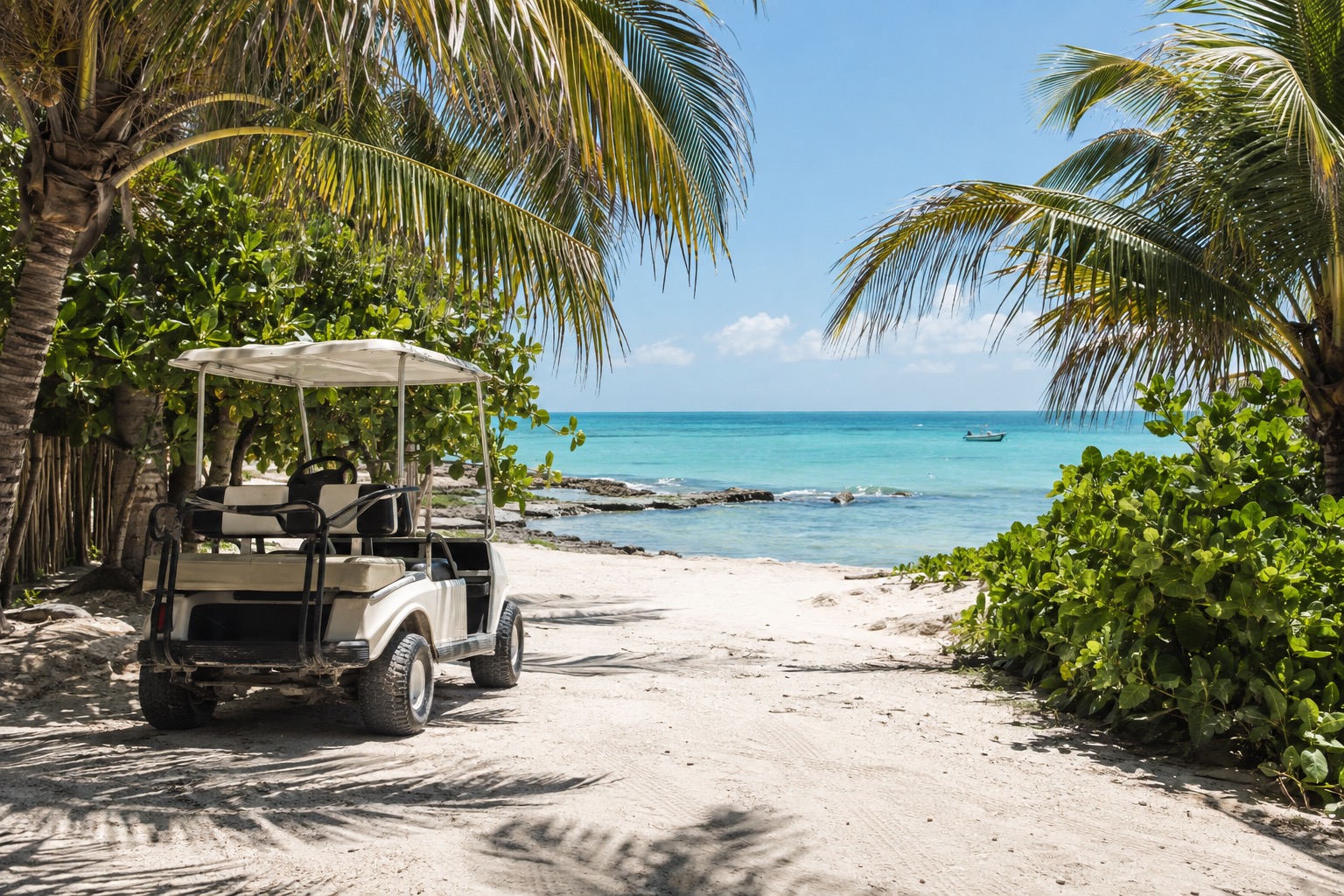
The island has no paved roads for cars. Streets are sand, and people walk, pedal bicycles or ride golf carts. The village, Centro, is made of colorful low buildings and has a lively but easygoing air, with bars and restaurants that can get noisy on weekends.
Travelers who love beaches, birds and unhurried evenings tend to fall for it. Those who want big resorts, nightclubs or sidewalks will probably be happier elsewhere: the beachfront has boutique hotels and small cabañas, and no large all-inclusive resorts.
What is there to do in Holbox?
The reasons to come are mostly outdoors and mostly simple: the north-shore beach, the water life around the island, the birds in the lagoon and the nights themselves. Holbox is different from its neighbors because the pace is set by sand and tides rather than by tours and traffic.
The beach on the north shore
The north-facing strip has soft white sand and shallow turquoise water, with a sea that is generally calm. It is a place for wading, floating and long walks with the water barely above your knees. Check the beach flags before swimming, since conditions change with the weather.
From the ferry pier in Centro, the beachfront hotels are a walk of a few minutes along sandy streets, or a short golf cart taxi ride. Daytime can bring music from a few beach clubs, but evenings are quieter than in town.
Couples and families get the most from it, especially if they sleep close enough to step onto the sand. Go early or near sunset for the softest light, and keep the middle of the day for shade and a cold drink.
Whale sharks, flamingos and the lagoon
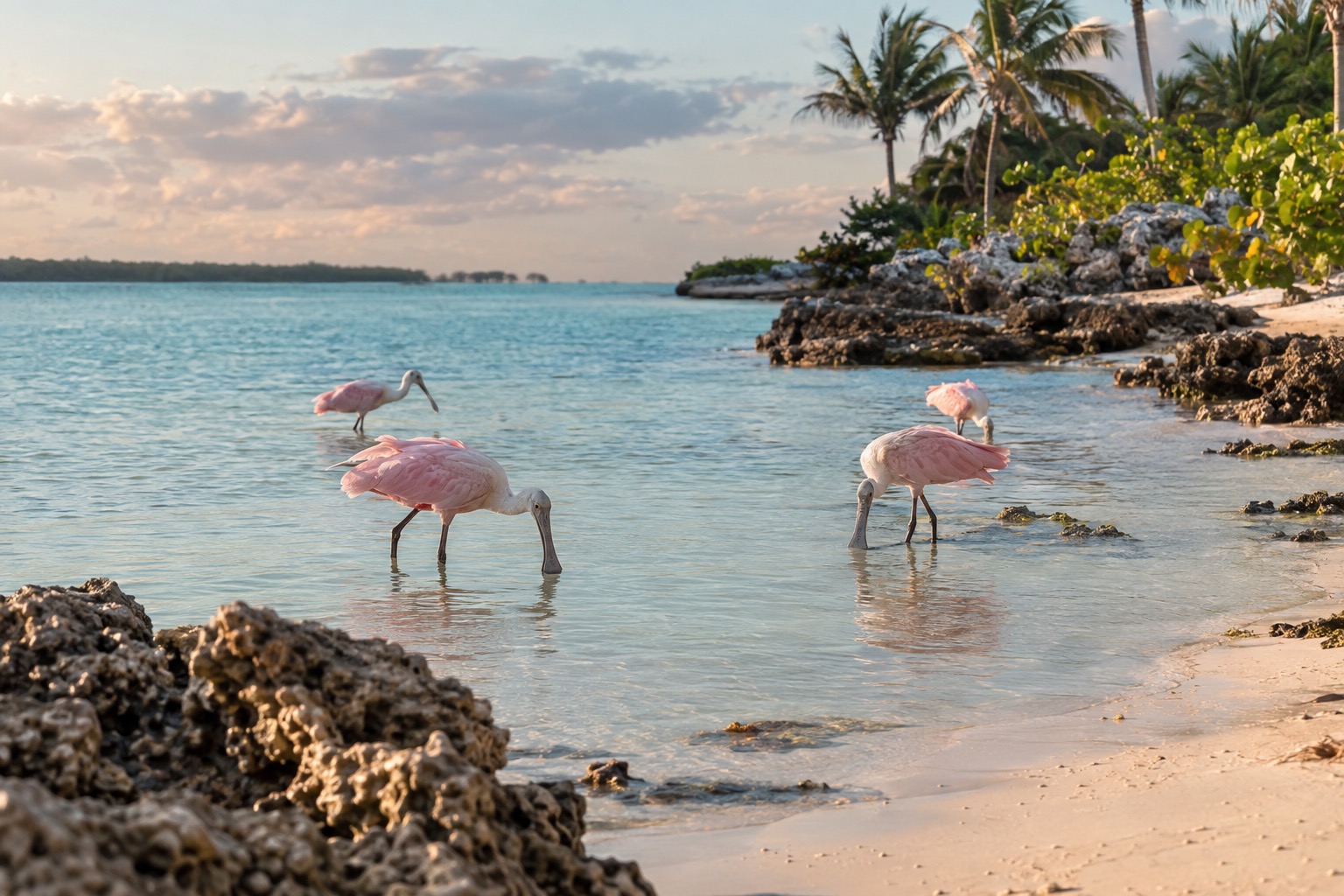
From about June to September, whale sharks come together in the waters off Holbox and neighboring Isla Mujeres, and snorkel trips are planned around that season. For the remainder of the year, boats head into the lagoon, which is part of the Yum Balam reserve, as flamingos and other wading birds eat in the shallows behind the island.
Boat tours leave from the lagoon side, right beside the ferry pier, so there is no transfer to arrange on land. The mangrove channels are quiet and the water glassy, with birds lifting off as the boat passes.
Early morning tends to be the calmest and the best for birds. Packing a sun hat and binoculars, plus a lightweight extra layer for the boat ride, helps make the trip more comfortable, and this combination suits travelers of just about any age who would rather watch wildlife than race around.
Glowing water at night
On certain warm, dark nights, when the water is stirred, plankton in the lagoon gives off a blue-green glow. It is one of the island’s most talked-about sights, though it is never guaranteed. Moonlight, weather and season all play a part, and a bright full moon can wash it out.
Trips go out by boat from the lagoon side after dark, and the lagoon is only minutes from the village. You see the water light up around your hand or the oars, and the silence out there is half of the pleasure, with the lights of the village shrinking behind you.
Choose a moonless night if your dates allow, and ask the operator how the water has been lately. It suits curious travelers of any age, though very young children may tire before the show begins. Bring repellent for the mangrove edges at dusk.
How many days do you need in Holbox?
A long weekend is enough to feel the island, and three or four nights is the sweet spot for most travelers.
A short stay fits a beach day, a lagoon boat trip and a couple of slow dinners in Centro. The journey in takes a good part of a day, so a single night barely repays it.
With more time, you can add a second boat outing, a sunset walk toward Punta Cocos and lazy mornings with nothing planned. If whale sharks are in season, an excursion toward the deeper water makes a full day. Isla Mujeres sits nearby on the same waters, and some visitors pair the two.
Where to stay in Holbox
Four areas cover most stays. Centro is the village itself, with small guesthouses, hostels, budget hotels and apartments, often a few blocks from the beach. It suits budget travelers and backpackers who want restaurants, shops and the pier close by, and it lets you skip golf cart rentals because everything is walkable. Some corners get loud at night on weekends.
The beachfront zone has boutique hotels, small cabañas and a few larger hotels, many opening straight onto the sand, and it suits couples, families and beach lovers. Rooms there fill quickly in high season, so book early.
The lagoon side is right beside the pier, with guesthouses and apartments that often have docks or terraces over the water. It is easy on the budget and handy for boat tours, though morning boat traffic can be noisy.
Punta Cocos, at the western end, is the quietest choice, with a natural beach, a handful of small hotels, beach houses and eco-lodges, and very dark nights. It suits couples and families with young children who want seclusion. Bring insect repellent, as dusk near the lagoon brings mosquitoes.
How do you get to Holbox and get around?
Most visitors fly into Cancun International Airport, take a shuttle or bus to Chiquilá, then cross by ferry, a journey of roughly 2.5 to 3.5 hours in all, depending on the wait for the boat.
Holbox Express ferries cross roughly every hour, from 6:30 a.m. to 9:30 p.m. The pier is in Centro, so arriving by boat puts you in town. Most accommodations are within a 5 to 10 minute walk, with beachfront hotels a bit farther.
| Passenger | One-way ferry fare |
|---|---|
| Adult | 330 pesos |
| Child | 200 pesos |
| Quintana Roo resident with valid ID | 230 pesos |
On the island there are no paved roads for cars, so you walk, cycle or take a golf cart. Golf cart taxis run to the beachfront and out to Punta Cocos, about 10 to 15 minutes from Centro. Walking to Punta Cocos along the beach or sandy roads takes about 30 to 40 minutes.
When is the best time to visit Holbox?
The island has something for every season, so the best time depends on what you want to see. Whale shark snorkeling runs roughly from June to September, and the glowing lagoon depends on warm, dark nights, which means it is most likely when the weather is warm and the moon is small.
Since the Atlantic hurricane season, which affects Holbox and runs until the end of November, includes early autumn, it is smart to watch the forecast before you travel and leave your dates open. Outside those months the season is over, and the island feels relaxed.
High season fills beachfront rooms quickly, so reserving early matters for the busiest weeks. In quieter stretches the streets are calmer and the village has a more local feel.
Good to know before you go
The U.S. State Department rates Quintana Roo Level 2, ‘Exercise increased caution’.
Pesos are the currency to have in mind, and sandy streets suit sandals and light bags. Streets away from Centro have little lighting, so a small flashlight helps after dark. Two charges apply to many visitors in Quintana Roo.
| Fee | Amount | Who pays |
|---|---|---|
| Visitax (state visitor fee) | 2.50 UMA, about 293 pesos | Every foreign visitor entering Quintana Roo |
| Lodging tax (Impuesto Sobre Hospedaje) | 5% of the billed accommodation value, or 6% when a host or booking platform collects payment for a short-term rental | Guests, on the accommodation bill |
Sources
- Holbox Express, "Holbox Ferry Rates and Departures Timetable" (holboxexpress.com), checked September 29, 2026
- Congreso del Estado de Quintana Roo, Ley del Impuesto al Hospedaje del Estado de Quintana Roo, art. 8, congresoqroo.gob.mx, checked September 29, 2026
- Ley de Derechos del Estado de Quintana Roo, art. 51-Octies, congresoqroo.gob.mx, checked September 29, 2026
- U.S. Department of State, travel.state.gov, checked September 29, 2026 (date issued May 29, 2026)
- NOAA National Hurricane Center, nhc.noaa.gov, checked September 29, 2026
All our pages
When to go
- Best Time to Visit Holbox: Weather by Month, Crowds, Sargassum and Festivals
- Holbox in January: Weather, Nortes, Flamingos and Island Life
- Holbox in February: Carnaval, Weather and What to Do on the Island
- Holbox in March: Weather, Spring Break Crowds, Sandbar Boat Rides and Seafood
- Holbox in April: Warm Sea, Quiet Sand Streets, Flamingos and Easter Week
- Holbox in May: Weather, Whale Shark Season, Island Food and Beach Days
- Holbox in June: Whale Sharks, Summer Rains and Island Life
- Holbox in July: Whale Sharks, Lagoon Nights, Weather and Crowds
- Holbox in August: Whale Sharks, Flamingos, Rain and Island Life
- Holbox in September: Whale Sharks, Rainy Afternoons and Empty Sand Streets
- Holbox in October: Whale Sharks, Rainy Afternoons and Quiet Sand Streets
- Holbox in November: Weather, Sandbar Days, Island Food and What to Do
- Holbox in December: Weather, Christmas on the Island, Boat Trips and Sea Conditions