
Before sunrise in the cloud forest above Santa Elena, the first sound is a chorus of birds, and a thin mist drifts between the ferns while breakfast arrives: gallo pinto, eggs and a cup of local coffee. A few hours away, surfers are already paddling out along the Pacific, and farther east the Caribbean canals begin to glow in the morning light. Costa Rica packs volcanoes, rainforest and two coastlines into a small country, and travelers choosing where to spend their time will find plenty to fill it.
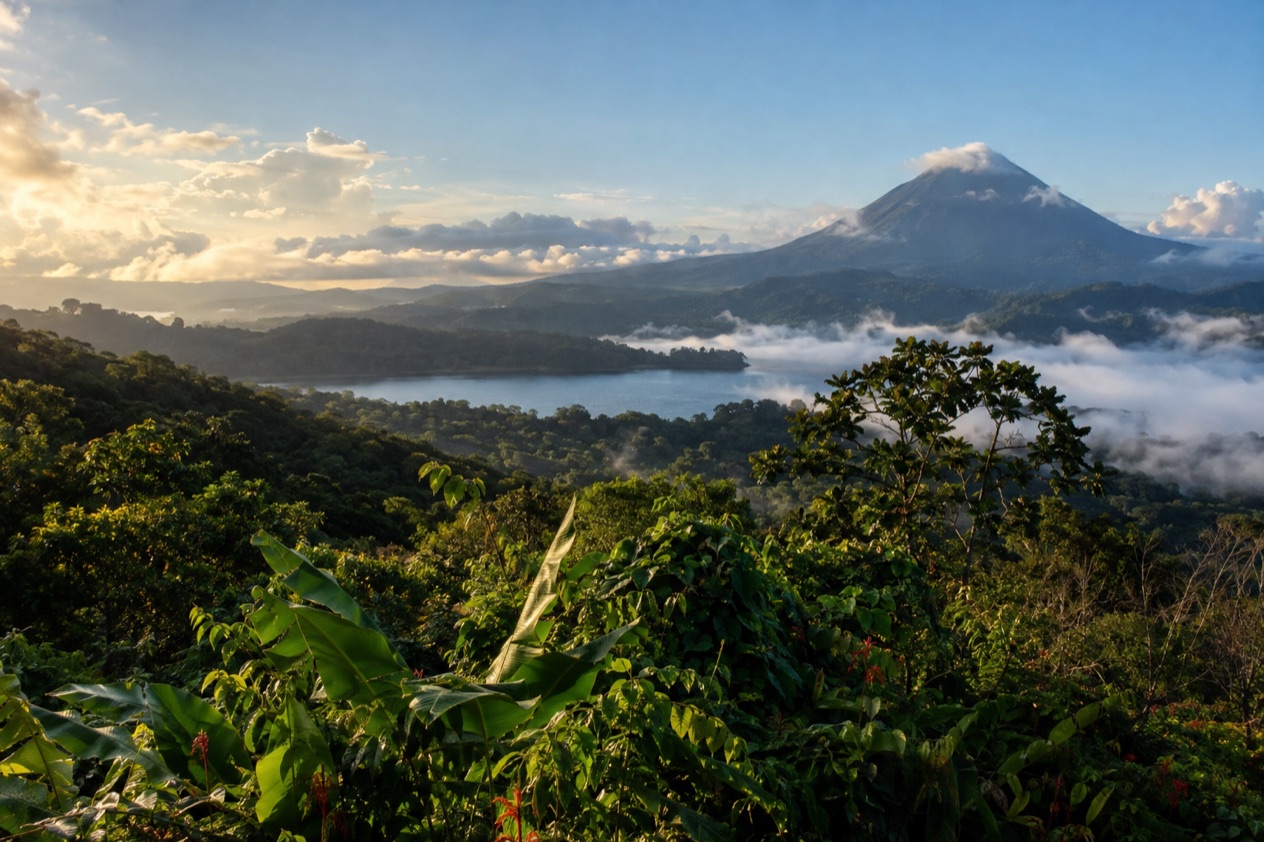
Where is Costa Rica and what is it like?
Costa Rica is a small Central American country between Nicaragua to the north and Panama to the south, with the Pacific Ocean on one side and the Caribbean Sea on the other. A spine of volcanic mountains runs from the northwest to the southeast and splits the country into a Pacific side and a Caribbean side. Two places an hour apart can have very different weather, which is part of the fun and part of the planning.
The character is easy to describe: green, outdoorsy and relaxed. Costa Rica abolished its army in 1948 and is known for its stable democracy and for setting aside roughly a quarter of its land in national parks, reserves and refuges. That shows when you travel. Even near busy towns you hear howler monkeys at dawn, see toucans crossing a road, or find a sloth hanging in a tree beside a hotel pool.
The mountains are the second half of the picture. Several volcanoes stand near the main tourist routes, with Arenal near La Fortuna, Poas and Irazu above the Central Valley, and Rincon de la Vieja in the northwest.
Clouds often hide a summit by midday, so early starts pay off. The Central Valley, where San Jose sits at about 3,800 feet, has a mild, spring-like air that feels a world away from the sticky coast.
Costa Rica suits couples, families, surfers, birders, yoga travelers and anyone who likes to pair a morning hike with an afternoon on a beach. Spanish is the official language, but English is widely spoken in hotels, tour companies and the main tourist towns.
The phrase you will hear everywhere is pura vida, used as a greeting, a thank-you and an answer to how are you. American devices work without an adapter, since the power and plugs are the same as in the United States.
Where to go in Costa Rica
Most trips combine one highland stop with one or two beach stops, while wildlife-focused itineraries may add the Osa Peninsula and Corcovado National Park. Two international airports shape the routes: San Jose for the Central Valley and the central Pacific, and Liberia for the northwest beaches.
San Jose and the Central Valley
San Jose, the capital, is where most visitors land and where most move on within a day or two. The air is mild, and the center rewards a few unhurried hours. The National Theater, opened in 1897, is one of the city’s best-known buildings, and the Pre-Columbian Gold Museum sits under the Plaza de la Cultura, showing the gold work of the peoples who lived here before the Spanish.
It suits travelers with an early flight or a late arrival, and anyone who wants coffee, a market lunch of a casado and a look at city life before heading to the coast. Poas and Irazu rise above the valley and make a morning outing, though each has its own access rules and clouds often cover the summit by midday. Jaco and Manuel Antonio are the easiest beach stops from here.
La Fortuna and Arenal
La Fortuna is a small town at the foot of the Arenal Volcano in the northern lowlands, and it is the main base for the area’s hot springs, waterfall, hanging bridges and lake. Arenal is a classic cone that erupted almost continuously from 1968 and has been quiet since 2010. Visitors come for the view and for walks over old lava flows rather than for eruptions.
A typical day starts with a waterfall or a bridge walk in the cool morning, leaves the afternoon for a soak in the hot springs and ends with dinner in town. It suits families, couples and anyone who likes an active day that finishes in warm water.
Monteverde and Santa Elena
Monteverde is a cloud-forest area high in the Tilarán mountains, around Santa Elena, where the air is cooler and often misty. The forest is thick with ferns, orchids and mosses, and everything feels damp and quiet. Pack a light jacket, even if you arrive from the beach.
Visitors come to walk the reserve trails, cross hanging bridges through the canopy, zip-line over the treetops and take guided night walks to look for frogs, insects and sleeping birds. It suits nature lovers and families with older children. A guide makes a real difference here, since the forest hides far more than the eye catches alone.
Manuel Antonio and Quepos
Manuel Antonio is a stretch of hills and beaches on the central Pacific coast, just south of the town of Quepos, around one of the most visited national parks in the country. White-faced capuchin monkeys, squirrel monkeys, sloths, iguanas and raccoons are commonly seen in and around the park, and visitors are asked not to feed them.
The mix of forest trails and beach time makes it a favorite for first-time visitors and families. Hotels climb the hillsides with ocean views, and the restaurants along the road look out over the water at sunset. Rip currents can be strong on Pacific beaches, so check the flags and ask locally before swimming.
Guanacaste and the Nicoya Peninsula
Tamarindo is the lively gateway, a surf and beach town on the Pacific coast of Guanacaste with restaurants, shops and nightlife along its main street, about an hour’s drive from the Liberia airport. Its beach break suits beginners, and surf schools rent boards and give lessons. Bigger waves are found at beaches a short drive north and south.
Farther down the peninsula the mood softens. Samara sits on a wide curved bay with calm, shallow water protected by a reef and an island offshore, and families and first-time surfers favor its gentle waves. Nosara is known for Playa Guiones, a long beach with steady surf, and for its yoga studios.
Santa Teresa, at the southwestern tip, is strung along a dirt road behind a long beach, with small hotels, cafes and a barefoot feel. Getting there takes most of a day from San Jose by road and car ferry from Puntarenas to Paquera, then a long drive on partly unpaved roads, or a short flight to a nearby airstrip.
The Caribbean coast: Puerto Viejo and Tortuguero
Puerto Viejo de Talamanca is a laid-back town on the southern Caribbean coast, known for its Afro-Caribbean culture, reggae, bicycles and beaches such as Playa Cocles and Punta Uva. The wave called Salsa Brava breaks over a shallow reef just off the town and is for experienced surfers only.
Tortuguero is a small village on the northern Caribbean coast surrounded by canals and rainforest, reachable only by boat or small plane, since no roads lead in. Green sea turtles come ashore to nest mainly from about July to October, and leatherbacks nest earlier in the year. Night walks to see them are done with a licensed guide. Both stops suit travelers who want a quieter, more local coast.
Things to do in Costa Rica
Watch wildlife with a guide
Costa Rica is a country for wildlife watching. Sloths, howler and white-faced monkeys, toucans, scarlet macaws and many butterflies and frogs live in its rainforests. A local guide spots far more than a visitor walking alone, and guided dawn walks and night walks are how most people see animals. Treat every sighting as a chance, not a promise.
Good places to try include the Monteverde cloud forest, the trails around Manuel Antonio and the canals of Tortuguero, where a boat glides slowly under the trees. Bring binoculars if you have them, wear quiet clothes, and keep your distance from the animals.
Whales and turtles
Uvita, on the southern Pacific coast, is the gateway to Marino Ballena National Park, whose beach forms a sandbar shaped like a whale’s tail at low tide. Humpback whales visit the coast twice a year, from roughly December to April and again from roughly July to October, one of the longest whale-watching windows in the world.
Turtles follow their own calendar. Olive ridley turtles come ashore in large numbers at Ostional, near Nosara, mostly in the green season, and green turtles nest at Tortuguero mainly from about July to October. Night walks to see nesting turtles go with a licensed guide.
Surf, beaches and rip currents
Jaco is a lively beach town about two hours by road from San Jose, with a long dark-sand beach, bars and restaurants. Its beach break works for beginners and experienced surfers alike, and lessons and board rentals make it a classic first surf stop. Tamarindo, Nosara and Santa Teresa each offer their own version.
Rip currents are very dangerous and cause several drownings of U.S. tourists each year.
Volcanoes, hot springs and hanging bridges
Around Arenal, a morning hike over old lava flows, a walk across a hanging bridge and an afternoon in hot springs make a classic day. Before visiting Poas, Irazu or Rincon de la Vieja, check the official SINAC page for current access and reservation requirements. Go early, because clouds often hide the summit by midday.
Eat the everyday plate
The everyday plate is a casado, with rice, black beans, plantain, salad and a protein, served at small family restaurants called sodas. Breakfast is often gallo pinto, rice and beans fried together with onion and sweet pepper, served with eggs and sour cream. Local coffee is the natural partner at either meal.
When to visit Costa Rica
Most of the Pacific side and the Central Valley has a dry season that runs from about December to April and a green, rainy season from about May to November. In the green months the rain usually falls in the afternoon, so mornings are often the best time for hikes, tours and beach walks. The hills turn lush, and the crowds thin out in many places.
The Caribbean side gets rain all year and follows a different pattern, so it does not simply flip with the other coast. Plan for showers there whatever the month, and pack a light rain jacket. Because the mountains divide the country, a gray morning in the highlands can sit beside a bright beach a couple of hours away.
Nature adds its own calendar. Humpback whales visit the southern Pacific coast from roughly December to April and again from roughly July to October. Turtles nest on the Caribbean beaches of Tortuguero mainly from about July to October, and olive ridleys arrive at Ostional mostly in the green season. If one of these is your reason to come, choose your month around it.
The dry months bring the busiest beaches and the most booked hotels, especially around Christmas and New Year. If you travel then, reserve rooms and tours early. Travelers who prefer green hills and quieter towns can go in the rainy months, planning mornings outside and afternoons for lunch, a spa or a museum.
Check a current forecast when you plan a Caribbean or lowland trip. Whatever the month, mornings are for the outdoors, and afternoons are for plans that can move indoors.
Getting around Costa Rica
Two international airports serve most visitors: Juan Santamaria International (SJO), near San Jose in the Central Valley, and Daniel Oduber Quiros International (LIR), at Liberia in the northwest, the closest airport for the Guanacaste beaches. Pick the one nearest your first stop, since roads are slower than the map suggests, especially in the mountains and on unpaved stretches.
Distances look short, but travel days add up. Jaco is about two hours by road from San Jose, and Tamarindo is about an hour’s drive from Liberia. Santa Teresa takes most of a day from San Jose by road and the car ferry from Puntarenas to Paquera, followed by a long drive on partly unpaved roads, or a short flight to a nearby airstrip.
Tortuguero has no roads in at all, and you arrive by boat or small plane, which becomes part of the trip. Puerto Viejo and the rest of the Caribbean coast are a longer drive from the capital, with a quieter feel on arrival.
The time zone is simple: Costa Rica does not observe daylight saving time and stays on UTC-6 all year, one hour behind the East Coast in winter and two hours behind it in summer.
Good to know before you go
The U.S. State Department rates Costa Rica Level 2, ‘Exercise increased caution,’ due to crime; it says petty crime is common throughout Costa Rica and that violent crime also affects tourists, including armed robbery, homicide and sexual assault.
Spanish is the official language, but English gets you far in tourist areas. The currency is the colon, yet U.S. dollars are widely accepted in tourist areas, and change often comes back in colones.
Restaurant bills usually add 13 percent sales tax and a 10 percent service charge, so a further tip is a matter of choice. Petty theft and pickpocketing are common, so keep valuables out of sight on beaches and in parked cars. A valid passport for the length of your stay is required, and you need a return ticket or proof of onward travel.
Sources
- U.S. Department of State, Costa Rica Travel Information, Entry and exit requirements (https://travel.state.gov/content/travel/en/international-travel/International-Travel-Country-Information-Pages/CostaRica.html), checked October 8, 2026
- U.S. Department of State, Costa Rica Travel Advisory, issued April 1, 2026 (https://travel.state.gov/content/travel/en/traveladvisories/traveladvisories/costa-rica-travel-advisory.html), read via the State Department open data API on October 8, 2026
- U.S. Department of State, Costa Rica Travel Information, Safety and security (https://travel.state.gov/content/travel/en/international-travel/International-Travel-Country-Information-Pages/CostaRica.html), checked October 8, 2026
All our pages
When to go
- Best Time to Visit Costa Rica: Dry and Green Seasons, Weather by Region and Festivals
- Costa Rica in January: Dry-Season Weather, Santa Cruz Fiestas and Where to Go
- Costa Rica in February: Dry-Season Weather, the Envision Festival and Where to Go
- Costa Rica in March: Dry-Season Weather, Dia del Boyero and Where to Go
- Costa Rica in April: Weather by Region, Semana Santa and Where to Go
- Costa Rica in May: Green Season Weather, Where to Go and What to Do
- Costa Rica in June: Green Season Weather, Beaches, Cloud Forests and What to Do
- Costa Rica in July: Green Season Weather, Guanacaste Day and Where to Go
- Costa Rica in August: Green Season Weather, Where to Go and the Cartago Pilgrimage
- Costa Rica in September: Green Season Weather, Independence Day Lanterns and Where to Go
- Costa Rica in October: Green-Season Weather, Limon Carnival and Where to Go
- Costa Rica in November: Weather by Region, Where to Go and What to Do
- Costa Rica in December: Festival de la Luz, Dry-Season Beaches and Where to Go
- Costa Rica Hurricane Season: Dates, Rainiest Regions and When to Go
- Costa Rica Rainy Season: When It Starts, What It Feels Like and Where It Differs
Things to do
- Things to Do in Costa Rica: Volcanoes, Beaches, Wildlife and Day Trips
- 10 Days in Costa Rica: Itinerary, Volcanoes, Cloud Forest and Pacific Beaches
- 2 Weeks in Costa Rica: Itinerary: Arenal, Monteverde, Manuel Antonio and Uvita
- 7 Days in Costa Rica: Itinerary Through Arenal, Monteverde Cloud Forest and Manuel Antonio
- Arenal Volcano: Lava Trails, Lookouts, Hours and When to Go
- Best Beaches in Costa Rica: Surf Towns, Family Bays, Pacific vs. Caribbean and Swimming Safety
- Cahuita National Park: Sloths, Coral Reef, Beach Trails and Hours
- Carara National Park: Scarlet Macaws, Forest Trails, Hours and How to Get There
- Cerro Chirripo: Costa Rica's Highest Peak, the Mountain Hut, Reservations and When to Go
- Corcovado National Park: Wildlife, Guides, Getting There and When to Go
- Do You Need a Passport for Costa Rica? Entry Documents, the 180-Day Stay and Proof of Onward Travel
- Driving in Costa Rica: U.S. License, Road Conditions and What to Do After an Accident
- Costa Rican Food: Casados, Gallo Pinto, Coffee and Tropical Fruit
- Costa Rica Health and Vaccines: Yellow Fever Rule, Medical Care, Tap Water and Mosquito Risks
- Costa Rica Hot Springs: Arenal Pools, Rainy Season Soaks and What to Know
- Irazu Volcano: Craters, Hours, Getting There from San Jose and When to Go
- Marino Ballena National Park: Whale's Tail Sandbar, Humpback Whales and Beach Walks
- Costa Rica National Parks: Volcano Craters, Rainforest Trails, Reservations and Which Park to Choose
- Poas Volcano: Crater Views, Hours, Reservations and When to Go
- Rincon de la Vieja National Park: Fumaroles, Waterfalls, Trails and How to Plan the Visit
- Rio Celeste Waterfall and Hike: Turquoise River, Trail Details and When to Go
- Surfing in Costa Rica: Pacific Beach Breaks, Caribbean Reef, Beginner Towns and Rip Currents
- Costa Rica Volcanoes: Arenal, Poas, Irazu, Rincon de la Vieja and How to Reserve
- Costa Rica Wildlife: Sloths, Monkeys, Macaws, Turtles and Whales
- Zip Lining in Costa Rica: Monteverde, La Fortuna, Safety and Other Canopy Adventures
Where to stay
Getting there
Practical
- Know Before You Go to Costa Rica: Entry Rules, Money, Getting Around and Local Customs
- Is Costa Rica Safe? Petty Theft, Rip Currents, Rainy-Season Roads and Getting Around
- Costa Rica Currency: Colones, U.S. Dollars, Tipping and Paying at Markets
- The Pacific Coast vs the Caribbean Coast: Beaches, Weather, Wildlife and Getting Around
Places
- La Fortuna Travel Guide: Arenal Volcano, Hot Springs, the Waterfall and When to Go
- Manuel Antonio Travel Guide: Beaches, Wildlife, Where to Stay and Best Time to Visit
- San Jose Travel Guide: National Theater, Central Market, Volcano Day Trips and When to Go
- Tamarindo Travel Guide: Surf Lessons, Nearby Beaches, Turtles and the Best Months
- Monteverde Travel Guide: Cloud Forest Walks, Hanging Bridges, Weather and Where to Stay
- Tortuguero Travel Guide: Turtle Nesting, Canal Boat Tours and When to Go
- Jaco Travel Guide: Surf, Scarlet Macaws, Beach Nights and the Best Months to Go
- Nosara Travel Guide: Playa Guiones, Yoga, Sea Turtles and When to Go
- Puerto Viejo de Talamanca Travel Guide: Beaches, Caribbean Culture, Cahuita and When to Go
- Samara Travel Guide: Beach, Surf Lessons and the Best Time to Go
- Santa Teresa Travel Guide: Surf, Sunsets, Getting There and When to Go
- Uvita Travel Guide: Whale-Tail Sandbar, Humpback Whales and Rainforest Waterfalls