
At dusk in Campeche, the pastel facades inside the old walls turn honey-colored, and families drift toward the Gulf for an evening stroll along the waterfront. Church bells, the smell of grilled fish and the clatter of dominoes from a corner table set the pace. This is a walled colonial port on the Yucatán Peninsula’s western coast, built for travelers who like history, seafood and a town that moves slowly.
Where is Campeche and what is it like?
Campeche sits on the Gulf of Mexico side of the Yucatán Peninsula, a long way from the Caribbean resorts and much quieter than them. The city is the capital of the state of the same name, with a historic center enclosed by old fortifications and a waterfront promenade, the malecón, running beside it along the Gulf shore.
The mood is local rather than touristy. Residents sit out on their doorsteps in the evening, shopkeepers close for a long lunch, and the streets of the old town are lined with colonial houses painted in ochre, rose, blue and green.
It is a place for walking, eating and lingering in plazas. Travelers who want beach clubs and nightlife will find little of that here, and the Gulf waterfront is for strolling more than for swimming.
The U.S. State Department rates the state of Campeche Level 1, Exercise normal precautions.
What is there to do in Campeche?
The great reason to come is the old town itself, a fortified port built to resist pirates, which gives Campeche a character none of its Yucatán neighbors share. Most visitors build their stay around the walls, the two hilltop forts, the waterfront and the table.
The walls and the old town
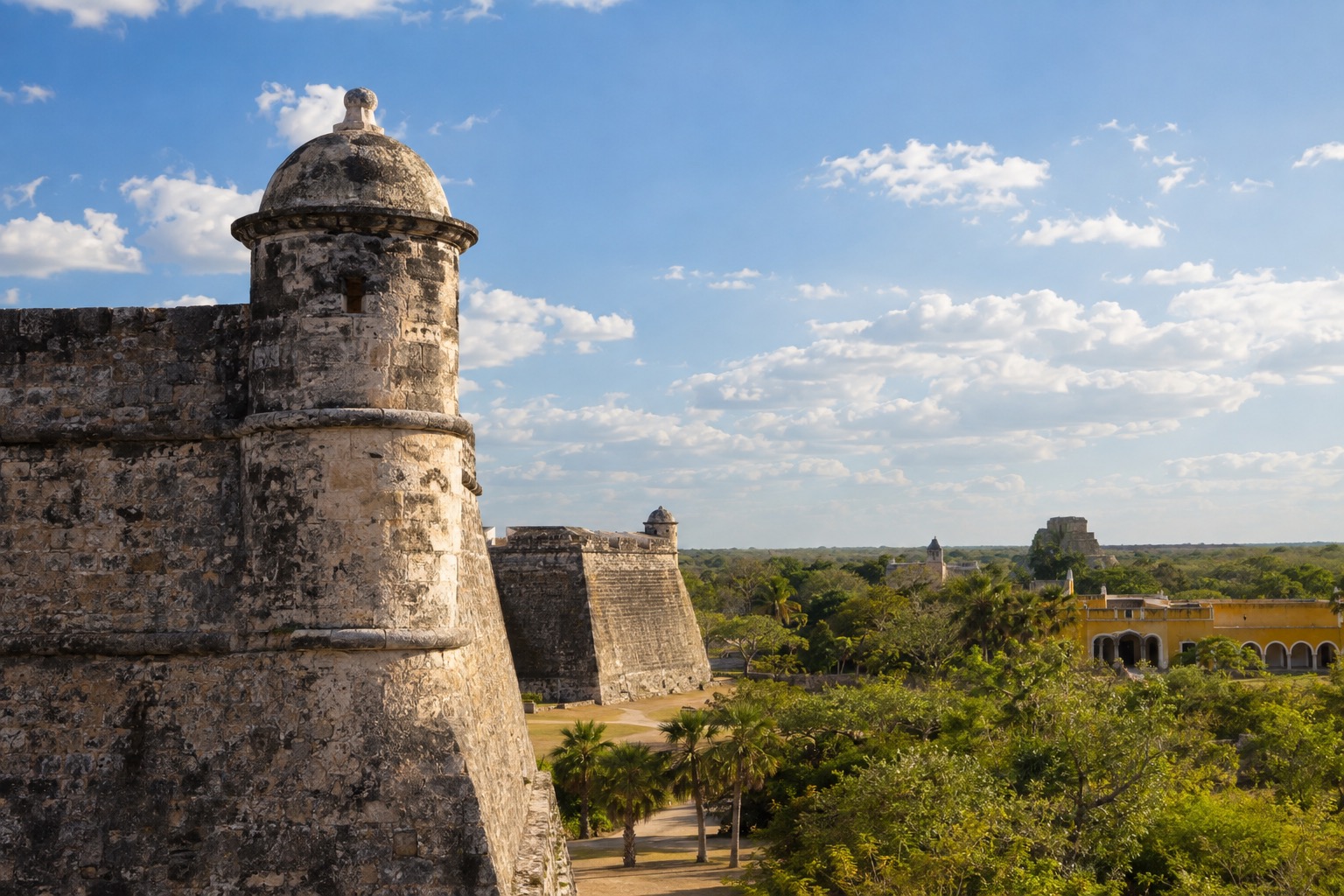
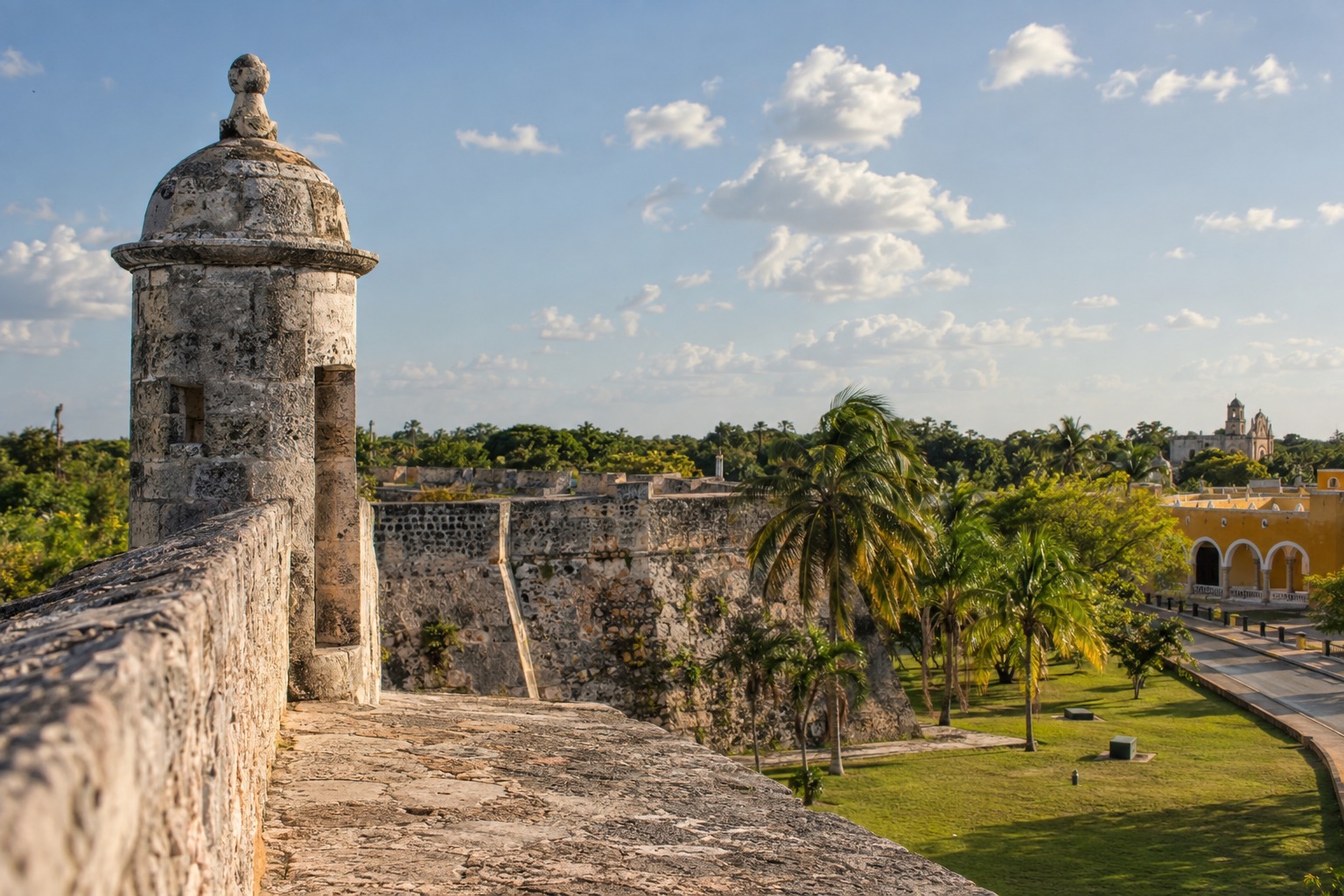
The hexagonal wall, with its eight bastions and four gates, went up between 1686 and 1704 to keep pirates away from a rich port. The Land Gate, the Puerta de Tierra, came later, in 1732. A section was pulled down in 1893 to open the city to the sea, which is why the circuit is no longer complete. UNESCO inscribed the Historic Fortified Town in 1999.
The best way to see it is on foot, tracing the line of the bastions and ducking into the streets behind them. Early morning and late afternoon are the gentler hours, when the light is soft on the facades and the heat eases. Several bastions hold small exhibits, so you can combine a stroll with a museum stop. Wear comfortable shoes, because the old paving is uneven.
The hilltop forts
Beyond the walls, two redoubts crown the hills on either side of town. The Fuerte de San José, built in 1762 on the east hill, now shows a collection of period boats and weapons. The Fuerte de San Miguel, on the west hill, houses an archaeology museum with pre-Hispanic pieces from the region.
Both reward the trip with wide views over the Gulf and the rooftops, and both make a good half-day outing for anyone who likes history. Go in the cooler part of the day and bring water. The San Miguel museum is the better pick if you want to connect the colonial story with the older Maya world around Campeche.
The malecón and the seafood
The malecón runs along the Gulf shore beside the historic center and is where the city comes out at sunset, to walk, jog, cycle or simply sit on the seawall. The water here is more a backdrop than a beach, so think of it as a promenade with a view.
Dinner in Campeche usually means seafood. Look for fish ceviche, shrimp, crab dishes such as pan de cazón (tortillas layered with shark and beans) and the local style of stone crab when it is available. Restaurants inside the walls serve these in courtyards and old houses, a pleasant way to end a day of walking.
How many days do you need in Campeche?
A long weekend is enough to see the essentials, and two full days feel comfortable for the old town at a relaxed pace.
In a short stay, spend one day on the walls, bastions, plazas and cathedral area, and another on the two forts and the malecón at sunset. Meals fill the gaps naturally. With more time, add day trips into the countryside, where Maya sites, haciendas and small towns of the state are within reach by road, and let the city itself slow you down.
Where to stay in Campeche
The historic center inside the walls is the natural base. You can walk to the bastions, plazas, restaurants and the waterfront, and many guesthouses occupy restored colonial houses with courtyards. It suits travelers who want to step out the door into the atmosphere and not depend on a car.
Along the malecón and just outside the center, you find larger, more modern hotels with sea views and easier parking. These suit people arriving by car or who prefer a more conventional hotel. Either way, staying close to the old town keeps the evenings simple.
How do you get to Campeche and get around?
Campeche International Airport, code CPE, serves the city and handled 127,492 passengers in 2025. Since 2023 it has been run by a holding company owned by the Mexican military, the same group that runs Tulum’s airport. Many travelers also arrive by road from elsewhere on the Yucatán Peninsula.
Once in town, the walled center is made for walking, and most sights are close together. Taxis are handy for the hilltop forts or for the airport, and the malecón is an easy walk from the old town. A car becomes useful mainly for excursions beyond the city.
When is the best time to visit Campeche?
The cooler, drier months of winter are the most comfortable for walking the walls and climbing to the forts, with pleasant evenings on the malecón. Spring and summer bring serious heat, so plan sightseeing for early morning and late afternoon and take long lunches indoors.
Campeche sits on the Gulf, and the Atlantic hurricane season runs from June to November, so late summer and fall can bring stormy spells. Holy Week and the year-end holidays draw more Mexican visitors, which means busier plazas and rooms that fill sooner. The rest of the year the city stays calm.
Good to know before you go
The U.S. State Department rates the state of Campeche Level 1, ‘Exercise normal precautions’.
Mexican pesos are the currency to carry for small restaurants, markets and taxis. Normal city habits apply: keep valuables out of sight, and stay in the lit, busy streets of the center in the evening. The old town is compact and easy to read, and a little Spanish goes a long way in the shops and cafés.
Sources
- UNESCO World Heritage Centre, record 895, whc.unesco.org/en/list/895, checked September 29, 2026
- Wikipedia, "Campeche (city)", en.wikipedia.org, checked September 29, 2026 (source secondaire, citant l'UNESCO)
- Wikipedia, "Ing. Alberto Acuna Ongay International Airport", en.wikipedia.org, checked September 29, 2026 (source secondaire, citant l'Agencia Federal de Aviacion Civil)
- U.S. Department of State, Bureau of Consular Affairs, Mexico Travel Advisory, travel.state.gov, checked September 29, 2026 (date issued May 29, 2026) (date issued May 29, 2026)
- common knowledge