
Late in the afternoon, Quinta Avenida fills with the smell of grilled corn and sunscreen, street musicians tune up outside the taquerías, and people drift back from the beach with sandy feet. Playa del Carmen is a lively Caribbean town on the Riviera Maya, easy to walk, easy to eat in and close to the cenotes, the ferry to Cozumel and the big eco-parks. It suits first-timers, couples, families and anyone who wants a beach vacation with a real town behind it.
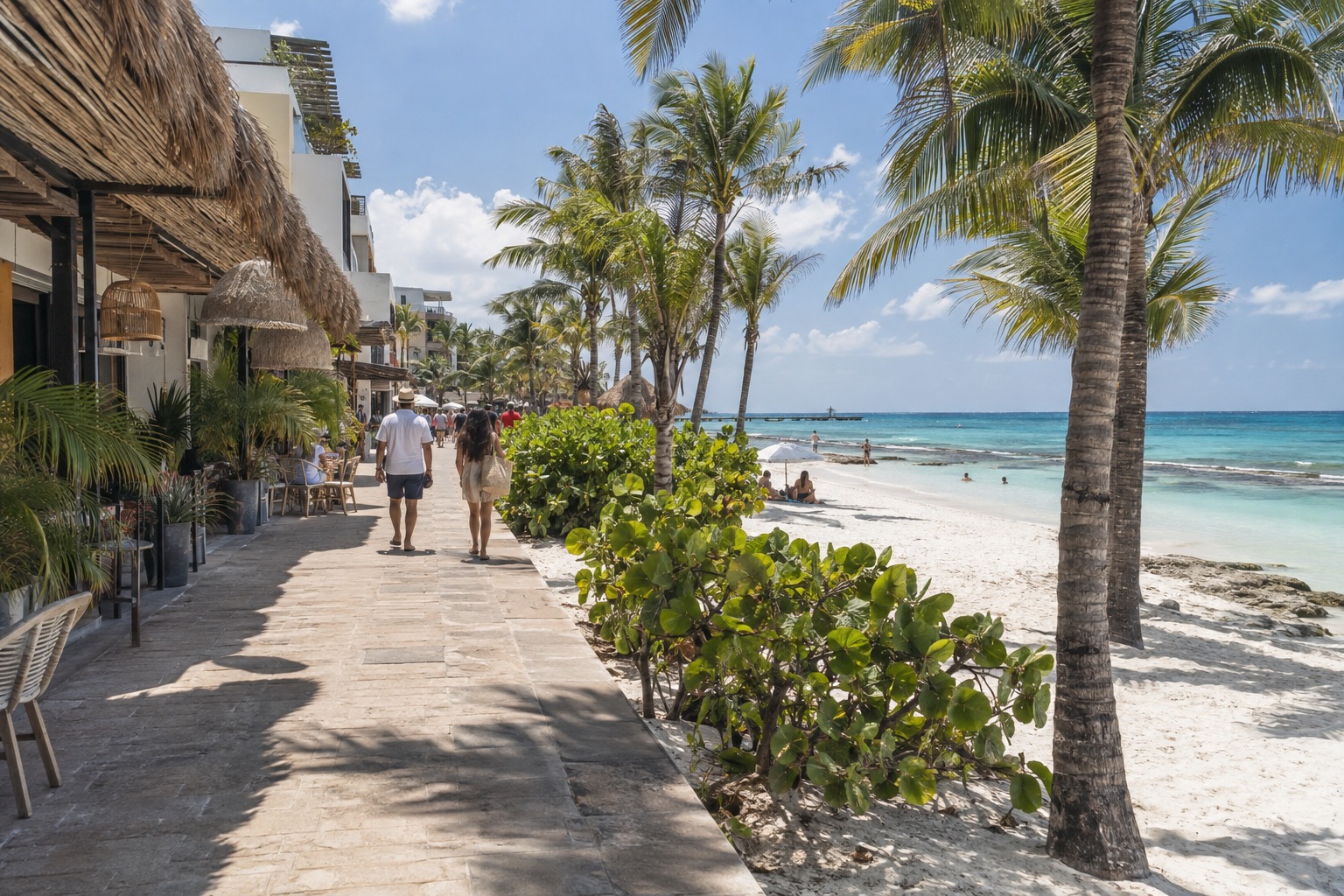
Where is Playa del Carmen and what is it like?
Playa del Carmen sits on the Caribbean coast of Quintana Roo, south of Cancun and north of Tulum, facing the island of Cozumel across the water. It began as a small fishing settlement and has grown into the state’s second-largest city, yet the center still feels like a beach town where you can leave the car behind.
The pace is social and a little restless. Days start with coffee and a swim, afternoons slide into long lunches, and nights are for the bars and clubs along Quinta Avenida, a pedestrian street that runs parallel to the sea. Travelers who want empty beaches and silence may prefer to stay in the quieter northern or gated southern pockets, which give the town a calmer side. Rebuilding after Hurricane Wilma in October 2005 shaped much of the modern town, and the mix of boutique hotels, condos and restaurants you see today grew from there.
What is there to do in Playa del Carmen?
Most people come for the beach, the food and the nightlife on Quinta Avenida, then use the town as a base for trips along the coast. What sets Playa apart from its neighbors is the balance: it is livelier and more walkable than Tulum, and more of a real town than the Cancun Hotel Zone.
Quinta Avenida and the beach
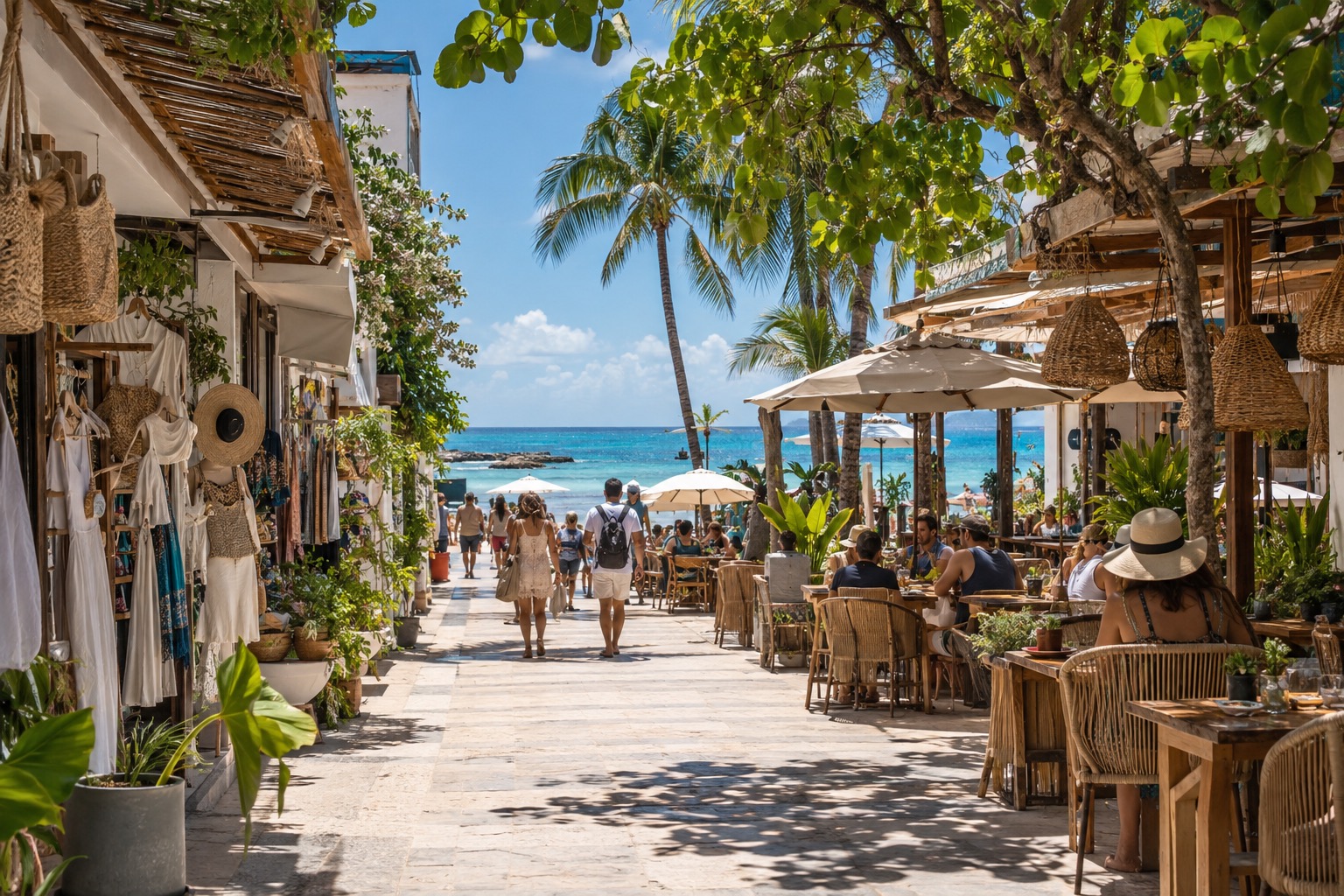
Quinta Avenida is the spine of the town, a long pedestrian stretch of shops, restaurants and clubs, with side streets that run straight down to the sand. You can spend a whole day moving between a beach chair, a seafood lunch, a browse for hammocks and silver, and a rooftop drink at sunset.
Mornings are the calmest hours on the avenue, and the beach clubs fill up after lunch. Streets a block or two off the avenue are quieter and often have the better taco stands. Sargassum can affect some stretches of beach, so a quick look at recent reports helps if swimming matters to you.
The ferry to Cozumel
Cozumel is the classic outing from Playa, a short crossing from the waterfront to an island known for its reef, snorkeling and diving, and for a slower, quieter feel than the mainland. From the Terminal Maritima NAVEGA, which sits on Avenida Benito Juarez, the Ultramar ferry departs, while Xcaret Xpress covers the same route too.
Early boats give you the most time on the island, whether you spend it on the water or over a long lunch in San Miguel. It suits divers, snorkelers and anyone who wants a calm change from the beach scene.
Xcaret and the Riviera Maya parks
South of town, Xcaret is a full-day eco-park that brings nature and culture together, with underground rivers for floating, plus an aviary, a pavilion for butterflies, and an aquarium with a coral reef. In the evening it closes with a large staged show with hundreds of performers, telling Mexican history through music and dance.
Plan the park as the main event of the day, with comfortable shoes and swimwear in your bag. It works well for families and groups with mixed tastes, and its hours stretch late enough to include the evening show.
Cenotes and the road to Tulum
The limestone sinkholes of the Yucatan are the other great draw. You’ll find Dos Ojos and Gran Cenote nearer Tulum, and toward Puerto Morelos there are several smaller cenotes, each with its own posted price and its own independent operation.
You step down into clear, cool water under rock and roots, and the light is best in the middle of the day. Combine a cenote with a stop in Tulum for a full outing, and bring a towel and a swimsuit.
How many days do you need in Playa del Carmen?
A long weekend covers the essentials, and a week lets the town and the coast unfold at an easier pace. A short stay fits the beach, a few evenings on Quinta Avenida and either the Cozumel crossing or a cenote morning.
With more days, add Xcaret as a full day, a trip to the cenotes near Tulum, and an unhurried day on Cozumel. A week also leaves room for slow mornings, a long lunch in the northern neighborhoods and a few hours doing nothing on the sand.
Where to stay in Playa del Carmen
Centro, around Quinta Avenida, suits first-time visitors, couples and groups who want dining, nightlife and the beach on foot. Lodging is mostly boutique hotels, rental condos, hostels and small aparthotels, with almost no large all-inclusives. A room a block or two off the avenue keeps the nighttime noise down while leaving the action close.
Playacar, a gated, landscaped community south of Centro, suits families, golfers and anyone who wants a quiet, self-contained resort setting. Phase 1 is dominated by beachfront all-inclusives, while Phase 2 has villas, condos and a few boutique hotels. Without a rental car, ask your host about bicycles or golf carts, since walks from some villas to the beach or gate can be long.
North of Calle 38, Zona Norte is calmer and more residential, with low-rise condos, guesthouses and small beach clubs. It suits couples, remote workers and long stays, and it is a short taxi ride or a walk from downtown. Little Italy, around Avenida 10 north of Calle 44, is a compact pocket of Italian-owned restaurants and delis, mostly apartments without beachfront. A kitchen helps if you want to cook with the local produce.
How do you get to Playa del Carmen and get around?
Most visitors fly into Cancun International Airport, then take a private shuttle or car for about 45 to 60 minutes to Centro, or an ADO bus for about 60 to 75 minutes. Tulum International Airport, to the south, is the closer option for the southern Riviera Maya. Many Playacar resorts arrange transfers directly to the property.
Once in town, you walk. Quinta Avenida and the beach streets are pedestrian-friendly, the ADO terminal is a short walk or taxi ride from Centro, and taxis cover the rest. Centro to Playacar is a short taxi ride, and the northern neighborhoods are a short taxi ride or a beach walk away. Ferries cross to Cozumel from the waterfront.
When is the best time to visit Playa del Carmen?
The cooler, drier months from late fall through spring are the most comfortable for beach days and long evenings on the avenue, and they are also when the town is busiest, especially around Christmas, New Year and spring break.
Summer is hotter and stickier, and the Atlantic hurricane season stretches from June through November. Activity clusters from mid-August into mid-October, so those weeks carry the greatest chance of storms, and flexible plans are wise. Rooms are easier to find in those quieter months.
Good to know before you go
The U.S. State Department rates the state of Quintana Roo Level 2, ‘Exercise increased caution,’ due to terrorism and crime.
Dollars are widely accepted in tourist areas, though pesos are handy at small shops and taquerías. After night begins, keep to pedestrian streets with good lighting and areas popular with tourists, and keep in mind that Playa del Carmen runs a Tourist Assistance Module that can provide emergency numbers, legal advice, and assistance with filing police reports. Foreign visitors also pay a state environmental fee.
| Fee | Amount | Who pays |
|---|---|---|
| Visitax (state tourist fee) | About 293 pesos (2.50 UMA), paid online at visitax.gob.mx | Foreign tourists |
Sources
- Wikipedia, "Playa del Carmen", en.wikipedia.org, checked September 29, 2026 (source secondaire)
- common knowledge
- Ultramar (exploitant), ultramarsales.ultramarferry.com/en/ferry-cozumel.php, checked September 29, 2026
- Xcaret (operator), xcaret.com, checked September 29, 2026 (schedule and price unconfirmed)
- reserve de sourcage, aucun chiffre affirme
- U.S. Department of State, Bureau of Consular Affairs, Mexico Travel Advisory, travel.state.gov, checked September 29, 2026 (date issued May 29, 2026) (date issued May 29, 2026)
- Gobierno del Estado de Quintana Roo, portal visitax.gob.mx, checked September 29, 2026 (amount unconfirmed)
- NOAA National Hurricane Center, checked September 29, 2026
- Ley de Derechos del Estado de Quintana Roo, art. 51-Octies, congresoqroo.gob.mx, checked September 29, 2026
All our pages
When to go
- Best Time to Visit Playa del Carmen: Weather by Month, Crowds, Sargassum and Festivals
- Playa del Carmen in January: Weather, Beach Days, Cenotes and Quinta Avenida
- Playa del Carmen in February: Carnaval, Weather, Beach Days and Where to Eat
- Playa del Carmen in March: Weather, Beach Days, Cenotes and Spring Break Crowds
- Playa del Carmen in April: Weather, Easter Crowds, Beach Days and Cenote Outings
- Playa del Carmen in May: Weather, Sea Temperature, Beach Days and What to Do
- Playa del Carmen in June: Weather, Sea Days, Cenotes and Rainy-Season Rhythm
- Playa del Carmen in July: Weather, Sea Days, Summer Crowds and What to Do
- Playa del Carmen in August: Turtle Nights, Stormy Afternoons and Warm Sea
- Playa del Carmen in September: Hurricane Season Calm, Warm Sea, Cenotes and Quiet Streets
- Playa del Carmen in October: Weather, Rainy-Day Plans, Food and Quiet Beaches
- Playa del Carmen in November: Weather, Día de Muertos, Cenotes and Calm Beaches
- Playa del Carmen in December: Weather, Posadas, Quinta Avenida and Cozumel Days
Things to do
- Things to Do in Playa del Carmen: Quinta Avenida, Beaches, Cozumel and Xcaret
- Day Trips from Playa del Carmen: Cozumel, Xcaret, Cenotes and Maya Ruins
- 3 Days in Playa del Carmen: Quinta Avenida, Xcaret, Cozumel and Where to Stay