
Ships sound their horns at the pier in the morning, and by the time the day-trippers have found their loungers, the fishermen of Mahahual are already hauling their boats up the sand. Costa Maya is the quiet southern end of the Quintana Roo coast, a shallow turquoise sea in front of a small town with a beach walkway and not much else. This is just right for visitors who are looking for a barefoot Caribbean minus the resort corridor.
Where is Costa Maya and what is it like?
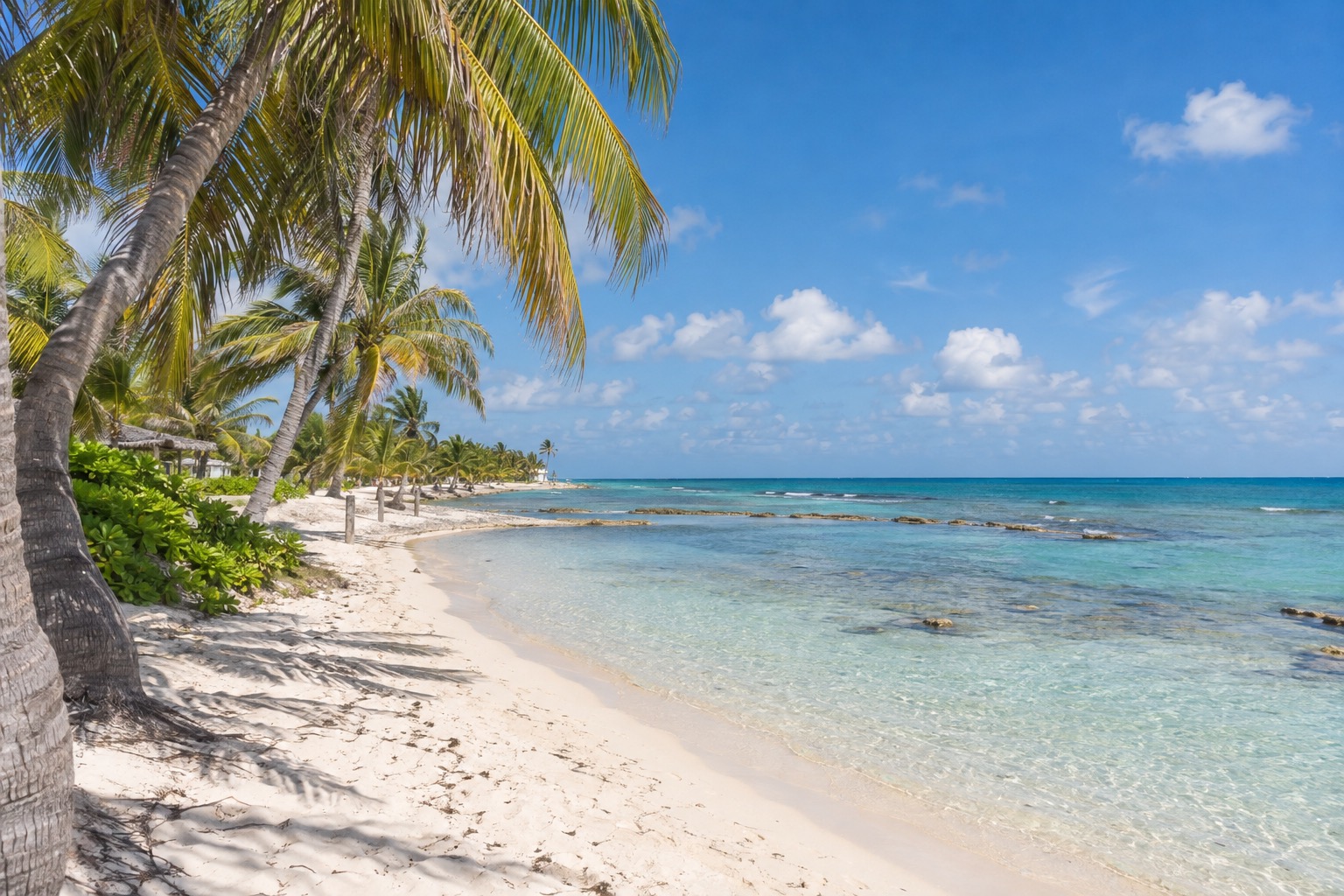
Costa Maya is the southern stretch of Quintana Roo’s Caribbean coast, centered on the fishing town of Mahahual and reaching toward Xcalak and the Belize border, with Chetumal as the nearest city inland. The name comes from the cruise terminal beside Mahahual, and the town grew up around that pier without losing its fishing-village scale.
The center of life is the malecón, a pedestrian walkway along the sand lined with small hotels, restaurants and beach clubs. The water in front is shallow and sheltered by the reef. Evenings are low-key, a few beach bars and dinners, and most places wind down before midnight.
Couples, families with young children and budget-minded travelers tend to love it. If you want big nightlife, a large all-inclusive resort or a long list of attractions, the Riviera Maya further north will suit you better.
What is there to do in Costa Maya?
Costa Maya offers beach days, time on the water, a slow walk through a real Mexican fishing town and, for the adventurous, a trip to the far end of the coast. What sets it apart from its neighbors is the lack of crowds on land and the absence of big resort infrastructure.
Beach days along the malecón
The malecón is where most days begin and end. You pick a beach club, claim a lounger, order fresh fish or a plate of ceviche and wade into water that stays gentle close to shore. Between clubs, stretches of open sand are quieter and good for walking at sunrise.
Everything is within an easy stroll, since the whole walkway can be covered end to end in about 15 to 20 minutes. Taxis or rented golf carts are there for the trip to the cruise port or the town center. Bring pesos in cash, because many small beachfront businesses have unreliable card readers or add card fees.
Snorkeling and diving on the Mesoamerican Reef
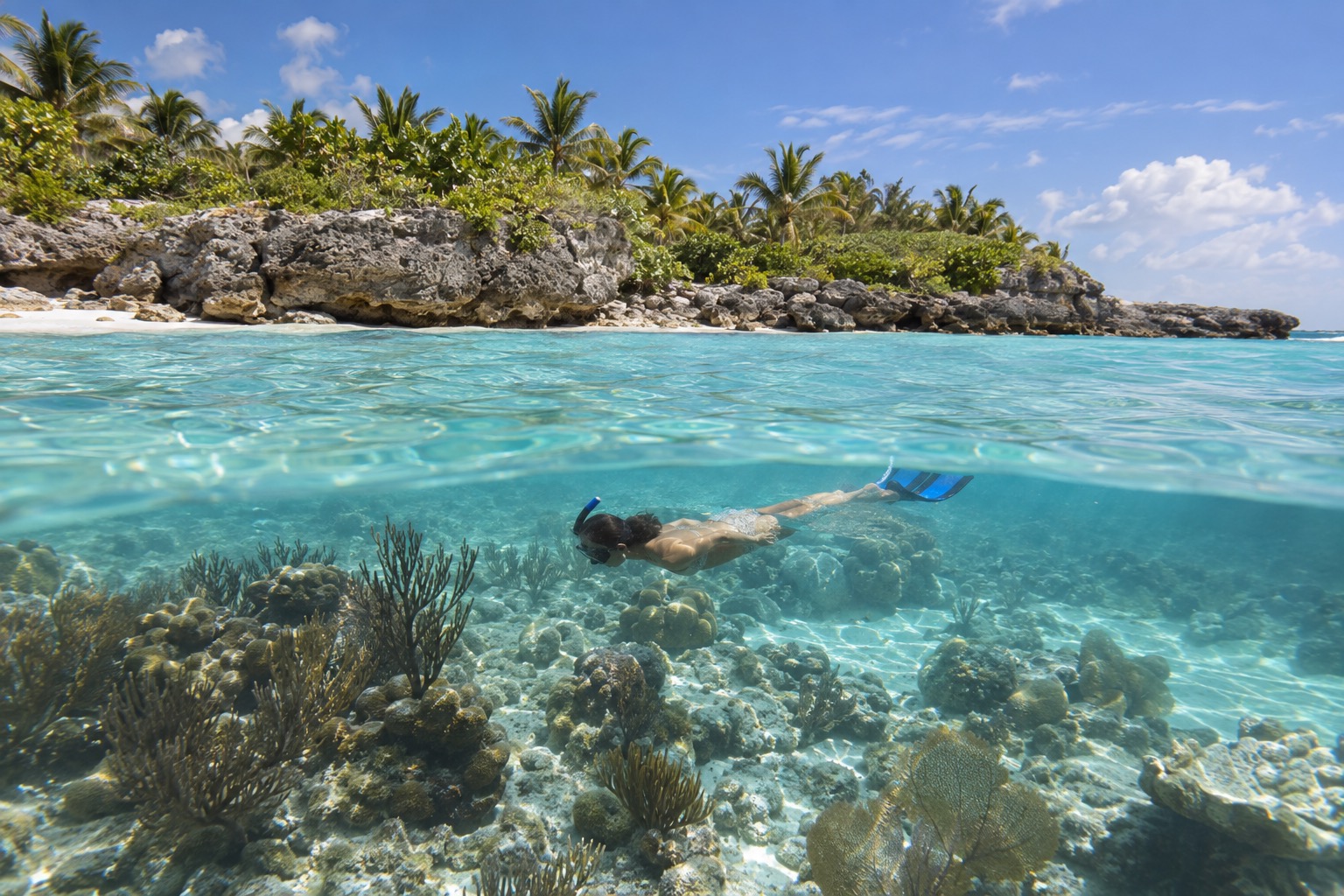
The reef sits so close to town that the boat ride out is brief, which keeps the day relaxed. Outings here are about drifting over coral heads and watching fish in clear water, then returning for a late lunch on the sand.
It suits first-time snorkelers as well as certified divers, and mornings are usually the easiest time to be on the water. Because conditions change with the wind, ask the operator how the sea looks that day.
Xcalak, the end of the road
Xcalak is a remote fishing village by the Belize border, with a sandy main street, mangroves, palms and almost no development. Divers and fly anglers come for the quiet and the water, and nature lovers come for the isolation. Many lodges serve meals on site because independent restaurants are scarce.
It is reached by the coastal road from Mahahual, now largely paved, and also by road from the Chetumal side. From Mahahual the drive usually takes 1.5 to 2 hours, and from Chetumal International Airport the total trip can run 3.5 to 4 hours. Bring any specialized dive or fishing gear, since rental and repair services are extremely limited.
How many days do you need in Costa Maya?
Three or four days is a comfortable stay, and a week suits anyone who likes to slow down completely.
A short visit fits a reef outing, a couple of beach-club afternoons and an evening stroll along the malecón, with a wander through the inland streets of town for a more local meal. Cruise passengers get a taste of the same in a single day.
With more time, add the journey to Xcalak and give it a night or two, since the drive is long enough to deserve it. Otherwise the best use of extra days is to do very little, which is what the place is built for.
Where to stay in Costa Maya
The malecón has small hotels, cabanas and boutique guesthouses directly on or just behind the beach, with few international chains. It suits couples, families with young children and anyone who wants the sand at the door without a big resort.
Mahahual Centro, the original village a few blocks inland, has inexpensive guesthouses, hostels and family-run inns, usually without ocean views. It is quieter and more residential, a good fit for budget and long-stay travelers, and the beach is a 5 to 10 minute walk. Xcalak, farther south, offers small dive lodges and eco-cabins for those who want isolation.
How do you get to Costa Maya and get around?
Because Costa Maya has no full-service international airport of its own, the majority of visitors come by cruise ship or overland, either from Chetumal or from the north via the coastal highway.
From Chetumal International Airport the drive by car or bus usually takes 1.5 to 2 hours. From Cancún International Airport it is about 4 to 5 hours.
Once in Mahahual, you mostly walk. The malecón is compact, and town lodgings are a short stroll from the beach. The cruise port lies about 1.2 miles north of the center, a 25-minute walk or a short taxi ride, and golf carts are also available. For Xcalak, a rental car or a prearranged shuttle is the usual choice, and a high-clearance vehicle is recommended in the rainy season.
When is the best time to visit Costa Maya?
The calmest planning months fall in the winter and spring, after the storm season has ended, when beach days and reef trips are most predictable.
Summer and early fall are the hot, wetter stretch and sit inside the Atlantic season, so expect heat, showery afternoons and a sea that can change quickly. Crowds here follow the cruise ships more than the calendar. On port days the beach clubs near the pier fill up, while the stretches farther along the malecón and the town stay relaxed. Christmas and Easter weeks bring more vacationers and peak-season rates, and Holy Week moves every year.
Good to know before you go
The U.S. State Department rates Quintana Roo Level 2, ‘Exercise increased caution’.
Carry Mexican pesos for small businesses, keep to ordinary travel habits and ask locally about sea conditions before heading out. The Atlantic hurricane season lasts from June 1 through November 30, a point to keep in mind as you choose your dates. Quintana Roo also charges a lodging tax on stays, and visitors pay a state fee on entry.
| Fee | Amount | Who pays |
|---|---|---|
| Visitax (state visitor fee) | 2.50 UMA, about 293 pesos | Foreign visitors entering Quintana Roo |
| Cruise passenger fee | 5 US dollars, collected by the cruise line | Cruise passengers, instead of Visitax |
| Lodging tax (Impuesto Sobre Hospedaje) | 5% of the billed accommodation value | Hotel guests |
| Lodging tax, short-term rentals | 6% when a host or booking platform collects payment | Short-term rental guests |
Sources
- Reportur, "Royal Caribbean toma el control del puerto en Mahahual", 16 juillet 2025 ; Milenio, checked September 29, 2026
- APIQROO, "Empresa" (apiqroo.com.mx), checked September 29, 2026
- Congreso del Estado de Quintana Roo, Ley del Impuesto al Hospedaje del Estado de Quintana Roo, art. 8, congresoqroo.gob.mx, checked September 29, 2026
- Ley de Derechos del Estado de Quintana Roo, art. 51-Octies and 51-Nonies, congresoqroo.gob.mx, checked September 29, 2026
- U.S. Department of State, travel.state.gov, checked September 29, 2026 (date issued May 29, 2026)
- NOAA National Hurricane Center, nhc.noaa.gov, checked September 29, 2026