
On January 6, Mexican families gather around a rosca de reyes, the oval sweet bread studded with candied fruit, each hoping not to find the little plastic baby hidden in their slice. Out on the Baja coast, gray whales are nosing up beside small boats in the lagoons, while the highland plazas are cool and bright. January in Mexico is a month of clear skies and easy sightseeing, with a warm beach, a colonial city or a whale-filled lagoon waiting depending on where you land.
What is the weather like in Mexico in January?
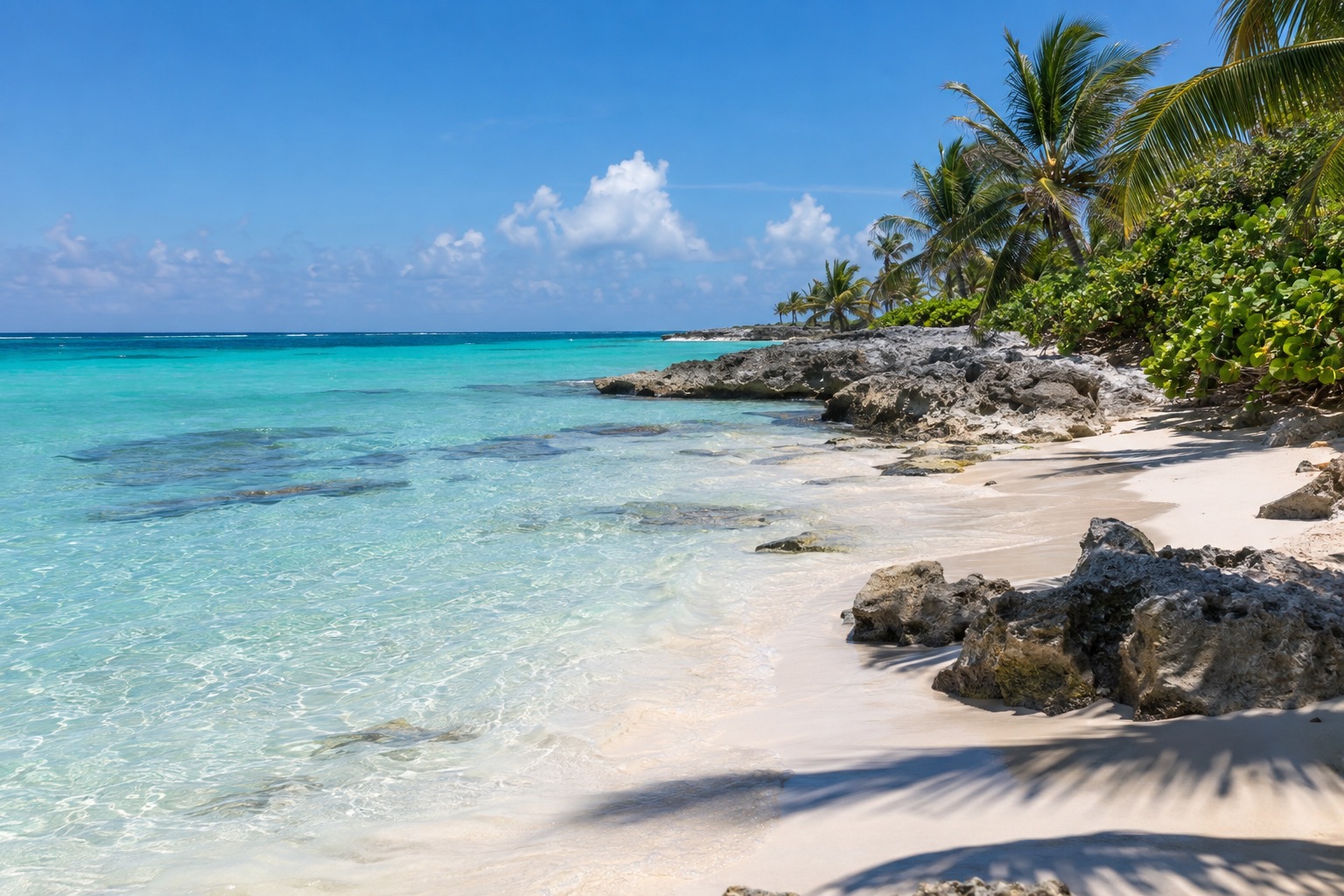
January is warm and mostly dry across Mexico, but the country splits into distinct climates: sunny, mild beaches on the Pacific side, a humid and showery Caribbean coast, and highland cities with hot afternoons and chilly nights.
| Place | Region | Average high (°F) | Average low (°F) | Rain (in) | Rain days | Sea (°F) |
|---|---|---|---|---|---|---|
| Cancun | Caribbean coast | 83.7 | 68.0 | 4.09 | 10.9 | 80.7 |
| Puerto Vallarta | Pacific coast | 80.1 | 56.7 | 1.22 | 8.8 | 78.2 |
| Cabo San Lucas | Baja California | 79.9 | 55.0 | 0.24 | 0.9 | 73.6 |
| Mexico City | Central highlands | 72.0 | 46.9 | 0.47 | 2.7 | |
| Oaxaca | Central highlands | 84.0 | 50.5 | 0.09 | 1.4 |
The biggest contrast is between day and night. Oaxaca reaches the mid-80s in the afternoon yet drops to around 50 after dark, and Mexico City is comfortable by day but properly cold early in the morning, so layers matter more there than at the beach.
Cancun is the wettest of the group, with rain on roughly one day in three, usually short passing showers that leave the evenings warm. Cabo San Lucas gets almost no rain, but the Pacific beside it is the coldest sea in the group, a brisk plunge instead of a bath. Puerto Vallarta sits between the two, with a sea noticeably warmer than Cabo’s.
Where to go in Mexico in January
The Caribbean coast
White-sand beaches, cenotes and Maya ruins are found in Cozumel, Isla Mujeres, Cancun, Playa del Carmen and Tulum, and come January the sea stays warm enough for a swim with no hesitation. Days are warm and humid, and the showers tend to be brief, so a morning at Tulum or a day trip inland to Chichén Itzá usually works out.
January comes after the Atlantic hurricane season, and sargassum is typically at its lowest in the winter months, though some years still bring a lot of seaweed to the beaches from Cancun to Mahahual. This is a good month for a classic beach-and-ruins trip, and for anyone who wants guaranteed warmth in the middle of a northern winter.
The Pacific coast: Puerto Vallarta and Riviera Nayarit
Around the Bay of Banderas sits Puerto Vallarta, where jungle-covered hills climb behind the Malecón, and January evenings stay mild enough for a long stroll along the seafront and dinner outside. Up the coast, the beach towns of Riviera Nayarit, such as Sayulita and Punta Mita, are good for surf lessons, tacos on the sand and lazy afternoons.
Humpback whales visit the Bay of Banderas in winter, and tour boats go out to find them. Rain is limited to a few showery days, and the hurricane season is long over. The U.S. government places no travel restrictions on its employees in Puerto Vallarta and neighboring Riviera Nayarit, though Jalisco as a whole is rated Level 3.
Baja California: Los Cabos
Los Cabos is desert meeting the sea, with cactus-covered hills dropping to the Pacific. Cabo San Lucas offers nightlife, the marina and the famous arch, whereas San José del Cabo is calmer, with galleries and a peaceful town square. Sunshine is nearly guaranteed in January, with warm days and cool evenings.
It is also whale season, with humpbacks watched from tour boats off the cape. Because the ocean here stays chilly in January and many local beaches along the Pacific are too rough for a swim, the month suits boating, sunbathing, and sunsets more than long swims. Farther north, the gray whale lagoons make a trip of their own.
The central highlands
In Guadalajara, Oaxaca, Mexico City and San Miguel de Allende, the appeal lies in colonial centers, museums and food, not beaches. January is dry and sunny, ideal for long walks through the Zócalo, markets and mezcal bars, with evenings cool enough for a jacket. Rain is almost absent, so plans rarely get washed out.
Oaxaca is warm in the afternoon and crisp at night, which suits its outdoor markets and courtyard dinners. Mexico City is mild by day and chilly by dawn. Guadalajara is in Jalisco, rated Level 3 by the U.S. State Department, so check the current guidance before planning a stop there.
What to do in Mexico in January
Three Kings Day and the rosca
January 6, Día de los Reyes Magos, is the day Mexican children get their presents, and families and offices share the rosca de reyes with hot chocolate or atole. Bakeries sell them in the days before, and the lines at the counters are part of the scene. Whoever finds the figurine in their slice traditionally hosts a tamales party on Candlemas, February 2.
New Year’s Day is a public holiday, so many shops and some restaurants are closed on January 1, and the first days of the month are slow in cities. Plazas, especially in the highlands, fill with families walking off the holiday meals.
Gray whales in Baja California Sur
January is the heart of the gray whale season in Baja California Sur, when mothers and newborn calves fill the Ojo de Liebre and San Ignacio lagoons of El Vizcaíno. Small boats head out onto the lagoons, and curious whales sometimes come close enough to be seen at eye level. January sits in the middle of the season.
It is a trip for travelers who like wildlife more than resort comforts, as the lagoons are remote and well away from Los Cabos. Tour boats also let travelers see humpbacks off Los Cabos, as well as in the Bay of Banderas, right at Puerto Vallarta.
Monarch butterflies
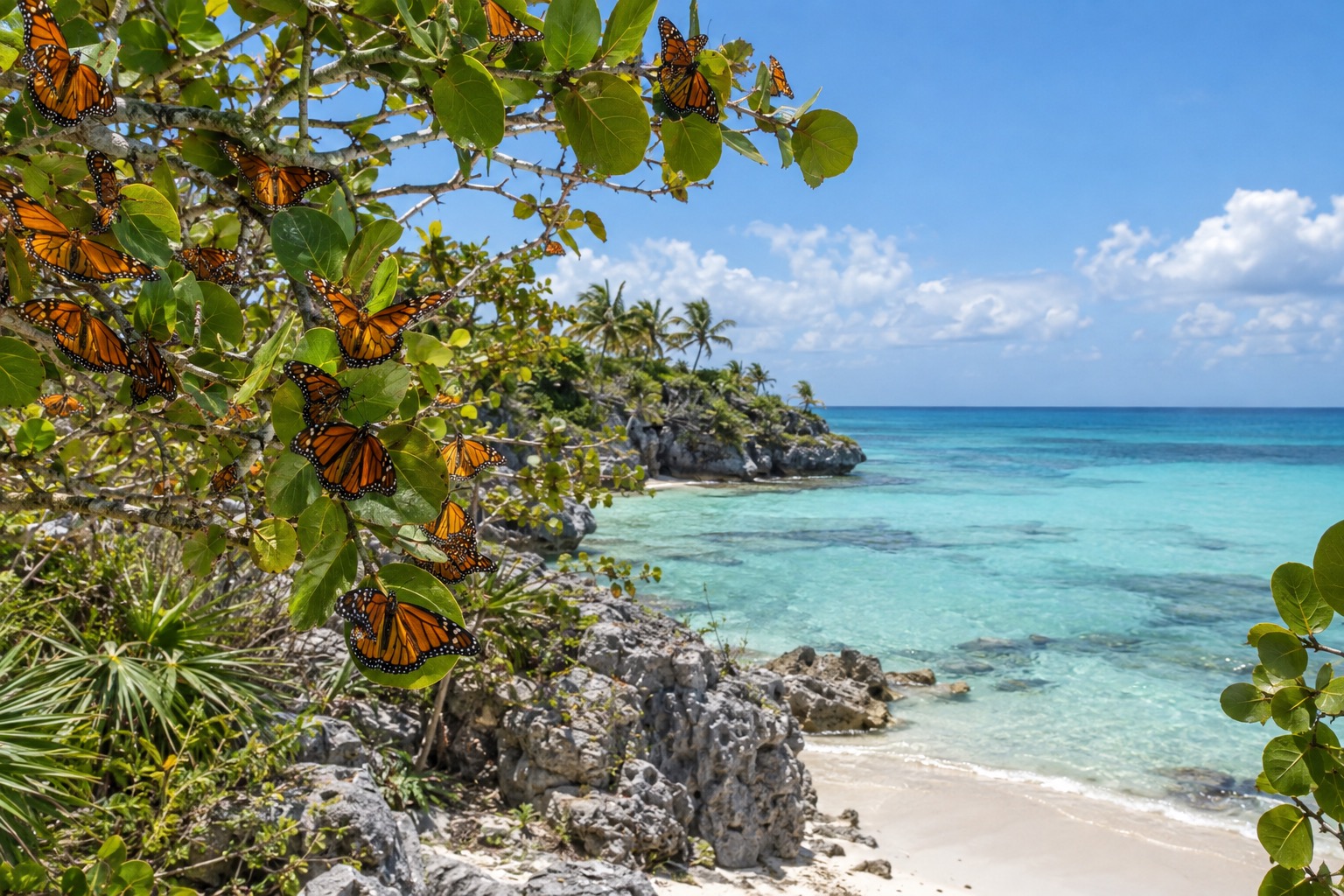
Each winter the monarchs cover the oyamel fir forests in central Mexico, and four sanctuaries open to visitors. Michoacán carries a U.S. Level 4 (Do Not Travel) rating, and three of them, El Rosario, Senguio and Sierra Chincua, lie within that state. State Department, and the advisory names the Monarch Butterfly Reserve among areas U.S. government employees may not enter.
The fourth, Piedra Herrada, is in the State of Mexico, rated Level 2. The sanctuaries have been open daily from morning to late afternoon in recent seasons, with the season running from mid-November through March.
| Site | Open | Admission |
|---|---|---|
| Monarch sanctuaries (El Rosario, Senguio, Sierra Chincua, Piedra Herrada) | Daily, 8 a.m. to 5 p.m. (2024-2025 season, November 15 to March 31) |
Is Mexico busy in January?
Yes, the first half of January is busy in the beach destinations, and the crowds ease noticeably in the second half. North American visitors escaping winter fill the Caribbean coast, Puerto Vallarta and Los Cabos, and peak-season rates tend to stay in place through the first days of the month.
Mexican families travel around New Year’s and Three Kings Day, so popular beach towns and colonial cities feel lively through January 6. After that, schools reopen and the pace relaxes. The highland cities stay steady all month, and the whale lagoons of Baja remain quiet because they are far from everything.
What to pack for Mexico in January
Packing depends on where you are headed: beach clothes for the coasts, and layers for the highlands, where mornings and nights are cool. Boat trips for whales can be breezy even on warm days.
- Swimsuit and light cotton clothes for Cancun, Puerto Vallarta and Los Cabos
- When evenings arrive across Mexico City, Oaxaca and Cabo San Lucas, pack a light jacket or sweater.
- A windbreaker for whale-watching boats
- Comfortable walking shoes for cobblestone streets and ruins
- A hat and sunscreen, as the sun remains intense even when temperatures are cool.
- A compact umbrella or light rain jacket if you are heading to the Caribbean coast
Good to know before you go
January falls outside the official hurricane seasons on both coasts, the Atlantic one that governs the Caribbean side and the Eastern Pacific one that governs Los Cabos and Puerto Vallarta. Sargassum is typically at its low point in winter on the Caribbean beaches, though some years still bring a lot.
The U.S. State Department rates Mexico Level 2 overall, exercise increased caution, and sets different levels by state, from Level 1 in Yucatán and Campeche up to Level 4 in six states. Check the level for each state on your route before booking, since popular regions such as Quintana Roo and Baja California Sur sit at Level 2 while Jalisco and Baja California are at Level 3.
Is January a good time to visit Mexico?
Yes, January is a very good time for the Pacific coast and Baja, where the days are sunny and nearly dry and the whales are in the water, and it is excellent for the highland cities, which are dry and bright. The Caribbean coast is warm and still lovely, with a bit more rain than the others.
Compared with December, the holiday crowds thin out after Three Kings Day, and the sea cools a little on the Pacific side. February is a touch drier in Cancun and warmer in the highlands, with the whales still in Baja, so the two months feel close in spirit, with January a bit livelier at the start and calmer toward the end. What makes January special is the mix of traditions and wildlife: a warm slice of rosca on Three Kings Day, a gray whale surfacing beside a skiff in a Baja lagoon, and a dry, golden light over plazas that are easy to enjoy at a slow pace.
Sources
- Servicio Meteorologico Nacional (CONAGUA), normales climatologicas 1991-2020, estacion 23155 (Cancun, Benito Juárez), checked September 29, 2026
- Open-Meteo Marine API, average 2015-2024, checked September 8, 2026
- Servicio Meteorologico Nacional (CONAGUA), normales climatologicas 1991-2020, estacion 09048 (Tacubaya Central (Obs), Miguel Hidalgo), checked September 29, 2026
- sunrise-sunset.org, sunrise and sunset on the 15th of the month, checked September 8, 2026
- Servicio Meteorologico Nacional (CONAGUA), normales climatologicas 1991-2020, estacion 03005 (Cabo San Lucas, Los Cabos), checked September 29, 2026
- Servicio Meteorologico Nacional (CONAGUA), normales climatologicas 1991-2020, estacion 14339 (El Cuale, Puerto Vallarta), checked September 29, 2026
- Servicio Meteorologico Nacional (CONAGUA), normales climatologicas 1991-2020, estacion 20079 (Oaxaca, Oaxaca De Juárez), checked September 29, 2026
- NOAA National Hurricane Center, "Tropical Cyclone Climatology", nhc.noaa.gov, checked September 29, 2026
- University of South Florida, Optical Oceanography Lab, "Sargassum Watch System (SaWS)", optics.marine.usf.edu, checked September 29, 2026
- U.S. Department of State, Mexico Travel Advisory (main, level banner), travel.state.gov, read live via browser (protected by Cloudflare, direct fetching blocked with 403) on 29 September 2026
- U.S. Department of State, Mexico Travel Advisory (reissued May 29, 2026), section « Risks in specific areas », travel.state.gov/en/international-travel/travel-advisories/mexico.html, read via browser (Cloudflare blocks curl) on 29 September 2026
- CONANP (Comision Nacional de Areas Naturales Protegidas), "Inicia la temporada de avistamiento de ballena gris en la Reserva de la Biosfera El Vizcaino", gob.mx/conanp, checked September 29, 2026 (window confirmed over several seasons, including the 2025-2026 announcement)
- CONANP (Comision Nacional de Areas Naturales Protegidas), "Inicia la temporada de visitacion a los santuarios de Mariposa Monarca, periodo 2024-2025", gob.mx/conanp, checked September 29, 2026
To plan your stay
- Things to Do in Mexico: Ruins, Beaches, Day of the Dead and Street Food
- Where to Stay in Mexico: Riviera Maya, Los Cabos, Puerto Vallarta, Mexico City and All-Inclusive Areas
- Getting Around Mexico: Buses, the Tren Maya, Taxis and Driving Your Own Car
- Mexico Travel Tips: Dollars, Tourist Tax, Tipping, Tap Water, Driving and Safety by State