
At Santa Cruz, boats loaded with snorkelers push off the marina in the morning, pelicans watch from the pilings, and the smell of grilled fish drifts from the beachfront restaurants. A few minutes inland, La Crucecita’s zócalo fills with families as the evening cools. Huatulco is a string of protected bays on Oaxaca’s Pacific coast, a place for swimming, boat rides and unhurried days, whether you want a resort, a small town base or a cabaña at the end of a quiet beach.
Where is Huatulco and what is it like?
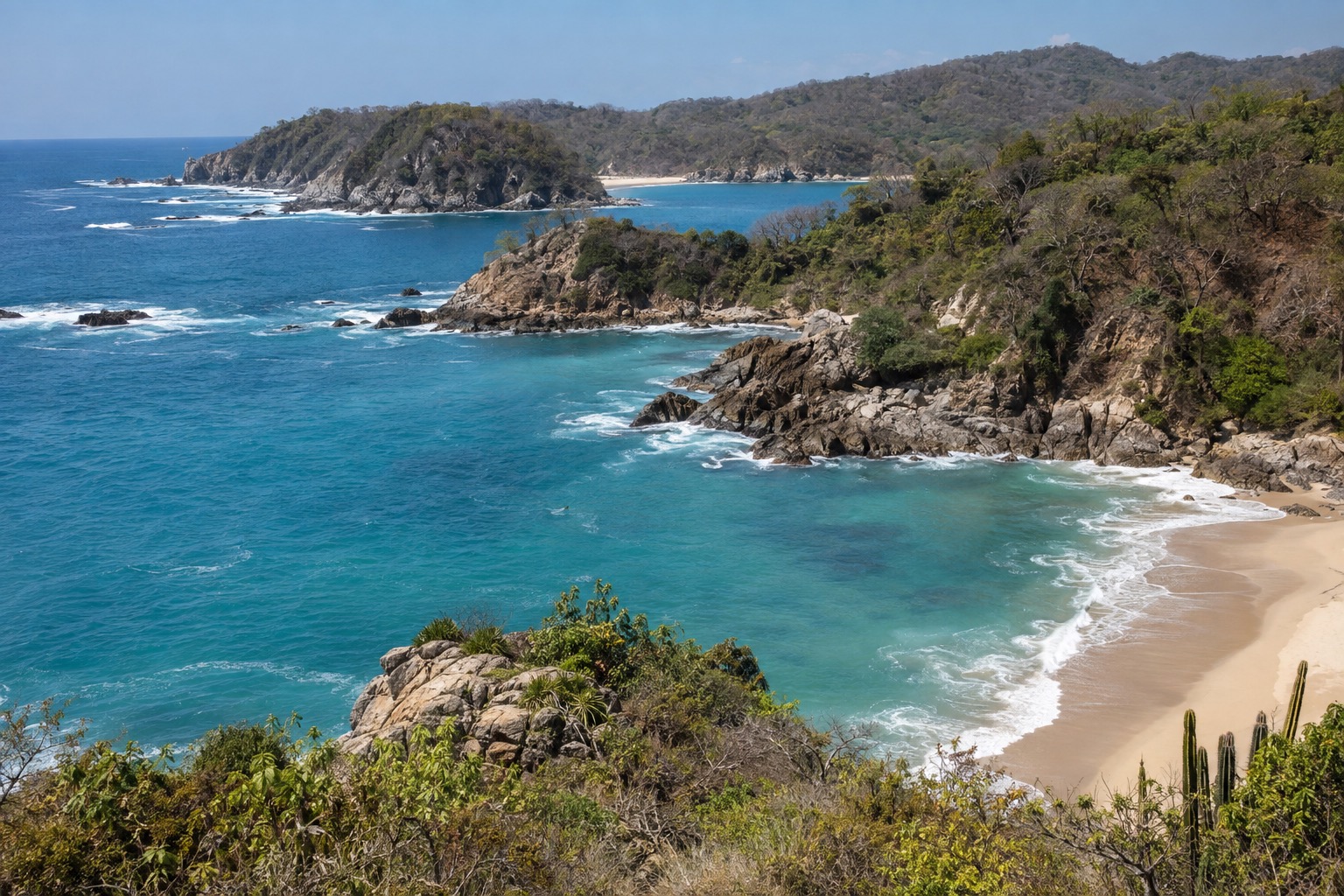
Huatulco sits on the Pacific coast of Oaxaca, where the Sierra Madre drops toward a run of nine bays, and it is a planned resort area built around nature rather than a single big beach town. Santa Cruz Huatulco holds the marina and the beachfront, La Crucecita is the town behind it, and Tangolunda, Chahué and Bahía de Conejos spread along the coast on either side.
The pace is slow. Much of the coast is protected, so you find dry tropical forest running down to the water, coral reefs offshore and mangroves in the quieter corners. Five of the nine bays lie inside a national park, which explains why the coast feels green and low-rise rather than packed with towers.
People who love it want sea, shade and quiet evenings, with good Oaxacan food in town. Travelers who look for big nightlife or a long list of museums may find it too calm. It is a place to settle in, not to rush through.
What is there to do in Huatulco?
Boat trips to the protected bays
The signature outing is a boat ride along the coast, stopping at bays that have no road. Several of them, including Maguey and Organo, are reached only by boat from Santa Cruz Huatulco or La Crucecita. You swim, snorkel over the reefs and eat fresh fish on a sandy shore under palapa roofs.
Boats leave from the Santa Cruz marina, which makes it the easiest base for this. The outing suits almost everyone who likes the water. A useful tip: buy tickets at the official marina kiosks rather than from beach vendors.
Wildlife through the seasons
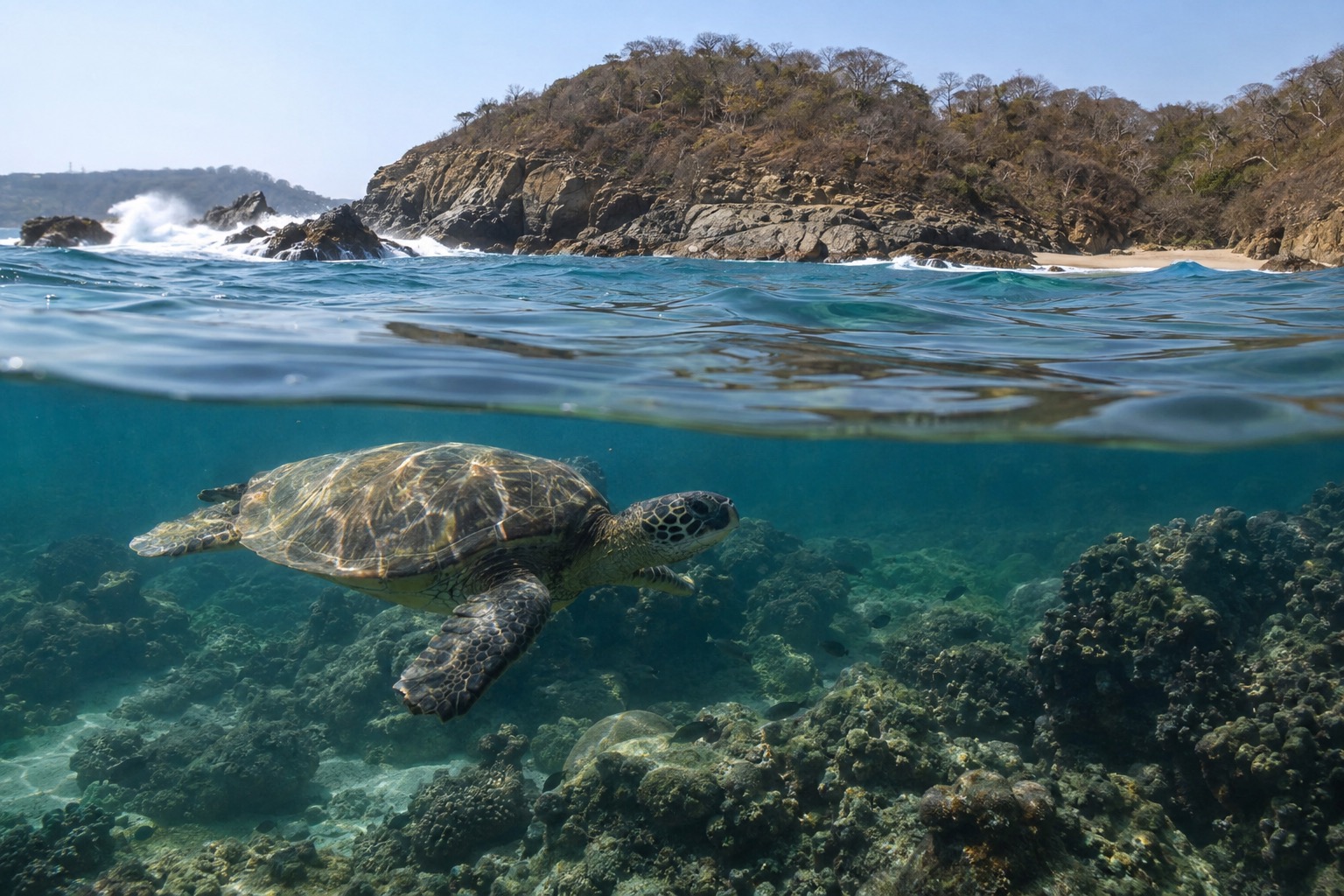
Nature sets the calendar here. Humpback whales pass offshore from October to April, migratory birds arrive from September to March, and sea turtles nest on the beaches from June to November. The Playa Escobilla olive ridley sanctuary lies on the same stretch of Oaxaca coast, for those drawn to turtles.
Whale watching departs by boat, and the winter months are when it makes the most sense. Early morning, when the water is usually calmest, is the classic time to go out.
Beach days and resort bays
Tangolunda has a wide, calm beach and a golf course, and its large resorts make it the choice for relaxed, all-inclusive days. Chahué has a swimmable beach and a small marina, with a more residential feel. Always check the beach flags, since waves on this coast can change quickly.
At the far end, Bahía de Conejos offers a long beach that is often empty and has no nightlife at all. That mix of busy marina, resort beach and empty sand is what sets Huatulco apart from its neighbors: you pick the amount of company you want.
Evenings in La Crucecita
La Crucecita is where Huatulco feels like a real town. The zócalo is the center of evening life, with local restaurants around it serving Oaxacan staples such as tlayudas, mole and fresh seafood. It is relaxed and easy to cover on foot.
It suits solo travelers and anyone who wants local food and local life after a day on the water. Choosing a place to sleep within a few blocks of the zócalo keeps night walks on lit streets.
How many days do you need in Huatulco?
A long weekend covers the essentials, and a week lets the coast settle into a comfortable rhythm. In a short stay you can fit one boat day to the bays, a beach afternoon at Santa Cruz or Tangolunda, and an evening in La Crucecita.
With a week, you can add a second boat trip to different bays, a quiet day at Bahía de Conejos and time simply on one favorite beach. In whale season, an outing to watch for humpbacks fits naturally into the extra days. The turtle sanctuary at Playa Escobilla makes a good side trip along the Oaxaca coast for nature lovers.
Where to stay in Huatulco
Tangolunda suits couples and families who want all-inclusive comfort and quiet evenings, with large resorts and a few upscale rentals. Santa Cruz is best for travelers who want the marina, restaurants and boat departures within walking distance and no need for a car, with small beachfront hotels and budget guesthouses.
La Crucecita fits budget travelers and solo visitors, with small hotels, guesthouses and apartments close to the zócalo. Chahué is a calm residential choice for families and long stays, mostly condos and small hotels near the beach. Bahía de Conejos offers a few eco-lodges and cabañas for those who want seclusion, and a car or private taxi is needed there.
How do you get to Huatulco and get around?
Most visitors arrive at Huatulco International Airport, which is about 20 to 30 minutes by car from the main bays. La Crucecita is around 20 minutes away, Santa Cruz and Chahué about 25, and Tangolunda about 30. Bahía de Conejos is farther, at 35 to 40 minutes.
Airport taxis do not always serve Tangolunda directly, so book a transfer in advance if you are staying there. Once settled, La Crucecita is compact and walkable, with inexpensive taxis and local buses to nearby beaches. Santa Cruz is also walkable, and buses and taxis reach the other bays.
Boats handle the bays with no road. For longer stays across several bays, a rental car or a regular taxi arrangement helps, and Bahía de Conejos really requires one or the other.
When is the best time to visit Huatulco?
The cooler months from late fall into spring suit most travelers, and they overlap with humpback whale season, which runs from October to April. Migratory birds are also present from September to March, so the winter months give you the most wildlife alongside beach time.
Summer and early fall fall inside the eastern Pacific hurricane season, which officially runs from May 15 to November 30. Sea turtles nest on the beaches from June to November, which appeals to nature lovers who accept the weather risk. Rain tends to come in heavy showers, and the sea can be rougher.
Christmas, New Year and Holy Week are the busy stretches on Mexican coasts, so expect fuller resorts and peak-season rates then. Dates for Holy Week move each year.
Good to know before you go
The U.S. State Department’s Mexico travel advisory rates Oaxaca at Level 2, ‘Exercise increased caution’.
Bring some cash, especially if you plan to stay at Bahía de Conejos, where there are no ATMs or large supermarkets. In town, stick to well-lit streets at night. Much of your time will be near the water, and if you visit between mid-May and the end of November, you are in hurricane season.
| Fee | Amount | Who pays |
|---|---|---|
| Lodging tax (Impuesto Sobre Hospedaje) | 3% | Guests staying in paid lodging in Oaxaca |
Sources
- CONANP / Diario Oficial de la Federacion, decree cited by the official park page, checked September 29, 2026
- CONANP, programa de manejo, published in the Diario Oficial de la Federacion on December 2, 2002, checked September 29, 2026
- CONANP, page for Parque Nacional Huatulco (gob.mx), checked September 29, 2026
- CONANP, gob.mx, Parque Nacional Huatulco, publiee le 9 September 2019, checked September 29, 2026
- ASUR, asur.com.mx, pages “Nuestros Aeropuertos” and “Huatulco – Contactanos”, checked September 29, 2026
- El Contribuyente and J.A. del Rio, ISH tables by State 2026, read on September 29, 2026
- U.S. Department of State, Mexico Travel Advisory (travel.state.gov), checked September 29, 2026
- CONANP, official press releases on the Santuario Playa Escobilla, read on September 29, 2026
- NOAA National Hurricane Center, official Eastern Pacific season (nhc.noaa.gov), checked October 5, 2026
All our pages
When to go
- Best Time to Visit Huatulco: Weather by Month, Crowds, Swimming and Festivals
- Huatulco in January: Whale Season, Dry Warm Weather and Bay Days
- Huatulco in February: Weather, Whale Watching, Bays and Beach Days
- Huatulco in March: Weather, Late Whale Season, Bays and Beach Days
- Huatulco in April: Hot Dry Days, Warm Sea, Beach Bays and Semana Santa Afterglow
- Huatulco in May: Hot Seas, First Rains, Bay Days and Mexican Coastal Food
- Huatulco in June: Green Season Rain, Warm Sea and Quiet Bays
- Huatulco in July: Green Season Weather, Warm Sea and What to Do
- Huatulco in August: Green Season Weather, Warm Sea, Turtles and What to Do
- Huatulco in September: Rainy-Season Weather, Turtle Nesting and Quiet Bays
- Huatulco in October: Warm Sea, Green Hills, Turtle Season and Quiet Bays
- Huatulco in November: Weather After the Rains, Bays, Whale Season and What to Do
- Huatulco in December: Weather, Beach Days, Posadas and Christmas Festivities