
Sunshine, whitewashed houses with bright-blue shutters, ancient monuments among the greatest anywhere, good food and an easygoing rhythm of life all come together in Greece. It suits history lovers, beach people, night owls and anyone happy to slow down.
Where should you stay in Greece?
Athens
The capital is the natural first base, with an atmospheric old town and funky neighborhoods full of avant-garde nightlife. Stay in or around the Plaka, the old-town neighborhood, and you can walk to the archaeological sites, museums, shops and restaurants. The coastal suburbs, sometimes called the Athenian Riviera, put you at the beach and away from the city center. Leafy Kifissia is the pick for a cool, quiet suburb and a beautiful old classical hotel. Be wary of packages that look too good to be true. Many keep the price down by using hotels in areas you won't want to stay in.
Nafplio and the Peloponnese
Nafplio, once Greece's first capital, is a snug harbor town with a graceful old quarter, lively streets and a hilltop fortress that looks out over both sea and mountains. It's a base with character, and the ancient sites of Mycenae and Epidavros are close by.
Drivers who want something wilder can head to the Mani Peninsula, a remote and rustic corner of Greece with seaside villages, abandoned ghost towns, Byzantine churches, caves, stark ridges and rugged shoreline. Its best jumping-off point is Kardamyli. Monemvasia is another memorable stop, a fortress town with Venetian and Byzantine roots that sits atop a huge rock reaching out into the sea.
Hydra
Hydra is an island getaway with a lovely harbor, relaxed beaches and coastal trails, and it has no cars, though donkeys are everywhere. It sits handy to both Athens and the Peloponnese, so it slots easily into the start or end of a trip.
Mykonos
Mykonos is a popular island with a whitewashed village that looks like a postcard, old windmills and lively nightlife, and visitors also enjoy the food and the sunsets alongside the parties. Stay here when you want energy.
Santorini
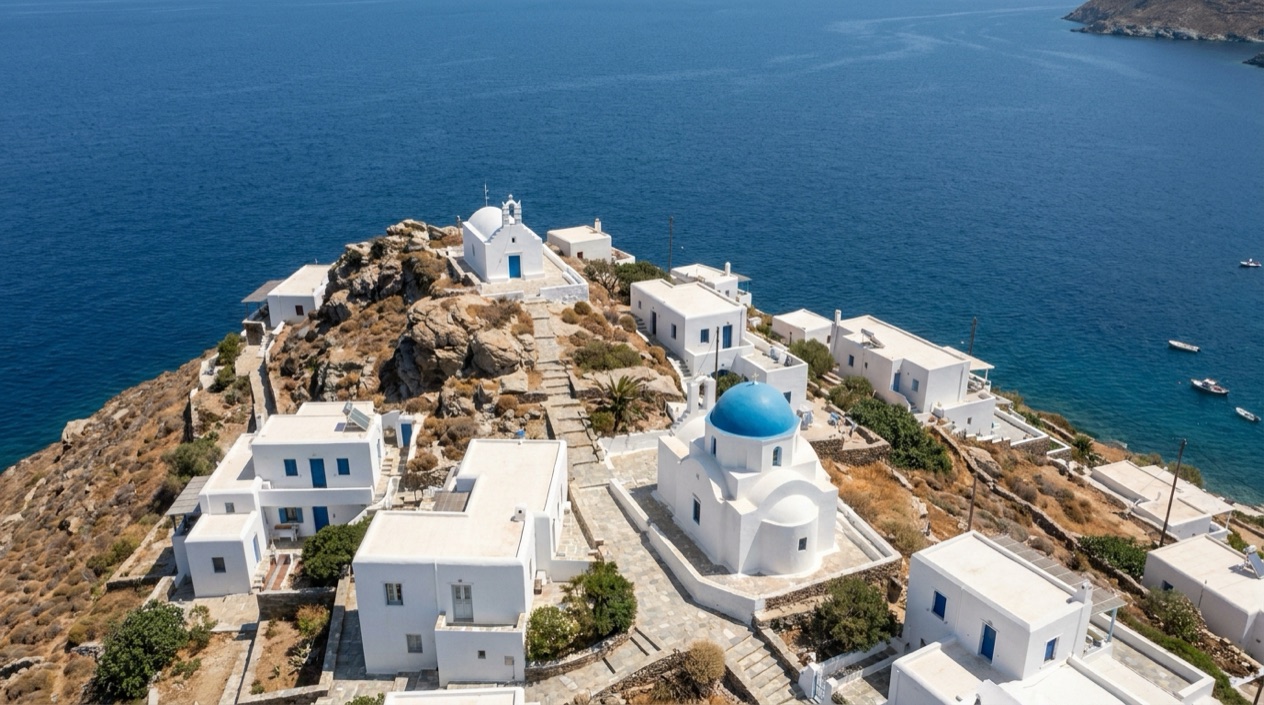
Santorini is really the rim of a volcano's flooded crater, which helps explain its dramatic setting. White villages cling to the cliffs, blue-domed churches stand out against the sky and the sunsets draw crowds. It's a romantic island, and couples feel it straight away.
Naxos, Milos and Paros
Milos and Paros are two more Cyclades islands to put on your list.
What are the best things to do in Greece?
Start in Athens with the Parthenon atop the Acropolis hill, often called the ancient world's most magnificent sight. Then give time to the atmospheric old town and the city's excellent museums. Evenings belong to the old town and one of the livelier neighborhoods.
Beyond Athens, the ancient sites are why many people come, and the mainland is where they cluster.
- Delphi: ruins of the Sanctuary of Apollo set dramatically on a mountainside, plus a museum full of statues and treasures found at the site.
- Olympia: the birthplace of the Olympic Games, where you can see atmospheric temple ruins, a stadium that still works and keeps its original starting line, and a small museum of ancient masterpieces.
- Mycenae: the legendary mountaintop fortress of the Mycenaeans, dating to roughly 1300 BC, nearly a millennium before Athens' golden age.
Nafplio is the handy base for Mycenae and Epidavros. Olympia and Delphi sit outside the itinerary below, so add a day or two if either one tempts you.
Crete, the largest Greek island, is home to the Palace of Knossos, the main Bronze Age archaeological site and, in legend, the home of the Minotaur.
For a different way to see the islands, book a cabin charter cruise. These boats carry 5 to 25 cabins, which means 10 to 40 people on board, compared with hundreds or thousands on a big ship. Many are old-style wooden sailboats, though they usually get around under engine power.
What are the best beaches in Greece?
Each island has its own beach personality, so pick by mood.
Mykonos for sun and a party
Sun-kissed sandy beaches, beach clubs and a party scene that carries on past dark. Come for the energy, and expect summer crowds.
Santorini for something unusual
Santorini's beaches are volcanic sand, a striking change from a morning spent in the cliff-top villages.
Milos and Naxos for a proper beach trip
Milos is praised for its beaches, and Naxos for its clear salty water and glistening sands. If swimming is your priority, start with these two.
Hydra for a quiet swim
Hydra's beaches are casual, and its coastal trails make for good walking between swims.
Kardamyli for getting away
Kardamyli, a cozy, unspoiled beach town on the Mani, rewards travelers with a car who want to be far from the crowds.
What should you eat in Greece?
Greek tables feature feta, phyllo pastries and meze, with local olive oil and ouzo alongside. Meals come with philoxenia, the Greek word for hospitality, and in the right taverna with music and dancing too.
Time your trip for Easter and you can taste special delicacies that aren't made at any other time of year, and join locals in the celebrations of Holy Week.
When is the best time to visit Greece?
April and May are lovely, with weather that suits outdoor adventures and the islands feeling much quieter before the summer crowds arrive. In the dry summer months, forest fires are common and occasionally close roads.
Expect some cold or rainy spells, and even snow in the mountains. You can ski at Arahova near Delphi and swim in the Corinthian Gulf on the same day. Winter is also the time for cheap flights and hotel deals.
Plan around Easter weekend. Easter is a very busy time across the country, and hotels often fill up a few weeks ahead.
How many days do you need in Greece?
The plan below gives each stop two nights, since an island needs at least two or three nights before you really experience it. With a week, drop the Peloponnese or one island.
Day 1: Athens
Land, drop your bags and set out on foot.
Day 2: Athens
Go out to a livelier neighborhood in the evening.
Day 3: Nafplio via Mycenae and Epidavros
Head into the Peloponnese. See Mycenae in the morning and Epidavros after lunch, then reach Nafplio for an evening stroll through the old town.
Day 4: Nafplio
Climb to the fortress for the sea-and-mountain views, then wander the streets all afternoon. This is a rest day by design.
Days 5 and 6: Hydra
Travel to Hydra and settle in by the harbor. Walk a coastal trail and swim, and eat dinner on the waterfront with donkeys passing by. Spend the second day on beaches and coastal trails.
Days 7 and 8: Santorini
Give Day 8 to the cliff-top villages and blue-domed churches in the morning, a volcanic-sand beach and long lunch after, and the sunset in the evening.
Days 9 and 10: Mykonos
Take the ferry from Santorini to Mykonos on Day 9 and spend the afternoon on the beach. On Day 10, wander the whitewashed village among the windmills, take a half-day trip to Delos, whose ruins mark the legendary birthplace of Apollo and Artemis, and finish with a sunset dinner.
How do you get to Greece and around?
Athens International Airport and the Athens metro are fully accessible with ramps and elevators. For the flight home, arrive at the airport three hours before departure.
Between islands, ferries are the main link, and some routes, such as Santorini to Athens, also have flights. Some islands do not connect easily with each other, so check which ones link up before you fix your route. If ferries make you nervous, some islands are joined to the mainland by bridges and others sit a very short ride away.
A car is the best way to explore the Peloponnese and the Mani. Greek law requires a valid U.S. driver's license, and insurance companies may require an international driver’s permit. Talking or texting on a phone while driving is illegal, and so is driving under the influence of alcohol or drugs; police run random alcohol tests. Greece has one of the highest traffic fatality rates in the European Union, so drive defensively. Motorcyclists must wear a helmet. Thieves in Greece seek out rental cars and break into them for passports, valuables and luggage, so it's wise to keep those items with you.
On buses and the metro, buy the right ticket and validate it. Riding without a valid ticket can cost a fine of up to 60 times the basic fare.
What should Americans know before going?
U.S. citizens may enter Greece without a visa for up to 90 days for tourism or business. Your passport should have at least three months of validity beyond your planned departure date, and you should be ready to show proof of sufficient funds and a return ticket if asked. A passport you've reported lost or stolen won't get you in, even if you later find it.
Greece is a generally safe destination, but petty crime is common in popular tourist spots. Pickpocketing and purse-snatching happen at major sites and on public transportation, especially the metro. Strikes and demonstrations are common, can start with little notice and sometimes turn violent. Transportation strikes can halt traffic, taxis, seaports and airports, so keep island plans loose enough to absorb a lost day. Tremors and earthquakes occur regularly.
Carry your passport or another photo ID at all times. Marijuana is illegal, and so are mace and pepper spray.
The currency is the euro. ATMs are easy to find in major towns and on the inhabited islands, and cards work at many shops and hotels, though a few bars may not have a working card machine. Carrying some cash is a good idea. Plugs are Type C and F at 230 volts, so bring an adapter and a converter for hair dryers and other hot tools.
Many care providers in Greece only accept cash, and private hospitals usually want proof of adequate insurance or cash before admitting a patient, so consider buying travel insurance before you leave, especially if you plan to sail or try anything adventurous.
Sources
- ricksteves.com (https://www.ricksteves.com/europe/greece), checked October 18, 2026
- costcotravel.com (https://www.costcotravel.com/vacation-packages/europe/greece), checked October 18, 2026
- greektravel.com (https://www.greektravel.com/), checked October 18, 2026
- virtuoso.com (https://www.virtuoso.com/travel/destinations/europe/greece), checked October 18, 2026
- theblondeabroad.com (https://www.theblondeabroad.com/ultimate-greece-travel-guide/), checked October 18, 2026
- U.S. Department of State (https://travel.state.gov/content/travel/en/international-travel/International-Travel-Country-Information-Pages/Greece.html), checked October 15, 2026
- U.S. Department of State (https://travel.state.gov/content/tsg_aem/us/en/home/international-travel/travel-advisories/destination.grc.html), checked October 15, 2026
All our pages
When to go
- Best Time to Visit Greece: September and Late May to Early June
- Greece in January: Weather, Crowds and What to Do
- Greece in February: Weather, Crowds and What to Do
- Greece in March: Weather, Crowds and What to Do
- Greece in April: Weather, Crowds and What to Do
- Greece in May: Weather, Crowds and What to Do
- Greece in June: Weather, Crowds and What to Do
- Greece in July: Weather, Crowds and What to Do
- Greece in August: Weather, Crowds and What to Do
- Greece in September: Weather, Crowds and What to Do
- Greece in October: Weather, Crowds and What to Do
- Greece in November: Weather, Crowds and What to Do
- Greece in December: Weather, Crowds and What to Do
- The Climate Crisis Resilience Fee in Greece: What It Is, How Much, Where It Applies and the Places It Touches
- Trains in Greece: Hellenic Train, Main Routes and Booking
Things to do
- 3 Days in Greece: Athens, the Acropolis and a Day on Syros
- Greece Itinerary: A First Trip Through Athens, the Islands and Beyond
- Greece Itinerary for 10 Days: Athens, Mykonos, Paros and Santorini
- 14 Days in Greece: Itinerary: Athens, Delphi, Meteora, the Cyclades and Crete
- 21 Days in Greece: Itinerary Through Athens, Meteora, the Cyclades and Crete
- 5 Days in Greece: Itinerary for Athens, Santorini and Add-On Stops
- Greece Itinerary for 7 Days: Athens, Mykonos and Santorini
- The Achilleion Palace: Achilles Statues, the Kaiser's Summer Residence and Views over Corfu
- The Acropolis of Athens: What to See, When to Go, How to Do It Right
- Aegean Airlines: Greece's Flag Carrier, Domestic and European Routes, Lounges
- Agia Roumeli: Samaria Gorge Exit, Ancient Tarra, the Hill Castle and the Ferry from Hora Sfakion
- Akrotiri, Santorini: What You See, How to Visit, and What to Pair It With
- Alexandroupoli Travel Guide: Seafront Tavernas, Samothrace Ferry and Thracian Day Trips
- Alonissos Travel Guide: Marine Park, Patitiri to Chora, Seafood and Sailing Trips
- The Alonissos Marine Park: Zones, Islands and What You Can Do
- Amphipolis: Ancient Walls, the Wooden Bridge, the Gymnasium and the Kasta Tomb
- Anafiotika, Athens: Cycladic Lanes, Terrace Views and Where to Eat Nearby
- Ancient Agora of Athens: What You See, What It Costs, and How to Visit
- Ancient Corinth: Temple of Apollo, the Theater, Acrocorinth and Getting There
- Ancient Kamiros: Dorian City, Stoa, Reservoir and When to Go
- Ancient Messene: City Walls, Klepsydra Fountain, Museum and Visiting Tips
Where to stay
- Arachova: Parnassus Mountain Town, Formaela Cheese, Ski Season and Saint George's Day
- Accommodation Taxes in Greece: Room Rates, Port Bargaining and What a Stay Costs
- Village Stays and Agritourism in Greece: Farm Stays, Olive Harvests, Stone Houses and Booking Tips
- Airbnb and Vacation Rentals in Greece: Booking, House Rules and Villas
- Greece All Inclusive: Where It Works, What It Covers, and Who Should Skip It
- Boutique Hotels in Greece: What They Are, Where to Find Them and What to Check Before Booking
- Hotel Tips for Greece: Rooms, Booking and Walk-In Stays
- Staying Longer in Greece: The 90-Day Limit, Schengen Visas and Long-Stay Planning
Getting there
- American Airlines Flights to Greece: U.S. Cities, Athens Arrivals and Onward Island Flights
- Atlanta to Athens: U.S. Gateways, Airlines and Onward Flights
- Boston to Athens: Airlines, Arrival Airport and Onward Flights
- Boston to Mykonos: Athens Nonstops, Mykonos Airport and Seasonal Flights
- Boston to Santorini: Flying via Athens, Santorini Airport and What to Plan
- Charlotte to Athens: American Airlines Nonstop, Athens Airport and Island Connections
- Chicago to Athens: Airlines, the Airport at Spata and Flights Onward to the Islands
- Chicago to Mykonos: Nonstop Options, the Athens Connection and Mykonos Airport
- Chicago to Santorini: Flights via Athens, Landing at Santorini Airport and What the Trip Involves
- Dallas to Athens: The Nonstop Airline, Your Arrival Airport and Flights Onward
- Delta Flights to Greece: U.S. Gateways, Athens Connections and Island Hops
- Detroit to Athens: Airlines, Where You Land and Onward Flights to the Islands
- The ferry to Santorini vs a flight to Santorini: Sights, Beaches, Food and Getting There
- Flights to Athens: The Airport, U.S. Nonstops and Getting Into the City
- Flights to Corfu: How Americans Get There and When to Book
- Flights to Crete: How Americans Get There and When to Book
- Flights to Greece: How Americans Get There and When to Book
- Flights to Mykonos: How Americans Get There, and When to Book
- Flights to Naxos: How Americans Get There and What to Book
- Flights to Rhodes: How Americans Get There, and What to Book
- Flights to Santorini: How Americans Get There, and When to Book
Practical
- Greece on a Budget: Cash Machines, Cards, Beaches and Ferries
- Greece Trip Cost: What a Week Really Takes
- A cruise vs island hopping: Ferries, Island Groups, Onboard Dining and Who Each Suits
- Greece Currency: Euros, Cards, Cash and What to Expect
- Greece Travel Tips for First-Timers: Church Etiquette, Fire Rules, Ferries and Sailing
- Spring vs autumn in Greece: Weather, Food, Sights and Who Should Go When
- What to Pack for Greece in Fall: Layers, Rain Gear, Shoes and What to Skip
- What to Pack for Greece: Boat Papers, Ferry Days and Layers
- What to Pack for Greece in Spring: Layers, Rain Gear, Shoes and What to Leave Behind
- What to Pack for Greece in Summer: Sun Protection, Light Layers and What Stays Home
- What to Pack for Greece in Winter: Layers, Rain Gear and Footwear
- Tipping in Greece: What to Leave, Where, and When
- Do Americans Need a Visa for Greece? Entry Rules, Length of Stay and Passport Checks
- Greece vs Italy: Which One Should You Visit First?
Places
- Athens Travel Guide for First-Timers: Where to Stay, What to See, and How to Plan
- Crete Travel Guide: Where to Stay, What to See and How to Plan It
- Chania Travel Guide: Where to Stay, What to Eat and How to Spend Your Days
- Corfu First-Timer's Guide: Where to Stay, What to See, and How to Plan Your Days
- Santorini Travel Guide for First-Timers: Where to Stay, What to Do and How to Plan
- Mykonos Travel Guide: Where to Stay, What to Eat and How to Plan Your Days
- Greece Ferries: How to Get Around the Islands by Sea
- Heraklion Travel Guide: What to See, Eat and Plan
- Delphi, Greece: A First-Timer's Guide to the Ancient Center of the World
- Cyclades Islands, Greece: How to Pick Your Islands and Plan the Trip
- Naxos Travel Guide: Where to Stay, What to See and How to Plan It
- Paros, Greece: A First-Timer's Guide to Beaches, Villages and Long Dinners
- Kefalonia: The Complete First-Timer's Guide to Greece's Biggest Ionian Island
- Milos Travel Guide: Beaches, Villages and How to Plan Your Days
- Aegina Travel Guide: How to Plan Your First Visit
- Rhodes, Greece: A First-Timer's Guide to Castles, Coves and Long Lunches
- Zakynthos Travel Guide: Beaches, Boats and Where to Stay
- Delos: The Sacred Island You Visit by Day Boat from Mykonos
- Halkidiki Travel Guide: Kassandra, Sithonia, Mount Athos and Getting Around
- Hydra, Greece: A First-Timer's Guide to the Car-Free Island
- Syros Travel Guide: What to See, Where to Stay and How to Plan It