
September ranks among the best months for a trip to Greece. The sea is warm, the worst of the summer heat starts to ease, and crowds thin once schools reopen. Early September still feels like high season on the popular islands, and late September brings cooler evenings and a greater chance of rain.
What is the weather like in Greece in September?
| Month | Average high | Average low | Rainfall | Sunshine per day |
|---|---|---|---|---|
| August | 94°F (34°C) | 76°F (24°C) | 0.2 in (6 mm) | 11.7 h |
| September | 86°F (30°C) | 68°F (20°C) | 0.9 in (24 mm) | 9.2 h |
| October | 76°F (24°C) | 61°F (16°C) | 1.5 in (39 mm) | 6.9 h |
The table shows Athens, and the rest of the country varies around it. The mainland generally runs hotter than the islands, where the sea and the breeze take the edge off. The Cyclades bring warm days, cooler evenings and occasional strong winds on exposed beaches. Crete, Rhodes and Kos are good picks if you want hot beach weather late in the month. Crete's south coast runs warmer than the north, and a number of its beaches are tucked out of the northerly winds. In Thessaloniki and northern Greece, evenings cool faster than on the southern islands.
Swimming is at its best. Compared with June, the water is usually warmer, and swimming feels pleasant right through the end of the month, though a breezy day can leave you cold once you step out. The Meltemi, the strong summer wind, tends to lose some of its persistence by September, yet blustery days are still common around the Cyclades. North-facing beaches can get rough, and boat tours are sometimes affected.
Dinner outside is easy all month. Evenings turn cooler toward the end of September, especially out on the water, and mountain villages such as those around Zagori can be chilly after sunset.
Rain comes in short, occasional bursts, mostly late in the month. Corfu, the Ionian Islands, northern Greece and the mountainous mainland are the first to see it.
Is September a good time to visit Greece?
Yes, for most travelers, as long as you choose your part of the month. Through the first ten days or so, Santorini, Mykonos and Paros still feel like high season. Hotels stay expensive, famous beaches fill up, and ports get chaotic when several ferries arrive at once.
From mid-month, things settle. The sea is still warm, almost everything stays open, and crowds thin with children back in school. That same calendar means families with school-age kids may be limited by term dates. Sightseeing and getting around become more pleasant, while the big islands stay lively.
Greece does not close down on one particular date. On the major islands, most hotels, restaurants, tours and beach clubs run all month. Some smaller seasonal businesses start closing near the end, and big DJ events on Mykonos become less frequent. Archaeological sites and museums stay open, though some switch to seasonal hours.
How does September compare with August and October?
August is hotter, busier and pricier. It suits travelers who want peak nightlife and the broadest selection of ferries and flights.
September hits the sweet spot: warm sea, dependable beach weather, islands that are still lively, and sightseeing that is much easier than in July and August.
October brings lower prices and calmer streets, though the weather is cooler and wetter, and beach days and island hopping are harder to count on. It fits a trip centered on Athens, Crete, Rhodes or the mainland better than an ambitious island itinerary.
How does island hopping work in Greece in September?
Mykonos, Paros, Naxos and Santorini are the easiest islands to link. The main routes from Athens stay busy all month, with the widest choice of sailings early on. Not all routes run daily, and links between smaller islands get sparser as the month goes on. Look at ferry schedules before booking hotels, since a plan that seems sensible on a map might send you back through Athens or require a change of boats. They normally run throughout September, but confirm the exact dates before building a trip around them.
Book ferries in advance, since high-speed boats and sailings at convenient times can sell out in early September. Conventional ships are slower but usually more comfortable in rough seas, and windy weather doesn't automatically mean cancellations.
For one week, stick to two islands. With ten to fourteen days, three works well. A ferry transfer can eat up most of a day once you count the trip to the port, the wait, the crossing and settling into your next hotel. Plan to be back on the mainland at least a night before an international flight, so a ferry delay can't cost you the trip home.
What is there to do in Greece in September?
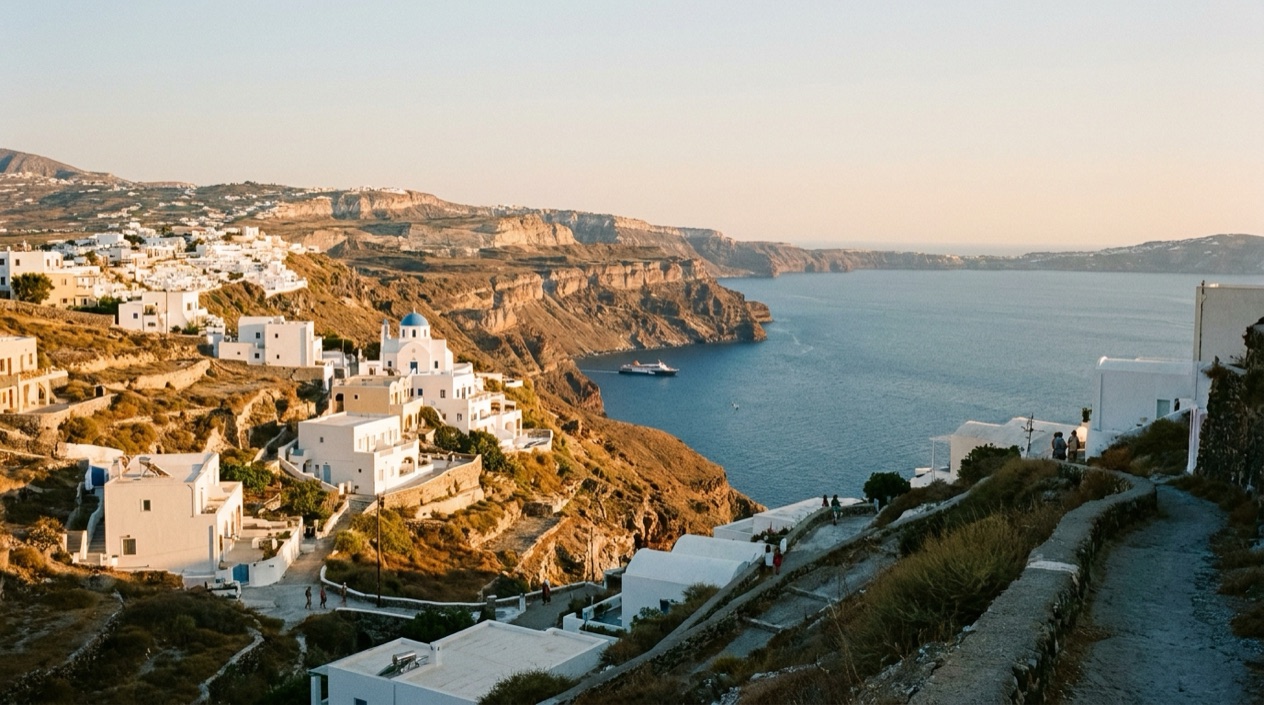
Start with the islands. Santorini's caldera and volcano boat tours are excellent this month, though strong winds can occasionally disrupt sailings. Fira works well if you want buses and nightlife, Imerovigli suits quieter caldera views, and Oia has the village feel and the sunset crowds. Naxos is a great fit for families and beach lovers, with long sandy stretches at Agios Prokopios and Agia Anna, tasty food and prices that beat Santorini and Mykonos. Paros brings Naoussa's stylish restaurants and lively evenings, and the popular tables still need reservations early in the month. Mykonos is the pick for beach clubs and nightlife. Corfu shines in early September, with green scenery, beaches and one of Greece's most interesting old towns.
Athens is far more comfortable than in midsummer, though it can still be hot, and the Acropolis and Ancient Agora offer little shade. Visit the Acropolis and the Parthenon right at opening or later in the afternoon, and spend the hottest hours in air-conditioned museums. The Temple of Zeus and Hadrian's Library round out the sightseeing in Athens. A beach day or two on the Athens Riviera fits in without a ferry.
Crete rewards at least five nights in one region, with botanical gardens, archaeological museums and the Samaria Gorge. The gorge is a long, demanding hike, harder in the hotter first half of the month. Rhodes also works best as a standalone stay of five to seven nights. Delphi and Meteora are excellent too.
September also marks the start of the grape harvest, so a winery tour lets you taste fresh vintages and see how the wine is made. Snorkeling and diving reveal volcanic landscapes that extend into the sea, caves, schools of fish, urchins and loggerhead turtles.
What should you pack for Greece in September?
Think summer in Europe. Pack linen shirts and trousers, sundresses, tees and plenty of swimwear, plus an outfit or two for nice dinners or clubbing. Add a cardigan or light sweater for cooler evenings and boat days. Comfortable walking shoes that you won't mind getting sandy round it out. If you're heading to mountain villages, bring a warmer layer for after sunset.
Sunscreen is essential, along with a cap or sunglasses and a reusable water bottle. Water shoes help on rocky shores. A waterproof phone pouch, a small bag for valuables and a portable phone charger for long days of exploring earn their space.
What do Americans need to enter Greece?
U.S. citizens can visit Greece without a visa for up to 90 days of tourism or business. Your passport should have at least three months of validity beyond your planned departure date, and a passport that has been reported lost or stolen will not be accepted for entry. Be ready to show proof of sufficient funds and a return ticket or other evidence of departure if asked. Keep the form with your entry stamp safe, because if you lose it, you must file a report at a police station before Greek authorities will let you leave.
Is Greece safe for American travelers?
Greece is generally safe. Pickpocketing and purse-snatching happen at popular sites and on public transportation, especially the Athens metro, so keep a close eye on your bags. Be sure to validate your ticket, since riding without a valid one can bring a fine of up to 60 times the basic fare.
To drive, you must carry a valid U.S. license, and insurance companies may require an international driver’s permit. Greece has one of the highest traffic fatality rates in the European Union, and talking or texting on a phone while driving is illegal. Forest fires are common in the dry summer months and occasionally close roads, and transport strikes can interrupt taxis, public transportation, seaports and airports. Carry your passport or another photo ID with you, and avoid leaving valuables in a parked rental car, since thieves break into them looking for passports and luggage.
Sources
- accuweather.com (https://www.accuweather.com/en/gr/athens/182536/september-weather/182536), checked October 18, 2026
- contiki.com (https://www.contiki.com/six-two/article/greece-in-september/), checked October 18, 2026
- santorinidave.com (https://santorinidave.com/greece-in-september), checked October 18, 2026
- 101holidays.co.uk (https://www.101holidays.co.uk/hottest-greek-islands/september/), checked October 18, 2026
- sovereign.com (https://www.sovereign.com/holidays/greece/weather-in-greece/), checked October 18, 2026
- U.S. Department of State (https://travel.state.gov/content/travel/en/international-travel/International-Travel-Country-Information-Pages/Greece.html), checked October 15, 2026
- U.S. Department of State (https://travel.state.gov/content/tsg_aem/us/en/home/international-travel/travel-advisories/destination.grc.html), checked October 15, 2026