
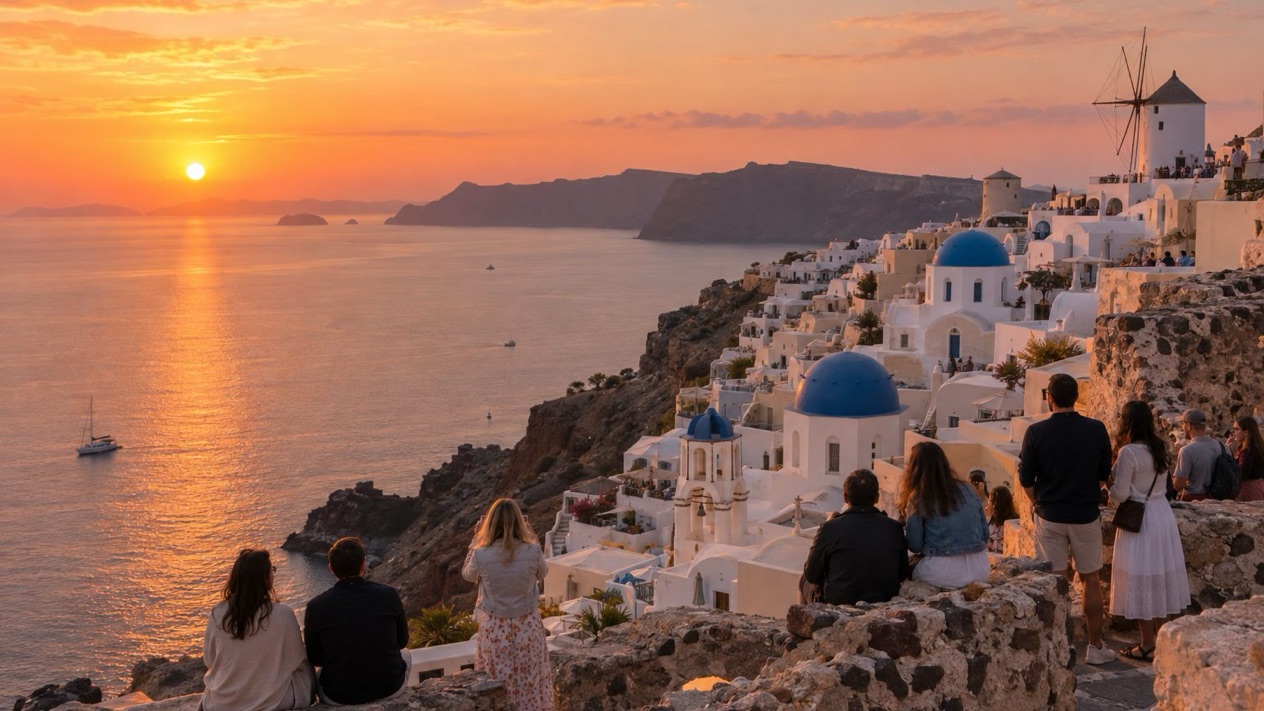
Santorini is a ring of cliffs around a drowned volcano. White villages sit on the rim, and the sea lies far below. It suits couples, honeymooners, hikers, wine lovers and anyone who wants a view worth the price. It is also crowded and pricey, so where you stay, when you go and what you skip all matter.
Where should you stay in Santorini?
Choose the village before the hotel. A caldera stay, a beach stay and an inland stay feel like three different trips. The four cliffside villages on the western rim, Fira, Firostefani, Imerovigli and Oia, are where you wake up looking at the volcano. If your budget allows, spend at least part of the trip on the caldera, because a beach hotel can't recreate that view.
Book early. If you have your heart set on a particular hotel or room type for peak summer, it helps to reserve something like 6 to 9 months ahead.
Fira
Fira is the capital and the easiest base for a first visit. It has plenty of restaurants, shops and nightlife, plus the main bus station, which makes it a handy base if you won't rent a car. Within a few minutes on foot you can go from a cocktail bar on the cliff edge to a cheap gyro shop or a museum. The downside is crowds. The lanes around the cable car and the caldera path are packed from late morning to sunset, and worst on heavy cruise days, when as many as 8,000 passengers can come ashore. For quiet nights, avoid hotels near the central bar streets.
Firostefani
Firostefani sits 10 to 15 minutes' walk north of Fira on the caldera path. The views are just as good and the lanes are calmer. You still get a bakery, cafés, small markets and a handful of restaurants. There is no real nightlife, but Fira's bars are an easy walk away. The walk into Fira is downhill and the walk back is steeply uphill, worth remembering after a late dinner.
Imerovigli
Imerovigli is the highest village on the caldera, and it has the widest views and the calmest mood. It has luxury hotels and a few good restaurants, but very little shopping and no real nightlife. Honeymooners love it. The trail to Skaros Rock starts here, and Fira is about 25 minutes south on foot along the caldera path. Many hotels are built into the cliff, so expect stairs. If you are going to splurge on a view, splurge here.
Oia
Oia is the village on the postcards, with whitewashed lanes, blue domes and boutique shops. It is a pricey village and gets very crowded in high season. It is loveliest early in the morning and in the evening, once the day-trippers leave and the lamplit streets go quiet. Many of the best hotels face the caldera but not the sunset, so read room descriptions closely. Trips to the beaches, the port and the airport take longer from here, and taxis are hard to find around sunset. Stay here for the romance, not the logistics.
Kamari, Perissa and Perivolos
The east coast is flat, with black-sand beaches, bigger pools, larger rooms and lower prices. You give up the caldera view, but you gain easy streets and direct access to the sea. Kamari has a long beach promenade, plenty of casual restaurants, and beach bars and an open-air cinema after dark. It also gets some airplane noise from the nearby airport. Perissa is the casual, budget-friendly end of the long southern beach and has the main bus stop. Perivolos is more spread out and stylish, with beach clubs. This coast works best for families, swimmers and anyone who finds cliff stairs a problem.
Pyrgos and Megalochori
Both villages are inland, quiet and lived-in, and both are better value than the caldera. Pyrgos climbs a hill below the island's highest peak. It has a Venetian castle at the top, good restaurants and sunsets with a fraction of Oia's crowd. Megalochori is wine country, with a lovely square, old mansions and bell towers. Both are far easier with a rental car.
When is the best time to visit Santorini?
May and October are the sweet spots, with warm weather and crowds that feel manageable. The months on either side also work, though the shoulder edges can feel a bit chilly and the end of summer still runs at high-season crowds. July and August are the hottest, busiest and priciest months.
Winter brings lower room rates and more rain, and the sights cut back their hours. In the shoulder months, ask whether your hotel's plunge pool is heated, because an unheated one can be too cool to enjoy when the wind is up. In summer, plan outdoor sightseeing for the morning and late afternoon, and spend the hottest hours at a pool or the beach.
What are the best things to do in Santorini?
Start with the walk from Fira to Oia, about 6 miles (10 km) along the rim and roughly 3 to 4 hours on foot. The path passes blue-domed churches, bougainvillea-draped doorways and cliffside luxury hotels, with caldera views almost the whole way. It begins on cobblestones through Firostefani and Imerovigli, then turns into rugged, hilly dirt track with very little shade. Wear sneakers or hiking shoes, carry plenty of water and start early. Most people walk from Fira toward Oia, though either direction works. From Imerovigli you can add the Skaros Rock detour, a promontory with castle ruins that adds about an hour round trip.
In Oia, look for the tall Panagia Platsani church, rebuilt after the 1956 earthquake. The castle ruins are a popular sunset spot, and they can get packed. For a calmer sunset, go to the lighthouse at the western tip of the Akrotiri peninsula, where the sea view is open and the crowd is smaller, or to Pyrgos. The lighthouse is a quiet spot with few services, and parking can be hard to find as sunset approaches. Below Oia, Ammoudi Bay is a small fishing port with seafood tavernas at the water's edge. No bus goes there, so you walk roughly 300 steps down and back up. Don't ride the donkeys.
Ancient Akrotiri is the one sight to protect time for. This Bronze Age town was preserved under volcanic ash, much like Pompeii but older and smaller, and it now sits under a large modern roof. Wooden walkways keep it largely flat and easy to get around. KTEL buses run there from Fira. Full admission is €20 in 2026. As of October 2026, Akrotiri of Thera is open 8:00 a.m. to 6:00 p.m. from October 16 to 31, with last entry at 5:30 p.m. In winter in 2026, hours are 8:30 a.m. to 3:30 p.m., and the site is closed on Tuesdays. Entry is free on the first Sunday of each month from November through March.
Ancient Thera sits on a mountaintop above Kamari, with ruins that span several empires, including the Romans. Skip it if you dislike rough, uneven ground. The road up is full of hairpin turns, and the walk from Kamari takes about an hour with little shade. Full admission is €10 in 2026, and reduced admission is €5. The 2026 ticket is listed as valid for Akrotiri, Ancient Thera and the Prehistoric Thera Museum, so hold on to it. As of October 2026, the summer schedule for Ancient Thera is 8:30 a.m. to 3:30 p.m., with a closing day on Wednesdays. In November 2026, Ancient Thera opens Friday to Sunday from 8:30 a.m. to 3:30 p.m. and is closed Monday through Thursday. At Ancient Thera, visits are by appointment only from December 1 to February 28 in 2026, so it's worth arranging your visit ahead of time if you're coming in winter.
A catamaran or boat trip is a splurge many visitors love, especially one that ends with the sunset off Oia. Many boats to the volcano and the caldera leave from the bay of Fira, and many tours include hotel pickup. The island's volcanic soil is ideal for grapes, which makes winery tastings the other highlight, and they pair naturally with a visit to Pyrgos or Megalochori. With a car, drive up to Profitis Ilias monastery at the island's highest point. There is no direct bus from Fira, and the view sweeps across the whole island.
What are the best beaches in Santorini?
Santorini's beaches have dark volcanic sand and pebbles, so don't expect the soft golden sand you'd find on Naxos or Paros. After a couple of hours in the sun the sand is hot enough to burn, so bring sandals or water shoes. The upside is that the water at the dark beaches is warmer, because the lava soaks up heat.
Perissa and Perivolos
This is one long beach, flat and organized, with sunbeds, umbrellas, tavernas and water sports. The sand is finer than at Kamari. Perissa is the busier northern stretch below the Mesa Vouno headland, Perivolos runs south from it, and Agios Georgios is the quiet southern end. Check the sunbed policy before you settle in, since some beach clubs expect you to order food or drinks. The bus from Fira takes roughly 25 to 45 minutes, depending on traffic and season.
Kamari
Kamari is the easy one with kids. The seafront promenade is flat and mostly pedestrian, so strollers are no trouble, and much of the beach has sunbeds run by the restaurants behind it. The water gets deep quickly in places. Summer buses to Fira are frequent and take about 15 to 20 minutes.
Vlychada
Farther east of Akrotiri, Vlychada stands out for its sculpted volcanic cliffs and feels calmer than Kamari or Perissa. It's the pick for a quiet swim, and a car makes it much easier to reach.
Red Beach
Red Beach is dramatic, with iron-rich cliffs towering over red sand. The cliffs are prone to rockslides, so take care. Go for the view and a few photos, then move on. White Beach is reached by boat, and many boat tours stop at both beaches, which is an easy way to see Red Beach without a car.
What should you eat in Santorini?
Santorini's soil is volcanic and fertile, and it gives the local cherry tomatoes, white aubergines and capers a distinct flavor. Order tomatokeftedes, the tomato fritters, and melitzanosalata, the dip made with the sweet white aubergines. Add fava, the local puree of yellow split peas, and a Greek salad. For something heartier, look for souvlaki and grilled meats all over the island, or octopus at a seaside taverna. Finish with baklava or loukoumades, the fried dough balls drizzled with honey and cinnamon. Wash it all down with a glass of local wine.
Lunch is the easiest meal to save on, because gyros and souvlaki are cheap and good. Lucky's Souvlaki in Fira is a favorite, and Pitagyros is the stop in Oia. At dinner, restaurants right on the caldera or the beachfront charge extra for the view, and prices usually drop a street or two back. In Imerovigli, Athenian House is the romantic splurge, Avocado is casual and reliable, and Anogi is lively and good value. Reserve sunset tables well ahead in summer.
How many days do you need in Santorini?
Three or four days covers the highlights. Beyond that you are mostly swimming and sitting on a terrace, which is a fine plan if you can afford it. This plan puts the long walk on day two, when your legs are fresh and you have settled in.
Day 1
Arrive and settle in. From Imerovigli or Firostefani, take a slow walk along the rim in the late afternoon and watch the sunset close to your hotel, where it is far quieter than in Oia. In Imerovigli, the path out toward Skaros Rock takes about 30 minutes and gives you views back along the caldera. Have dinner at a gyro spot near your hotel or book a village restaurant. In Fira, you'll find plenty of bars if you still have energy after sunset.
Day 2
Start the Fira to Oia walk early. Plan a break at the snack shack about halfway along the trail. Reach Oia by early afternoon, wander the lanes, then walk down to Ammoudi Bay for a seafood lunch. Catch the bus back to Fira before the sunset rush, because the line gets long and late arrivals end up standing. The ride takes roughly 30 minutes. Keep the evening for resting.
Day 3
See Ancient Akrotiri in the morning, before the heat builds. Without a car, take the bus back through Fira to Perissa for a swim and a long lunch, and stay out of the midday sun. With a car, drive on to Vlychada, add a winery stop and stay for sunset at the lighthouse. You could also give this day to a catamaran trip, which usually picks you up in the afternoon and puts you on the water for sunset.
Day 4
Spend the morning in Pyrgos, with its castle, its lanes and its view over the whole island. Book a winery tasting for the afternoon, with a driver or a wine tour rather than your own car. Have dinner in Pyrgos or Megalochori.
How do you get to Santorini and around?
Many Americans fly into Athens and continue by plane or ferry. The flight from Athens to Santorini takes 50 minutes. Ferries take anywhere from about 5 hours to more than 11, depending on the vessel. They run year-round from Piraeus and Rafina near Athens, and from islands such as Mykonos, Naxos and Crete. Most ferries, including the ones from Athens (Piraeus), arrive at Athinios Port, about 5 miles (8 km) south of Fira. The port is steep and chaotic in peak season and not walkable, and no bus runs directly from there to Oia, which is about 40 minutes away by car. The airport is small and crowded in summer. With luggage or a cliffside hotel, pre-book a transfer from either one.
On the island, the bus is inexpensive and Fira is the hub, so most routes start or end there. Expect to change there for almost everywhere except Oia and Imerovigli. The Perissa bus also serves central Pyrgos. Buy your ticket from the conductor, and queue early in summer, when buses fill up.
A rental car makes the south, the wineries and Pyrgos much easier, though parking is hard in Oia and Imerovigli in high season. Greece has one of the highest traffic fatality rates in the EU. Driving while talking or texting on a phone is illegal, and police run random alcohol tests.
If you arrive on a cruise, the ship anchors in the caldera and small boats tender you to the Old Port below Fira. The cable car up to town takes about three minutes. A one-way ticket costs €6 in 2026, and luggage costs €3. The alternatives are 587 steps or a donkey.
What should Americans know before going?
U.S. citizens can visit Greece without a visa for up to 90 days. Your passport should have at least three months of validity beyond your planned departure date, and a passport previously reported lost or stolen will be refused at the border. Carry your passport or another photo ID at all times. To drive, Greek law requires both a valid U.S. license and an international driving permit, even if the rental company doesn't ask for the permit.
The U.S. State Department rates Greece as generally safe, but petty crime such as pickpocketing and purse-snatching is common at busy tourist sites and on public transportation, and thieves break into rental cars to steal passports and luggage, so avoid leaving valuables in your car. Strikes are common and can shut down ferries, taxis and airports with little notice, so build some slack into your plans. Tremors and earthquakes occur regularly in Greece, and Santorini has been in a seismic sequence since February 2025, centered near Anydros, about 19 miles northeast of the island. Fira and Oia are open to visitors as usual.
A few everyday differences catch Americans out. Many visitors stick to bottled water for drinking, which is easy to find in shops. Don't flush toilet paper, because the pipes clog easily. Outlets are Type C and F at 230 volts, so leave hot tools like curling irons at home.
Before you go, book your caldera room and any sunset dinner as early as you can. Email your hotel to ask exactly how many steps lead from the road to your room, and arrange your port or airport transfer. Check ferry times for your dates, and pack sandals for the beach and sturdy shoes for the rim walk.
Sources
- santorinidave.com (https://santorinidave.com/best-places-santorini), checked October 18, 2026
- theptopal.com (https://www.theptopal.com/blog/3-days-in-santorini), checked October 18, 2026
- erikastravels.com (https://www.erikastravels.com/two-days-in-santorini/), checked October 18, 2026
- agirlandherpassport.com (https://agirlandherpassport.com/where-to-stay-in-santorini/), checked October 18, 2026
- travel.usnews.com (https://travel.usnews.com/Santorini_Greece/), checked October 18, 2026
- U.S. Department of State (https://travel.state.gov/content/travel/en/international-travel/International-Travel-Country-Information-Pages/Greece.html), checked October 15, 2026
- Hellenic Ministry of Culture, Odysseus (http://odysseus.culture.gr/h/1/eh155.jsp?obj_id=3325), checked October 15, 2026
- Hellenic Ministry of Culture, Odysseus (http://odysseus.culture.gr/h/3/eh355.jsp?obj_id=2454), checked October 15, 2026
- Hellenic Ministry of Culture, Odysseus (http://odysseus.culture.gr/h/3/eh355.jsp?obj_id=2410), checked October 15, 2026
- santorini.gr (https://www.santorini.gr/), checked October 15, 2026
- santoriniports.gov.gr (https://www.santoriniports.gov.gr/en/cruise), checked October 15, 2026
- Visit Greece (GNTO) (https://www.visitgreece.gr/islands/cyclades/santorini/), checked October 15, 2026
All our pages
When to go
- Best Time to Visit Santorini: Late May Through June, and September Into October
- Santorini in January: Weather, Crowds and What to Do
- Santorini in February: Weather, Crowds and What to Do
- Santorini in March: Weather, Crowds and What to Do
- Santorini in April: Weather, Crowds and What to Do
- Santorini in May: Weather, Crowds and What to Do
- Santorini in June: Weather, Crowds and What to Do
- Santorini in July: Weather, Crowds and What to Do
- Santorini in August: Weather, Crowds and What to Do
- Santorini in September: Weather, Crowds and What to Do
- Santorini in October: Weather, Crowds and What to Do
- Santorini in November: Weather, Crowds and What to Do
- Santorini in December: Weather, Crowds and What to Do
Things to do
- Things to Do in Santorini: What's Worth Your Time and What to Skip
- Santorini Itinerary: Three Days of Caldera Views, Wine and Sunsets
- Santorini Sunset: Where to Watch It and How to Get a Good Spot
- Santorini Wineries: Where to Taste, What to Drink, How to Get There
Where to stay
Getting there
- How to Get to Santorini: Flights, Ferries and What to Pick
- Santorini Airport (JTR): Getting In, Getting Out, Getting to Your Hotel