
The Cyclades are a ring of Aegean islands around sacred Delos, and each one has its own character. Santorini and Mykonos are the famous names, with big crowds and hefty price tags to match. Quieter islands like Folegandros, Serifos and Koufonisia often deliver more of what people picture when they dream of Greece: a slower pace, hidden beaches and family-run tavernas. Choose a handful of islands, hop between them by ferry, and aim for early spring or early autumn, when the water is still warm and the crowds have thinned.
What do the Cyclades islands have in common?
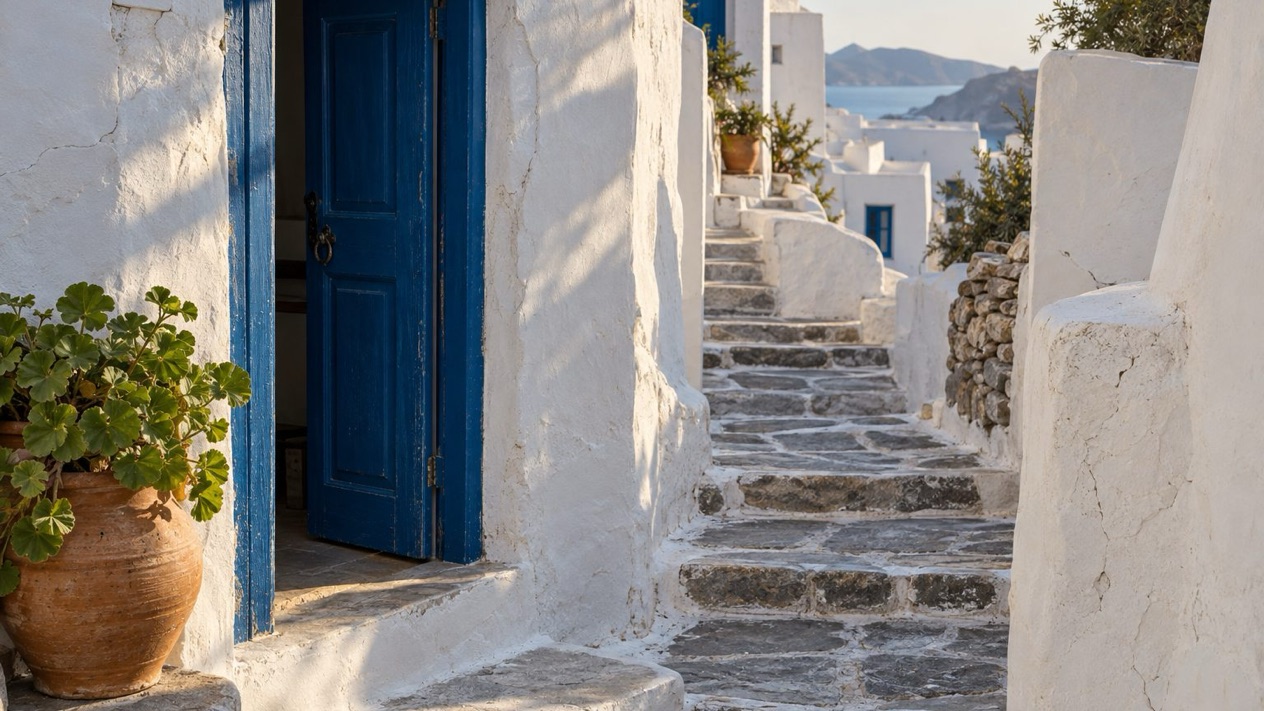
Light, first of all. It is incomparable here, falling on whitewashed walls and translucent green-blue water. Add bare rock and villages of white cube houses, with tiny alleys winding between them.
From there, each island goes its own way. Some are volcanic and lunar, others green and farmed, and they range from tiny Folegandros, so small that its villages get by without street names, to large, fertile Naxos. That variety is what makes island hopping work so well. Moving on after three or four days makes each stop feel like the start of a fresh vacation, so two weeks can feel like a month.
Food varies the same way. Mykonos has its spicy kopanisti cheese, Mykonos and Tinos both cure louza (pork fillet), and Sifnos slow-cooks chickpeas in a clay pot. Fava turns up across the chain. Santorini's volcanic soil produces exceptional wines, and Tinos is known for a lighter, more refined raki.
Which Cyclades island is right for me?
Santorini
This is the postcard: whitewashed villages tumbling toward the water, blue-domed churches, and a caldera left by a volcano. Sunset from Fira or Oia is the moment many visitors come for, and the view can melt away any irritation at the crowds. The hike between Fira and Oia is a great way to take it all in.
The drawbacks are real. Cruise ships keep the narrow lanes crowded, Santorini is a pricey island, and the beaches are black or red volcanic sand that can get hot enough to burn your feet. Plan your days around the caldera and the sunsets, and save the long beach days for another island. A dinner with a view comes at a premium, so have a drink at the edge and eat somewhere cheaper, where the food is often better anyway.
Mykonos
Mykonos is the glamour island, with a whitewashed maze of streets lined with cafes, boutiques and bars. Beaches such as Psarou and Elia have golden sand, green-blue water and polished beach clubs. Those clubs set the tone, with loud music and drinks at a premium, and a pair of sunbeds with shade can cost a lot, so book them ahead.
It is a fine pick for nightlife and people-watching. For calm or a bargain, look elsewhere, and expect the main town to feel claustrophobic when cruise ships are in.
Paros and Antiparos
Paros balances polish and ease. Parikia is a handsome port town, Naoussa has an old fishing harbor with bars along the water, and villages like Lefkes sit up in the hills. The beaches are soft sand, many with sunbeds and parasols, and kitesurfing and sailing are popular.
This is a drinks-and-a-sunset-dinner island more than a party one. Tables at popular restaurants in the prime spots can fill up, so booking the evening before or choosing a quieter place works well.
Antiparos is about 10 minutes away by ferry and deserves at least a day, mostly for long, golden Soros beach.
Naxos
Naxos, the largest and most fertile island, suits beach lovers. The sand is fine and powdery, and Agios Georgios sits right by the main town, so you can manage without any transport at all. Walk out to the Portara, the monumental marble doorway of the temple of Apollo, for sunset. If you do rent wheels, head inland around dusk, when the farmland and mountain villages glow.
Naxos is also one of the less expensive islands, and families, hikers and windsurfers all do well here. Agia Anna is easy with kids, Mikri Vigla is the spot for wind sports, and the summit of Mount Zas gives a 360-degree view across the Cyclades.
Milos
Milos is volcanic, with the moonlike white rock of Sarakiniko, colorful fishing villages lined with boathouses, and sea caves at Kleftiko and Sykia. Come for the scenery more than for long stretches of fine sand. Tsigrado, for one, means climbing down a few ladders. Plaka, the old village, has whitewashed houses and blue-painted shutters, and a sunset dinner in Trypiti or Mandrakia is a highlight.
A boat tour reaches coves you can't get to any other way. Bus links are good, especially from Adamas, so a car is optional.
Folegandros
Folegandros is tiny, rugged and far from mass tourism. You can drive from one end to the other in about 15 minutes, and the main village, Chora, is a tangle of alleys and white cube houses. Most beaches are natural, with no sunbeds or bars, and many are reached on foot or by boat. Buses run roughly four times a day, enough for one beach in the morning and a ride back in the afternoon. To explore more, hike or rent a scooter or ATV.
Small family-run hotels are clustered in Chora and up the hill in the village of Ano Mera.
Tinos, Syros and Andros
Tinos is the country's great pilgrimage island, and mass tourism has largely passed it by. Beaches have soft sand and clear water, the villages are worth wandering, and a full-day bus tour sold at the port bus station covers the main stops. It is a short ferry ride from Mykonos, close enough for a day trip. Around August 15, the island fills with pilgrims. Most visitors are Greek, so don't count on English everywhere.
Syros is the administrative capital, more working island than resort. Ermoupoli's neoclassical buildings look more like Venice than the Aegean, and its Apollo Theatre is a miniature of La Scala. The climb to Ano Syros for sunset is steep but worth it, and the town has lots of steps, so explore outside the midday heat.
Andros is green, with river valleys, hiking trails and grand neoclassical mansions. As one of the bigger islands in the group, it has plenty of room to spread out and comparatively few visitors. Art lovers will enjoy the contemporary art museum in Chora, a town roughly an hour's drive from the port at Gavrio, while the beach town of Batsi sits just 15 minutes from the port. A rental car makes life easier here.
Sifnos, Serifos, Ios and the small islands
Sifnos is for food lovers, with working potteries, slow-cooked dishes and beachfront fish restaurants. Serifos, one of the closest islands to Athens, has a dramatic hilltop Chora, a red, iron-rich landscape and plenty of blond beaches. Ios is the young party island, with long beaches like Mylopotas, so skip it in summer if you like an early night. Amorgos has steep cliffs and the 11th-century Hozoviotissa Monastery. The Small Cyclades near Naxos, including Koufonisia with its sea caves, are the pick for quiet.
How do you get to the Cyclades and between the islands?
Santorini and Mykonos have international flights, which makes them handy bookends. Fly into Athens and home from Mykonos or Santorini, and your flights all go in one direction. Other islands have airports too, though not all of them handle international flights. If you plan to do most of your travel by ferry, put Santorini at the start or end, since the sailing from Athens can take the better part of a day.
Ferries are the best way around. They are easier than island flights once you count check-in and security, and many travelers find a ferry far more pleasant. Plan your route as a loop to cut sailing time. Book online early in summer, since seats can be limited, and watch for the check-in reminder email that ferry booking services send before departure. Piraeus, Athens' main port, is huge, so confirm which quay your ferry leaves from and arrive early.
On the islands, buses serve the main towns and beaches, though service is sparse on the quietest routes. Buy a ticket and validate it, because riding without a valid ticket can bring a fine of up to 60 times the fare. Taxis are handy when you first arrive but cost the most. Where you need more freedom, rent a car, scooter or ATV for a day or two.
When is the best time to visit the Cyclades?
The season runs from early spring into late autumn, and midsummer is the peak, with heat, crowds at the popular sunset spots, and restaurants that need booking. August is the busiest month of all, since many Athenians head to the islands for their own vacations and ferries fill up. For August, start booking ferries and accommodation in March/April.
The shoulder months are quieter and still warm, with pleasant beach weather of about 72 to 77°F (22 to 25°C) and alleys still in bloom. The trade-off is fewer ferries and fewer open businesses, so your choice of islands and travel days narrows. By early October the season is winding down and many restaurants are getting ready to close. From mid-October, barely any ferries run and most hotels and restaurants stay shut until April/May, so check ferry times before you book a room.
What does an American need to know before going?
The U.S. State Department says U.S. citizens can enter Greece without a visa for up to 90 days for tourism or business. Your passport should have at least three months of validity beyond your planned departure date, and you may be asked for proof of funds and a return or onward ticket.
Greece is generally safe, though petty crime is common at popular tourist spots, and thieves target rental cars for passports, valuables and luggage, so take your belongings with you when you park. Strikes and demonstrations can disrupt transportation, including seaports, so build slack into ferry days. Forest fires are common in the dry summer months, and earthquakes occur regularly.
If you rent a car or scooter, Greek law requires a valid U.S. license, and insurance companies may require an international driver’s permit. Drive with care, since Greece has one of the highest traffic fatality rates in the European Union. Carry your passport or a photo ID with you, along with some cash, because many care providers in Greece mostly take cash.
Sources
- Visit Greece (GNTO) (https://www.visitgreece.gr/en/islands/cyclades), checked October 18, 2026
- suewherewhywhat.com (https://www.suewherewhywhat.com/a-first-timers-guide-to-greek-island-hopping/), checked October 18, 2026
- cntraveller.com (https://www.cntraveller.com/bc/article/cyclades-islands-greece), checked October 18, 2026
- discovergreece.com (https://www.discovergreece.com/cyclades), checked October 18, 2026
- jillonjourney.com (https://jillonjourney.com/cyclades-island-hopping-quiet-greek-islands/), checked October 18, 2026
- U.S. Department of State (https://travel.state.gov/content/travel/en/international-travel/International-Travel-Country-Information-Pages/Greece.html), checked October 15, 2026
- U.S. Department of State (https://travel.state.gov/content/tsg_aem/us/en/home/international-travel/travel-advisories/destination.grc.html), checked October 15, 2026
All our pages
When to go
Things to do
- Things to Do in the Cyclades: Delos, Santorini's Caldera, Island Food and Nightlife
- 10 Days in Greece: Itinerary: Athens, Paros, Naxos, Mykonos and Santorini
- 14 Days in Greece: Itinerary for Athens, Paros, Naxos, Santorini, Milos and Sifnos
- 7 Days in Greece: Itinerary for Athens, Paros, Naxos and Santorini