
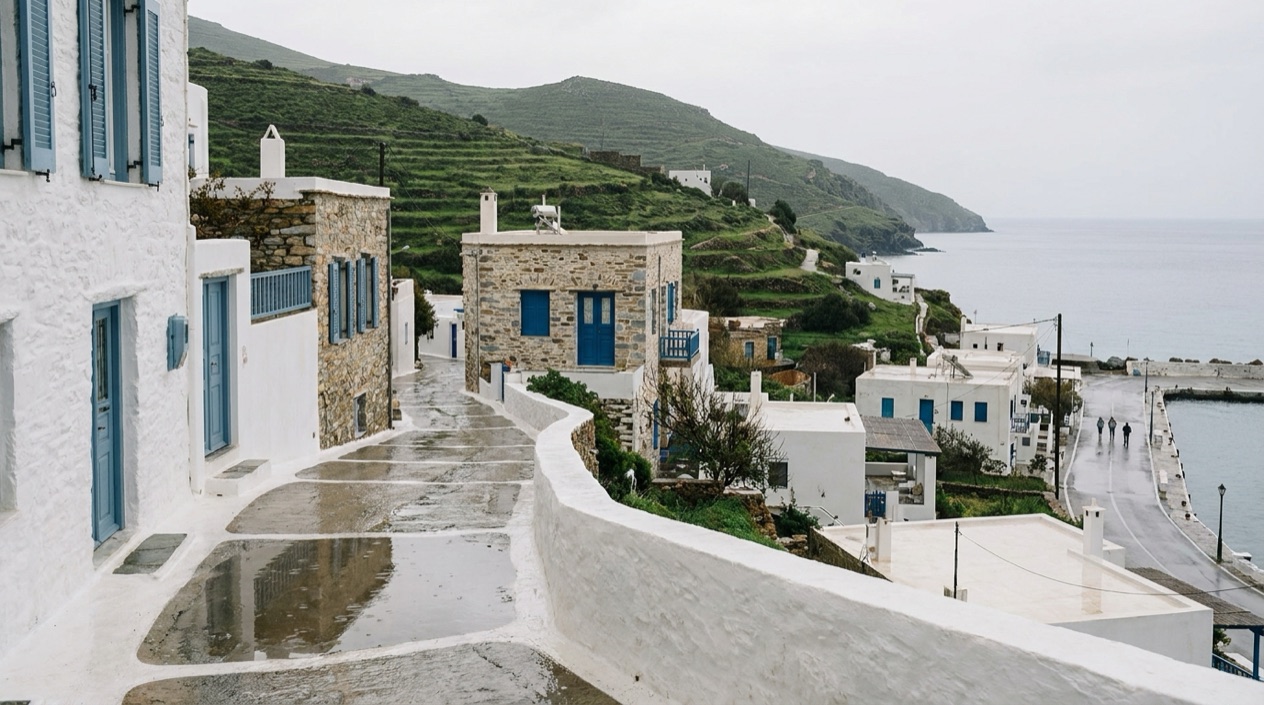
In the old part of an island town in winter, the shutters of the seafront tavernas stay open only where a wood stove is lit, and the smell of smoke and grilled octopus drifts down a lane slick from the last shower. Bakeries sell syrup-soaked honey cookies, and the citrus trees hang heavy over garden walls. Greece in winter asks for a suitcase of layers, a real rain jacket and shoes that grip wet stone, and nothing that belongs to the beach.
What should you pack for Greece in winter?
Pack for rain and for changing temperatures: a waterproof jacket, a few warm layers you can add or shed, and sturdy shoes with a good grip. Rain in a Mediterranean climate falls mainly in winter and spring, so wet weather is part of the season rather than a surprise. A trip planned around sightseeing, long lunches and village walks goes best with clothes that work together in small combinations.
Winter temperatures in a Mediterranean climate only occasionally fall below freezing. That shapes the suitcase: you want warmth you can adjust, not arctic gear. Think of a mid-weight sweater or fleece, a long-sleeve shirt or two, and a coat you can wear over them when the wind or the rain picks up.
Rain gear and outer layers
A waterproof shell with a hood is the single most useful item. Winter is when the rain arrives, and it can fall unevenly, since rainfall in Mediterranean climates varies considerably from year to year. A jacket that closes well at the neck and wrists does more than an umbrella on a hillside lane or a ferry deck.
Under the shell, wear a fleece, a wool sweater or a light down vest. This is the layer you take off in a warm taverna and put back on when you step into the street.
Shoes for stone, steps and mud
Greek towns are built of stone: worn paving in the old quarters, steep stairways between houses, and long ramps up to castles and monasteries. In winter those surfaces are often wet, so shoes with a rubber sole that grips are worth more than anything fashionable. Waterproof walking shoes or light boots handle both city pavement and a dirt path through olive groves.
Bring a second pair so one can dry out. Shoes that stay damp overnight make the next morning miserable, and a pair of thick socks costs almost nothing in the bag. Sandals are for a different season.
Small things that earn their space
A compact daypack with a rain cover keeps a camera, a phone and a paperback dry while you walk through an archaeological site. A reusable water bottle fits in the same bag. A lightweight hat and sunglasses still have a place, because winter days between the showers can be bright.
For evenings, a nicer sweater and a pair of dark trousers are enough for almost any taverna or small restaurant. Add a small dry bag or a few zip bags for phones and papers, and a plug adapter for the hotel room. That is the whole list, and it fits in a carry-on without much effort.
How cold does it get?
Cool and often wet, but rarely freezing: in a Mediterranean climate, winter temperatures only occasionally fall below freezing, and snow is generally seldom seen except in some locations. That describes the pattern Greece follows along much of its lowlands and coasts, so winter here is a season of sweaters and rain jackets rather than heavy parkas.
The Mediterranean pattern also has a dry side. Summers can go many months without significant rain, and the rain falls mainly in winter and spring. That explains why the landscape turns green after the first autumn downpours, with fresh grass on the hillsides and herbs thickening under the olive trees.
Coast, islands and the sea
Summer temperatures in Mediterranean climates depend on distance from a large body of water, on elevation and on latitude, and the same factors shape the winter feel of a place. Along the shore and on the islands, the sea softens the weather, and a day outside is usually a day in layers rather than in a coat buttoned to the chin.
Wind and rain still make a seafront walk feel colder than the thermometer suggests, so keep the shell within reach. A swim is not the point of a winter visit. The pleasures are the empty promenade, the fishing boats pulled up on the quay and a coffee in a kafenio, the traditional coffeehouse, with the harbor in view.
Mountains and higher ground
Elevation matters. Snow is seldom seen in a Mediterranean climate except in some locations, and those are mostly the high ones. If your route includes a mountain village or a high plateau, pack as you would for a colder place: a warmer coat, a hat, gloves and boots with real traction.
Travelers who split their trip between a port city and an upland town should pack for the colder of the two and treat the warmer as a bonus. Layers make this simple. A base layer, a fleece and a shell cover both places, and none of it takes much space.
What winter feels like on the ground
Winter in Greece has its own calendar. Christmas is marked with carols sung door to door and with trays of kourabiedes, buttery almond cookies dusted with sugar, and melomakarona, honey-dipped cookies spiced with cinnamon. On New Year’s Day many families cut the vasilopita, a sweet bread with a coin hidden inside.
In early January, the Epiphany blessing of the waters happens in harbors across the country, when a priest throws a cross into the sea and swimmers dive after it. Later in the season come the pre-Lenten Carnival celebrations, called Apokries, with costumes and parades in some towns. Bring a jacket you do not mind standing around in, because these events happen outdoors.
What can you leave at home?
Leave the beachwear, the heavy winter gear and anything that only works in dry weather. A winter trip to Greece does not need swimsuits as a main item, flip-flops, a large sun hat, or a puffy parka built for sub-zero cold. Winter temperatures in Mediterranean climates only occasionally fall below freezing, so the bulkiest cold-weather items stay in the closet.
Beach gear and summer clothes
Summer clothing is what to skip first: tank tops, linen shorts, thin sundresses and open sandals. They take up room and have little to do in a season when rain falls mainly in winter and spring. One light short-sleeve shirt is enough to wear under a sweater in a warm room.
A swimsuit is worth packing only if your hotel mentions a heated pool or a spa. Otherwise it is dead weight. Skip the beach towel, the snorkel set and the large beach bag, and use the space for a second pair of dry shoes.
Heavy coats, gloves and thermal gear
A parka rated for deep cold is rarely needed, since snow is generally seldom seen except in some locations. A wool coat or a medium-weight jacket with a fleece under it is plenty for most routes. Thermal underwear and heavy snow boots belong in the bag only if your plan includes a mountain village.
Instead of one bulky item, carry several thin ones. Three light layers pack smaller than a single heavy coat, and they let you adjust to a warm tavern, a windy quay or a damp museum without any trouble.
Fragile fabrics and fussy shoes
Rain and stone streets are hard on suede, thin leather soles and delicate fabrics. Heels catch in the gaps between paving stones, and white sneakers will not stay white for long. Pick shoes you can walk in for hours and that still look fine at dinner.
An umbrella can also stay home if you own a good hooded shell, since wind on a hillside or a ferry deck can turn a cheap one inside out. If you want something extra for the airport, a small folding one tucks into a daypack without trouble.
Extra gadgets and formal clothes
A winter trip rarely calls for formal wear. A smart sweater and a pair of dark trousers or a simple dress cover a dinner at a restaurant in a town, and the rest of the time you are in walking clothes. Leave the blazers, the ties and the evening shoes unless you have a specific event.
The same goes for extra electronics. A phone, a charger, a plug adapter and perhaps a camera are enough, and a long list of gadgets only adds weight to a bag you will be carrying up stairways. Pack a paperback for the rainy afternoons instead.
Good to know before you go
Greece uses the euro, and it is worth keeping a little cash for small purchases at bakeries, village shops and kafenia. Rainfall in Mediterranean climates is irregular, so one winter can be wetter than another, and a flexible plan for outdoor sightseeing helps. Keep a spare layer in your daypack, a dry pair of socks in a zip bag, and leave room in the suitcase for the honey, olive oil and herbs that tend to come home with you.
Sources
- Wikipedia, Mediterranean climate (https://en.wikipedia.org/wiki/Mediterranean_climate), checked October 12, 2026