
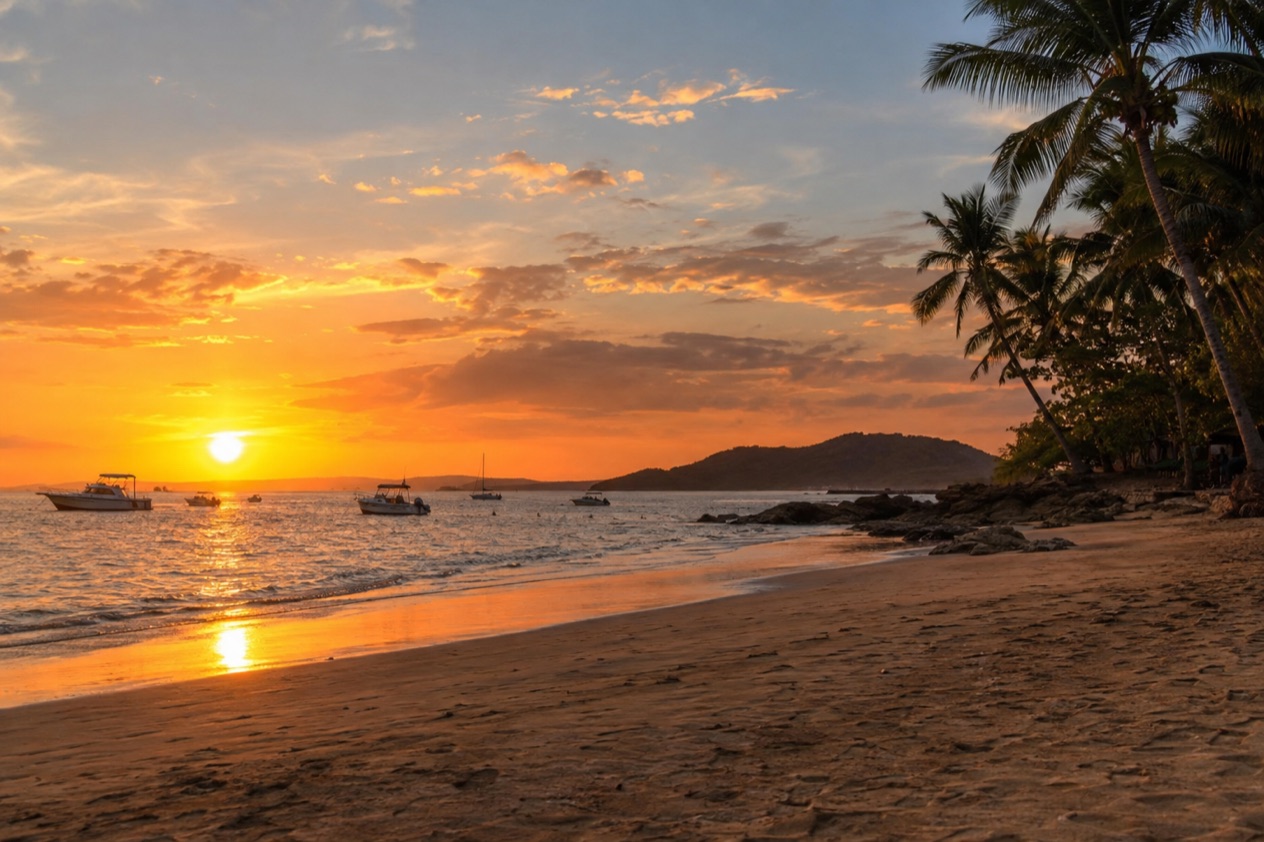
At low tide in Uvita, the sand stretches out into the sea in the shape of a whale’s tail, and families walk its curve with their shoes in their hands. Farther north, surfers paddle out at Tamarindo while pelicans skim the swells. Costa Rica has two coasts and a long list of beaches, from dark-sand surf breaks to jungle coves and reef-lined Caribbean shores.
What are the best beaches in Costa Rica?
The best beaches in Costa Rica depend on what you want from a day by the sea: Manuel Antonio for forest meeting the water, Uvita for the whale-tail sandbar, Samara for a gentle bay, Playa Conchal for its shell-covered shore, Santa Teresa and Nosara for long surf beaches, and Puerto Viejo for the Caribbean. Costa Rica’s beaches are public, though reaching beaches inside national parks may require park entry.
The Pacific coast offers the widest choice, and the towns along it each have their own feel. The Caribbean side is slower and more tied to its Afro-Caribbean culture. Picking a base first, then a beach, makes planning easier.
Manuel Antonio: forest and sea together
Inside the national park, small beaches such as Playa Manuel Antonio and Playa Espadilla Sur sit in coves between the trees and the water. You walk a shaded trail to reach them, and monkeys and birds are often seen along the way, though never guaranteed.
Outside the park gate lies Playa Espadilla, the long public beach, lined with restaurants and open to anyone. It suits travelers who want a full day of sand, shade and a cold drink without a hike. The park’s official page is the place to check current rules before you plan a visit inside.
Uvita and Marino Ballena: the whale-tail sandbar
Uvita is the small town that opens onto Marino Ballena National Park, where the beach forms a sandbar shaped like a whale’s tail at low tide. Walking out along it, with water on both sides, is the image most visitors take home. The park also protects the sea offshore, known for humpback whales and dolphins, which you may see on a boat outing, as chances rather than promises.
The tide decides the best moment, so ask your hotel when low tide falls that day and plan the walk around it. It is a relaxed stop for couples, families and anyone who likes wide, open shorelines.
Puerto Viejo and Cahuita on the Caribbean side
Puerto Viejo de Talamanca is a laid-back town of bicycles, reggae and Afro-Caribbean kitchens, with beaches such as Playa Cocles and Punta Uva a short ride away. The mood is barefoot and unhurried, and the evenings smell of coconut and spice from the small restaurants.
Farther along the coast, Cahuita National Park combines a forest trail beside the shore with beaches and a coral reef. Sloths and monkeys are often spotted from the path. Go early, bring water, and take your time: the walk is the point.
Which beaches are best for surfing?
Many of Costa Rica’s best-known surf beaches are on the Pacific side, including Tamarindo, Playa Grande, Nosara, Santa Teresa and Jaco. Each has its own character, so the right one depends on your level and the kind of town you want to come back to in the evening.
Tamarindo and Playa Grande
Tamarindo is a surf and beach town on the Guanacaste coast, with restaurants, shops and nightlife along its main street, about an hour’s drive from the Liberia airport. Surf schools line the beach, which makes it a natural first stop for beginners who want a lesson and a lively evening afterward.
A few minutes away, Playa Grande is a nesting beach for leatherback turtles, and Playa Langosta is another option close to town. Quieter than Tamarindo itself, Playa Grande draws surfers who prefer open sand and fewer crowds. Surf conditions change with the swell and the tide, so ask a local school before you paddle out.
Nosara and Santa Teresa on the Nicoya Peninsula
Nosara is a quiet coastal community known for Playa Guiones, a long beach with steady surf, and for its yoga studios and wellness culture. The rhythm of the day here is early surf, a smoothie, a yoga class, and another session as the light turns gold.
At the southwestern tip of the peninsula, Santa Teresa is strung along a dirt road behind a long beach, with small hotels, cafes and a barefoot feel. Surfers share it with yoga travelers and people who simply like the unpaved, unhurried atmosphere. Expect dust on dry days and a slower pace than the bigger resort towns.
Jaco, close to the capital
Jaco is a lively beach town on the central Pacific coast, about two hours by road from San Jose, with a long dark-sand beach, surf, bars and restaurants. Its easy distance from the capital makes it a popular weekend stop.
It suits surfers who want nightlife and plenty of places to eat after the session. If you prefer calm and quiet, a town like Nosara may fit better.
Which beaches are best for families?
Samara is the family favorite, a small beach town on a wide curved bay where the water is calm and shallow, protected by a reef and an island offshore. Even there, conditions can change, so keep children within arm’s reach at all times and ask your hotel about the day’s conditions.
Samara: a gentle bay with a village feel
The town sits right behind the sand, so you can walk from breakfast to the beach and back for lunch. Palm trees give shade along the shore, and the bay’s shape makes it pleasant for paddling, building sandcastles and slow evening strolls.
Small restaurants and shops are close at hand, which helps when children need a snack or a break from the sun. Samara works well for a few days of unhurried beach time, with no long drives between your room and the water.
Other family-friendly stops
At Uvita, the sandbar walk at low tide is an outing children tend to love, with wide space to run and shells to find. Manuel Antonio combines the beach with forest trails where monkeys and birds are often seen, which keeps older children curious between swims.
In the Caribbean, Cahuita National Park offers a shaded shoreline trail and a chance of spotting sloths. Whichever beach you choose, bring hats, water and sunscreen, and remember that most beaches have no lifeguard.
Are the Pacific or the Caribbean beaches better?
Neither coast is better across the board: the Pacific has more variety and more surf, while the Caribbean has a slower, more local atmosphere. Your choice comes down to the kind of trip you want.
The Pacific coast gives you the surf towns of Guanacaste and the Nicoya Peninsula, the lively beach at Jaco, the park beaches of Manuel Antonio and the whale-tail sandbar near Uvita. It is the easier coast for a trip that mixes surf lessons, restaurants and nightlife with calm bays for families.
The southern Caribbean is a different world. Puerto Viejo de Talamanca is known for its Afro-Caribbean culture, reggae and bicycles, and its beaches, such as Playa Cocles and Punta Uva, suit travelers who like a relaxed rhythm over a busy scene. Cahuita adds a coral reef and a forest trail along the shore.
The two coasts follow different weather calendars, so check the forecast for the specific coast you plan to visit rather than assuming one pattern for the whole country. Many travelers combine both, spending a few days on each side.
Are Costa Rican beaches safe for swimming?
Swimming in Costa Rica needs real care, because rip currents are very dangerous and cause several drownings of U.S. tourists each year. Most beaches do not have lifeguards or warnings about unsafe conditions.
Lifeguards are present at specific Pacific and Caribbean beaches, but the stations may be far apart and poorly equipped. Conditions change with the tide and the swell, and calm-looking water says nothing about the current underneath.
Before you get in, ask your hotel or a local surf school about the day’s conditions, and follow any flags you see. Keep children within arm’s reach at all times.
If a beach feels uncertain, sit on the sand, walk a trail or choose a different spot. Park beaches such as those at Manuel Antonio or Cahuita are lovely for the scenery and the wildlife, and the shore itself is worth the visit even on a day when the sea stays off limits.
Good to know before you go
The U.S. State Department rates Costa Rica Level 2, ‘Exercise increased caution,’ due to crime; it says petty crime is common throughout Costa Rica and that violent crime also affects tourists, including armed robbery, homicide and sexual assault.
All beaches in Costa Rica are open to the public, so carry what you need for the day, including water, sunscreen and a hat, and keep valuables out of sight, since petty crime is common throughout the country. Sit-down restaurants near the sand are the easy way to pass the hottest hours. Rules at national park beaches can change, so check the park’s official page before you go.
Sources
- U.S. Department of State, Costa Rica Travel Information, Safety and security (https://travel.state.gov/content/travel/en/international-travel/International-Travel-Country-Information-Pages/CostaRica.html), checked October 8, 2026
- U.S. Department of State, Costa Rica Travel Advisory, issued April 1, 2026 (https://travel.state.gov/content/travel/en/traveladvisories/traveladvisories/costa-rica-travel-advisory.html), read via the State Department open data API on October 8, 2026
To plan your stay
- Best Time to Visit Costa Rica: Dry and Green Seasons, Weather by Region and Festivals
- Where to Stay in Costa Rica: Beach Towns, Cloud Forest, Volcano Views and Which Base Fits Your Trip
- Costa Rica Airports: San Jose or Liberia? Beaches, Drive Times and Getting to Your Hotel
- Know Before You Go to Costa Rica: Entry Rules, Money, Getting Around and Local Customs