
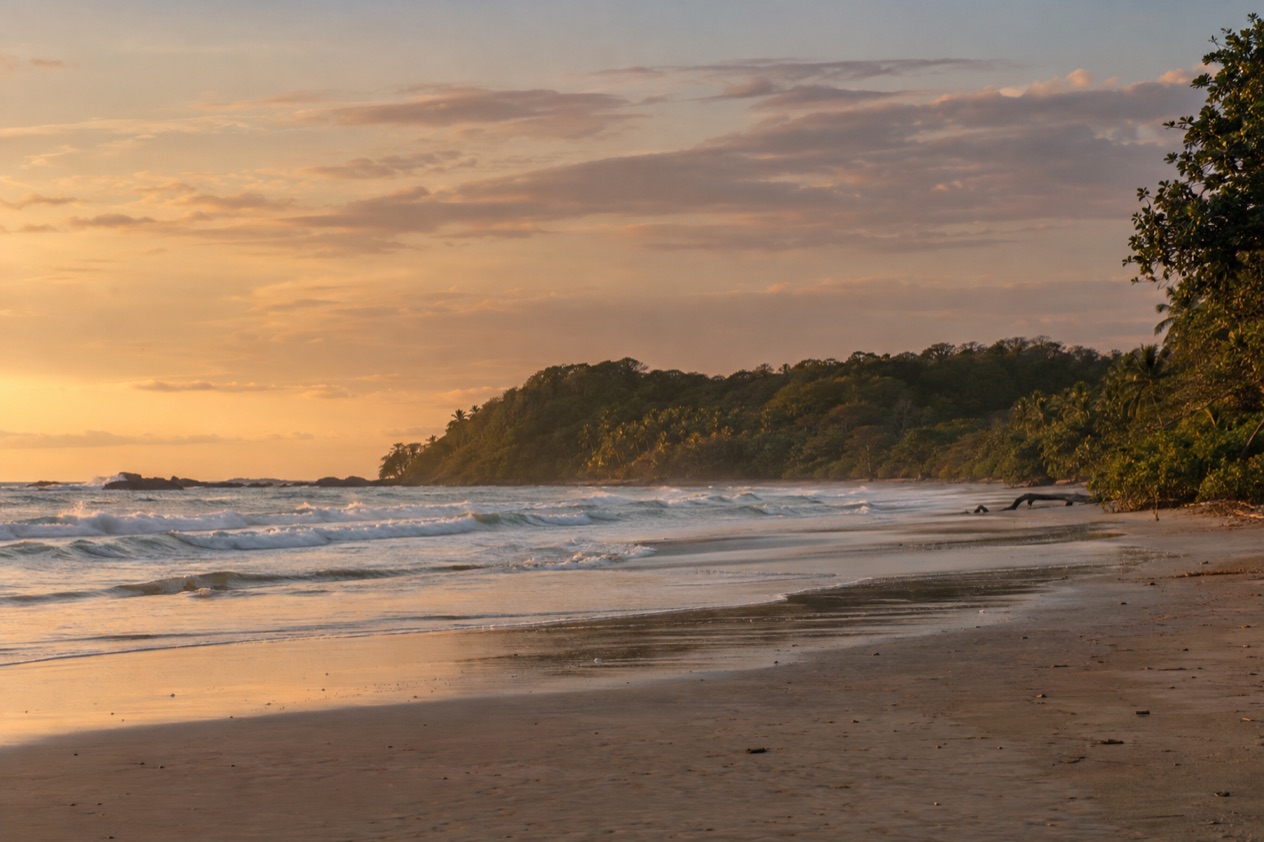
At first light in Nosara, the sand at Playa Guiones is already dotted with surfboards, and the only sounds are the shore break and howler monkeys grumbling somewhere in the forest behind the beach. By mid-morning the yoga studios have opened their doors, and smoothie bars fill with people in damp rash guards. This is a small, green, unhurried corner of the Nicoya Peninsula, built for people who want surf, stretching and slow days more than nightlife.
Where is Nosara and what is it like?
Nosara sits on the Pacific coast of the Nicoya Peninsula, in the northwest of Costa Rica, in the province of Guanacaste. It is a quiet coastal community spread along the shore and back into the trees, best known for Playa Guiones, a long beach with steady surf, and for a wellness culture built around yoga studios, healthy cafés and early bedtimes.
It is not a single town center with a plaza and a church. Nosara is scattered, a handful of small clusters of restaurants, shops and surf schools connected by quiet roads that wind through forest.
Many of its streets are shaded by big trees, and wildlife is part of the daily scenery: monkeys crossing overhead, iguanas on the fences, birds in the garden of almost every café. The beach is the real main street, and the day is organized around it, with surf or a workout early, a long breakfast, shade in the hottest hours and the sunset walk back on the sand.
The pace suits travelers who like to settle in. People come for a week and stay a month, take a surf lesson one day and a yoga class the next, and slowly learn which smoothie spot has the best bowls. Families with children who like beaches do well here, and so do couples, solo travelers and remote workers who plan around a morning session on the water.
It is less suited to anyone who wants a lively strip of bars, big resorts or a packed list of sights. Evenings are mellow, dinners are earlier than in a city, and the best entertainment is often a sky full of stars. The sea also asks for respect.
Rip currents are very dangerous along this coast and cause several drownings of U.S. tourists in Costa Rica each year, and most beaches have no lifeguards or warnings about unsafe conditions. Surf here is for lessons with a local instructor or for people who already know how to read the water.
What is there to do in Nosara?
Nosara offers surf, yoga and wellness, turtle nesting at a nearby beach, and long walks on sand backed by forest. What sets it apart from its neighbors on the peninsula is how calm the whole package feels: there is no party scene competing for your attention, and the activities all revolve around the body, the ocean and the outdoors.
Surfing at Playa Guiones
Playa Guiones is the reason many people come. The beach is wide and long, with a gently sloping sandy bottom and a steady surf that suits learners as well as people with plenty of experience.
Mornings are the favorite time, when the wind is lighter and the heat has not yet built. Evening sessions are popular too, with a pink sky behind the lineup.
Waves change with the tide and the swell, so ask your instructor or a local shop which stretch is best that day. Because rip currents are a real hazard here and lifeguards are not posted on most beaches, take lessons rather than paddling out alone on your first day, and watch the flags where they are flying.
Yoga and wellness
Nosara is one of the best known yoga destinations in Costa Rica, and the studios are part of the town’s rhythm. Classes run through the day, often in open-sided pavilions where you hear birds and the distant surf, and styles range from gentle stretching to strong, sweaty vinyasa. Many visitors pair a morning class with an afternoon surf, which makes for a day that is both tiring and calming.
Alongside the studios you find massage rooms, juice bars, breakfast spots serving bowls and avocado toast, and places to discover Costa Rican cooking. It suits people who want a wellness week without feeling they are in a retreat center. If you have never done yoga, a drop-in class is an easy way to try it, and nobody will mind if you spend half of it on the mat in child’s pose.
Sea turtles at Ostional
A short trip from Nosara, Ostional beach is one of the places where olive ridley sea turtles come ashore in large numbers to nest, mostly in the green season. The sight, when it happens, is of dark shapes hauling themselves up the sand and digging nests, sometimes in great numbers at once. It is a chance, not a promise, since the turtles follow their own rhythm of tides and moon.
The village itself is small and rural, a different mood from the surf scene of Guiones. Bring a light layer, a flashlight with a red filter if you have one, and patience.
Beach walks and sunsets
Beyond Guiones, smaller beaches such as Playa Pelada and Playa Garza give you rocky corners, tide pools and quieter sand. Pelada is a favorite for sunset, with rocks and a blowhole feel at certain tides, and Garza has a more local, fishing-village air. Walking from one cove to the next is a pleasant way to spend a morning, as long as you check the tide before you set out.
Sunsets are the daily social event. People drift to the beach with a drink or a beach towel, kids wade, float or play at the edge of the water, and surfers take their last waves in the orange light. Rip currents are very dangerous, and most beaches have no lifeguards or warnings about unsafe conditions.
How many days do you need in Nosara?
A long weekend is enough to taste Nosara, but a week is where it starts to make sense. The town rewards staying put, and travelers who rush through often leave feeling they only saw the beach from the car.
With three or four days you can fit a surf lesson, a yoga class or two, a sunset on Playa Pelada and an outing to Ostional if the season suits. Mornings are the active hours, with the sea and the studios, and afternoons are for shade, a long lunch and a swim in the hotel pool. Evenings are for an early dinner at one of the restaurants tucked into the trees and a quiet walk home under the stars.
A week lets you slow down and repeat the good things. You can take a second lesson once your legs have learned the first, try different studios, and wander to the smaller beaches on the calmer days. A longer stay also gives you room for a rainy afternoon, which in the green season is not a problem but part of the plan: reading, a massage, a coffee shop and a nap.
If you have more time, add a day or two elsewhere on the Nicoya Peninsula or in Guanacaste. The peninsula has other beach towns, each with a different mood, some more social, some more remote, and a trip north or south on the coast makes a natural change of pace.
Many visitors also pair Nosara with a volcano or rainforest area on another part of the country, flying in or out of Liberia or San Jose. Plan the transfer days generously so you are not rushing between the airport and the beach.
One more thing for short trips: Nosara is not a place that is easy to reach for a single night. Travelers who arrive after a long day on the road usually wish they had given themselves a second night to unwind.
Where to stay in Nosara
Most visitors stay near Playa Guiones, the heart of the surf and yoga scene. Lodging here ranges from simple surf lodges and rented rooms to villas with pools set back in the forest. It is the best choice if you want to walk to lessons, classes and breakfast, and to spend as little time as possible in a car.
The streets nearest the beach have the most energy, with cafés, shops and surf schools within easy reach. Farther back into the trees, the setting is quieter and greener, with more birdsong and less foot traffic, and you may be a bike ride or a short drive from the sand. Light sleepers sometimes prefer the quieter side, while first-timers often like being close to the action.
Playa Pelada, to the north, has a smaller, more rocky and local feel, with fewer places to stay and a calm village mood. It suits people who care more about sunsets and a quiet corner than about being next to the surf schools. Playa Garza, farther along the coast, is a simple fishing-village beach and appeals to travelers who want to feel away from the wellness crowd.
Many visitors rent a house or a condo for a week or longer, especially families and groups of friends who want a kitchen and a bit of space. Short stays tend to be hotels and guesthouses.
Whatever you choose, look for a place with good air conditioning or fans and screens, since the weather is warm and humid all year, and ask about how far it is from the beach on foot. In the dry season and around Christmas and New Year’s, good rooms go early, so reserve ahead.
How do you get to Nosara and get around?
Most visitors reach Nosara through one of two international airports: Daniel Oduber Quiros International (LIR) at Liberia in the northwest, the closest airport for the Guanacaste beaches, or Juan Santamaria International (SJO) near San Jose in the Central Valley. Liberia is the more convenient of the two for Nosara, and flights there often connect directly to the United States. From either airport, the last part of the journey is by road.
Many travelers book a private shuttle or a transfer, which saves the stress of unfamiliar roads, especially after a flight. Others rent a car, which gives freedom to explore the peninsula but means driving on roads that can be slow and rural.
Once you are in Nosara, getting around is part of the charm. Many visitors walk or cycle between their lodging, the beach and nearby cafés, and the scattered layout makes a bike a favorite way to travel.
A few practical points help. Costa Rica asks for a valid passport for the length of your stay and for a return ticket or proof of onward travel. The currency is the colon, but U.S. dollars are widely accepted in tourist areas, and many hotels, tours and restaurants quote in dollars, with change often handed back in colones. Keep some small bills for taxis and small shops.
When is the best time to visit Nosara?
The best months for beach weather are December through April, the dry season on this part of the Pacific coast. January is the driest of the months, with sunny days, almost no rain and warm sea, a mix that suits surf, yoga, and lazy afternoons by the pool. By April the heat has built, afternoons are hot and sticky, and the first showers start to arrive, though plenty of sunny days remain.
From about May to November the green season takes over. July is wetter and greener, with rain on most days, usually in the afternoon or evening, and mornings that are often still bright enough for the beach.
October sits in the heart of it, with showers on nearly every day and some of them heavy, so it suits travelers who accept rain in return for lush scenery, quieter streets and a slower mood. The sea stays warm all year, in the mid-80s, so a swim never feels like a shock in any month.
The busiest weeks are the dry-season holidays, especially Christmas through New Year’s and Holy Week, which moves every year. Rooms and rental cars are in demand then, and restaurants are lively. The green season is when turtles are most likely to nest at Ostional, so travelers who care about that sight sometimes choose the rainier months on purpose. Whenever you come, pack a light rain jacket, quick-dry clothes and plenty of sunscreen.
Good to know before you go
The U.S. State Department rates Costa Rica Level 2, ‘Exercise increased caution,’ due to crime; it says petty crime is common throughout Costa Rica and that violent crime also affects tourists, including armed robbery, homicide and sexual assault.
Bring some small bills, since U.S. dollars are widely accepted in tourist areas but change often comes back in colones. Keep valuables out of sight on the beach and in parked cars, as petty theft is the usual trouble in Costa Rica.
Treat the ocean with respect, swim near shore, and ask a local surf shop about conditions before you go in. Visitors can generally stay for a long period without a visa, though this is not guaranteed, so confirm the rules before you travel.
Sources
- Open-Meteo / ECMWF ERA5, normals 1991-2020 computed for the grid cell at 9.9792N 85.6531W, checked October 8, 2026
- Open-Meteo Marine API, average 2015-2024, checked October 8, 2026
- U.S. Department of State, Costa Rica Travel Information, Safety and security (https://travel.state.gov/content/travel/en/international-travel/International-Travel-Country-Information-Pages/CostaRica.html), checked October 8, 2026
- U.S. Department of State, Costa Rica Travel Advisory, issued April 1, 2026 (https://travel.state.gov/content/travel/en/traveladvisories/traveladvisories/costa-rica-travel-advisory.html), read via the State Department open data API on October 8, 2026
- U.S. Department of State, Costa Rica Travel Information, Entry and exit requirements (https://travel.state.gov/content/travel/en/international-travel/International-Travel-Country-Information-Pages/CostaRica.html), checked October 8, 2026
All our pages
When to go
- Best Time to Visit Nosara: Dry Season, Green Season, Surf and Turtles
- Nosara in January: Weather, Playa Guiones Surf, Ostional and a Two-Day Plan
- Nosara in February: Weather, Playa Guiones Surf, Yoga and a Two-Day Plan
- Nosara in March: Dry-Season Surf, Warm Seas and Yoga Mornings
- Nosara in April: Weather, Surf at Playa Guiones, Ostional Turtles and Two Days of Plans
- Nosara in May: Green-Season Weather, Playa Guiones Surf and a Two-Day Plan
- Nosara in June: Green Season Weather, Surf at Playa Guiones and What to Do
- Nosara in July: Green Season Surf, Turtles at Ostional and Guanacaste Day
- Nosara in August: Green Season Weather, Surf at Playa Guiones and What to Do
- Nosara in September: Green Season Weather, Surf, Independence Day Lanterns and Things to Do
- Nosara in October: Green-Season Rain, Ostional Turtles, Surf and Yoga
- Nosara in November: Green Season Showers, Surf at Playa Guiones and Yoga Mornings
- Nosara in December: Weather, Surf and Yoga Mornings, and What to Do