
Early in the morning in Monteverde, mist slides through the treetops and beads on every fern, and the first sounds are birds you cannot see and the drip of water from the leaves. By midday the cloud may thin enough to show the green folds of the Tilarán mountains, then close in again by afternoon. This is a cool, damp, quiet corner of Costa Rica, made for walkers, bird lovers and anyone who would rather spend a vacation under a forest canopy than on a beach.
Where is Monteverde and what is it like?
Monteverde sits high in the Tilarán mountains, in the cloud-forest country around the town of Santa Elena, well away from both coasts. It is a mountain destination in every sense: the air is cooler than anywhere on the beaches, the forest is thick with ferns, orchids and mosses, and the clouds are part of the scenery rather than an interruption to it.
The place has a gentle, unhurried pace. Santa Elena is the small hub, with a handful of streets of restaurants, tour offices, bakeries and shops, and from there the roads climb into scattered lodges, farms and reserve entrances. Evenings are early and quiet. Dinner is often soup or a plate of casado (the classic Costa Rican plate of rice, beans, a protein and salad) after a day outdoors, and by nine most people are heading to bed ahead of an early start.
The setting shapes the stay. Monteverde is windier and cooler than the coast, especially from December to February, and a light jacket is useful in the evening in any month. Pack a layer for the mornings and something that dries fast, because the mist gets into everything.
It suits hikers, birdwatchers, photographers, families with children who like to look for creatures in the leaf litter, and couples after a slower rhythm. It suits less well anyone who wants nightlife, a long beach day or a tightly paved, easy drive. The air is fresh, the days are active, and the reward is the forest itself, close up and dripping.
What is there to do in Monteverde?
The big reasons to come are the cloud forest on foot, the canopy from above, the forest after dark and the farm country around town. What sets Monteverde apart from its neighbors is the mountain setting: the beaches of Guanacaste and the volcano country of the north give you sun, surf and hot springs, while here the main event is mist, moss and the sound of the forest.
Walking the reserve trails
The trail networks of the Monteverde Cloud Forest Reserve, the Santa Elena Reserve and smaller private reserves nearby are the heart of any visit. Paths wind under huge trees draped in epiphytes, past ferns taller than a person, across little streams and out to lookouts where the clouds roll over a ridge.
Early morning is the usual choice, when the forest is quietest and birds are most active. You may see hummingbirds at feeders, brightly colored trogons and, with luck and patience, the resplendent quetzal, though it is always a chance and never a promise. Waterproof shoes and a rain layer matter more than any gear. A guide with a spotting scope often finds animals you would walk right past.
Hanging bridges and zip lines
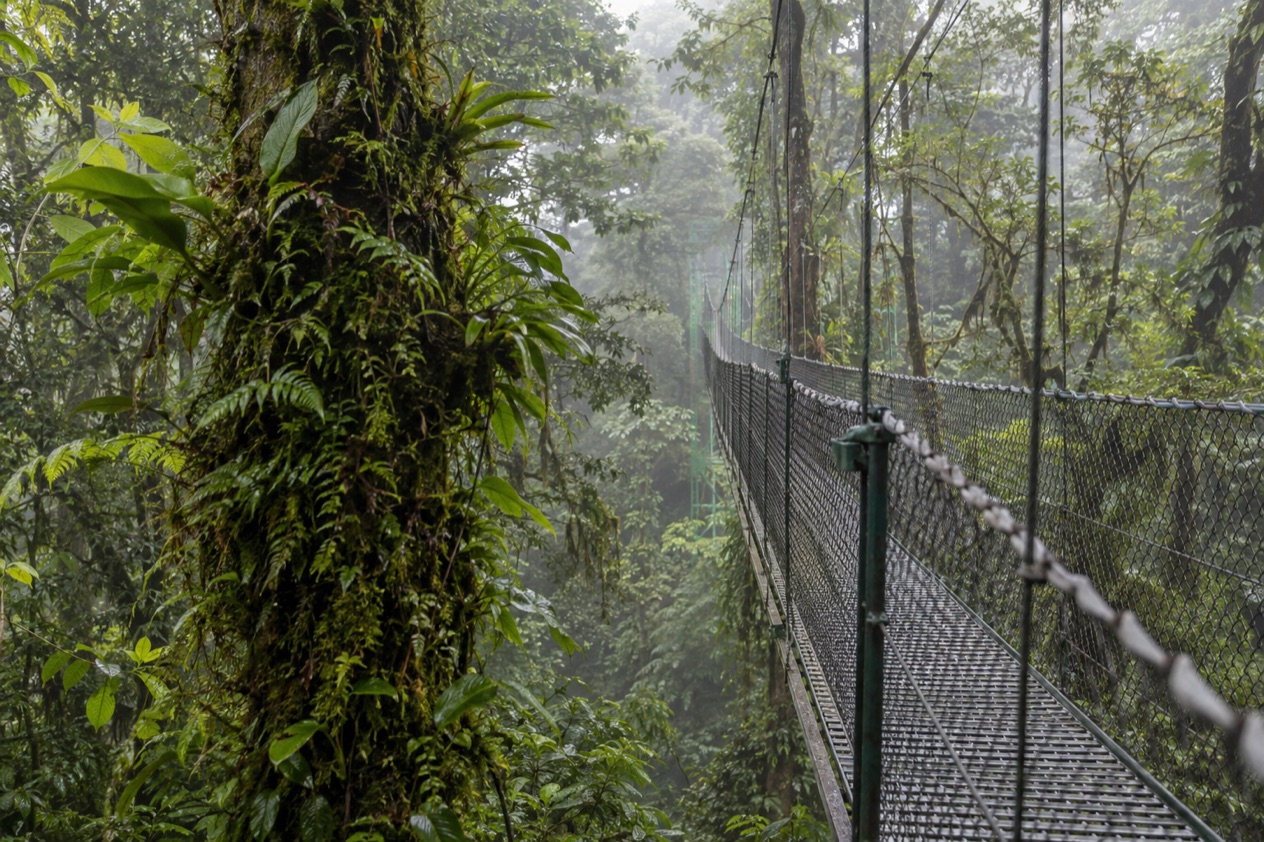
Hanging bridges let you cross the forest at canopy height, looking down into tree crowns and across to the next ridge. The walkways link together on a loop through the trees, so you move slowly and quietly, which is exactly how you spot a toucan or a troop of monkeys. The views are best when the cloud lifts, but the bridges are atmospheric even in full mist.
Zip-lining over the treetops is the more adrenaline-minded way to see the same canopy, with long cables strung across valleys and gaps in the forest. Zip-lining offers more adrenaline, while hanging bridges provide a slower canopy experience. Many visitors do the bridges on one morning and keep a second day for a zip-line outing, as the two are quite different experiences.
Guided night walks
After dark the forest changes completely. Guided night walks go out with flashlights to look for frogs, insects and sleeping birds, and the guides know exactly which trunk or leaf to point at. Expect glowing eyes, katydids that look like leaves, stick insects, sometimes a sleepy bird tucked in a branch, and a lot of unfamiliar night noise.
Damp weather can bring the forest to life, making a guided night walk especially atmospheric. Wear closed shoes and bring a jacket. The walks are usually slow and short on distance, long on stopping and looking.
Coffee, chocolate and dairy country
The slopes around town are working farmland, and the Quaker families who settled here long ago left a tradition of dairy farming that still shows up in local cheese and ice cream. Coffee farms offer tours that walk you from the bush to the cup, and small chocolate and sugarcane stops round out the picture of mountain agriculture.
These visits are a good fit for a gray, drizzly afternoon when the trails are slick, or for a slower half day between two active ones. You taste, you learn how the crop grows at this altitude, and you often end up with a bag of beans or a bar of chocolate to carry home.
How many days do you need in Monteverde?
A long weekend is the minimum that feels worthwhile, and a few full days is the stay that lets the place sink in. The road up is slow, so a single night spent mostly in the car is a poor trade for what the forest offers.
With a short stay, you can fit one early reserve walk, one canopy outing (bridges or zip lines) and one night walk, with a relaxed afternoon in Santa Elena in between. That covers the essentials: forest floor, treetops and after dark. Keep the day of arrival light, because the drive takes longer than the distance on the map suggests and you will probably reach town tired.
With more time, the stay opens up. You can take a second reserve, a different trail network or a guided bird walk with a specialist, and add a coffee or chocolate visit and a slow lunch at a farm or a café with a valley view. A rainy day stops being a problem and becomes part of the experience, because cloud forest is most atmospheric when it is wet.
Many travelers pair Monteverde with the Pacific coast or with the volcano and hot-spring country of the north, so the question is often how many days to give the mountains in a longer trip. A few days here fit neatly between beach time and a flight home. Leave a buffer for the mountain road if you have an international flight to catch the next day.
Where to stay in Monteverde
Most visitors stay in one of three areas: Santa Elena town, the road and hillsides that climb toward the reserves, or the quieter lodges tucked into the forest on the edges. Each gives a different version of the same mountain stay, and the right choice depends on whether you want to walk to dinner or wake up among the trees.
Santa Elena is the practical base. It has the most restaurants, bakeries, small supermarkets and tour offices, and you can walk between them in the evening without worrying about a late drive on a dark mountain road. It suits first-time visitors, families, travelers on a modest budget and anyone who likes to wander into a café between outings.
The hillsides above town trade convenience for atmosphere. Lodges and small hotels here sit among gardens and forest edges, with views of cloud rolling across the valley and birds at the feeders over breakfast. They suit couples, birdwatchers and travelers who want to be close to the reserve entrances and do not mind a short drive or taxi ride to dinner.
Further out, forest lodges and farm stays offer the deepest quiet, with night sounds, mist at the window and trails starting at the door. They suit people who have come mainly for nature and want to spend the evening on a porch rather than in town. The roads to these places can be steep and rough, so ask your lodge how to arrive and plan to reach it in daylight.
How do you get to Monteverde and get around?
You reach Monteverde by road. Two international airports serve most visitors: Juan Santamaria International (SJO), near San Jose in the Central Valley, and Daniel Oduber Quiros International (LIR), at Liberia in the northwest. From either, the journey ends in the mountains, and the drive is slower than the distance on the map suggests.
The last stretch of road to Monteverde and Santa Elena is steep, bumpy and partly unpaved, so the drive is slower than the distance on the map suggests. That is the single most useful thing to know when planning. Allow generous time, avoid setting out late in the day, and expect the final climb to feel longer than the earlier highway miles.
Santa Elena is the area’s hub for restaurants, shops and tour offices. Ask each venue about transportation when you book. The same steep, uneven surfaces apply on those local roads, and mist can make a bend harder to read.
A good habit is to plan outings by area, so you are not crossing back and forth along the same ridge. Pair a reserve walk with a lunch nearby, then do the farm visit on a different day. Keep a flashlight and a jacket in your daypack for evenings, since the temperature drops quickly after sunset.
When is the best time to visit Monteverde?
The best months for walking are the drier ones, roughly December through April. January is the clearest example, with only a few showery days and mild afternoons in the mid-70s, and April is similarly pleasant, a touch warmer and still mostly easy going. These months give you the best odds of long views and dry trails, though cloud forest is never fully dry and the mist can arrive on any day.
There is a trade-off in the middle of that stretch. From December to February Monteverde is at its windiest and coolest, so a good jacket matters even when the sun is out. If you feel the cold, March and April are gentler. The dry season is also when many travelers come, so rooms and popular tours can fill up around holiday weeks.
The green season, from about May to November, brings rain that usually falls in the afternoon. July is wet, with rain on most days, but showers are often short and the mornings can be bright.
October is the rainiest month in the year here, with rain on almost every day, and the forest is dripping, the trails are muddy and the clouds often sit low. Trails are quieter, the forest is lush, and a flexible plan with morning outings and indoor afternoons works well.
If you want a simple answer, aim for the dry months and bring layers. If you do not mind getting wet, the green months reward you with fewer visitors and a forest at full volume. Either way, plan activities early in the day and keep a rain jacket in your bag.
Good to know before you go
The U.S. State Department rates Costa Rica Level 2, ‘Exercise increased caution,’ due to crime; it says petty crime is common throughout Costa Rica and that violent crime also affects tourists, including armed robbery, homicide and sexual assault.
The Costa Rican currency is the colon, but U.S. dollars are widely accepted in tourist areas, and many hotels, tours and restaurants quote prices in dollars, with change often handed back in colones. Carry small bills for small purchases in town. Keep valuables out of sight in parked vehicles at trailheads and lookouts, as petty crime can happen anywhere in the country, and bring a light jacket for evenings in any month.
Sources
- Open-Meteo / ECMWF ERA5, normals 1991-2020 computed for the grid cell at 10.3009N 84.8248W, checked October 8, 2026
- U.S. Department of State, Costa Rica Travel Advisory, issued April 1, 2026 (https://travel.state.gov/content/travel/en/traveladvisories/traveladvisories/costa-rica-travel-advisory.html), read via the State Department open data API on October 8, 2026
- U.S. Department of State, Costa Rica Travel Information, Entry and exit requirements (https://travel.state.gov/content/travel/en/international-travel/International-Travel-Country-Information-Pages/CostaRica.html), checked October 8, 2026
All our pages
When to go
- Best Time to Visit Monteverde: Dry Season, Green Season, Weather by Month and Holiday Crowds
- Monteverde in January: Cloud Forest Weather, Hanging Bridges and Night Walks
- Monteverde in February: Dry-Season Weather, Cloud Forest Walks and a Two-Day Plan
- Monteverde in March: Dry-Season Cloud Forest, Hanging Bridges and Two Days of Walks
- Monteverde in April: Dry-Season Weather, Cloud Forest Walks and Holy Week Crowds
- Monteverde in May: Green Season Weather, Cloud Forest Walks and What to Do
- Monteverde in June: Green Season Weather, Cloud Forest Walks and Two Days of Plans
- Monteverde in July: Green Season Weather, Cloud Forest Walks and a Two-Day Plan
- Monteverde in August: Green-Season Weather, Cloud Forest Walks and the Cartago Pilgrimage
- Monteverde in September: Faroles Parade, Misty Cloud Forest and Rainy-Season Plans
- Monteverde in October: Green Season Rain, Cloud Forest Walks and Night Hikes
- Monteverde in November: Green Season Mist, Cloud Forest Walks and Coffee Country
- Monteverde in December: Cloud Forest Weather, Christmas Season and What to Do
Things to do
- Things to Do in Monteverde: Cloud Forest Walks, Hanging Bridges, Night Walks and Day Trips
- Monteverde Cloud Forest: Quetzals, Trails, Weather and How to Visit