
Early in the morning in a Costa Rican kitchen, a skillet hisses with rice and black beans, onion and sweet pepper, and the smell of cilantro and strong coffee drifts out to the street. Lunch comes on a plate heaped by someone who has probably cooked for the same neighbors for years, and dessert is often a slice of milk-soaked tres leches cake. Across the country, from the Central Valley to the coast, eating here is simple, filling and unhurried.
What do Costa Ricans eat every day?
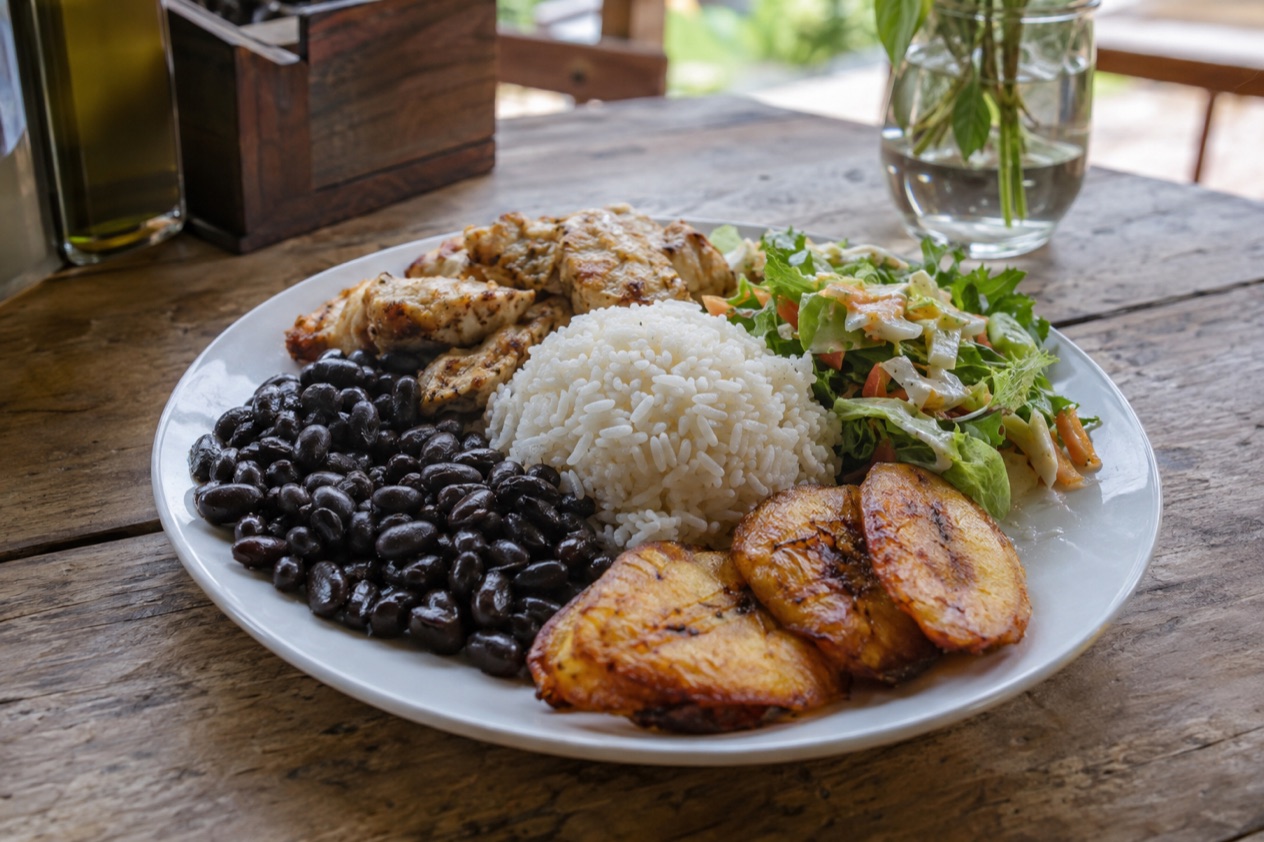
Rice and black beans are staples of everyday Costa Rican cooking. Fried together at breakfast they become gallo pinto, and at lunch they sit beside a salad, fried plantain and a portion of chicken, beef, pork or fish on a plate called a casado. Everything else, from soups to snacks, orbits around that pairing.
The food is mild rather than spicy. Flavor comes from onion, sweet pepper, garlic and cilantro, with lime squeezed over almost anything and a bottle of Salsa Lizano, a brown, tangy sauce, standing on many tables. Anyone who dislikes heat will feel at home, and those who want a kick can ask for chile sauce on the side.
The casado, the plate of the day
Casado means married man, and the name is usually explained as the marriage of rice and beans on one plate. It is the standard lunch, and what you see on the plate is a small tour of the kitchen: a mound of rice, a scoop of black beans, a crisp cabbage and tomato salad, sweet fried plantain and your choice of protein.
Choose fish near the coast and chicken or beef in the highlands, and you will rarely be disappointed. A fresco, a fruit drink blended with water or milk, comes alongside. It suits travelers who want a big, uncomplicated meal in the middle of the day, and anyone traveling with children will find the separate components easy to eat.
Soups, stews and bowls
When the afternoon turns gray and wet in the mountains, locals reach for sopa negra, a black bean soup often served with an egg, or olla de carne, a beef and vegetable stew built around yuca, corn and squash. Both are the kind of food that feels like a hug after a cool, misty morning.
At bars and casual spots you will also meet chifrijo, a bowl of rice and beans topped with pork cracklings and fresh tomato salsa, made for sharing over a cold beer while a soccer match plays on the television. Arroz con pollo, a yellow, fragrant rice dish with chicken and vegetables, turns up at family gatherings and on lunch menus alike.
What should you try in Costa Rica?
Start with a casado, a plate of gallo pinto and a ceviche by the sea, then follow with patacones, sopa negra, chifrijo and a slice of tres leches cake. That short list covers the flavors Costa Ricans themselves would point you to.
Ceviche on the coast
On the Pacific and Caribbean shores, ceviche is the common starter: sea bass or another white fish cured in lime juice with onion, cilantro and sweet pepper. It arrives cold, sharp and bright, with crackers or crisp plantain chips for scooping.
Pair it with a cold fresco or a local beer. It suits anyone who likes clean, citrusy flavors and wants something lighter than a full casado in the heat of the day.
Patacones and other snacks
Patacones are disks of green plantain, fried, flattened and fried again until crunchy outside and starchy inside. They come with black bean dip, guacamole or a topping of meat and cheese, and they make an easy shared appetizer.
Look for them at roadside stands, bars and sodas. They pair naturally with chifrijo, and a plate of both is a very Costa Rican afternoon snack, especially during a game on TV.
Something sweet
Tres leches cake, a sponge soaked in three kinds of milk, is the dessert you will see in bakeries and on restaurant menus everywhere. It is moist, lightly sweet and often topped with whipped cream or a little cinnamon.
Pair a slice with a small cup of black coffee, which cuts through the sweetness nicely. It is a good way to end a meal when you have already eaten more rice and beans than you planned.
What is a typical Costa Rican breakfast?
A typical Costa Rican breakfast is gallo pinto, rice and black beans fried together with onion, sweet pepper and cilantro, served with eggs, fried plantain and sour cream. Gallo pinto means spotted rooster, a name that describes the speckled look of the dark beans against the pale rice.
Gallo pinto is the national breakfast, usually served with eggs, fried plantain and sour cream. Expect it with a cup of coffee and perhaps a glass of fresh fruit juice, and plan for a hearty start that carries you through a morning of hiking or a long drive.
How locals dress the plate
Many people splash gallo pinto with Salsa Lizano, the bottled sauce that sits on tables across the country. It is savory and a little sweet, with a hint of spice but little real heat, and you can taste it first before deciding how much to add.
Eggs come fried or scrambled, often alongside a spoonful of sour cream, and ripe fried plantain adds a caramelized sweetness. Bread, a slice of white cheese or a tortilla sometimes joins the plate, making it a complete and generous meal for a hungry traveler.
Making the most of a slow morning
Breakfast is best taken unhurried, on a porch or a covered terrace, with the sounds of birds starting up around you. In the highlands the air is cool and a hot cup of coffee feels especially welcome, while on the coast the morning is the pleasant time before the day warms up.
If you are heading out early for a wildlife walk or a drive, a plate of gallo pinto is the practical choice. It is filling, it is everywhere, and it asks nothing of you except an appetite.
What coffee and tropical fruit should you taste?
Taste coffee from the highlands, ideally brewed in a chorreador, and as much fresh pineapple, mango, papaya and watermelon as you can find. Costa Rica grows its coffee in the Central Valley and other highland areas, and fruit is sold almost everywhere you go.
Coffee, brewed the old way
A chorreador is a cloth filter hung from a wooden stand, through which hot water drips slowly into a cup. The result is a clean, smooth brew without the harshness of a rushed machine, and many cafes and homes still serve it this way.
A farm tour in the highlands lets you see how the coffee is grown, picked and roasted, and ends, naturally, with a tasting. It suits curious travelers and anyone who wants to bring home a bag of beans, and it fits easily into a day around the Central Valley.
Fruit and frescos
Pineapple, mango, papaya and watermelon appear on breakfast plates, at roadside stands and in market stalls, sliced and ready to eat. The fruit tastes best when it is ripe and cold, and a bag of it makes an easy snack for a bus ride or a beach afternoon.
Frescos, the standard drink, are fruit blended with water or milk and poured over ice. Order one with lunch, and ask for the flavor of the day, since sodas usually make whatever is ripe and plentiful.
Where do locals eat lunch?
Locals eat lunch at sodas, small family restaurants that serve the daily casado at low prices. Many are open-sided, with a handful of tables, a counter and a cook who knows the regulars by name.
Sodas, the everyday kitchen
A soda has a short menu, often written on a chalkboard, and the casado is the heart of it. You pick a protein, and the plate arrives with rice, beans, salad and plantain. The atmosphere is casual, and the food tastes like home cooking because it is.
A soda suits solo travelers, families and anyone who wants to eat well without fuss, and it is a friendly place to try your Spanish.
The Central Market in San Jose
The Central Market is a covered maze of food stalls, coffee sellers, souvenir shops and small lunch counters, and it is the classic stop for a first taste of casados and fresh fruit. The aisles are narrow and busy, and the smells of frying plantain and roasting coffee follow you around each corner.
Sit at a lunch counter for a casado, then wander the stalls for a bag of fruit or a bundle of coffee to take home. It is lively and a little crowded, so keep your belongings close, as you would in any busy market.
Good to know before you go
The U.S. State Department rates Costa Rica Level 2, ‘Exercise increased caution,’ due to crime; it says petty crime is common throughout Costa Rica and that violent crime also affects tourists, including armed robbery, homicide and sexual assault.
Fresh fruit and frescos are everywhere, and a casado at a soda is one of the more modest meals you will find. Keep your valuables close in crowded markets.
Sources
- U.S. Department of State, Costa Rica Travel Advisory, issued April 1, 2026 (https://travel.state.gov/content/travel/en/traveladvisories/traveladvisories/costa-rica-travel-advisory.html), read via the State Department open data API on October 8, 2026
To plan your stay
- Best Time to Visit Costa Rica: Dry and Green Seasons, Weather by Region and Festivals
- Where to Stay in Costa Rica: Beach Towns, Cloud Forest, Volcano Views and Which Base Fits Your Trip
- Costa Rica Airports: San Jose or Liberia? Beaches, Drive Times and Getting to Your Hotel
- Know Before You Go to Costa Rica: Entry Rules, Money, Getting Around and Local Customs