
In February the mornings in Guanacaste start with the crackle of dry grass and the screech of parrots crossing a sky with hardly a cloud in it. Farther south, surfers wax boards on the beach while the Uvita jungle fills with people drifting toward a festival of music, art and yoga. February is prime time for beach lovers, wildlife watchers and anyone craving green hills minus the everyday deluge, since the dry season peaks across the Pacific side and the Central Valley while the Caribbean holds to a softer beat of its own.
What is the weather like in Costa Rica in February?
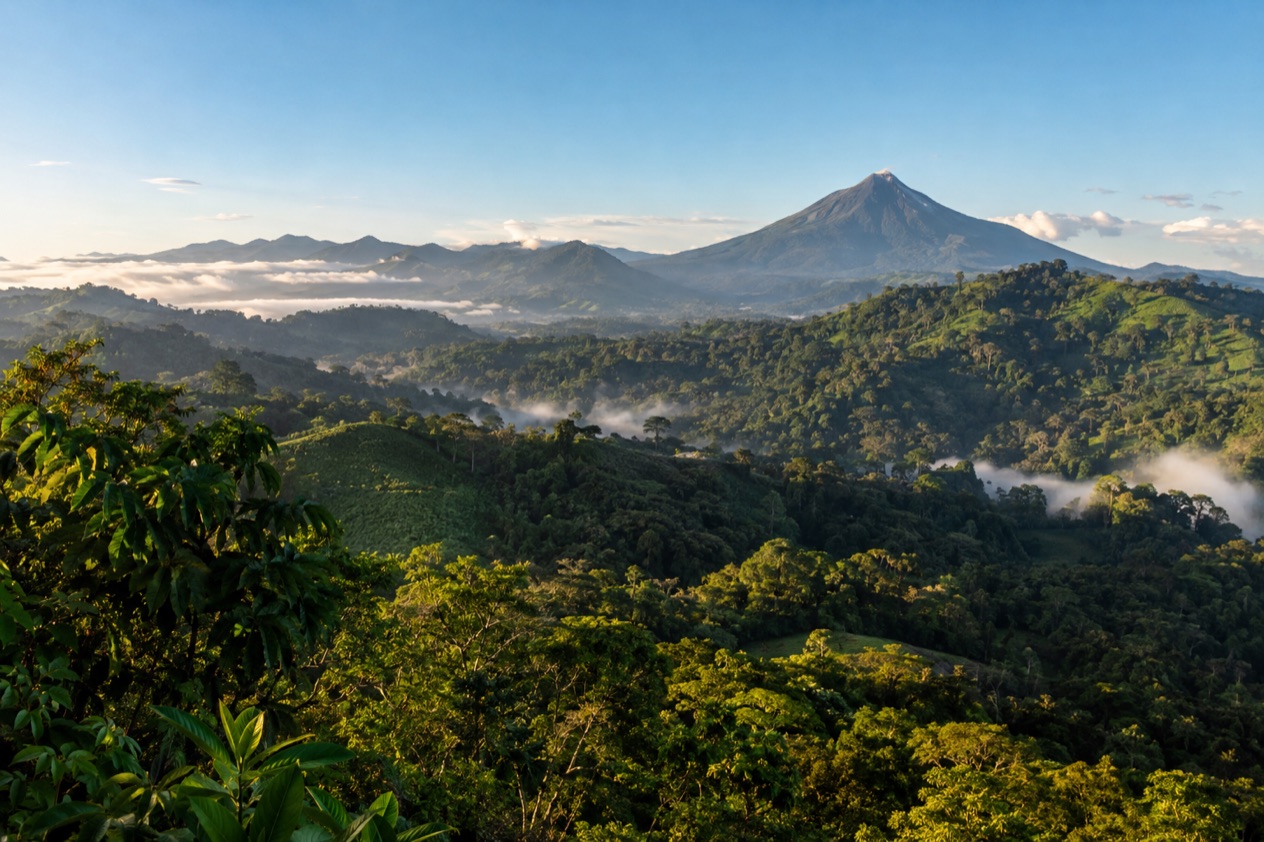
February is dry and hot on the northwest Pacific coast, warm and mostly dry in the Central Valley and the mountains, and showery on the Central Pacific and Caribbean sides, where some rain falls in most weeks. A spine of volcanic mountains runs from northwest to southeast, splitting Costa Rica into Pacific and Caribbean sides where nearby places can have very different weather.
| Place | Region | Average high (°F) | Average low (°F) | Rain (in) | Rain days |
|---|---|---|---|---|---|
| San Jose | Central Valley | 77.9 | 61.9 | 2.58 | 5.6 |
| Monteverde | Northern highlands | 78.4 | 63.0 | 0.59 | 1.7 |
| Tamarindo | North Pacific coast | 90.4 | 75.5 | 0.13 | 0.2 |
| Manuel Antonio | Central Pacific coast | 81.7 | 72.3 | 4.53 | 12.7 |
| Puerto Viejo de Talamanca | South Caribbean coast | 79.9 | 70.4 | 5.90 | 11.1 |
The sharpest contrast is between Tamarindo and the rest of the table. In Guanacaste, a day without rain is the rule, the heat is real by early afternoon, and nights stay warm enough to eat dinner outside in a T-shirt. The sea there is as warm as bathwater, and it climbs to 83.0°F off Tamarindo.
Manuel Antonio and Puerto Viejo sit at the other end. Both see showers on more than a third of the days, though February is not their wettest stretch, and the rain tends to come as a passing downpour followed by sun.
The ocean is bath-warm on both coasts, around 86.8°F off Manuel Antonio and 82.7°F off Puerto Viejo. Up in the highlands, San Jose and Monteverde have spring-like days with cool, fresh nights. Monteverde is very dry for a cloud forest, though mist and wind can still sweep through the trees.
Where to go in Costa Rica in February
North Pacific: Tamarindo and Guanacaste
Guanacaste is the surest bet for beach days this month. Tamarindo has a long, sandy beach with surf lessons in the morning, a row of open-air restaurants for grilled fish at sunset, and a lively evening scene. The landscape is golden and dry, with trees that lose their leaves and howler monkeys calling at dawn from whatever shade remains.
This is the place for travelers who want sun without a plan B, whether they are couples, surf beginners or families who want long hours in the water. Early mornings and late afternoons are the best times for walking the beach and for any hike, because the middle of the day is hot. Rip currents are very dangerous, and most beaches have no lifeguards or warnings about unsafe conditions, so choose where you swim with care.
Central Pacific: Manuel Antonio and Uvita
Manuel Antonio is where the rainforest meets the beach, and February is a comfortable time for it. Inside the national park, paths curve toward coves where white-faced monkeys, sloths and raccoons may appear, while a local guide notices far more than most visitors do. Showers do come through on a good share of days, usually brief, so a light rain layer is more useful here than an umbrella.
Farther down the coast, Uvita is the base for the long sandbar beach at Marino Ballena and for the waterfall hikes in the hills behind it. It also usually hosts the Envision Festival in late February, bringing a younger, busier and more bohemian atmosphere when it takes place. Travelers who prefer quiet may want to stay a little outside town.
South Caribbean: Puerto Viejo de Talamanca
The Caribbean coast does not follow the Pacific calendar, and that is its charm in February. Puerto Viejo is a laid-back town of bicycles, reggae and coconut-scented rice and beans, with beaches like Playa Cocles and Playa Chiquita lined with palms. Rain can fall in any week, and a good share of days see at least a shower, but it passes quickly and the warm air dries you off.
It suits travelers who like jungle right behind the beach, chocolate farms, snorkeling when the sea is clear and long lunches at wooden restaurants over the sand. Surf here can be strong, particularly at the famous break known as Salsa Brava, so beginners should stay on the gentler beaches. As on the Pacific, most beaches have no lifeguards.
Central highlands: San Jose and Monteverde
The highlands are comfortable this month, with warm sunny days and cool nights. San Jose is the usual gateway, with its Central Market, its museums and its coffee shops, where the day starts with a cup of strong local brew and a gallo pinto breakfast, the rice and beans dish that is the national morning habit. Showers are brief and rare, and the city is pleasant for walking.
Monteverde is the cloud forest favorite, with hanging bridges, hummingbird gardens and night walks that may turn up frogs, insects and sleeping birds. February brings little rain but plenty of wind and mist, so bring layers. Spotting a quetzal is a chance, never a promise, and a guide improves your odds considerably.
What to do in Costa Rica in February
The Envision Festival at Uvita
The month’s big event is the Envision Festival, a gathering of music, art and yoga that usually takes place at Uvita in late February, with dates that change every year. The jungle and the beach become the stage, with dance floors, workshops, sculpture and a crowd that arrives from many countries. It is a celebration of sustainability and creativity, and the mood leans toward barefoot and festive.
If it is on your list, plan the rest of the Central Pacific around it, since the towns nearby fill with festival-goers. If it is not your scene, the same days are a good time to visit the beaches farther north or south, where the festival has little effect.
Wildlife and rainforest walks
Costa Rica rewards wildlife watching in February, and a local guide can help spot animals that visitors miss. Sloths, howler and white-faced monkeys, toucans and scarlet macaws live in the rainforests, and many butterflies and frogs turn up on night walks. With about a quarter of its territory set aside in national parks, reserves and refuges, Costa Rica offers plenty of spots to explore.
Guided walks are how most visitors see animals, and the guide’s trained eye is what turns a green wall into a sloth in a tree. Set out early, when animals are active and the heat has not built. In the dry northwest, wildlife often clusters near rivers and shady trees.
Beaches, surf and volcano country
With the sun this reliable on the Pacific, days fall into a rhythm: surf or swim in the morning, siesta in the heat, then a sunset on the sand with a cold drink. Learn-to-surf lessons are a fixture in Tamarindo and the Central Pacific, and the warm water makes falling off the board painless. Remember that rip currents are a real danger, causing the deaths of several American travelers every year.
Inland, the highlands are good for coffee farm visits, volcano country drives and cloud forest walks. Check each park’s official SINAC page for current trail access and reservation rules before setting out.
Is Costa Rica busy in February?
February ranks among the busiest months, since travelers escaping a northern winter are pulled in by the dry season in the Central Valley and on the Pacific side. North Americans make up much of the crowd, along with Europeans and a good number of Costa Ricans on weekend trips.
The busiest places are the ones with the most reliable sun and the best-known names. Tamarindo and the Guanacaste beaches fill with sun seekers, Manuel Antonio is lively around its national park, and Monteverde hums with day visitors and overnight guests on the hanging bridges. Uvita gets an extra burst of energy around the Envision Festival. Rooms in popular areas are easier to book early, and hotels often feel full at weekends.
For calm, look away from the headline stops. The Caribbean side runs on its own calendar and tends to feel relaxed, and smaller beach towns, farm stays and lesser-known trails offer quiet even in a busy month. Early mornings are the best time to enjoy a famous spot before the day-trip crowds arrive. A weekday in San Jose, with its markets and museums, is also calmer than a weekend on the coast.
What to pack for Costa Rica in February
Packing changes with the region this month. For Guanacaste and the Pacific coast, think hot and sunny, with light, breathable clothes and strong sun protection. For the Caribbean and the Central Pacific, add a light rain layer, since showers come through on a good share of days. For San Jose and the cloud forests, bring something warmer for the cool nights and the wind in the mountains.
- Breathable, quick-drying clothes for the beach and the rainforest, plus a swimsuit you can wear all day.
- A light rain jacket for the Caribbean, Manuel Antonio and the cloud forest.
- A fleece or sweater for the cool highland evenings in San Jose and Monteverde.
- Sunscreen, a hat and sunglasses, especially for the dry, bright days in Guanacaste.
- Closed shoes with good grip for wet trails, plus sandals for the beach.
- Binoculars and a refillable water bottle for wildlife walks and hot afternoons.
A small daypack with a dry bag for your phone and camera is handy for boat rides and sudden showers. Insect repellent is useful in the forest and near the coast at dusk.
Good to know before you go
The U.S. State Department rates Costa Rica Level 2, ‘Exercise increased caution,’ due to crime; it says petty crime is common throughout Costa Rica and that violent crime also affects tourists, including armed robbery, homicide and sexual assault.
The U.S. State Department rates Costa Rica Level 2, exercise increased caution, because of crime. Keep valuables out of sight on the beach and in parked cars.
The sea needs respect too. Most beaches do not have lifeguards or warnings about unsafe conditions, so choose where you swim with care.
Is February a good time to visit Costa Rica?
Yes, February is one of the best months for a first trip, especially to the northwest Pacific coast, where dry days and warm sea make beach time easy. The Central Valley and the mountains are pleasant too, so a route that mixes Guanacaste with a cloud forest or a volcano valley works well. The Caribbean is a fine choice for travelers who accept showers in exchange for a different, slower coast.
Compared with January, February feels a touch hotter and drier on the Pacific side, as the green of the rainy season fades and the landscape turns golden. The festive mood of the holiday weeks has passed, and the month feels like a settled stretch of dry weather with plenty of places to explore. Compared with March, it is a little fresher and a little less parched, with trails and rivers still carrying some of the earlier moisture.
The trade-off is company. Popular beaches and parks are busy, and the best rooms go early, so book ahead for the places you care about most. In return you get long, clear days, wildlife that gathers where the water is, and the chance to end the month under the trees at Uvita with the Envision Festival.
Sources
- Open-Meteo / ECMWF ERA5, normals 1991-2020 computed for the grid cell at 9.9281N 84.0907W, checked October 8, 2026
- Open-Meteo / ECMWF ERA5, normals 1991-2020 computed for the grid cell at 10.3009N 84.8248W, checked October 8, 2026
- Open-Meteo / ECMWF ERA5, normals 1991-2020 computed for the grid cell at 10.2993N 85.8371W, checked October 8, 2026
- Open-Meteo Marine API, average 2015-2024, checked October 8, 2026
- Open-Meteo / ECMWF ERA5, normals 1991-2020 computed for the grid cell at 9.392N 84.1366W, checked October 8, 2026
- Open-Meteo / ECMWF ERA5, normals 1991-2020 computed for the grid cell at 9.6558N 82.7541W, checked October 8, 2026
- U.S. Department of State, Costa Rica Travel Information, Safety and security (https://travel.state.gov/content/travel/en/international-travel/International-Travel-Country-Information-Pages/CostaRica.html), checked October 8, 2026
- U.S. Department of State, Costa Rica Travel Advisory, issued April 1, 2026 (https://travel.state.gov/content/travel/en/traveladvisories/traveladvisories/costa-rica-travel-advisory.html), read via the State Department open data API on October 8, 2026
- U.S. Department of State, Costa Rica Travel Information, Entry and exit requirements (https://travel.state.gov/content/travel/en/international-travel/International-Travel-Country-Information-Pages/CostaRica.html), checked October 8, 2026
To plan your stay
- Things to Do in Costa Rica: Volcanoes, Beaches, Wildlife and Day Trips
- Where to Stay in Costa Rica: Beach Towns, Cloud Forest, Volcano Views and Which Base Fits Your Trip
- Costa Rica Airports: San Jose or Liberia? Beaches, Drive Times and Getting to Your Hotel
- Know Before You Go to Costa Rica: Entry Rules, Money, Getting Around and Local Customs