
Late in the afternoon in Puerto Viejo, bicycles roll along the main street with surfboards balanced across the handlebars, and a reggae bass line drifts out of a bar before the sun has even touched the palms. Someone is selling coconut bread from a basket, and the smell of woodsmoke and cacao hangs over the corner. This is the laid-back southern Caribbean coast of Costa Rica, a town of Afro-Caribbean cooking, bare feet and long beaches, for travelers who would rather linger than rush.
Where is Puerto Viejo de Talamanca and what is it like?
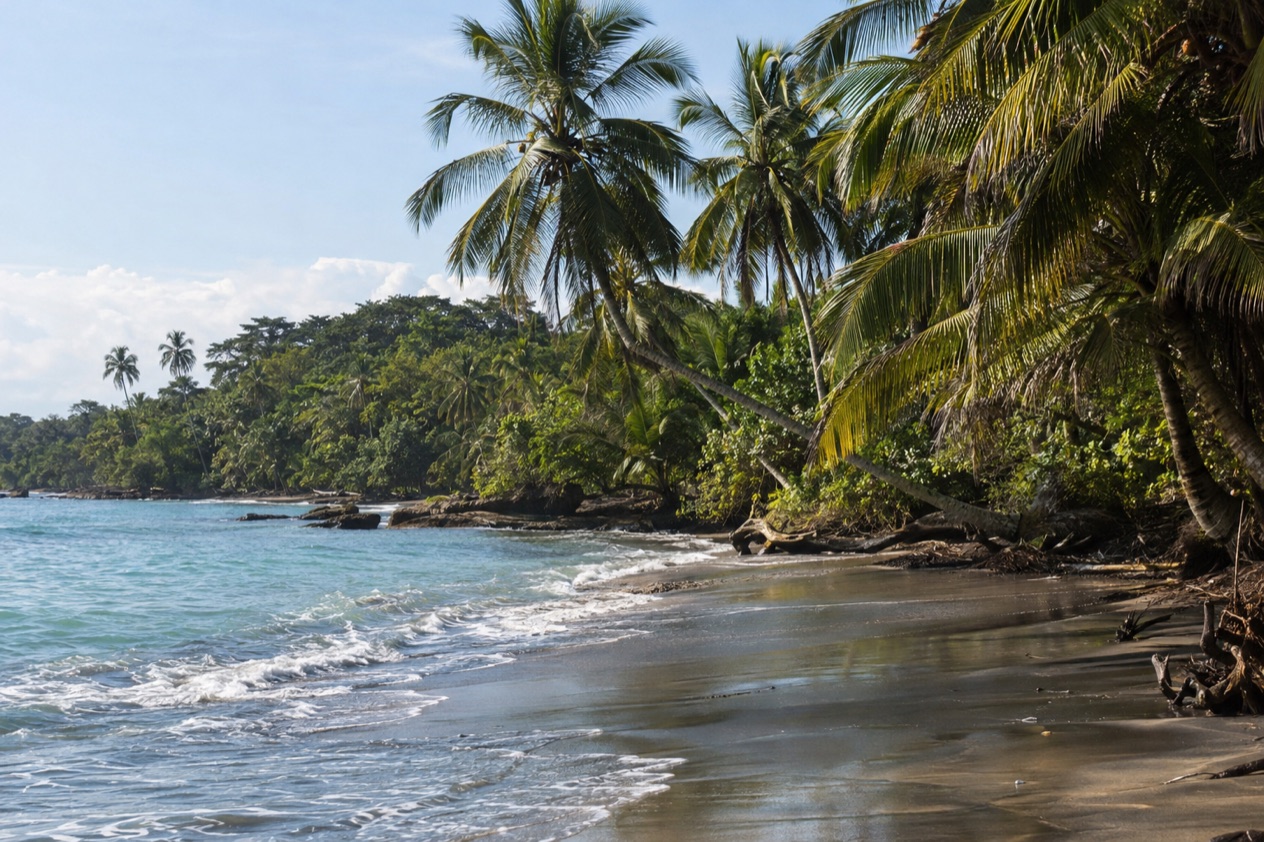
Puerto Viejo de Talamanca sits on the southern Caribbean coast of Costa Rica, a world away from the Pacific resorts most visitors picture first. Cahuita and its national park lie up the coast, and a string of beaches runs south from town toward Punta Uva and the quiet end of the road. Behind it, the green lowlands of Talamanca roll back toward the mountains.
The town is small, loose and easy to read. One main street holds the surf shops, bakeries, bike rental stands and open-air restaurants, and everything else spreads out along the coastal road and the sandy lanes that branch off it.
Afro-Caribbean culture shapes the place, from the music and the Creole-flavored speech you hear in the street to the coconut-rich kitchens. Reggae is the soundtrack, and it never seems to be turned off completely.
The pace here is slow by design. Days run on a simple rhythm of a morning swim or a ride to a beach, a long lunch, a nap in a hammock and an evening wandering between bars and food stands. Travelers who like to rest, bike, eat well and take things as they come tend to fall for it quickly.
It will suit some people less. If you want a polished resort with a managed beach, tidy sidewalks and a fixed schedule, the rough edges here can feel like inconvenience. The rain also comes on its own terms, because the Caribbean side gets showers all year, and the beaches are wild rather than lifeguarded. For anyone who enjoys that unscripted feel, it is part of the charm.
What is there to do in Puerto Viejo de Talamanca?
The big reasons to come are the beaches, the surf, the nearby national park and the food. What sets Puerto Viejo apart from its neighbors is how much of this you reach by bicycle, with no car and no tight plan, and how strongly the Caribbean culture runs through every meal and every evening.
Playa Cocles, Punta Uva and the beach road
The coastal road south of town links a series of beaches that are the main reason many people come. Playa Cocles is the lively one, with golden-brown sand, surfers in the water and beach bars set back under the palms. Farther along, Punta Uva feels quieter and greener, with forest reaching almost to the sand and small coves that suit a long, slow afternoon.
Most people ride a rented bicycle along this road, stopping wherever a beach looks inviting, and that is half the fun. Go in the morning when it is cooler and the light is soft, and bring water and sunscreen. Most beaches here have no lifeguards or posted warnings, and rip currents are very dangerous and cause several drownings of U.S. tourists in Costa Rica each year, so ask locals about the water that day before you swim.
Salsa Brava and surfing
Surfing is part of the town’s identity. The wave called Salsa Brava breaks over a shallow reef just off the town and is for experienced surfers only, a heavy, fast wave that draws people who know what they are doing and a crowd of onlookers on the shore. It is worth watching from land even if you never paddle out.
Beginners usually head to the beach breaks near Playa Cocles, where surf schools work with newcomers and the sandy bottom is more forgiving than reef. Conditions change from week to week, so look at the beach flags and talk to the instructors before you go in.
Cahuita National Park
Cahuita National Park, up the coast, is the classic outing from Puerto Viejo. A forest trail runs along the shore beside beaches and a coral reef, and the park is known for sloths and monkeys. You may spot them in the trees, along with birds, crabs and lizards, though wildlife is never guaranteed and a local guide helps a great deal in finding it.
The park protects the most preserved coral reef in the Costa Rican Caribbean, and it is run in close partnership with the surrounding community, a model of shared management between residents and government. Go early, wear shoes that can get damp and carry water. Here, the forest trail follows the shore beside beaches and a coral reef.
Caribbean food and the evening scene
Eating is a pleasure in its own right. The Caribbean kitchen leans on coconut milk, rice and beans, plantains, fresh fish, lobster in some seasons and spicy sauces, with a stew called rondón as a local favorite. Chocolate is a theme too, since cacao grows in the surrounding hills and you will see homemade bars and cacao drinks around town.
After dark, the main street fills with the sound of reggae, calypso and a bit of everything else, mixing with the smell of grills and the clink of bottles on terraces. It is relaxed rather than rowdy for the most part. Take a small flashlight for the sandy side lanes.
How many days do you need in Puerto Viejo de Talamanca?
A long weekend is enough to taste Puerto Viejo, but a week lets the place work on you the way it is meant to. The town rewards slowness, and travelers often arrive for a couple of nights and stay far longer than they planned.
With a short stay, keep it simple. Spend one day on the beach road by bicycle, asking the hotel or a surf school about the day’s conditions before you wade, float or play at the edge of the water and eat lunch at a beachside spot, then give a second day to Cahuita National Park and its shoreline trail. Evenings belong to the main street, a bowl of rondón and a drink with the music in the background. That already gives a real feel for the coast.
With a few more days, the rhythm changes. You can take a surf lesson and watch Salsa Brava from the shore, then ride all the way to Punta Uva and stay for sunset. Add a chocolate or cacao visit in the hills, a walk in the forest with a guide who knows where the sloths and birds hide, and a lazy day with nothing planned at all.
For a week or more, the coast opens up further. Day trips by the road south take you toward Manzanillo and its quiet beaches and wildlife refuge, while a second visit to Cahuita lets you explore its reef side. Rainy days are part of the plan on this coast, so leave a little slack for reading, cooking classes, yoga or a long lunch.
If you are combining the Caribbean with other regions, remember that Puerto Viejo sits far from the Pacific beaches and the northwest. Treat it as its own trip rather than one stop in a fast loop, and it will feel better.
Where to stay in Puerto Viejo de Talamanca
The main choice is between staying in the town itself and staying along the beach road. In town, you are within a short walk of restaurants, bike rentals, surf shops and the evening music. It suits people without a car, solo travelers and anyone who likes to step out of the door into the action. The trade-off is noise, since the bars and music can run late on busy nights.
Along Playa Cocles, lodgings are scattered between the road and the sand, with a mix of small hotels, guesthouses and cabins. It is the area for surfers and for travelers who want to stay near the beach. Expect a lively but not frantic setting, with the sound of the waves in the background.
Farther south toward Punta Uva, the mood turns quieter and greener. Cabins and small lodges sit among trees, with monkeys and birds as neighbors and fewer places to eat close by. It suits couples, families and anyone who wants a quieter retreat among the trees.
Think about your priorities before you pick. If you want nightlife and easy meals, stay in or near town. If you want sand and surf, choose Cocles. If you want forest, calm and a slower pace, go toward Punta Uva. Whatever you choose, look for places with good screens or nets, fans or air conditioning, and some protection from the humid weather that is normal on this coast.
In busy weeks, rooms in the best spots fill up, so reserve early if you have fixed dates. In quieter stretches, you will find it easier to be spontaneous.
How do you get to Puerto Viejo de Talamanca and get around?
Most visitors arrive through Juan Santamaria International Airport (SJO), near San Jose in the Central Valley, since the Caribbean coast lies on that side of the country. The other international airport, Daniel Oduber Quiros (LIR) at Liberia in the northwest, is the closest one for the Guanacaste beaches and sits far across the country from the Caribbean, so it makes a poor starting point for this trip.
The route crosses the mountains and drops to the Caribbean lowlands, so plan the transfer as a significant part of the day rather than a quick hop. Weather, traffic and road conditions can change the time, so leave margin on arrival and departure days.
Once you are in Puerto Viejo, you hardly need a vehicle. Walking covers the town, and bicycles are the signature way to reach the beaches along the coastal road, with rental stands all along the main street. Take a light, a lock and some water, and ride in daylight when you can.
A car gives freedom to stop at beaches and viewpoints, but it is not required, and parking in the center of town can be awkward. If you drive, take your time on narrow stretches and watch for cyclists, pedestrians and heavy rain. Dollars are widely accepted in tourist areas, but change often comes back in colones, so carrying some local currency helps for small purchases and local buses.
When is the best time to visit Puerto Viejo de Talamanca?
The southern Caribbean coast keeps its own calendar, and the best stretches are February and March, plus September and October, when it is often drier here while the Pacific side is wet. That pattern is the opposite of what many visitors expect from Costa Rica, where the Pacific coast is dry from about December to April. It is the main reason to think of this coast separately.
Even in the better months, expect showers, because rain falls here all year. January and April bring rain on about half the days, usually in passing bursts that leave plenty of sunshine around them, with warm days and sea temperatures that stay inviting.
October brings rain on most days, often in heavy downpours, even if the coast tends to have drier spells at this time of year. The sea is at its warmest then.
July is the wettest of the months we looked at, with rain on nearly every day and some days of real downpours. Roads, trails and the beaches feel the effect, and you will want to be flexible. It is still a green, warm and quiet time for travelers who do not mind getting wet.
Temperatures hardly change through the year, with warm days and mild nights, so rain and your own tolerance for it decide the best time more than heat. Pack a light rain jacket whatever the month. The ocean can have rip currents at any time, so check the conditions and the beach flags where there are any.
Good to know before you go
The U.S. State Department rates Costa Rica Level 2, ‘Exercise increased caution,’ due to crime; it says petty crime is common throughout Costa Rica and that violent crime also affects tourists, including armed robbery, homicide and sexual assault.
Dollars are widely accepted in tourist areas and many hotels, tours and restaurants quote in dollars, though your change often comes back in colones, so keep some small local bills. Petty theft can happen anywhere, so keep valuables out of sight, lock your bike every time and do not leave bags unattended on the beach while you swim. Beaches here mostly have no lifeguards, and rip currents are a real risk, so ask locally before getting into the water.
Sources
- Open-Meteo / ECMWF ERA5, normals 1991-2020 computed for the grid cell at 9.6558N 82.7541W, checked October 8, 2026
- Open-Meteo Marine API, average 2015-2024, checked October 8, 2026
- Costa Rica Tourism Board (ICT), Cahuita National Park (https://visitcostarica.com/where-to-go/protected-areas/cahuita-national-park), checked October 8, 2026
- U.S. Department of State, Costa Rica Travel Information, Safety and security (https://travel.state.gov/content/travel/en/international-travel/International-Travel-Country-Information-Pages/CostaRica.html), checked October 8, 2026
- U.S. Department of State, Costa Rica Travel Advisory, issued April 1, 2026 (https://travel.state.gov/content/travel/en/traveladvisories/traveladvisories/costa-rica-travel-advisory.html), read via the State Department open data API on October 8, 2026
- U.S. Department of State, Costa Rica Travel Information, Entry and exit requirements (https://travel.state.gov/content/travel/en/international-travel/International-Travel-Country-Information-Pages/CostaRica.html), checked October 8, 2026
All our pages
When to go
- Best Time to Visit Puerto Viejo de Talamanca: Weather, Sea and Seasons
- Puerto Viejo de Talamanca in January: Weather, Beaches and What to Do
- Puerto Viejo de Talamanca in February: Weather, Caribbean Beaches and What to Do
- Puerto Viejo de Talamanca in March: Weather, Caribbean Beaches and What to Do
- Puerto Viejo de Talamanca in April: Weather, Caribbean Beaches, Holy Week and What to Do
- Puerto Viejo de Talamanca in May: Weather, Beaches and What to Do
- Puerto Viejo de Talamanca in June: Rain, Caribbean Beaches and What to Do
- Puerto Viejo de Talamanca in July: Weather, Caribbean Swimming and What to Do
- Puerto Viejo de Talamanca in August: Weather, Caribbean Beaches, Things to Do and Crowds
- Puerto Viejo de Talamanca in September: Weather, Swimming, Independence Day Lanterns and What to Do
- Puerto Viejo de Talamanca in October: Weather, Caribbean Sea and What to Do
- Puerto Viejo de Talamanca in November: Weather, Swimming, Things to Do and Crowds
- Puerto Viejo de Talamanca in December: Weather, Beaches, Surf and Things to Do