
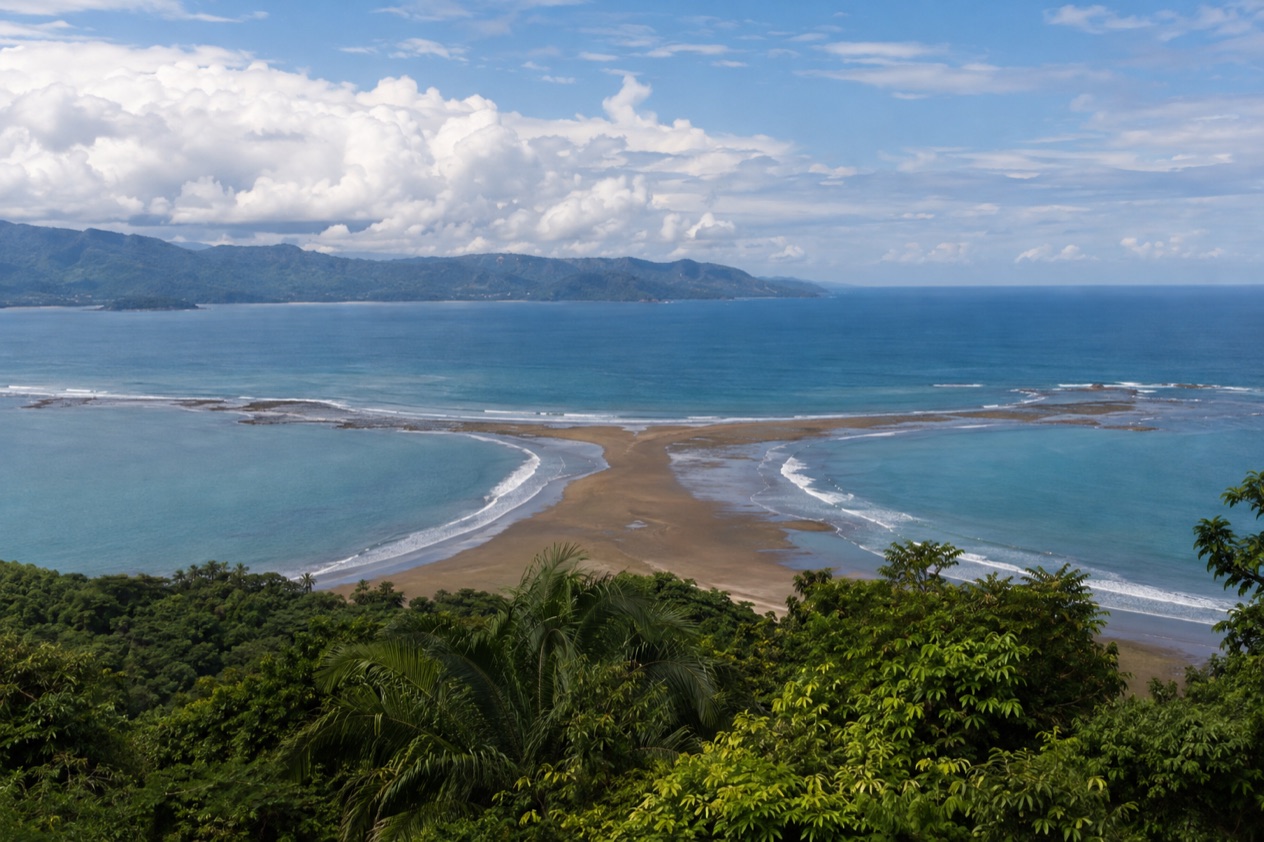
At low tide in Uvita, the water pulls back and a long curve of sand reaches out into the Pacific, split at the tip like a whale’s tail. Walkers drift along it with their shoes in their hands, pelicans work the surf line, and green ridges rise straight behind the beach. This is a small, relaxed town on Costa Rica’s southern Pacific coast, built for people who want whales, jungle and quiet evenings more than nightlife.
Where is Uvita and what is it like?
Uvita sits on the southern Pacific coast of Costa Rica, a small town strung along the road between the beach and the first folds of the mountains, and it serves as the gateway to Marino Ballena National Park. Dominical and its surf beach lie a short drive to the north. The town itself is spread out rather than packed, with a handful of supermarkets, bakeries, open-air restaurants and tour offices along the main road, and most of the lodging tucked into the hills above it.
The pace is slow. Mornings begin early, with birdsong and a heat that builds fast, and the day tends to organize itself around the tides, the boats and the afternoon rain. Evenings mean a casado (the classic plate of rice, beans, salad, plantain and a choice of fish, chicken or beef) at a family-run soda, then an early night. Nobody comes here to stay out until dawn.
Uvita suits travelers who like to be outdoors, who are happy to look for sloths and toucans on a guided walk, and who see a muddy trail as part of the fun. It is a good fit for couples, families with children who enjoy nature, and anyone who wants a base between beach and rainforest.
It may disappoint those looking for a polished resort strip, a lively bar scene or a town with historic architecture. Uvita is a place for the landscape, and the landscape is generous.
The setting also asks for a little respect. The Pacific here is beautiful but powerful, and rip currents are very dangerous, causing several drownings of U.S. tourists each year across Costa Rica. Most beaches do not have lifeguards or warnings about unsafe conditions, so Uvita’s wide, inviting sand deserves a careful look at the water before anyone wades in.
What is there to do in Uvita?
Uvita’s draw is a handful of big things done well: a national park with a famous sandbar, two whale seasons, the Uvita and Nauyaca waterfalls, jungle-backed beaches, and excursions to Cano Island and Corcovado. Unlike its neighbors, it is less about surf and more about wildlife and quiet scenery, which makes it a calmer base than Dominical and a greener one than the busier beach towns farther north.
Marino Ballena National Park and the whale-tail sandbar
The park protects a stretch of coast and sea near town and is known for humpback whales, dolphins and the sandbar that gives it its name. At low tide the two arms of the tail meet the beach and stretch out into the water, and the view from the nearby ridges, with the green headland and the pale curve of sand, is the picture most visitors come for.
Morning is the favorite time, when the light is soft and the heat has not yet built. Most beaches do not have lifeguards or warnings about unsafe conditions, so do not assume that flags or signs will be present.
Humpback whales, twice a year
Humpbacks visit this coast twice a year, from roughly December to April and again from roughly July to October, one of the longest whale-watching windows in the world. The animals come to mate, calve and nurse in the warm water, and boats set out from the Uvita area in the morning to look for them.
Sightings are a chance, never a promise. On a good day you may see blows on the horizon, tail slaps, a mother and calf traveling together or a whale breaching. Dolphins are often part of the outing too. The sea can be lumpy on rainy mornings, so anyone who gets seasick will want to plan ahead. A hat and sunscreen help, since the sun on the water is strong.
Nauyaca waterfalls, a day trip inland
The Nauyaca waterfalls are a day trip inland from Uvita, up in the green foothills. The falls drop in tiers through forest, and getting there means a ride or a walk along a country road, past cattle pasture and patches of rainforest. The sound of the water reaches you before the view does.
The trip suits people who like a bit of effort and a reward at the end, and it works best on a morning that starts dry, since the rainy months turn roads and trails muddy. Bring shoes with grip and a rain layer. Watch for birds along the way, and ask your host or the operator about current conditions before setting out.
Beaches, birds and slow days
Beyond the park, the coast offers long, quiet stretches of sand where the main activities are walking, reading and watching the light change. Dominical, to the north, has the surf beach, and its waves draw people who want something more active than a stroll. Back in the hills, guided walks through forest and farmland are how most visitors find toucans, trogons, monkeys and, with luck, a sloth.
The sea here stays warm all year, so even a cloudy day by the water feels pleasant. Just remember that warm water does not mean gentle water. Check the flags, look at how the waves break and stay out of anything that looks like a channel pulling seaward.
How many days do you need in Uvita?
A long weekend is enough to see the essentials, and a week lets Uvita settle into a proper slow vacation. The town has few sights to tick off, so the question is really how much nature you want to fit in and how the weather cooperates.
With a short stay, the plan is simple. Spend one morning at the park, timed for low tide, and keep the afternoon for a long lunch and a rest while the rain passes.
Add a whale-watching boat outing if you visit in one of the two seasons. That already fills two good days, and a third can go to the hills, with a guided walk to look for birds and mammals.
With more time, the pace turns lazy in the best sense. The Nauyaca waterfalls make a full day inland, and Dominical makes an easy outing for a surf session, a beach walk or a meal by the water.
You can also leave a day open for weather. In the wetter months, mornings are often the best window for outdoor plans, and an afternoon downpour becomes a good excuse for a café, a book or a nap.
Travelers who like to move around often use Uvita as one stop in a longer trip along the Pacific side. Even then, giving the town at least a few nights pays off, because the best things here depend on tides, light and whales, and none of them can be rushed. Those who want a week can mix active days with empty ones, and many find the empty ones are what they remember.
Where to stay in Uvita
Uvita has three main kinds of places to stay: the town along the main road, the beach area near the park entrance and the hillsides above the coast. Each gives a different version of the same trip, and the right one depends on how much you want to walk, how much you want a view and whether you will have a car.
The town center suits travelers who want restaurants, supermarkets and tour offices close at hand. It is the easiest base without a car, with simple lodging, hostels and small guesthouses, and it keeps daily logistics easy. It is also where you hear the most traffic and see the least jungle, so it works best for people who plan to be out most of the day.
The beach area is the choice for people who want the sand, the park and an early start at low tide close by. It is quieter in the evening, with fewer places to eat, but waking up near the water has a clear appeal. Families and couples often like it for the relaxed feel and the short walk to the shore.
The hills are where Uvita feels most like the rainforest. Lodges and villas sit above the coast, with ocean views, birdlife on the balcony and sunsets that turn the whole bay orange. The trade-off is distance.
Roads can be steep and, in the rainy months, slippery, and getting down to town for dinner takes planning. This is the choice for travelers who want a retreat, a private pool or a view, and who are comfortable driving or arranging rides.
In the whale months and in the drier stretch of the year, rooms fill more readily, so looking early helps. In the green season the town is quieter and finding a room is usually easier.
How do you get to Uvita and get around?
Most visitors reach Uvita by road after flying into one of Costa Rica’s two international airports: Juan Santamaria International (SJO), near San Jose in the Central Valley, or Daniel Oduber Quiros International (LIR), at Liberia in the northwest. San Jose is the more natural gateway for the southern Pacific, and from there you continue by rental car, shuttle, private transfer or public bus along the coast road.
The drive is a trip in itself. The road follows the coast through palm plantations, small towns and river valleys, and in places it climbs through hills where trucks and rain slow things down. Starting early gives you daylight at the end of the journey, which matters when you are looking for a lodge up a hillside road.
Once in Uvita, the way you get around depends on where you stay.
Many tours include pickup, which solves the transport question for the park, the whale boats and the waterfalls.
A rental car gives the most freedom, especially if you stay in the hills or want to explore several beaches in a day. It also asks for patience.
Roads in the area can be steep, narrow or muddy after rain, and the evenings arrive quickly, so driving after dark is best kept to a minimum. If you would rather not drive at all, a base in town with a mix of walking, taxis and organized tours works well. Costa Rica asks visitors for a valid passport for the length of the stay and a return ticket or proof of onward travel to another country.
When is the best time to visit Uvita?
The most reliable weather comes from about December to April, the dry season on this side of the country, and that stretch also overlaps with the first whale season. January is a good example.
Days are warm and the sea is very warm, rain still falls on most days of the month, but it tends to come as showers rather than all-day gray. By April the heat builds and the rain starts to return, with afternoon storms becoming the rule.
From about May to November, the green season takes over, and Uvita turns lush. July and October show the pattern clearly. Rain falls on nearly every day of the month, and some days bring heavy downpours that can last through the afternoon.
October is especially soaked, with the road, the trails and the rivers all showing it. The second whale season, from roughly July to October, runs right through this period, so the boats still go out, and the town is quiet.
The sea stays warm in every month, a fact that surprises many first-time visitors, and the air is warm too, so the season is more about rain and crowds than temperature. For first-timers who want dry-ish mornings, blue-sky views of the whale-tail and the best chance of calm boat trips, December to April is the natural choice. For travelers who value empty beaches, deep green hills and the chance to see whales without the high-season rush, July to October has its own appeal, as long as plans stay flexible and mornings are used well.
The busiest weeks usually fall around Christmas and New Year and again near Easter, when Costa Ricans and foreign visitors alike head for the coast. Lodging fills earlier then, and the roads and beaches get lively. Outside those weeks, Uvita keeps its unhurried feel.
Good to know before you go
The U.S. State Department rates Costa Rica Level 2, ‘Exercise increased caution,’ due to crime; it says petty crime is common throughout Costa Rica and that violent crime also affects tourists, including armed robbery, homicide and sexual assault.
The Costa Rican currency is the colon, but U.S. dollars are widely accepted in tourist areas, and many hotels, tours and restaurants quote prices in dollars. Change is often handed back in colones, so it helps to keep a little local money for small purchases.
As in much of the country, petty theft is the everyday concern, so keep valuables out of sight at the beach and out of parked cars. Bring a rain jacket in any month, sunscreen, and shoes that can handle mud.
Sources
- Open-Meteo / ECMWF ERA5, normals 1991-2020 computed for the grid cell at 9.1561N 83.7347W, checked October 8, 2026
- Open-Meteo Marine API, average 2015-2024, checked October 8, 2026
- U.S. Department of State, Costa Rica Travel Information, Safety and security (https://travel.state.gov/content/travel/en/international-travel/International-Travel-Country-Information-Pages/CostaRica.html), checked October 8, 2026
- U.S. Department of State, Costa Rica Travel Advisory, issued April 1, 2026 (https://travel.state.gov/content/travel/en/traveladvisories/traveladvisories/costa-rica-travel-advisory.html), read via the State Department open data API on October 8, 2026
- U.S. Department of State, Costa Rica Travel Information, Entry and exit requirements (https://travel.state.gov/content/travel/en/international-travel/International-Travel-Country-Information-Pages/CostaRica.html), checked October 8, 2026
All our pages
When to go
- Best Time to Visit Uvita: Dry Season, Whale Seasons, Weather and Festivals
- Uvita in January: Whale Season, Weather and Marino Ballena
- Uvita in February: Envision Festival, Marino Ballena Beaches and a Two-Day Plan
- Uvita in March: Weather, Marino Ballena Beaches and What to Do
- Uvita in April: Weather, Whale Season, Marino Ballena and What to Do
- Uvita in May: Green Season Weather, the Whale's Tail Beach and What to Do
- Uvita in June: Green Season Weather, Marino Ballena and Nauyaca Waterfalls
- Uvita in July: Humpback Whales, Afternoon Rain and a Warm Pacific
- Uvita in August: Weather, Swimming, Whales and a Two-Day Plan
- Uvita in September: Rain, Warm Seas, Faroles and Marino Ballena
- Uvita in October: Humpback Whales, Rainy-Season Weather and Marino Ballena
- Uvita in November: Weather, Swimming, Marino Ballena and a Two-Day Plan
- Uvita in December: Weather, Marino Ballena Beaches and What to Do