
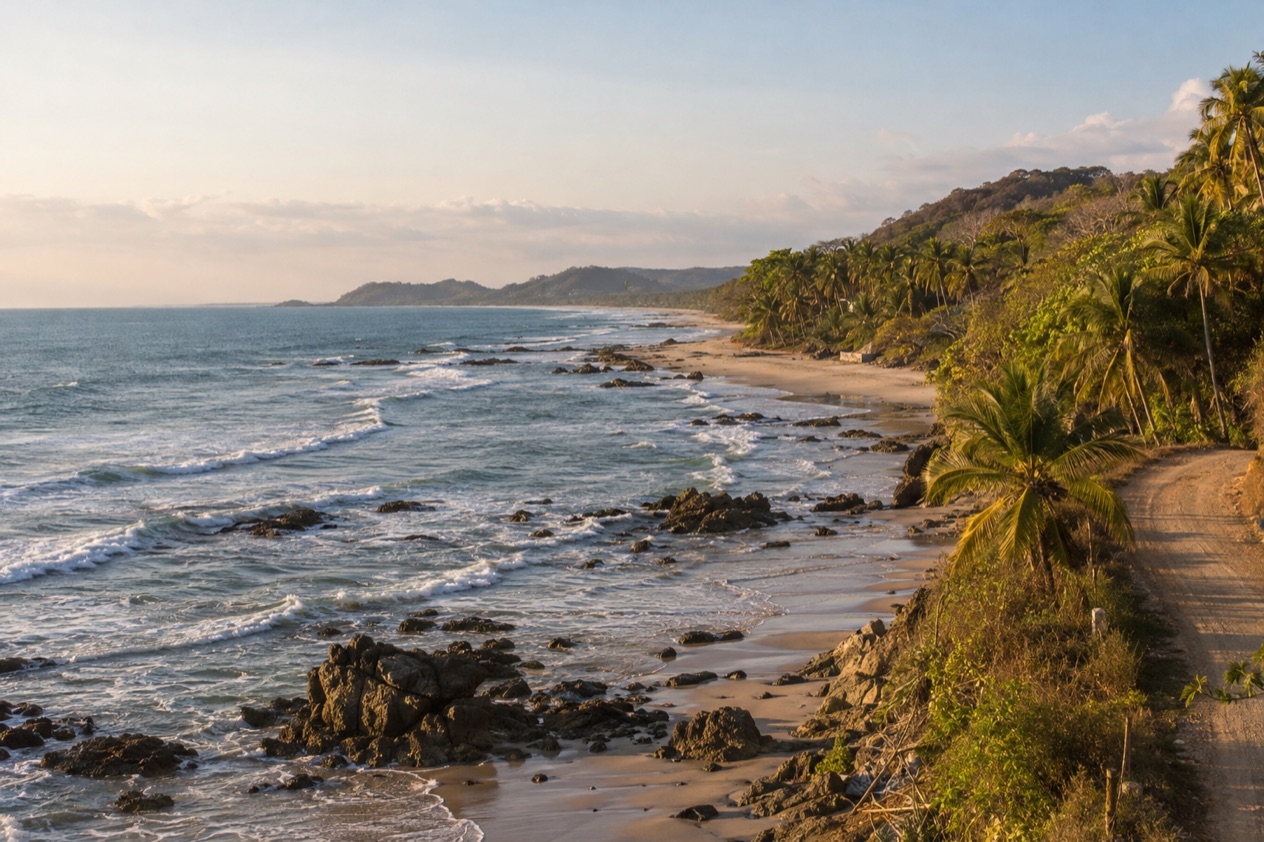
At the end of the afternoon, the dirt road behind the beach in Santa Teresa fills with surfers walking home barefoot, boards under their arms, hair stiff with salt. A cloud of fine dust hangs in the low sun, and the cafes start pouring cold coconut water and smoothies as the light turns orange over the Pacific. This is a surf and yoga town at the southwestern tip of the Nicoya Peninsula, and it suits travelers who want waves, sunsets and a slow, sandy pace.
Where is Santa Teresa and what is it like?
Santa Teresa sits at the southwestern tip of the Nicoya Peninsula, on the Pacific coast of Costa Rica, strung along a single dirt road behind a long beach. Its neighbors are Mal Pais and Playa Carmen to the south, while Montezuma lies on the other side of the southern Nicoya Peninsula, near the Cabo Blanco reserve. Together they form a loose string of beach settlements with Santa Teresa as the liveliest.
It is not a resort town in the usual sense. There are no high-rises and no all-inclusive towers, just small hotels, bungalows hidden in the trees, open-air cafes, bakeries, taco stands and surf shops. The barefoot feel is real: people walk the road in flip-flops and sarongs, and the day is organized around the tide, the swell and the light.
The sea is the center of everything. The beach runs for a long stretch of pale sand with rocky points, tide pools at low water and waves that draw beginners and experienced surfers alike. Evenings belong to the sunset, when half the town drifts down to the sand to watch it go.
The dirt road through town is part of the character, and part of the price. It gets dusty in the dry season and muddy in the green season, and the dust settles on everything from the cafe tables to your sunglasses. Travelers who like polish, paved sidewalks and big hotel pools may find it rough around the edges, while those who want wild beaches, good coffee and a crowd that mostly arrives for the waves tend to fall for it quickly.
The mood leans young, athletic and international. Yoga studios, juice bars and surf schools sit side by side with simple local sodas serving casado, the plate of rice, beans, salad, plantain and a choice of meat or fish that is the everyday lunch in Costa Rica.
Families come too, though the town is built more around active days than around children’s attractions. Nightlife is a drink at a beach bar or live music at a restaurant, rather than clubs.
What is there to do in Santa Teresa?
Surfing is the reason most people come, and the rest of the day tends to fill in around it with yoga, beach walks and good meals. What sets Santa Teresa apart from the busier Guanacaste resort beaches to the north is the lack of a manufactured scene: you arrive for the sea and the rhythm of the town, not a set of organized attractions.
Surfing and the beach
The long beach has several breaks, but conditions shift with the tide and the swell. Surf schools line the road and rent boards by the hour or the day, and beginners often start with a lesson on the gentler stretches. Mornings are when many surfers go out, before the wind picks up and the crowd grows.
Treat the water with respect. Rip currents are very dangerous and cause several drownings of U.S. tourists each year in Costa Rica, and most beaches have no lifeguards or warnings about unsafe conditions.
Conditions shift with the tide and the swell, so ask a local surf instructor about the day before you go in, even for a swim. If you only want to watch, the sand at sunset is as good a spot as any.
Yoga, wellness and slow mornings
Yoga is nearly as much a part of town life as surfing. Open-air studios under tin roofs and palms offer classes at sunrise and in the late afternoon, many of them timed so that you can fit a session in between waves. Massage, breathwork and meditation workshops are easy to find, and some hotels build their stays around retreats.
It suits travelers who want to recover from a long trip or sit still for part of the day. Even if you never unroll a mat, the habits of the place rub off: smoothie bowls for breakfast, hammocks on the porch, early nights after a day in the sun.
Mal Pais, Playa Carmen and tide pools
Just south of Santa Teresa the road leads to Playa Carmen and Mal Pais, which share the same coast but feel a little more spread out. Playa Carmen has its own surf breaks and a cluster of restaurants, while Mal Pais is quieter, with rocky shoreline and open views. Walking or riding between the three is an easy way to see how the character changes every few minutes.
At low tide, the rocks along the shore reveal tide pools where small fish and crabs hide, a gentle outing for a family or anyone who wants a break from the surf. Birds and sometimes monkeys can show up in the trees behind the beach, though they are never guaranteed. Go early or late in the day when the heat is softer.
Montezuma and Cabo Blanco
Montezuma, a bohemian beach village along the coast, makes a popular day outing for its craft stalls, cafes and forest trails. Cabo Blanco, a protected reserve near the tip of the peninsula, offers forest walks that lead toward the coast, and is a place where birds and other wildlife are more likely than on the busy beach strip.
Go with sturdy shoes and water, and plan on a morning start, since the forest is more comfortable before the heat of the day.
How many days do you need in Santa Teresa?
A long weekend is the minimum worth the trip, and a week suits the town best. The journey in takes most of a day from San Jose, so a stay shorter than three nights means you spend more time on the road than on the sand.
With three or four nights you can settle in properly. That is enough for a surf lesson or two, a yoga class, a long beach walk at low tide, and a couple of sunsets from the sand. You can also add one outing, either south to Mal Pais and Playa Carmen or along the coast to Montezuma.
A full week lets the pace of the place work on you. You can surf on several mornings and get better at it, spend one day exploring the Cabo Blanco forest, and give another to Montezuma and its cafes. Some afternoons are best left empty, with a hammock, a book and a cold drink.
If you have even more time, Santa Teresa pairs well with a second stop in Costa Rica. Many travelers combine it with a volcano and cloud forest stay in the mountains or with a beach on the northern Guanacaste coast. Because the transfers are long, it works better as one base for several days than as a quick stopover between other places.
The season changes how you plan. In the dry months the days are long and bright, and you can fit in more outings. In the green season, rain often closes in for the afternoon, so mornings are for activities and afternoons for cafes and rest, which is another reason a longer stay gives you room to work around the weather.
Travelers who arrive by air to the nearby airstrip save most of the transit time, and for them a long weekend feels more generous. Those who come overland with the ferry should treat the first and last days as travel days and plan the rest around that.
Where to stay in Santa Teresa
Staying in the middle of town, close to the main crossroads where the cafes, surf shops and restaurants gather, puts you within walking distance of nearly everything. It is the most social part of Santa Teresa and the most convenient if you do not want to depend on transport, but it also has the most dust, traffic on the road and evening noise. It suits first-time visitors, solo travelers and anyone who wants to meet others.
North of the center, the road runs toward quieter stretches and then on toward Playa Hermosa. Here the properties tend to be spread out among trees, with more space and a calmer feel, and the beach often feels emptier. It suits couples, families and anyone who wants to wake up to birdsong and have a short walk to the water, though you will rely more on walking along the road, a bike or a taxi to reach restaurants.
To the south, Playa Carmen and Mal Pais offer a more relaxed, residential feel. You will find small guesthouses, villas and boutique hotels, some set back on hillsides with ocean views. This area suits travelers who prefer quiet evenings, surfers who want to be near different breaks, and families renting a house for a week.
Whichever area you pick, think about the road. In the dry season, dust is part of the deal, so a place set back from the main road or with a pool can be a relief.
In the green season, mud and puddles are common, and a property near the center keeps walking easier. Most places are small and personal, so staying a few nights with the same hosts is a good way to pick up local tips on waves, food and day trips.
Accommodations range from simple hostels and surf camps to bungalows, villas and boutique hotels with yoga decks and pools. Because the town is small, high-season weeks such as the Christmas and New Year period and Holy Week, whenever it falls, fill early. Booking well ahead for those weeks keeps your choice of area open.
How do you get to Santa Teresa and get around?
Getting to Santa Teresa takes most of a day from San Jose, either by road and car ferry or by a short flight to a nearby airstrip. Two international airports serve most visitors to the country: Juan Santamaria International (SJO) near San Jose, and Daniel Oduber Quiros International (LIR) at Liberia in the northwest, which is the closest airport for the Guanacaste beaches.
The overland route from San Jose heads to Puntarenas, where the car ferry crosses the Gulf of Nicoya to Paquera. From there a long drive follows, partly on unpaved roads, down the peninsula to the coast. The journey is part of the adventure for some and a tiring slog for others, so plan to arrive in daylight and leave plenty of slack in the schedule.
The alternative is the short flight from San Jose to an airstrip on the peninsula, which cuts most of the day down to a brief hop followed by a transfer by road. It costs more than the overland route but suits travelers with limited time or those who dislike long drives on rough roads.
Once in town, much of daily life happens on foot. The cafes, surf shops and many hotels cluster along the main road, making the center walkable. Some travelers choose to drive themselves, which gives freedom to reach farther beaches and trailheads.
Driving here means the unpaved road. Dust can reduce visibility in the dry season, mud and puddles slow you down in the green season, and the surface can be rough in both. Take your time on the rough surface. The overland route uses the car ferry from Puntarenas to Paquera, followed by a long drive on partly unpaved roads.
When is the best time to visit Santa Teresa?
The best months for beach weather are from about December to April, the dry season on this part of the Pacific coast. January is a good example: highs in the mid-80s, warm nights, and rain is rare, with only the odd shower. Days are bright, the sunsets are clear more often than not, and the sea is warm for swimming and surfing without a wetsuit.
By April the heat builds and the first showers start to appear, though most days stay sunny and the sea is at its warmest of the year. The trade-off in the dry months is dust on the road and busier streets, especially around Christmas, New Year and Holy Week when it falls in the spring. Rooms and tables are in demand then, and the town feels more crowded.
From about May to November the green season takes over. July brings rain on most days, often in the afternoon, with plenty of sun in between, and the hills turn lush green. Surf conditions can be good, the crowds thin out, and some travelers prefer this mood. The sea stays warm all year, close to the mid-80s in every season.
October is the wettest stretch of the year. Rain falls on most days and some days bring heavy downpours that turn the road to mud and can interrupt outdoor plans, so it suits only travelers who are flexible and happy with a damp, quiet town. Pack for rain, keep your schedule loose, and expect that some small businesses slow down or close in the deepest part of the green season.
Good to know before you go
The U.S. State Department rates Costa Rica Level 2, ‘Exercise increased caution,’ due to crime; it says petty crime is common throughout Costa Rica and that violent crime also affects tourists, including armed robbery, homicide and sexual assault.
The Costa Rican currency is the colon, but U.S. dollars are widely accepted in tourist areas, and many hotels, tours and restaurants quote prices in dollars, with change often handed back in colones. Keep small bills handy for cafes, taxis and beach stands. As anywhere, keep valuables out of sight on the beach and in parked vehicles, and do not leave bags unattended while you surf.
The sea deserves the most caution here, since rip currents are real and lifeguards are rare. Bring sunscreen, a hat and plenty of water, and wear shoes for the hot, dusty road.
Sources
- Open-Meteo / ECMWF ERA5, normals 1991-2020 computed for the grid cell at 9.6458N 85.1698W, checked October 8, 2026
- Open-Meteo Marine API, average 2015-2024, checked October 8, 2026
- U.S. Department of State, Costa Rica Travel Information, Safety and security (https://travel.state.gov/content/travel/en/international-travel/International-Travel-Country-Information-Pages/CostaRica.html), checked October 8, 2026
- U.S. Department of State, Costa Rica Travel Advisory, issued April 1, 2026 (https://travel.state.gov/content/travel/en/traveladvisories/traveladvisories/costa-rica-travel-advisory.html), read via the State Department open data API on October 8, 2026
- U.S. Department of State, Costa Rica Travel Information, Entry and exit requirements (https://travel.state.gov/content/travel/en/international-travel/International-Travel-Country-Information-Pages/CostaRica.html), checked October 8, 2026
All our pages
When to go
- Best Time to Visit Santa Teresa: Dry Season, Green Season, Weather by Month and Festivals
- Santa Teresa in January: Dry-Season Weather, Surf, Beaches and What to Do
- Santa Teresa in February: Dry Weather, Surf, Envision Festival and Two Days on the Beach
- Santa Teresa in March: Dry-Season Weather, Surf, Sunsets and What to Do
- Santa Teresa in April: Weather, Surf and Beach Days, Holy Week and What to Do
- Santa Teresa in May: Green Season Rains, Surf and a Two-Day Plan
- Santa Teresa in June: Weather, Surf, Green Season and What to Do
- Santa Teresa in July: Green-Season Rain, Warm Surf and the July 25 Holiday
- Santa Teresa in August: Green-Season Surf, Rain Patterns and Two Days Plan
- Santa Teresa in September: Green Season Surf, Independence Day Lanterns and Rainy-Day Plans
- Santa Teresa in October: Green Season Weather, Warm Sea, Surf and What to Do
- Santa Teresa in November: Weather, Swimming, Surf and What to Do
- Santa Teresa in December: Weather, Surf and Beach Days, and What to Do