
The first thing most people hear in Costa Rica is pura vida, said by the customs agent, the shuttle driver and the woman pouring coffee at the airport counter. Outside, the air is warm and a little damp, and the road to the hotel winds past coffee farms, roadside fruit stands and mountains wrapped in cloud. A few practical things make the first days easier, from the entry papers to the way a restaurant bill is built and how the roads behave.
What should you know before visiting Costa Rica?
Four things matter most: a passport that can be read electronically and an onward ticket, a country split by mountains into very different climates, roads that are slower than the map suggests, and a sea that deserves respect. Get those right and the rest is relaxed, friendly and easy to improvise.
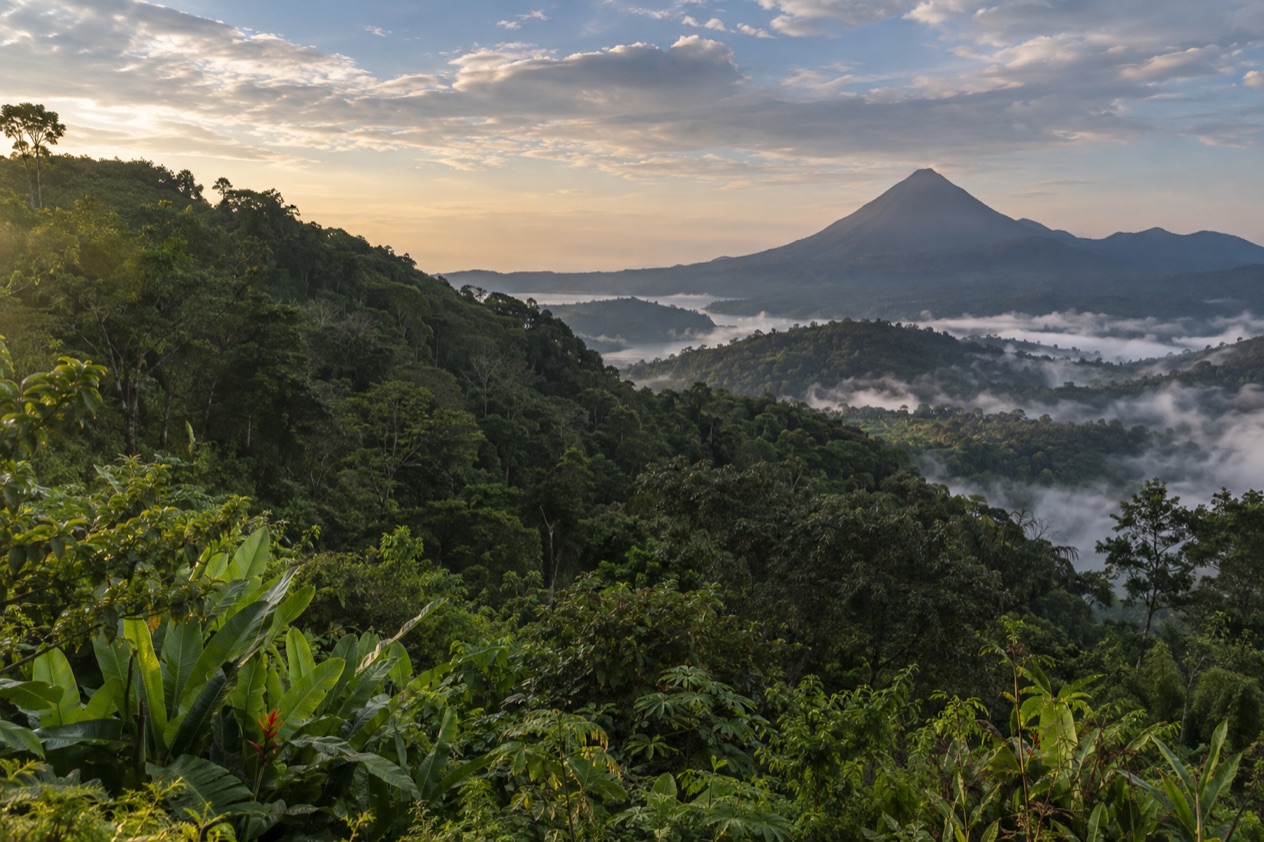
The geography explains a lot. Volcanic peaks form a mountain backbone stretching from the northwest down to the southeast, splitting the nation into a Pacific coast and a Caribbean coast, which means two spots an hour apart may see wildly different conditions.
You may leave a sunny beach town and arrive at a cloud forest lodge where you want a rain jacket and a sweater. Pack for both, and do not judge the whole country by the forecast for one town.
What surprises first-time visitors most is how much the day is shaped by the land.
Many travelers also expect everything to be a jungle adventure and find instead small towns with a central church, a soccer field and a bakery serving fresh empanadas. Others are surprised by prices that often come in dollars, and by how naturally English works in tourist areas while a few words of Spanish still earn warm smiles.
Two airports serve most visitors. Juan Santamaria International (SJO) is located close to San Jose in the Central Valley, while the airport nearest the Guanacaste beaches is Daniel Oduber Quiros International (LIR) at Liberia. Choosing the one nearer your first stop saves hours of driving on the day you land.
Entry, fees and paperwork
Costa Rica asks for a valid passport that can be read electronically, covering the length of your stay. Immigration may deny entry if the passport is damaged, so a bent cover or a loose page is worth sorting out before the flight. Visitors also need a return ticket to their home country or a plan of onward travel, and that can be a flight out, a pre-purchased bus ticket or proof of passage on a cruise ship.
Visitors must also show proof of economic means. Authorities may allow Americans to stay without a visa, though the stay is not guaranteed, and the table gives the figures. Proof of yellow fever vaccination is required only if you arrive from certain countries in South America or Africa, which concerns travelers combining Costa Rica with a longer trip.
| Requirement | Amount | Who it applies to |
|---|---|---|
| Proof of economic means | US$100.00 per month of legal stay | Visitors |
| Ticket for return or onward travel, if the return ticket is later than | 90 days after arrival | Non-residents |
| Stay without a visa, not guaranteed | Up to 180 days | Visitors |
Overstaying has real consequences. Immigration authorities could fine you, delay your departure or deport you, and they can deny you entry in the future. Debts matter too: if you owe money in Costa Rica, including unpaid bills from a car accident or medical costs, authorities may not allow you to leave.
Families should know that all Costa Rican minors need an exit permit from immigration to leave the country, and non-Costa Rican minor residents may also fall under this rule. Anyone who owes child support in Costa Rica may need to pay up to 13 months of it before leaving.
For everyday travel, keep copies of your ID and immigration papers with you, because local authorities may ask for your original passport and documents. They can also detain you to check your identity and immigration status, so keep the paperwork where you can reach it.
Money, cards and tipping
Costa Rica’s official money is the colon, yet U.S. dollars are widely accepted in places popular with visitors. Many hotels, tours and restaurants quote prices in dollars, and change is often handed back in colones. You can therefore arrive with a few small dollar bills and get by, though a modest amount of local cash is handy for a bakery, a roadside fruit stand, a bus fare or a small family-run soda.
A soda is the classic local lunch counter, and the place to try a casado, a plate of rice, beans, salad, plantains and a choice of chicken, fish or beef. Small places like these tend to prefer cash, while hotels, larger restaurants and tour companies are used to cards.
Carrying both, in separate places, is a sound habit. Cash machines are easy to find in towns and cities and harder to find in remote beach villages and mountain hamlets, so withdraw when you pass a bank rather than waiting.
Tipping is gentler here than in the United States. Restaurant bills usually add a sales tax of 13 percent. On top of that, a 10 percent service charge applies, which means any additional tip is up to you and not something you have to give. Many travelers leave a little extra for a guide, a driver or a server who made the evening, and a few coins for the person who carries your bags is always welcome.
Read the bill before you add anything, since the service line is often printed at the bottom. For prices in dollars, ask whether the tax is already included, because menus and tour quotes differ on this. Keep small bills for taxis, parking attendants and market stalls, where large notes can be hard to break.
Getting around and staying connected
Getting around depends on where you are going: shuttles, taxis and buses connect the main tourist towns, while a rental car gives freedom for the beaches and the mountains. The roads set the pace. Visibility at intersections may be blocked by vegetation or other obstacles, so drive with extreme caution, and expect to share narrow roads with trucks, motorbikes and the occasional cyclist.
Some places, especially beaches and rural areas, may only be accessible with a four-wheel drive vehicle. A small car that handles the highway nicely can struggle on a steep gravel track to a remote lodge, so ask your hotel which kind of vehicle the last stretch needs before you pick one up. During the rainy season, some roads may be blocked by landslides, so allow slack in the schedule on days when you must catch a flight.
Private shuttles between popular destinations such as the Central Valley, the northern lowlands and the Pacific beaches work well for travelers who want door-to-door service without driving.
Think about the airport when you plan the route. Landing at one airport and leaving from the other avoids doubling back across the mountains, and it lets you string together a volcano, a cloud forest and a beach in one line. Costa Rica remains at UTC-6 the entire year and never shifts to daylight saving time. It matches U.S. Central Standard Time in winter, so it is one hour behind the East Coast then, and in summer, when the U.S. moves its clocks forward, it is one hour behind the U.S. Central zone and two hours behind the East Coast.
American devices work without an adapter, because Costa Rica uses 120-volt, 60 Hz power with the same plugs as the United States. Bring your usual charger and a power strip if you travel with several devices.
Health, water and the sun
The sun is strong here in every season, even under a layer of cloud on a mountain morning. A hat, sunglasses and plenty of sunscreen belong in the daypack, along with a refillable bottle, since the tropical heat dehydrates you faster than you think. Plan the hardest walks for the early hours, when the air is cooler and the light is good for birds.
Mosquitoes appear near water, in the lowlands and after rain, and insect repellent and light long sleeves for the evenings make the trip more comfortable. Higher towns and volcano slopes are noticeably cooler, and a fleece for the night pays off after a day on the beach. Hiking shoes with a good grip help on muddy trails, and a light rain jacket is useful in nearly every part of the country.
The sea needs the most respect. Each year, rip currents prove extremely hazardous, leading to multiple drowning deaths among visitors from the United States. Ask your hotel or a local surf school about the day’s conditions, follow the flags where there are any, and keep children within arm’s reach whenever they are near the water.
For medical care, San Jose is usually good, but outside the capital services may be limited, so a remote lodge may be a long way from a hospital. Ambulances might not have all the advanced emergency equipment that travelers would expect. Costa Rica protects its wildlife, so keep your distance from animals, never feed them, and follow your guide’s directions when you walk in a park or a reserve.
Local customs and etiquette
Costa Ricans are polite and unhurried, and a greeting comes before any request. Say buenos días or buenas tardes when you walk into a shop, a bakery or a small restaurant, and expect a handshake, or a light kiss on the cheek between friends. Spanish is the country’s official language, but English shows up all the time at hotels, tour operators, and the busier tourist towns. A few words of Spanish still change the tone of a conversation.
Pura vida is the all-purpose local phrase. You can use it to say hello, to give thanks, or to reply when someone asks how you are, and it turns up all over, from the bus stop to the surf break. Use it with a smile and it fits almost any moment. Another habit worth copying is patience: service can be relaxed, and a meal is often a long, easy affair where nobody rushes you out.
Dress is casual almost everywhere. Shorts, sandals and light cotton are normal in beach towns, though people dress a bit more neatly in the city, at a nice dinner, or when stepping into a church, where covered shoulders and knees show respect. Walking through town in only swimwear is not the local habit, so throw on a shirt or a wrap once you leave the beach.
Meals follow a rhythm. Breakfast often means gallo pinto, a mix of rice and black beans, with eggs, fried plantains and strong coffee, and many people eat lunch as the main meal of the day.
Evenings tend to start early in smaller towns, and many local places close sooner than visitors expect. Markets and craft fairs are friendly places, but prices are generally set, so a polite smile and a question about a better price serve you better than hard bargaining.
Good to know before you go
The U.S. State Department rates Costa Rica Level 2, ‘Exercise increased caution,’ due to crime; it says petty crime is common throughout Costa Rica and that violent crime also affects tourists, including armed robbery, homicide and sexual assault.
Keep your passport, your onward ticket and copies of your documents together in a place you can reach quickly, and carry a copy of the ID page when you go out for the day. Petty theft and pickpocketing are common crimes against U.S. travelers in Costa Rica, so keep phones and wallets out of sight on beaches, in buses and in crowded markets, and never leave bags visible in a parked car.
In an emergency, dial 911. One last habit makes the trip pleasant: leave margin in your days. A late bus, a rain-slick road or a long lunch is part of the rhythm here, and travelers who plan fewer stops tend to see more.
Sources
- U.S. Department of State, Costa Rica Travel Information, Entry and exit requirements (https://travel.state.gov/content/travel/en/international-travel/International-Travel-Country-Information-Pages/CostaRica.html), checked October 8, 2026
- U.S. Department of State, Costa Rica Travel Advisory, issued April 1, 2026 (https://travel.state.gov/content/travel/en/traveladvisories/traveladvisories/costa-rica-travel-advisory.html), read via the State Department open data API on October 8, 2026
- Costa Rica Tourism Board (ICT), entry requirements (https://www.visitcostarica.com/en/costa-rica/planning-your-trip/entry-requirements), checked October 8, 2026
- U.S. Department of State, Costa Rica Travel Information, Safety and security (https://travel.state.gov/content/travel/en/international-travel/International-Travel-Country-Information-Pages/CostaRica.html), checked October 8, 2026
- U.S. Department of State, Costa Rica Travel Information, Health (https://travel.state.gov/content/travel/en/international-travel/International-Travel-Country-Information-Pages/CostaRica.html), checked October 8, 2026
- U.S. Department of State, Costa Rica Travel Information, Traveling and transportation (https://travel.state.gov/content/travel/en/international-travel/International-Travel-Country-Information-Pages/CostaRica.html), checked October 8, 2026
To plan your stay
- Best Time to Visit Costa Rica: Dry and Green Seasons, Weather by Region and Festivals
- Things to Do in Costa Rica: Volcanoes, Beaches, Wildlife and Day Trips
- Where to Stay in Costa Rica: Beach Towns, Cloud Forest, Volcano Views and Which Base Fits Your Trip
- Costa Rica Airports: San Jose or Liberia? Beaches, Drive Times and Getting to Your Hotel