
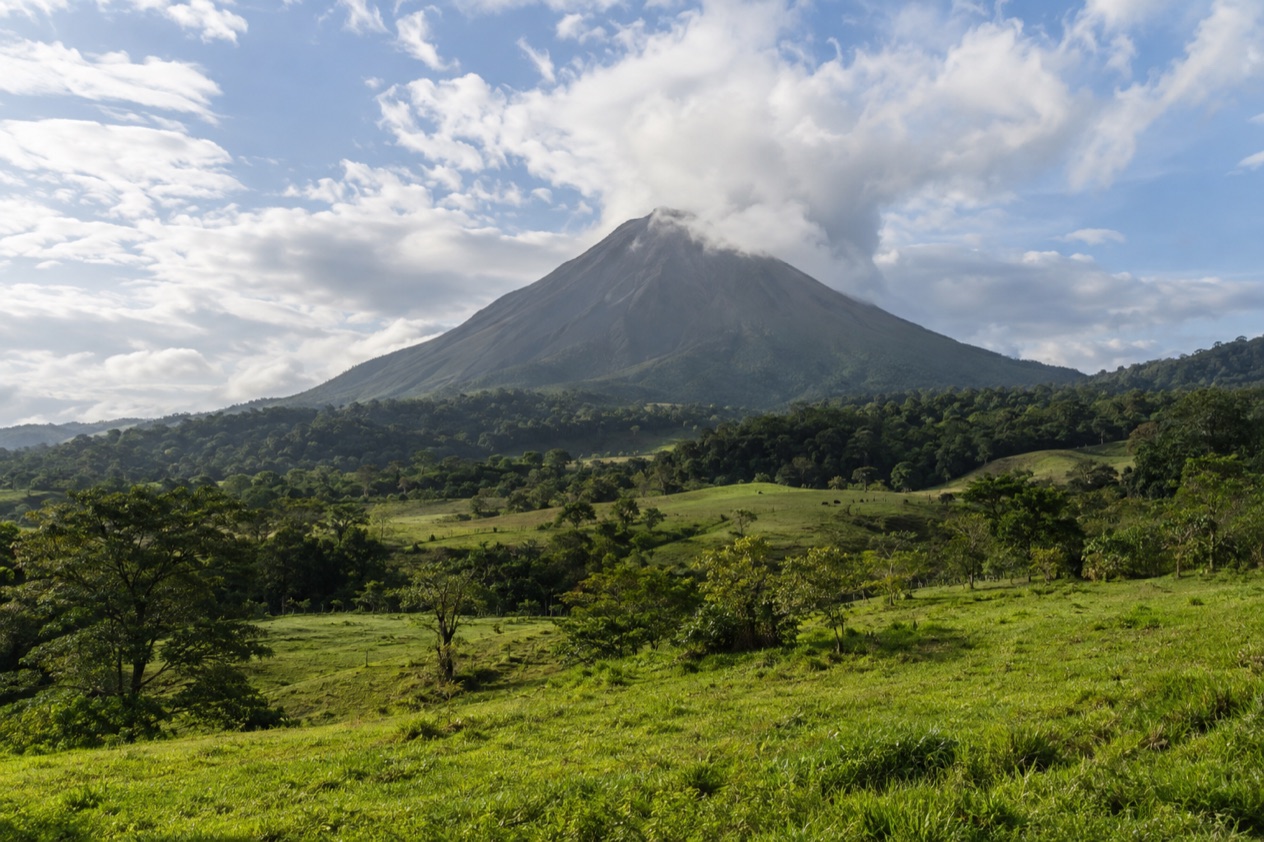
The cone comes into view long before the park gate, a near-perfect triangle rising out of the pasture with a cap of cloud that may or may not lift by mid-morning. Inside Arenal Volcano National Park, the air smells of wet leaves and warm stone, and toucans sometimes cross the trail ahead of you. It is a walking visit, short trails over old lava flows and through forest, with the volcano looming over every turn.
Is visiting Arenal Volcano National Park worth it?
Yes, if you like to walk, enjoy a big landscape and want to understand the volcano rather than just photograph it from a hotel terrace. The park suits families with children who can handle forest trails, travelers who like a few hours outdoors followed by a soak in a hot spring, and anyone curious about how a mountain rebuilds itself after decades of eruption. It is less rewarding if you come expecting fire and glowing rock.
Arenal erupted almost continuously from 1968 and has been quiet since 2010. What remains is the shape, one of the most classic cones in the Americas, and the evidence of its past: black ribbons of hardened lava, boulders the size of cars and young forest pushing through them. The walks are about reading that story on the ground.
What sets it apart from the other volcanoes on the usual tourist routes is the mix. Poas and Irazu above the Central Valley are about standing at a rim, and clouds often hide the summit by midday. Arenal gives you a whole landscape instead: forest, lava fields, and on clear mornings a view over Lake Arenal. Around it sit hot springs, a waterfall and hanging bridges, so one base covers several days.
Go with modest expectations about the summit. Clouds gather around it often, and the mountain may show itself fully for only part of your visit, or not at all. The forest and lava trails are worth the trip even when it hides, though the best photographs go to those who arrive early.
What to see at Arenal Volcano National Park
The park is organized around four named trails, and together they let you see the flora and fauna as well as the remains of the lava tracts. Each has a different mood, so it helps to know which one matches what you came for.
Los Miradores, the lookout trail
The name means the lookouts, and that is the point of this walk. It climbs to open spots where the forest falls away and the cone stands in front of you, with Lake Arenal spread out to one side when the air is clear. This is the trail to choose if a photograph of the volcano is the main reason you came.
Early morning gives the best chance of a clean view, before cloud builds around the summit. Even when the top is hidden, the lower slopes and the lake can stand on their own, and the pale light after rain makes the green almost electric. Bring a layer, as the breeze at the lookouts can feel cool against a warm, humid walk.
Coladas, the old lava flows
Coladas means lava flows, and this trail walks you across and alongside them. You see how the rock cooled in dark, jagged sheets and tumbled blocks, and how mosses, ferns and small trees have taken hold in the cracks. It is the clearest lesson in the park on what the long eruption that began in 1968 left behind.
Look at the contrast between bare rock and the dense forest that surrounds it, and at the ages of the vegetation, from first pioneers to tall trees on older ground. Wear shoes with good grip, because wet volcanic stone can be slippery and uneven. This is a trail for slow, watchful walking rather than speed.
Heliconias, the forest walk
Named for the heliconia plants with their bright, waxy bracts in red, orange and yellow, this trail is the one for the forest itself. Shade is thicker here, the sounds are birds and insects, and the plants and flowers are what draw your eye. Hummingbirds and butterflies tend to favor the flowering edges.
A local guide makes a large difference in forest like this. Sloths, howler and white-faced monkeys, toucans and scarlet macaws all live in Costa Rica’s rainforests, and a guide spots far more than a visitor walking alone. Treat any sighting as a bonus, never a promise, and keep your voice low.
Tucanes, the birdwatcher’s trail
Tucanes takes its name from the toucans, and bird lovers will want to linger here. Toucans are not guaranteed, but the forest edges and fruiting trees are where you have the best chance of hearing and sometimes seeing them, along with other birds that flit through the canopy.
Binoculars help more than a long camera lens. Walk quietly, stop often and look up, because most of the action happens in the branches overhead. Rain keeps many birds sheltered, so the hours after a shower can be the liveliest.
Hours, tickets and rules
The park opens every day, and the working day is a full one that suits a morning walk and a leisurely finish. On site you find an information point, a park ranger station, restrooms and drinking water, along with the trails themselves.
| Site | Open | Before you hike |
|---|---|---|
| Arenal Volcano National Park | Every day, 8 a.m. to 4 p.m. | Register with the park, hold an entry permit and use a certified tour operator |
The rule for hiking in national parks is that you register with the park, have an entry permit and use a certified tour operator. The Costa Rica Tourism Institute keeps a list of Certified Tour Guides, which is the place to look for someone qualified to lead you on the trails.
How to get to Arenal Volcano National Park
Almost everyone reaches the park from La Fortuna, the small town at the foot of the volcano and the main base for the area’s hot springs, waterfall, hanging bridges and lake. The park lies in the northwest part of the country, about nine miles from town, between the foothills of the Cordillera de Tilaran and the San Carlos plains.
From San Jose
La Fortuna is about three hours by road from San Jose, so most travelers base themselves there for at least a night rather than attempting everything in one rushed day. The drive climbs out of the Central Valley and drops into the northern lowlands, where the landscape shifts to pasture, sugarcane and the shape of the volcano on the horizon.
Plan the drive for the morning so that you arrive with daylight left to settle in. Arriving in the afternoon is also fine if your walk is for the next day, since the park closes in late afternoon and the trails need time.
From Monteverde
From Monteverde there are two routes, and both take about the same time. The road around the lake takes roughly three to four hours, and a boat-and-van transfer across Lake Arenal takes about the same. The road route runs along the water with changing views, while the crossing gives you the lake from the surface.
Either way, this is a travel day in its own right rather than a stop on the way. Pair the arrival with a soak in a hot spring or an evening in La Fortuna, and save the park walk for the next morning.
When to visit Arenal Volcano National Park
Go early in the day. The park opens at eight, and the first hours give you cooler air, quieter trails and the best chance of a clear cone before cloud settles over the summit. By midday clouds often hide volcano tops in Costa Rica, and Arenal is no exception.
The drier months
The dry season on much of the country runs from about December to April, and La Fortuna follows a gentler version of it. January still brings a fair number of showery days, with warm, pleasant afternoons in the high 70s. April is the lightest month in our picture, with sunnier stretches and temperatures in the low 80s, so it suits those who want the best odds on the view.
The Caribbean side gets rain all year and follows a different pattern, and Arenal sits close enough to feel some of that. Even in the better months, expect a shower or two and pack for it.
The green months
From about May to November the country is green and rainy, and the Arenal area is very wet, with rain on most days in July and in October. Afternoon downpours are common, and the forest is most luxuriant, with waterfalls running strong and lush ground cover over the lava.
October is a gray, soggy month here, and the summit hides more often than not. If you come then, treat the park as a forest and lava walk, start as early as you can and pack a real rain jacket. The reward is fewer crowds and a deeply green landscape.
Tips for your visit
Wear closed shoes with grip, bring a rain jacket in every season and carry a refillable bottle, since the park has drinking water. Add sunscreen, a hat and insect repellent, and keep a dry layer in your bag for the cooler lookouts.
Planning your time
Think of the park as a morning outing. Choose one or two trails rather than all four, and give yourself time to stop at the lookouts, watch for birds and read the lava. Starting at opening time lets you walk in the softest light and leaves the afternoon free.
With a guide you will notice more, from a toucan in a distant tree to the way a plant has colonized fresh rock. Because you must use a certified tour operator for hiking, arranging the visit through one is part of the plan anyway.
What to combine nearby
The area is famous for hot springs heated by the volcano, from simple local pools to large resort complexes with many pools at different temperatures. A soak after a morning of walking is the classic pairing, and it eases tired legs. Dusk in the warm water, with the rain falling, is one of the area’s quiet pleasures.
The La Fortuna Waterfall drops into a green basin outside town and is reached by a long staircase down, a good second outing for another day. Swimming in the pool at the bottom is a popular stop. La Fortuna also has hanging bridges and the lake for a slower day.
Families and mobility
The trails are short, but they cross uneven volcanic rock and forest ground, so they suit children who like to walk and adults who are steady on their feet. Slippery stone after rain deserves care. Travelers with limited mobility may prefer the views from the area around the park and a hot spring instead.
Good to know before you go
The U.S. State Department rates Costa Rica Level 2, ‘Exercise increased caution,’ due to crime; it says petty crime is common throughout Costa Rica and that violent crime also affects tourists, including armed robbery, homicide and sexual assault.
Rain is part of the picture most of the year, so a flexible plan works best, with the park early and the hot spring or a town day for the wet afternoon. Petty theft happens around parking areas and in towns, so keep valuables out of sight and with you. On the trail, listen to your guide, and treat wildlife from a distance.
Sources
- Costa Rica Tourism Board (ICT), Arenal Volcano National Park (https://visitcostarica.com/where-to-go/protected-areas/arenal-volcano-national-park), checked October 8, 2026
- Open-Meteo / ECMWF ERA5, normals 1991-2020 computed for the grid cell at 10.4679N 84.6427W, checked October 8, 2026
- U.S. Department of State, Costa Rica Travel Information, Safety and security (https://travel.state.gov/content/travel/en/international-travel/International-Travel-Country-Information-Pages/CostaRica.html), checked October 8, 2026
- U.S. Department of State, Costa Rica Travel Advisory, issued April 1, 2026 (https://travel.state.gov/content/travel/en/traveladvisories/traveladvisories/costa-rica-travel-advisory.html), read via the State Department open data API on October 8, 2026
To plan your stay
- Best Time to Visit Costa Rica: Dry and Green Seasons, Weather by Region and Festivals
- Where to Stay in Costa Rica: Beach Towns, Cloud Forest, Volcano Views and Which Base Fits Your Trip
- Costa Rica Airports: San Jose or Liberia? Beaches, Drive Times and Getting to Your Hotel
- Know Before You Go to Costa Rica: Entry Rules, Money, Getting Around and Local Customs