
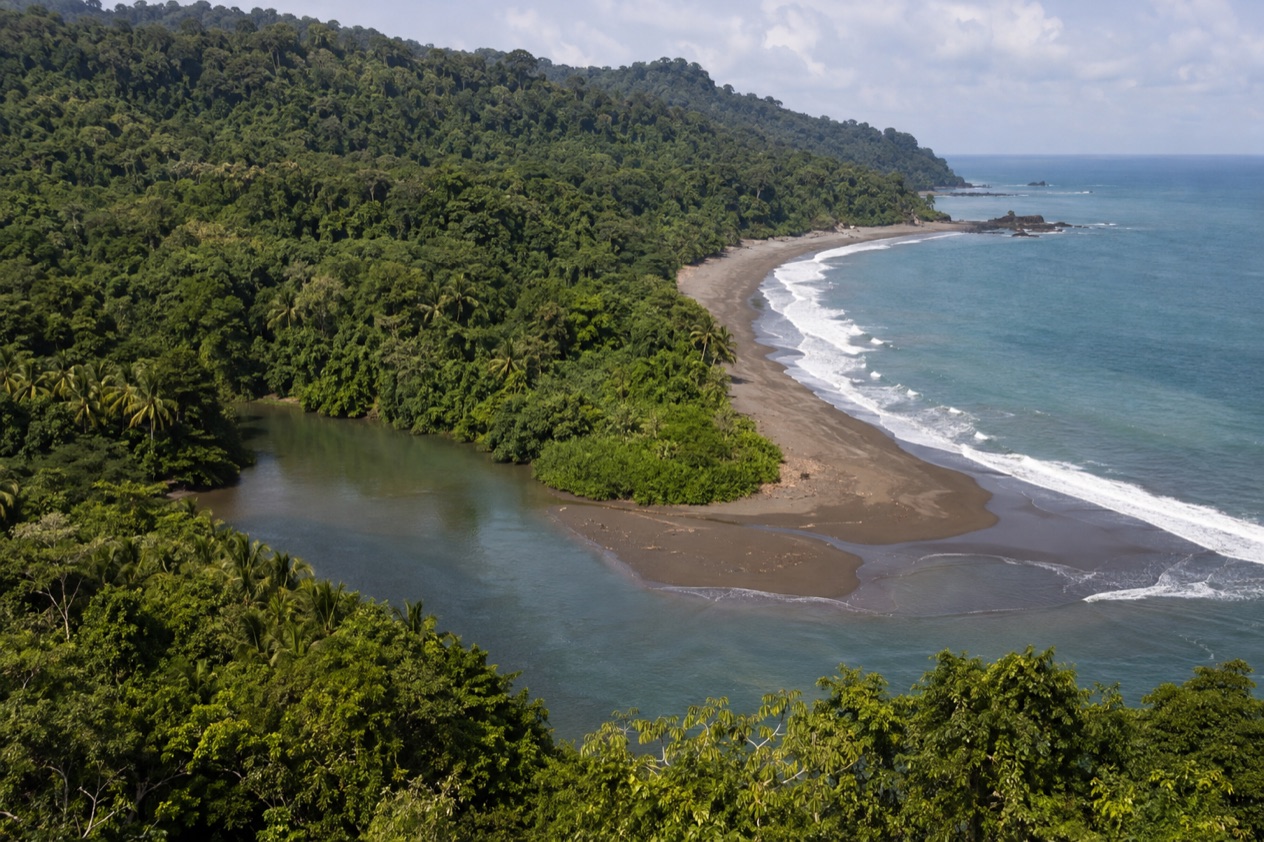
Corcovado is remote, and the first thing you notice is how quickly the road, the signal and the noise of town fall away. A wall of green rises behind a long, empty beach, scarlet macaws cross overhead, and the forest hums before you have taken a step inside. This is the remote heart of the Osa Peninsula, a wild rainforest park for travelers who want to walk with a guide and watch animals, not tick off a quick viewpoint.
Is visiting Corcovado National Park worth it?
Yes, if you want real rainforest and are happy to trade comfort for it, because Corcovado is one of the largest stretches of lowland rainforest on the Pacific side of Central America and it feels like it. It suits curious walkers, wildlife enthusiasts and anyone who prefers a long day on a jungle trail to a quick stop at a lookout. It is less of a fit for visitors who need easy access, paved paths or a flexible schedule, since you get here by boat or plane and you enter with an authorized guide.
What sets it apart from the better-known parks closer to San Jose is the scale and the remoteness. Instead of a single loop trail beside a hotel, you have lagoons, marsh, mangrove swamps, rivers, wet forest and even low cloud forest inside one protected area.
The wildlife list is long: hundreds of birds, well over a hundred mammals, and a huge cast of insects, reptiles and frogs. Because everyone enters with a guide, the visit becomes a day of looking closely, with someone who knows where the tapir tracks and the sleeping sloths are likely to be.
The cost of that wildness is effort. Getting to a base town takes a long day or a flight, and the park itself keeps short daytime hours. Think of it as the main event of a Osa Peninsula trip, not an add-on squeezed between two other stops.
What to see at Corcovado National Park
The rainforest trails
The trails are the reason to come. They run beneath tall trees draped in vines and epiphytes, past buttress roots as wide as a doorway, and across small streams where the light turns green and the air is thick and damp. Park trails come with signage, but the guide is what turns a green blur into specific animals.
Look for howler and white-faced monkeys in the canopy, toucans and scarlet macaws calling from the high branches, and the quick flicker of frogs and lizards at ground level. Sloths often hide in plain sight, and a trained guide with a spotting scope can show you one you walked right past. Wildlife is a chance, never a promise, so go with patience and let the forest set the pace.
The beaches along the coast
A very long ribbon of sandy beach runs along the park, backed by forest that reaches almost to the tide line. These are not resort beaches. You see driftwood, crabs, birds working the shoreline and sometimes animals that come out of the trees to walk the sand, and you may have a long stretch to yourself.
Treat the water with respect. Rip currents are very dangerous and cause several drownings of U.S. tourists each year, and nothing about a remote beach makes it an exception. Enjoy these beaches for walking and watching, and keep children within arm’s reach of you at all times.
Sirena station
Sirena is the park’s busiest hub and the place most visitors picture when they think of deep Corcovado. It has an information point, a park ranger station, restrooms, drinking water, a camping area and rustic lodging, plus radio communication and a landing field. Around it, trails lead into the forest, and the surroundings are some of the best places for wildlife watching in the park.
Even a short stay here shows how self-contained the park is. The quiet at dusk, with only frogs and insects for company, is part of the draw. It is best for visitors who want to spend real time in the forest, not just pass through.
Lagoons, mangroves and rivers
Beyond the trees, the park is a patchwork of wetlands. Shallow lagoons, marsh and mangrove swamps feed rivers that wind toward the sea, and each habitat brings its own birds and reptiles. Herons and kingfishers work the edges of the water, while the forest floor farther in belongs to shyer mammals.
This variety explains the park’s huge species lists, from thousands of insects to hundreds of trees and dozens of freshwater fish. You will not see them all, of course, but the mix of habitats means that a single day can feel like several different walks. Ask your guide which habitat is best on the day you go.
Hours, tickets and rules
The park keeps daytime hours every day of the week, holidays included, so there is no closed day to plan around. Entry comes with a requirement that shapes the whole visit: you go in with an authorized guide, never on your own.
| Site | Open | How to enter |
|---|---|---|
| Corcovado National Park | Every day, 8 a.m. to 3:30 p.m., including holidays | With an authorized guide; park registration and an entry permit |
To hike in national parks, you should register with the park, have an entry permit and use a certified tour operator. The Costa Rica Tourism Institute (ICT) provides a list of Certified Tour Guides, which is a good place to start when you choose who will take you in. Because the park closes in mid-afternoon, plan your day around the entry hours and your return transport.
How to get to Corcovado National Park
Corcovado is remote, and you reach it from the Osa Peninsula base towns of Drake Bay and Puerto Jimenez. From there you continue by boat, or you can arrive by plane at the Sirena station. Plan the approach as part of the trip, not as a detail.
By car to Puerto Jimenez
Driving from San Jose to Puerto Jimenez takes about seven hours. You follow the Inter-American Highway to the La Chacarita gas station, then turn right onto the dirt road that leads to Puerto Jimenez. It is a long day behind the wheel, so most travelers treat it as a travel day and sleep in town before the park.
Puerto Jimenez is a relaxed town on the Gulf side of the peninsula and a practical base, with guides and lodging within reach. Arriving the evening before means you start the park day rested instead of rushing a long transfer.
By boat
Boat routes to the Osa Peninsula leave from several points: Golfito, Puerto Jimenez, the Rio Sierpe toward Drake Bay, Drake Bay itself and Bahia Uvita. Trips take between half an hour and an hour and a half, depending on where you start. Visitors can enjoy the park by boat, and it is the usual way to reach the coast.
A boat ride along this coast is part of the experience. You may spot seabirds, forested headlands and empty beaches from the water before you ever step ashore. Conditions on the water change, so go with a guide or operator who knows the coast and the landing points.
By plane to Sirena
The other way in is by air. Visitors can arrive by plane at the Sirena station, which has its own landing field, and this is the route that saves the most time over land travel. You step off the plane almost at the edge of the forest, with the ranger station, drinking water and trails close at hand.
It suits travelers short on days, those with a stay planned at the station’s rustic lodging or camping area, and anyone who would rather spend the hours on the trail than on the road. Since the park closes in mid-afternoon, build your day around your flight and your guide’s plan.
When to visit Corcovado National Park
Go early. The park opens at 8 a.m., and the first hours in the forest are cooler and full of sound, with birds and monkeys at their most active. By the afternoon the air turns heavy, and the park closes in the mid-afternoon, so the morning is the heart of the visit.
On the Pacific side, the dry season runs from about December to April, and the green, rainy season runs from about May to November, with rain that usually falls in the afternoon. The dry months make trails and boat landings easier. The green months bring a lusher forest and fewer visitors, and morning walks can still be rewarding before the rain arrives. Either way, bring a rain layer, since a rainforest is wet by nature.
The draw is the forest itself, in any month, and the choice between dry and green is really a choice between easier travel and deeper greens. Since the park is open every day, including holidays, you can schedule around your own plans.
Tips for your visit
Pack for heat, humidity and mud: lightweight long sleeves and pants, sturdy shoes that can get wet, a rain jacket, a refillable water bottle, insect repellent and a hat. Binoculars make a real difference, and a waterproof bag keeps your camera and phone dry on the boat. Drinking water is available at the Sirena station, but you carry what you need on the trail.
Plan a full day for the park, with time on either side for getting to the base town. Many visitors stay a night or two near Drake Bay or Puerto Jimenez, which spreads out the travel and leaves room for a second outing. A guide spots far more than a visitor walking alone, so listen closely and ask questions as you go.
Families and travelers with limited mobility should think carefully. Forest trails are uneven, humid and sometimes muddy, and the access by boat or small plane adds steps to the day. If a longer walk is a stretch, tell your guide, who can shape the route around the group.
Pair Corcovado with a slower day in town, a boat outing on the coast or a rest by the water before you head back. The park is demanding in the best way, and leaving a free day on either side makes the whole trip feel less hurried.
Good to know before you go
The U.S. State Department rates Costa Rica Level 2, ‘Exercise increased caution,’ due to crime; it says petty crime is common throughout Costa Rica and that violent crime also affects tourists, including armed robbery, homicide and sexual assault.
The park is remote, so bring any medicine you rely on. Keep valuables out of sight, since petty crime is common throughout Costa Rica, and keep your wits about you in the busier towns on the way.
Rip currents are real at Corcovado’s beaches, so ask your guide about the day’s conditions and stay out of the water if in doubt. Rules in parks change, so confirm the details with your guide or tour operator close to your date.
Sources
- Costa Rica Tourism Board (ICT), Corcovado National Park (https://visitcostarica.com/where-to-go/protected-areas/corcovado-national-park), checked October 8, 2026
- U.S. Department of State, Costa Rica Travel Information, Safety and security (https://travel.state.gov/content/travel/en/international-travel/International-Travel-Country-Information-Pages/CostaRica.html), checked October 8, 2026
- U.S. Department of State, Costa Rica Travel Advisory, issued April 1, 2026 (https://travel.state.gov/content/travel/en/traveladvisories/traveladvisories/costa-rica-travel-advisory.html), read via the State Department open data API on October 8, 2026
To plan your stay
- Best Time to Visit Costa Rica: Dry and Green Seasons, Weather by Region and Festivals
- Where to Stay in Costa Rica: Beach Towns, Cloud Forest, Volcano Views and Which Base Fits Your Trip
- Costa Rica Airports: San Jose or Liberia? Beaches, Drive Times and Getting to Your Hotel
- Know Before You Go to Costa Rica: Entry Rules, Money, Getting Around and Local Customs