
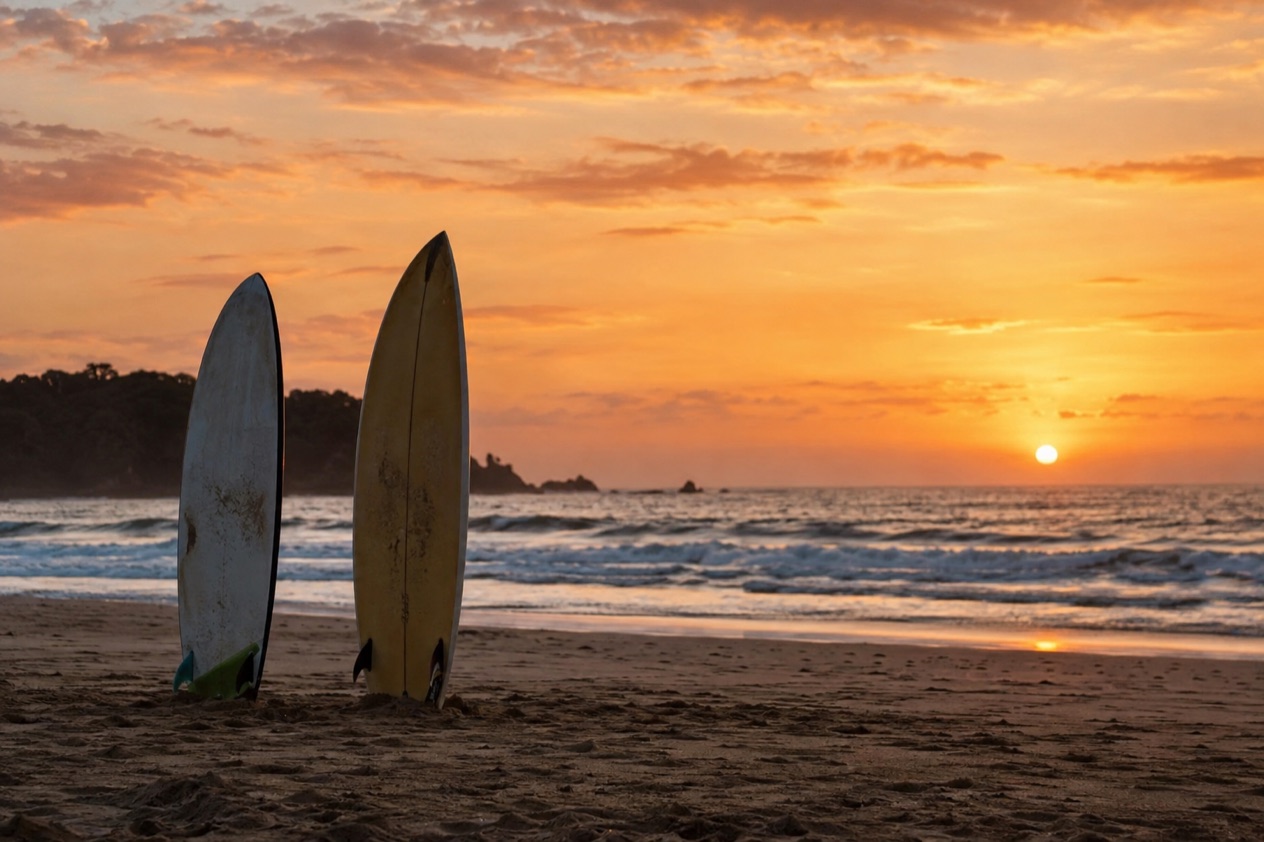
Late in the afternoon in a Pacific beach town, boards come out of the racks and the lineup fills with silhouettes against an orange sky. Barefoot surfers cross hot sand with wax in their pockets, and the smell of salt and sunscreen drifts over the beach bars. Costa Rica has waves on two coasts, and the choice of coast, town and season shapes the whole trip.
Where can you surf in Costa Rica?
You can surf along much of the Pacific coast and at a few spots on the Caribbean side, with the main beach towns offering schools, rentals and a ready-made surf community. The Pacific side is where most visitors paddle out, from the towns along the Nicoya Peninsula and the central coast to advanced destinations such as Pavones and Witch’s Rock farther afield. The Caribbean side is smaller in scale but has one famous wave.
Nicoya Peninsula: Tamarindo, Nosara and Santa Teresa
Tamarindo is the most developed of the surf towns, with a beach break that suits beginners and plenty of schools renting boards and giving lessons. Bigger waves are found at beaches a short drive north and south, so stronger surfers use the town as a base and head out for the day. Evenings here are social, with restaurants and bars facing the sunset.
Farther down the peninsula, Nosara is a quiet community known for Playa Guiones, a long beach with steady surf, and for its yoga studios and wellness culture. Santa Teresa sits at the southwestern tip, strung along a dirt road behind a long beach, with small hotels, cafes and a barefoot feel. Both suit people who want to surf in the morning and spend the rest of the day slowly, with a yoga class or a smoothie in between.
Jaco and the central Pacific
Jaco is a classic first surf stop. Its beach break works for beginners as well as for experienced surfers, and the town’s lessons and board rentals make it easy to start the same day you arrive. The town is lively at night, so it fits travelers who want surf plus restaurants and company rather than a hushed retreat.
The town also offers kayaking, horse riding and day trips to nearby beaches such as Playa Carrillo, which helps when someone in the group would rather not surf every day.
The south Pacific and the Caribbean
Near Uvita, Dominical and its surf beach lie a short drive north, a good option for a day of waves on the southern coast. The Nauyaca waterfalls are a day trip inland for a rest day between sessions.
On the Caribbean side, Puerto Viejo has Salsa Brava, a wave that breaks over a shallow reef just off the town. It is for experienced surfers only, and most visitors enjoy it from the shore, watching the sets stand up over the reef. Boards and lessons are also found in town for those who want to try the gentler options.
Where should beginners surf?
Beginners do best at the gentler beach breaks in the towns that have surf schools, such as Tamarindo, Jaco, Samara and Playa Guiones.
Tamarindo and Jaco: easy first lessons
In Tamarindo, the beach break suits beginners, and schools rent boards and give lessons right on the sand. You stand in white water at first, learning to pop up on a foam board while an instructor pushes you into the small waves.
Jaco is just as welcoming. Its lessons and rentals have made it a classic first surf stop, and the same beach also works for stronger surfers, so you can watch better riders and learn from the way they read the sets. After a lesson, a day of practice on your own is easy to arrange with a rented board.
Samara, Nosara and Santa Teresa
Samara is the choice for families and first-time surfers because of its gentle waves, and the other activities in town keep non-surfers happy. Horse riding along the beach or a kayak outing makes a good change on a day when your arms are too tired for another session.
Nosara and Playa Guiones offer a long beach with steady surf, which means room to spread out and many chances to catch a wave. Santa Teresa has a long beach too, with a laid-back town behind it. In both, lessons are available, and the yoga studios nearby help sore shoulders recover.
What to avoid at first
Reef waves are not for a first week. Salsa Brava at Puerto Viejo breaks over a shallow reef and is for experienced surfers only, so beginners in that town should stay out of that lineup and take lessons on an easier break with an instructor.
Whatever the beach, start with a lesson. An instructor knows how the break behaves that day, where the current runs and which part of the beach suits your level, which is worth more than any board you could rent.
When is the best time to surf in Costa Rica?
It depends on the coast. On the Pacific side the waves are usually bigger and more consistent in the green season, from about May to November, while the Caribbean coast gets its best surf in winter, from about December to March, and in summer.
Pacific coast: the green season
From about May to November the Pacific swell is bigger and steadier, which suits intermediate and advanced surfers looking for more power and more days with surf. The landscape is lush and green, and the beaches are often quieter than in the dry months. Rain tends to come in the afternoon on this side, so mornings are the natural time to paddle out.
Bigger waves do not mean harder for everyone. Beginners can still learn in the green season on the gentler beach breaks, but conditions change from day to day, and a surf school will tell you whether the morning suits a lesson or whether it is better to wait for smaller surf.
Caribbean coast: winter and summer
The Caribbean side runs on a different calendar. Its best surf comes in winter, from about December to March, and in summer, which makes it an option when the Pacific is in its other phase. Puerto Viejo is the main base, with Salsa Brava as the headline wave for experienced surfers.
Because the two coasts have different seasons, a trip can be planned around the waves you want. A surfer who arrives in the winter months can look east, and one who comes in the green season can stay on the Pacific, with a town like Santa Teresa or Nosara as the base.
Choosing your month by level
Beginners can look for gentler conditions at school-friendly beaches such as Tamarindo, Jaco and Samara, but should ask a local school whether the day’s surf suits their level. Stronger surfers will want to match the coast to the season above. Either way, ask the school or your hotel about the day’s swell instead of relying on a month on the calendar.
What should you know about the water before you paddle out?
The main danger is rip currents, which are very dangerous and cause several drownings of U.S. tourists each year. Most beaches do not have lifeguards or warnings about unsafe conditions, so the decision to go in is yours, and it should be informed.
Rip currents
Conditions change through the day with the tide and the swell, so what was fine in the morning may not be in the afternoon.
Before you go in, ask your hotel or a surf school about the day’s conditions, and follow any flags that are posted. Keep children within arm’s reach at all times, including at the water’s edge.
Choosing a spot with support
Surf towns with schools and rentals give you people who watch the water every day. Tamarindo, Jaco, Santa Teresa, Nosara, Playa Guiones and Puerto Viejo all have them, and an instructor can tell you which stretch of beach suits your level that morning.
A reef wave like Salsa Brava adds shallow rock to the equation, which is why it is for experienced surfers only. If you are unsure of your level, choose the beach break, take a lesson and leave the reef to those who know it.
Good to know before you go
The U.S. State Department rates Costa Rica Level 2, ‘Exercise increased caution,’ due to crime; it says petty crime is common throughout Costa Rica and that violent crime also affects tourists, including armed robbery, homicide and sexual assault.
Petty crime is common throughout Costa Rica, so keep valuables out of sight on the beach and do not leave bags unattended while you are in the water. Many surfers bring only a key and a little cash to the sand and leave the rest locked at the hotel.
Surf schools and board rentals take care of the gear, so you can travel light, with a rash guard, sunscreen and a hat as the essentials. Surf towns are small, and a quiet morning in the water is often followed by a long lunch, which is the rhythm the coast encourages.
Sources
- U.S. Department of State, Costa Rica Travel Information, Safety and security (https://travel.state.gov/content/travel/en/international-travel/International-Travel-Country-Information-Pages/CostaRica.html), checked October 8, 2026
- U.S. Department of State, Costa Rica Travel Advisory, issued April 1, 2026 (https://travel.state.gov/content/travel/en/traveladvisories/traveladvisories/costa-rica-travel-advisory.html), read via the State Department open data API on October 8, 2026
To plan your stay
- Best Time to Visit Costa Rica: Dry and Green Seasons, Weather by Region and Festivals
- Where to Stay in Costa Rica: Beach Towns, Cloud Forest, Volcano Views and Which Base Fits Your Trip
- Costa Rica Airports: San Jose or Liberia? Beaches, Drive Times and Getting to Your Hotel
- Know Before You Go to Costa Rica: Entry Rules, Money, Getting Around and Local Customs