
A Japanese morning can begin on a tatami floor, with a futon already folded away into the closet and a tray of grilled fish, rice and pickles set out by the staff. By evening you may be somewhere else entirely, in a tiny capsule glowing like a ship’s cabin or in a glass tower above the city lights. Japan offers an unusually wide range of places to sleep, and the choice of where to stay shapes the trip as much as the route does.
What is the best area to stay in Japan?
For a first visit, the big cities of Tokyo, Kyoto and Osaka make the strongest bases, with Tokyo for the full sweep of modern Japan, Kyoto for temples and old streets, and Osaka for food and nightlife. Families tend to be happiest where there is room to spread out and a choice of meals nearby. Budget travelers have the capsule hotel, the business hotel and the guesthouse, while travelers after atmosphere can look to the ryokan and the temple stay.
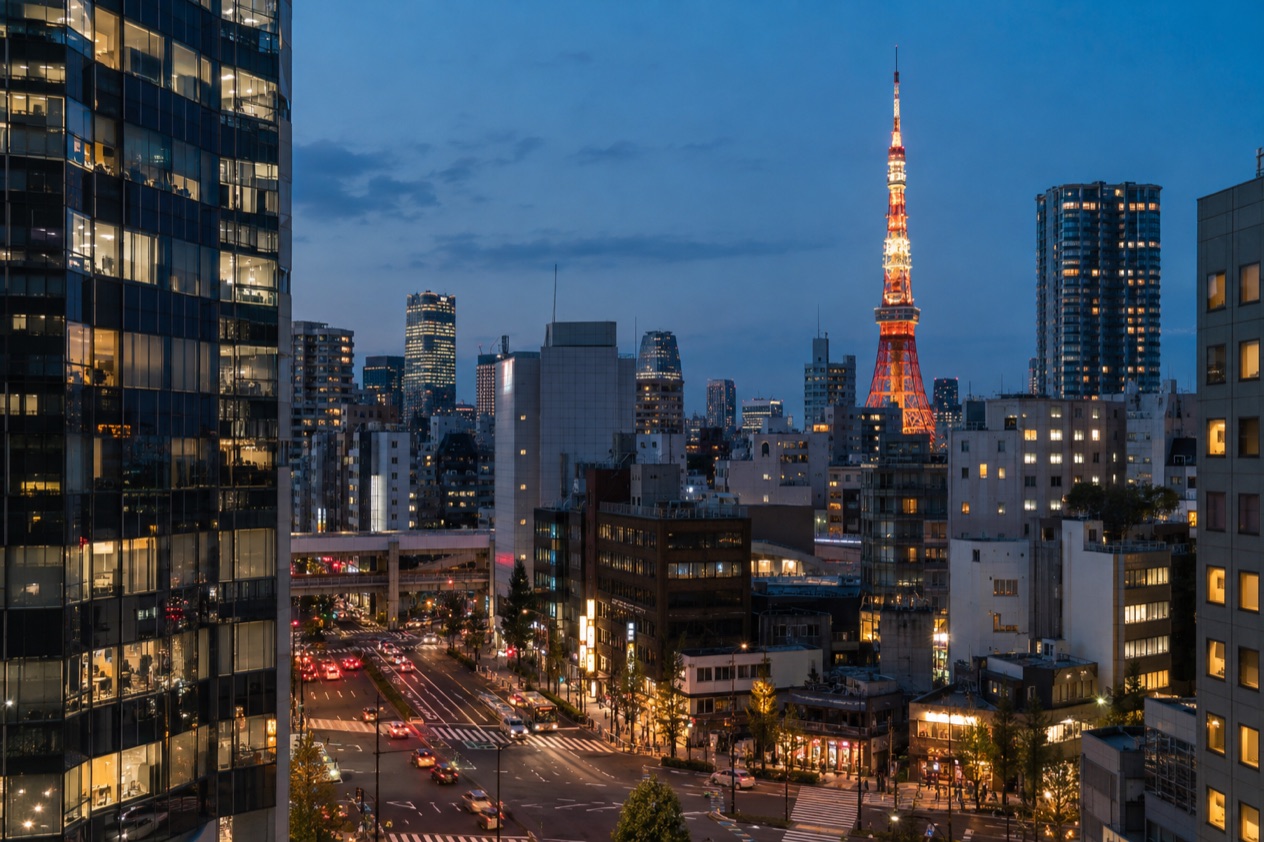
The cities do not feel alike once you unpack. Tokyo is a collection of districts, each with its own personality, from the business towers and department stores to the older temple quarters and the youth-driven crossings. Kyoto is a city of wooden lanes, gardens and shrines where the lodging often matches the surroundings. Osaka is looser and louder, a place built around eating late and walking home through lit-up arcades.
That tells you something about the country. A good night’s stay is not confined to the capital circuit, and a hot-spring inn in the countryside can be the highlight of a trip rather than a detour from it.
A useful way to decide is to ask what you want your room to do. If it is only a place to sleep after long days of sightseeing, a compact city hotel is enough and lets you put your energy elsewhere. If you want the room itself to be part of the experience, with a private bath, a dinner served in courses and a futon laid out for you, then a ryokan earns its place in the itinerary, even for a single night.
Nightlife changes the calculation. The late hours of Osaka and Tokyo are easiest to enjoy when you sleep within the same district, and the story of the capsule hotel begins with exactly this. It was conceived by a sauna operator in Osaka for customers who had missed the last train and needed somewhere to sleep. That origin still describes the idea well: a bed close to the evening, not a destination in itself.
Travelers who love quiet mornings and old buildings should look hard at Kyoto and at the temple towns, where the lodging itself belongs to the history. Travelers who like to leave the hotel and walk straight into restaurants, shops and station platforms will lean toward Tokyo and Osaka. Neither choice is wrong. The right answer depends on whether you want to wake up inside Japan’s past or inside its present.
The best areas to stay in Japan
Tokyo
Tokyo suits travelers who want a lot of variety within one stay. Business hotels, boutique hotels, guesthouses, apartments and large luxury properties all sit among its districts, and the choice of neighborhood decides the mood. Around Shinjuku and Shibuya the nights run late and the streets are full of signs. Ginza leans toward department stores and polished dining, while Asakusa gathers the older temple atmosphere around Senso-ji.
At the top end, Aman Tokyo opened in 2014 and was designed by the architect Kerry Hill. It was Aman’s first city property, a notable step for a brand that had been known for resorts. Luxury lodging in Tokyo falls into the Japan National Tourism Organization’s categories of hotels and unique accommodations, so there is room for both the grand and the unusual.
Tokyo works best for first-time visitors who want to see how different the districts can feel from one another. Pick the neighborhood that matches your evenings, whether lively streets or something calmer, and treat the rest of the city as a day outing from there.
Kyoto
Kyoto is where the traditional kinds of lodging fit most naturally. Ryokan, the inns that are believed to have emerged in the 8th century, offer tatami floors, futons, a kaiseki dinner (a meal of small seasonal courses) and a traditional Japanese breakfast. Staff explain the customs as you go, including taking off shoes indoors and wearing the yukata, the light cotton robe, so you do not need to arrive knowing the etiquette.
The city also has heritage stays and temple lodgings, which suit travelers who want to wake up inside a setting they would otherwise only walk past. Heritage Stays offer cultural activities such as tea ceremony, calligraphy and wearing traditional clothing. Autumn and spring are the seasons when these stays draw the most interest because of the scenery, and reservations are required.
Kyoto suits couples, slow travelers and anyone whose idea of Japan involves gardens, wooden eaves and maple leaves. Modern hotels are in the city too, for those who prefer a bed without ceremony, but the pull of Kyoto is the chance to sleep in a place that belongs to its surroundings.
Osaka
Osaka is the city for travelers who plan their days around meals. Takoyaki, okonomiyaki and skewers fried in batter are the local pleasures, and the late-night streets are lined with places to eat them. Staying in the middle of the action means you can walk back to your room after dinner, which is a real comfort in a city that stays up late.
Osaka also holds a piece of lodging history. The first capsule hotel in the world, the Capsule Inn Osaka, opened in 1979 in the Umeda district and was designed by Kisho Kurokawa. Capsule hotels in Japan give you a tiny room suitable only for sleeping, with shared bathroom facilities, which makes them a fit for solo travelers who want a bed and nothing more.
Osaka suits budget-minded travelers, food lovers and anyone who likes a city with a lively evening. Hotels, business hotels and apartments all exist here, and luxury accommodations are listed for the city as well.
Hokkaido and Okinawa
Hokkaido and Okinawa are both on the Japan National Tourism Organization’s list of destinations with luxury accommodations. They make sense as bases for travelers who have already seen the main cities, or who want a different tempo from the rail-hopping routine. Resorts and ryokan are the usual shapes of lodging in places like these, where the grounds and the surroundings are part of what you are paying for.
Think of them as a second stage of the trip rather than the first. A few nights at a resort or an onsen inn work as a pause after the pace of Tokyo, Kyoto and Osaka, with a private bath, a long dinner and time to do very little. Families and couples who value space over sightseeing will find that approach pays off.
Japan areas compared
| Area | Best for | Feel |
|---|---|---|
| Tokyo | First visit, nightlife, variety | A city of districts, from towers and shopping streets to temple quarters |
| Kyoto | Temples, gardens, traditional lodging | Wooden lanes, ryokan and heritage stays |
| Osaka | Food, late evenings, budget stays | Loud, lively, built around eating out |
| Hokkaido and Okinawa | A slower second stage, resort stays | Resorts and inns where the setting is the draw |
The main trade-off is between sleeping in the heart of the action and sleeping somewhere that lets you rest. A room close to a busy station or a nightlife district puts restaurants and bars at your door, but you may hear more of the city at night. A quieter street gives you better sleep and a calmer start to the day, and you accept a little more walking at the end of the evening.
The second trade-off is old against new. In Kyoto the old town offers inns and heritage properties with tatami floors, gardens and set meals, while a modern hotel gives you a bed, a private bathroom and a lobby you can walk through in your coat. Tokyo flips the balance, with its newer districts offering the polished hotels and the older quarters keeping the temple atmosphere.
Travelers settle the question by splitting the stay. A few nights in a city hotel suit the early days, when you want to get your bearings and eat well, and a night or two in a ryokan or a temple lodging gives the trip its memorable middle.
The shukubo, the temple lodging that once hosted traveling monks, is often the most unusual of these. It now welcomes ordinary visitors, and the room price usually includes both dinner and breakfast.
Resorts in Hokkaido and Okinawa suit the other end of that rhythm. They ask less of you, since the days there are for resting, bathing and eating, and they pair well with a city stay that comes before or after. Choosing between areas is therefore less about picking one winner and more about deciding in what order you want the different moods of Japan.
How to choose your hotel in Japan
A hotel in the plainest sense is a place that provides paid lodging on a short-term basis, and Japan adds several distinctive versions of the idea. The business hotel is the practical choice for a night in a city, the capsule hotel strips the idea down to a sleeping pod, the guesthouse is for travelers who want a simpler base, and the ryokan turns the night itself into a cultural experience. Knowing what each one offers keeps the surprises pleasant.
Ryokan and onsen inns
A ryokan is a traditional Japanese inn, and the rooms usually have tatami floors and futons. A futon here is a mattress with a duvet, laid on the tatami and folded into a closet called an oshiire during the day, so the same room serves for sitting, eating and sleeping. Tatami gives a softer base than wooden or stone floors, which is part of why the sleeping arrangement feels different from a hotel bed.
Dinner is typically a kaiseki meal and breakfast a traditional Japanese one, and many rooms have a private bath, sometimes outdoors. Staff explain how things work, from removing shoes to bathing in the onsen to wearing the yukata. The ryokan suits couples, older travelers who enjoy a ritual, and anyone who wants one night to feel unlike any other.
Temple stays and heritage stays
A shukubo is a temple lodging that historically hosted traveling monks and now accepts ordinary travelers. The room price usually includes dinner and breakfast, so the stay takes on the rhythm of the temple. Some shukubo accept only cash, so confirm the payment method when you reserve.
Heritage Stays are another way to sleep inside history. They offer cultural activities such as tea ceremony, calligraphy and wearing traditional Japanese clothing, and reservations are required, often through the property’s website or by phone. They are available year-round, with autumn and spring drawing the most interest because of the seasonal scenery.
Capsule hotels, business hotels and guesthouses
A capsule hotel gives you a tiny room suitable only for sleeping, with shared bathroom facilities. It suits solo travelers who plan to spend nearly all their time outside and want a bed at the end of the night. Business hotels offer a conventional private room in a city, and guesthouses offer a simpler, often more social base.
None of these is trying to be a resort, and that is their strength. If your days are full of trains, temples and meals, the room can be small and plain without costing you anything. Where you want to linger over breakfast or share a long evening, a larger room or a ryokan deserves the extra thought.
Families, mobility and luxury
Families will want to think about how the room works for several people. A ryokan room with futons laid out on tatami can sleep a group together, and the folded-away bedding leaves floor space for the day. Capsule hotels are built for one person, so they rarely suit family plans, and travelers with limited mobility should ask a property how the floor and the bath are set up before reserving, since tatami rooms and traditional baths follow their own layout.
At the top of the range, luxury accommodations in Japan are grouped into unique accommodations, hotels, resorts and ryokan, so the word covers very different kinds of stay. A downloadable guide to luxury hotels is available from the Japan National Tourism Organization, whose website also has a page on online reservation sites and is available in English for the United States.
Seen together, the kinds of lodging are less a ladder than a set of moods. The business hotel is for efficiency, the capsule for a night on the move, the ryokan for ceremony, the temple for stillness and the resort for rest. Match the mood to the day you are about to have and the choice usually settles itself.
Good to know before you go
Plan the arrival leg and your first night together, so you land at a base that suits the way you want to begin the trip. Some temple lodgings take only cash, so keep some on hand if a shukubo is in your plans. The Japan National Tourism Organization offers a page on online reservation sites, and Heritage Stays take reservations through the property’s website or by phone.
Sources
- Japan National Tourism Organization, ryokan stays, what is included, etiquette (https://www.japan.travel/en/guide/japanese-ryokan/), checked October 11, 2026
- Japan National Tourism Organization, temple stays (https://www.japan.travel/en/guide/temple-stays/), checked October 11, 2026
- Japan National Tourism Organization, heritage stays (https://www.japan.travel/en/heritage-stays/), checked October 11, 2026
- Japan National Tourism Organization, luxury accommodation (https://www.japan.travel/en/luxury/accommodations/), checked October 11, 2026
- Japan National Tourism Organization, online reservations (https://www.japan.travel/en/plan/online-reservation-sites/), checked October 11, 2026
- Wikipedia, Aman Resorts (https://en.wikipedia.org/wiki/Aman_Resorts), checked October 11, 2026
- Wikipedia, Business hotel (https://en.wikipedia.org/wiki/Business_hotel), checked October 11, 2026
- Wikipedia, Capsule hotel (https://en.wikipedia.org/wiki/Capsule_hotel), checked October 11, 2026
- Wikipedia, Futon (https://en.wikipedia.org/wiki/Futon), checked October 11, 2026
To plan your stay
- Best Time to Visit Japan: Cherry Blossoms, Autumn Colors, Weather and Festivals
- Things to Do in Japan: Kyoto Temples, Onsen, Street Food and Day Trips
- Sending Luggage from the Airport in Japan: Hands-Free Travel, Hotel Delivery and Coin Lockers
- Know Before You Go to Japan: Entry, Money, Etiquette and Getting Around