
A bowl of miso ramen in steam-fogged windows, a lamb barbecue sizzling at a long table, a park strung with lights where the snow squeaks underfoot: Sapporo is a city you taste and walk before you ever look at a map. It spreads out as a handful of districts with very different moods, one built around the railway station, one around a long ribbon of park, one around neon and late dinners. Choosing where to sleep means choosing which of those moods you want to wake up in.
What is the best area to stay in Sapporo?
For a first visit, the area around Sapporo Station is the simplest base, while Odori suits sightseeing on foot around the city’s central park, and Susukino suits travelers who want dinner, drinks and nightlife on the doorstep.
The station district is where the express train from New Chitose Airport arrives, and where the Hokkaido Shinkansen and Limited Express connection from Tokyo ends up. Hokkaido University sits just north of the station, so the neighborhood mixes travelers, students and commuters. If you land in the city, drop your bags and want to be oriented quickly, this is the area that asks the least of you.
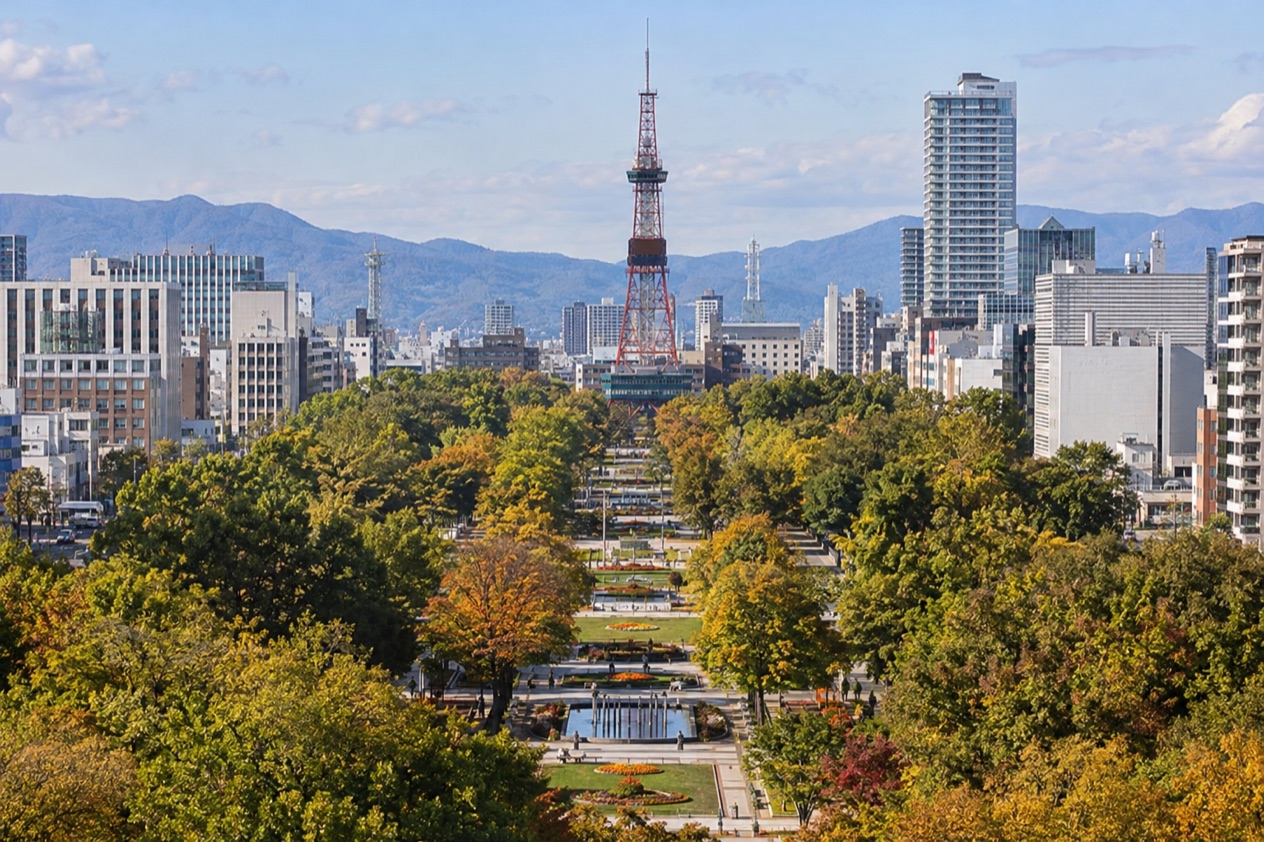
Odori is the green heart of Sapporo. Odori Park runs through the center of the city and holds the Sapporo TV Tower, and in summer the park hosts outdoor events from June onward. In February it becomes the main site of the Sapporo Snow Festival, with snow sculptures, projection mapping and a snow slide. Sleeping here puts you inside the scenery that visitors come to see.
Susukino is the largest entertainment and nightlife district north of Tokyo. It is where ramen counters, soup curry kitchens and jingisukan grills (the local lamb barbecue cooked on a domed pan) cluster in the evening. Its energy suits a traveler who plans to eat late and wander, and it has its own role in the Snow Festival, with ice sculptures and an ice bar.
Travelers who prefer a traditional experience can look at a ryokan, a Japanese inn with tatami floors, futons, a kaiseki dinner and a Japanese breakfast. Families, couples, solo travelers and groups can all find a fit among these districts, because each has a different rhythm: the station for arrivals and departures, Odori for open space and events, Susukino for evenings.
Think about the trip you are really taking. If most of your days are day trips out of the city, the station district keeps the rail connections close.
If you come for the Snow Festival, Odori and Susukino are two of its sites, so staying near them lets you step from one to the other. If your plan is beer, ramen and long dinners, Susukino is the obvious address. And if the point of your trip is a night in a tatami room, the choice of ryokan matters more than the choice of district.
The best areas to stay in Sapporo
Around Sapporo Station
This is the district of arrivals. The express train from Chitose Airport takes 35 minutes to reach Sapporo Station, and travelers coming from Tokyo on the Hokkaido Shinkansen change at Shin-Hakodate-Hokuto onto the Hokuto Limited Express for the last stretch into the city. Waking up here means the platforms are right there when you leave for a day trip or head home.
Just to the north lies Hokkaido University, whose grounds give the neighborhood a campus edge. Around the station you will find the kind of city lodging that fits a short stay, from large hotels to simpler rooms, though the specific properties are for you to pick. The district suits first-time visitors, anyone arriving late or leaving early, and travelers who plan to move around Hokkaido rather than stay in one place.
A good tip: if your trip includes outings to Otaru with its gas lamps and stone warehouses, or to Furano and Biei with their craft village and blue pond, a base at the station keeps those departures simple to start. Save the evenings for Odori or Susukino, both of which you can reach without making a full excursion of it.
Odori and the park
Odori Park cuts across the center of Sapporo, and the TV Tower stands in it. The mood changes with the season. In the warm months, from June through August, the park fills with outdoor events and people eating lunch on the grass.
In May, the Lilac Festival is held in Chuo-ku. In February, the park becomes the Odori Site of the Sapporo Snow Festival, with large, medium and small snow sculptures, Sapporo Citizen Snow Sculptures, projection mapping and a snow slide.
A room near the park suits sightseers, couples and families who want a central address and a green space at hand. You will find the city’s classic business-style hotels in this part of town, and the choice thins out only if you are looking for a traditional inn, since ryokan are a separate kind of stay and are best picked on their own merits.
Tip: this is the best address for the Snow Festival, since two of its three sites are in the center. The third, Tsudome, lies elsewhere, so plan for a separate trip if you want all of them. Outside February, Odori is a pleasant place to base yourself for a long weekend of strolling, coffee and park benches.
Susukino
Susukino is Sapporo after dark. It is the largest entertainment and nightlife district north of Tokyo, a grid of bars, izakaya (casual pubs serving small plates), ramen counters and karaoke rooms.
During the Snow Festival, Susukino hosts its own site themed Enjoy the Ice. In Fureai Hiroba you can touch or ride on ice sculptures, Illumination Street is where people take photos, and the Ice Bar serves hot drinks. An ice sculpture show and the Ice Sculpture Contest round out the program.
This district suits adults traveling together, friends and couples who want dinner and drinks to be part of the trip. Families can stay in the wider area, but the nightlife is the signature. Tip: if you want quiet nights, ask for a room away from the street, or choose Odori or the station instead.
A ryokan stay in or near the city
A ryokan is a traditional Japanese inn, and the tradition is believed to go back to the 8th century. A typical stay includes tatami floors, futons laid out for the night, a private bath that is sometimes outdoors, a yukata (a light cotton robe) to wear, a kaiseki dinner of many small courses and a traditional Japanese breakfast.
If you want to go further into the culture, Heritage Stays offer activities such as tea ceremony, calligraphy and wearing traditional Japanese clothing. Reservations for Heritage Stays are required and can often be made through the property’s website or by phone. This kind of stay suits couples, travelers who want one memorable night, and anyone who prefers a slow evening to a busy one.
Sapporo areas compared
| Area | Best for | Feel | Landmarks |
|---|---|---|---|
| Sapporo Station | First visit, arrivals, day trips | Transit hub with a university to the north | Express train from Chitose Airport in 35 minutes, Hokkaido University |
| Odori | Sightseeing, Snow Festival, families | Green, central, event-filled | Odori Park, Sapporo TV Tower |
| Susukino | Nightlife, dinners, Snow Festival evenings | Neon, late, lively | Ice Bar and ice sculptures in February, ramen and jingisukan |
The trade-off at the heart of Sapporo is simple. Near the station you are close to the trains that carry you out of town, and the district is organized around coming and going.
Near Odori you give up a little of that transit focus in exchange for open space and the festivals that take over the park. In Susukino you give up the sense of calm in exchange for dinners that go late and a street life that does not stop at sunset.
There is also a split between the practical and the atmospheric. A room by the station is a tool, and it works well for a short stay or a trip with many moves. A room at Odori is a view, and a room in Susukino is a night out. A ryokan is something else again: the stay itself is the activity, and its location matters less than its character.
If you are torn, remember that these districts all belong to the same city and the Sapporo Streetcar, one of only two operational circular tram systems in Asia, is part of its transport mix. You can sleep in one area and spend your evening in another without feeling that you have left your base. The airport is also a factor: New Chitose Airport lies in the city of Chitose, about 30 miles away, while Okadama Airport handles regional flights within Hokkaido and some parts of Japan.
How to choose your hotel in Sapporo
Start with what kind of night you want, because Japan offers several styles of stay. A hotel gives you a conventional room and the freedom to come and go. A ryokan gives you a tatami floor, a futon, a yukata and a kaiseki dinner, a private bath and a traditional breakfast. Choose the style first and the district second, since the best ryokan may not sit where the best hotel does.
Next, think about your arrival and departure. The express train from Chitose Airport to Sapporo Station takes 35 minutes, so a room near the station makes sense if you are landing late or flying out early. If you are coming from Tokyo by rail, the route runs through Shin-Hakodate-Hokuto on the Hokkaido Shinkansen, then the Hokuto Limited Express to Sapporo, and the station district is where that journey ends.
Then consider your itinerary. If you plan outings beyond the city, such as Otaru’s canal with its glowing gas lamps, the craft village of Ningle Terrace in Furano’s forests, the Shirogane Blue Pond near Biei, Asahiyama Zoo, or drift ice at Abashiri from late January, a hotel tied to rail connections is worth more than a room with a view. If you are staying in town, Odori and Susukino offer the dining, the Beer Museum’s beer and lamb barbecue and the Nijo Market, which is open year-round.
Families and travelers with limited mobility should weigh the practical side of each stay. A ryokan with tatami floors and futons asks you to sit and sleep close to the floor, which is a different experience from a standard hotel bed. If that matters, ask the property how its rooms are set up before you reserve. For Heritage Stays, reservations are required in any case.
Finally, look at the season. February brings the Snow Festival and a very different Sapporo from the summer months, when events fill Odori Park from June to August. Each period suits a different part of town, so match your dates to the area. In summer, a base near the park gives you the best of the city.
Good to know before you go
Travelers reach Sapporo through New Chitose Airport, and from there the express train to Sapporo Station takes 35 minutes. Okadama Airport serves regional flights within Hokkaido. Whichever district you choose, you can reach the others within the city, and the streetcar adds another way to move around. Pick the area that matches the trip you want to have, then enjoy the ramen.
Sources
- Japan National Tourism Organization, Sapporo (https://www.japan.travel/en/destinations/hokkaido/hokkaido/sapporo-and-around/), checked October 11, 2026
- Hokkaido Love, the official Hokkaido tourism site (https://www.visit-hokkaido.jp/en/), checked October 11, 2026
- Hokkaido Love, what to see and do (https://www.visit-hokkaido.jp/en/spot/), checked October 11, 2026
- Sapporo Snow Festival official website (https://www.snowfes.com/english/), checked October 11, 2026
- Sapporo official sightseeing website (https://www.sapporo.travel/en/), checked October 11, 2026
- Wikipedia, Sapporo (https://en.wikipedia.org/wiki/Sapporo), checked October 11, 2026
- Japan National Tourism Organization, ryokan stays, what is included, etiquette (https://www.japan.travel/en/guide/japanese-ryokan/), checked October 11, 2026
- Japan National Tourism Organization, heritage stays (https://www.japan.travel/en/heritage-stays/), checked October 11, 2026
To plan your stay
- Best Time to Visit Sapporo: Snow Festival, Summer Weather and Seasonal Highlights
- Things to Do in Sapporo: Snow Festival, Odori Park, Ramen and Day Trips
- Sapporo from Tokyo: The Hayabusa Shinkansen, the Seikan Tunnel and What Awaits on Hokkaido
- Know Before You Go to Sapporo: Entry, Money, Getting Around and Local Customs