
Step out of Otemachi station on a weekday morning and the crowd flows in one direction, office workers in dark suits heading for the glass towers. A few minutes later, an elevator carries a very different kind of guest up through one of those towers, past the working floors and into a lobby of paper screens and fresh flowers. That is Aman Tokyo, a luxury hotel set in the top floors of Otemachi Tower, the first city address of a brand best known for its retreats.
What is Aman Tokyo?
Aman Tokyo is a luxury hotel that opened in 2014 on the upper floors of a business tower in central Tokyo, designed by the architect Kerry Hill. It was the first city property for Aman, a company that had until then built its name on resorts, so the hotel is a kind of experiment: a retreat atmosphere lifted high above a financial district.
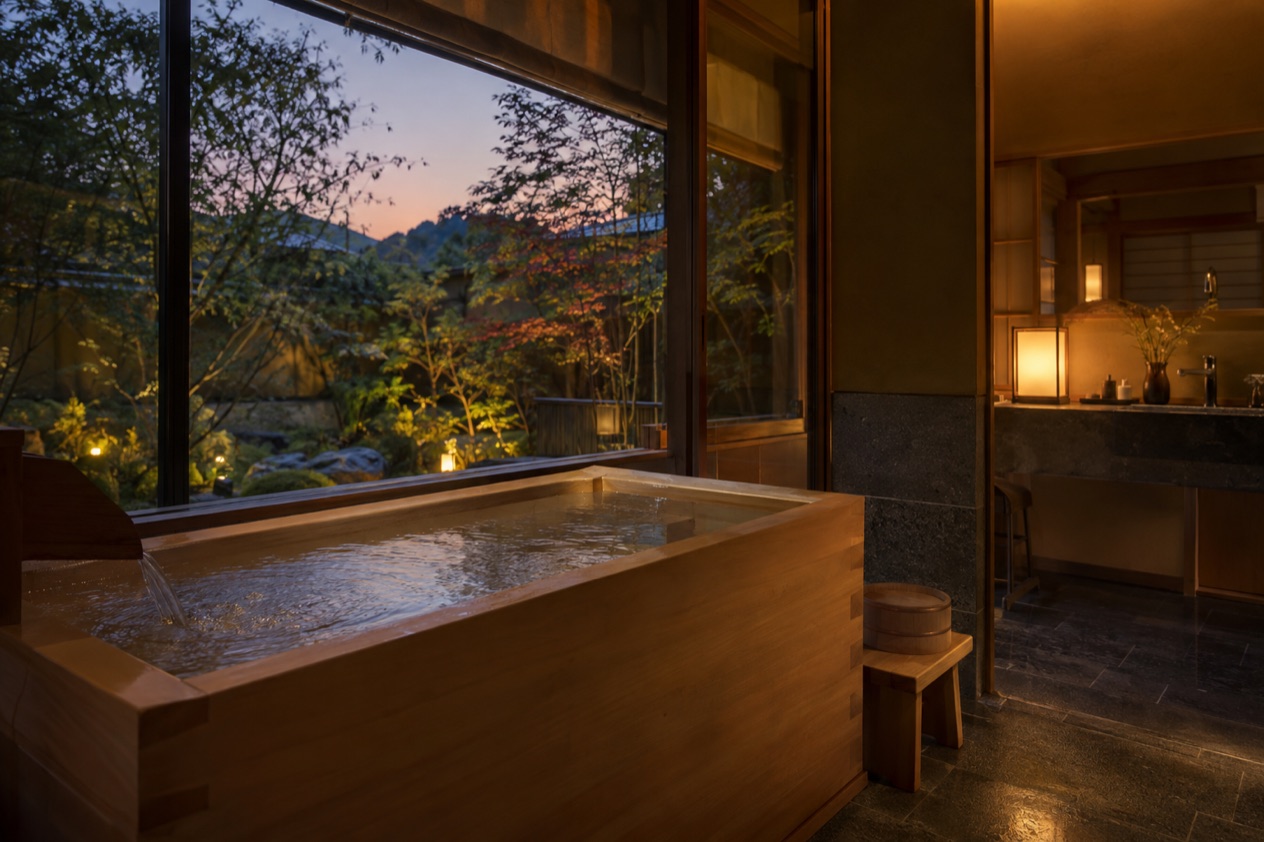
The look carries that idea through. Interiors borrow from Japanese design, with ikebana (the art of flower arranging) displayed in the public spaces, doors made of washi paper, and engawa, the wooden platforms that in a traditional house link the rooms to the garden. In a tower of steel and glass, these touches give the hotel its own character and set it apart from the offices below.
Rooms and suites
The rooms are laid out in an open plan, with the Tokyo skyline filling the windows. City Suites are the larger category and offer open plan living with exceptional views. At the top of the range, the Aman Suite overlooks the city skyline and its landmarks. Sizes are in the table.
| Room or feature | Size (square metres) |
|---|---|
| City Suites (starting size) | 121 |
| Aman Suite | 157 |
| Aman Spa pool (length) | 30 |
The reading of such figures is simple: these are generous spaces by the standards of a dense city, where hotel rooms are often compact. The suites are meant to feel like apartments with a view rather than hotel rooms in the usual sense.
The Aman family in Japan
Aman Tokyo is one of several Aman properties in the country. Kerry Hill also designed Amanemu, in Shima, which opened in 2016, and Aman Kyoto, in Kyoto, which opened in 2019. Aman Niseko is planned for Niseko in 2027. Each sits in a very different setting, from a bay to a mountain resort, and the Tokyo hotel is the one built for the city itself.
Two other names come up in the same conversation. Aman Residences Tokyo is a separate residential property in the Azabudai Hills complex, with 91 units over 11 floors, and it opened in 2023. Janu Tokyo belongs to Janu, Aman’s spin-off brand, which runs larger hotels and aims to be slightly more affordable than Aman. Neither is the hotel in Otemachi Tower.
Where is it?
Aman Tokyo is in the Otemachi district of Chiyoda-ku, on the top floors of Otemachi Tower. The full address is Otemachi Tower, 1-5-6 Otemachi, Chiyoda-ku, Tokyo 100-0004, Japan, which is the line to show a taxi driver or to type into a map.
Otemachi is the part of Tokyo where banks, newspapers and trading houses keep their headquarters. It reads as a business district, with towers, underground passages and lunch counters made for office workers. The hotel’s setting is the contrast: the world of salaried Tokyo below, and a hushed lobby above it.
Trains and the station beneath the tower
Otemachi Tower is directly connected to Otemachi subway station, which serves five subway lines. That means a guest can go from a platform to the hotel entrance without stepping outside, which in a Tokyo summer downpour or a cold snap is a real convenience of the setting. The connection also puts a large part of the city on the same underground network as the hotel.
Tokyo Station is close as well, and from there the nationwide bullet train network, the Shinkansen, leads across Japan. For a trip that mixes Tokyo with Kyoto, Hiroshima or other cities, the hotel sits near the point where those journeys start.
From the airports
Two airports serve Tokyo, and the hotel can be reached from either by car. Haneda handles both domestic and international flights, while Narita handles international flights. The drive times are in the table.
| Airport | Drive to Aman Tokyo (minutes) |
|---|---|
| Haneda Airport | 40 |
| Narita Airport | 60 |
Which airport a traveler lands at depends on the flight, not the hotel, so the two figures simply say that the hotel is reachable from both by road.
Around the Imperial Palace
The Imperial Palace Gardens lie moments from the hotel. Wide lawns, old stone walls and moats of the former castle grounds make a green counterweight to the surrounding towers, and for many people staying in Otemachi, the gardens are the natural place to spend a free hour. The city’s skyline, as seen from the suites, includes this large open space at the center.
What is on site?
On site, Aman Tokyo has its suites, a spa with a pool, and Musashi by Aman, a restaurant serving omakase sushi. Together they make the hotel a place to stay for the views and the food as much as for a bed.
Aman Spa and the pool
The Aman Spa has a pool with panoramic city views, so a swim takes place with the towers of Tokyo laid out beyond the glass. A pool of this length is long enough for proper laps, which is uncommon in a city hotel. The spa rooms continue the hotel’s design language, drawing on the same Japanese materials and calm tones as the suites.
There is a Japanese tradition that fits the setting well: the bath as a ritual of unwinding at the end of a day. The spa does not replace an onsen (hot spring bath), but a soak or swim above the city gives a taste of the same idea.
Musashi by Aman
Musashi by Aman serves omakase sushi in the Edomae tradition. Edomae refers to the style that grew up in old Edo, as Tokyo was once called, built on fish that is cured, marinated or lightly seasoned before it meets the rice.
A meal of this kind is paced by the chef, with seasonal fish appearing as the evening goes on. It is a good way to taste what Tokyo is known for, and the hotel setting means dinner and the view belong to the same evening.
Design details you will notice
Look for the ikebana arrangements, which change with the season, and for the washi paper doors, which soften light the way shoji screens do in a traditional home. The engawa platforms are the least expected touch in a tower: a narrow wooden threshold between inside and outside, here placed beside the windows over the city. These details are the answer to what makes the hotel feel Japanese rather than simply international.
Good to know before you go
Otemachi is an office district, so the streets around the tower are built around commuters rather than sightseers, and the Imperial Palace Gardens are the nearest green space. Luxury stays in Japan often include a taste of local drinks such as sake, shochu and awamori, a pleasant way to learn what the country pours.
In many Japanese hotels and inns, shoes come off at certain entrances, so slip-on pairs are easy to manage. Rain does not have to stop a day here, since the station below is directly linked to the tower.
Sources
- Japan National Tourism Organization, luxury accommodation (https://www.japan.travel/en/luxury/accommodations/), checked October 11, 2026
- Wikipedia, Aman Resorts (https://en.wikipedia.org/wiki/Aman_Resorts), checked October 11, 2026
- Aman Tokyo (https://www.aman.com/hotels/aman-tokyo), checked October 11, 2026
To plan your stay
- Best Time to Visit Japan: Cherry Blossoms, Autumn Colors, Weather and Festivals
- Where to Stay in Japan: Ryokan, Temple Stays, Capsule Hotels and the Best Cities to Base In
- Sending Luggage from the Airport in Japan: Hands-Free Travel, Hotel Delivery and Coin Lockers
- Know Before You Go to Japan: Entry, Money, Etiquette and Getting Around