
Nikko begins early for anyone who sleeps near the shrines. Tatami rooms hold the last of the night’s warmth, a breakfast tray of rice, grilled fish and pickles arrives, and the cedar-shaded precinct of Toshogu waits outside the door.
Others step off the train at Tobu-Nikko Station with a bag and a plan to see everything in a day. The real choice is between a bed beside the station and the rail line, and a night in a ryokan where the evening is part of the trip.
What is the best area to stay in Nikko?
For a first visit, the station side is the most practical base, because Tobu-Nikko Station is where the train from Tokyo arrives and where your trip starts and ends. For sightseeing centered on the shrines and temples, a stay near the UNESCO World Heritage precinct puts the visit at the heart of your evening and morning. For a slow, restful trip, a ryokan or a heritage stay turns the lodging itself into the experience.
Budget travelers, families and anyone who wants nightlife should be realistic about what Nikko is. It is a town built around three shrines and temples complexes, a mountain setting and the habit of going to bed early, not a city of neon and late bars. Evenings here mean a bath, a long dinner and a walk, so the most useful question is what kind of evening you want. The three bases below answer it differently.
The station side suits people who like to arrive, drop a bag and move on. The shrine precinct suits those who want Toshogu, Futarasan-jinja and Rinno-ji to define the trip. The ryokan or heritage stay suits those who see the lodging as one of the reasons to come. None of these is a wrong choice, and each changes how you spend the hours before dinner and after breakfast.
A few travelers will also consider staying in Tokyo and treating Nikko as an outing. That works for a single sightseeing day, since Tobu-Nikko Station is about two hours from Asakusa and Shinjuku. It leaves out the best part of Nikko, though: the hour when the day visitors have gone and the temple grounds belong to the people sleeping nearby. A night on the spot changes the trip.
Nikko also sits in a region of mountains and forest, in Tochigi Prefecture, and it has long been a place to rest as well as to visit. A Japanese saying tells visitors never to say kekkō, meaning splendid or magnificent, until they have seen Nikko.
A night or two here gives that saying room to prove itself. One night is enough to feel the place, and a second night lets you see the shrines without watching the clock.
Think also about the shape of your trip. If Nikko is one stop on a longer route through Japan, a base by the station fits neatly between trains.
If Nikko is the destination, a stay among the temples or in a ryokan lets you take your time. Couples, solo travelers and groups of friends can choose either way, while families will want to think about how long the evening meal and the bathing customs of a ryokan suit their children.
The best areas to stay in Nikko
Around Tobu-Nikko Station
The station is the point where Nikko meets the rest of Japan. Tobu-Nikko Station is about 2 hours from Asakusa Station and Shinjuku Station in Tokyo, so a bed here keeps the journey in and out of town simple to plan.
You arrive, leave your bag and begin sightseeing without having to think about the next leg. A stay around Tobu-Nikko Station keeps you close to the rail arrival point.
This base suits first-time visitors, travelers who are passing through on a longer route, and anyone who wants a straightforward room, a small restaurant for dinner and a quiet corner of town to return to. The lodging is mostly of the practical kind: standard hotels with Western-style beds, plus guesthouses and the occasional room with tatami floors. Anyone wanting a full ryokan evening will usually look elsewhere.
One tip: walk through the streets near the station on your first evening, when the shops are closing and the town settles. It gives you the sense of Nikko as a real town of people who live and work here, not only a set of monuments. It is also a good time to pick a dinner place for the evening, since the choice can be small.
Near the shrines and temples
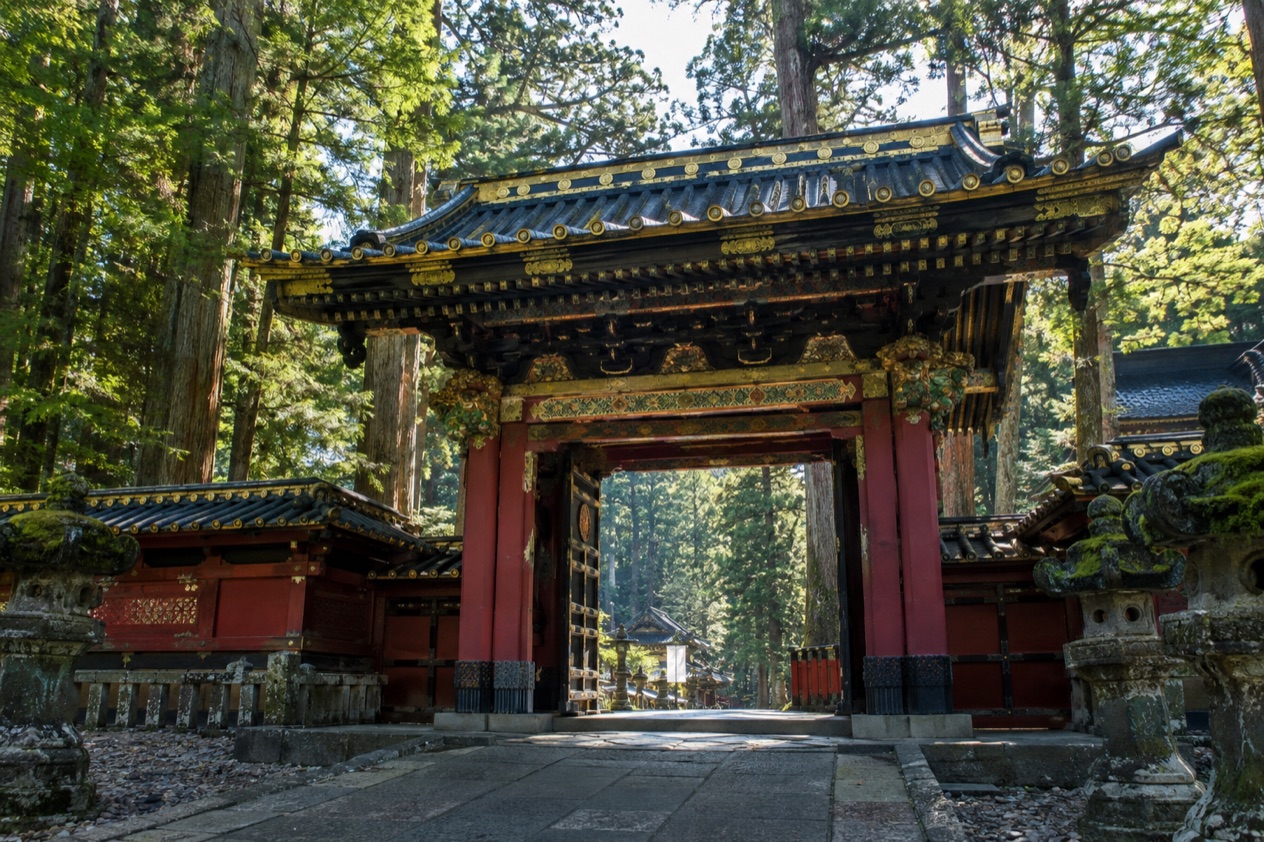
The heart of the visit is the UNESCO World Heritage site of Shrines and Temples of Nikko, which gathers Nikko Toshogu, Futarasan Shrine and Rinno-ji. Together they include 103 structures across three complexes.
Toshogu is the mausoleum of Tokugawa Ieyasu, founder of the Tokugawa shogunate that ruled Japan from 1603 to 1867. Beside it stands the mausoleum of his grandson Iemitsu, known as Taiyuin, and Futarasan Shrine, dedicated to the worship of Nikko’s three sacred mountains.
Staying close to this precinct means you can be at the gate when it opens and still be in the area when it closes. The grounds are shaded by tall trees, lined with stone lanterns and carved gates, and the mood of the place shifts as the light changes. Travelers who love photography, history and architecture will find the most to do here, and lodging in this area tends toward ryokan, small inns and guesthouses that match the setting.
A useful tip is to use the hours of the sites to plan your day. The hours below differ between the warmer and colder months, and the shrines close by mid-afternoon in winter.
| Site | Open |
|---|---|
| Toshogu Shrine | 8:00 to 16:30 (April to October), 8:00 to 15:30 (November to March) |
| Taiyuin | 8:00 to 16:30 (April to October), 8:00 to 15:30 (November to March) |
| Toshogu Museum | 9:00 to 16:00 daily |
| Rinno-ji | 8:00 to 17:00 (April to October), 8:00 to 16:00 (November to March) |
| Futarasan Shrine | 9:00 to 16:30 (April to October), 9:00 to 15:30 (November to March) |
A ryokan or heritage stay
Ryokan are traditional Japanese inns, believed to have emerged in Japan in the 8th century, and a night in one is a way of being in Nikko rather than only seeing it. Rooms typically have tatami floors and futons laid out in the evening, and guests change into a yukata, a light cotton robe. Many have private baths, sometimes outdoors, and dinner is a kaiseki meal of small seasonal dishes, followed by a traditional Japanese breakfast the next morning.
Ryokan staff explain the customs to guests, including removing shoes indoors, bathing in the onsen (hot spring bath) and wearing the yukata. Nobody is expected to know them beforehand, and that guidance is part of the welcome.
A ryokan stay suits couples, travelers marking an occasion, and anyone who wants the trip to slow down. It is also good for those who would rather spend the evening in one place than go out to find dinner.
Heritage Stays go a step further. At these properties, visitors can take part in cultural activities such as tea ceremony, calligraphy and wearing traditional Japanese clothing. Reservations for Heritage Stays are required and can often be made through the property’s website or by phone. Plan the stay as a centerpiece of the visit, with the shrines and temples as the day’s outing and the evening as the part you came for.
Nikko areas compared
| Area | Best for | Feel | Getting around |
|---|---|---|---|
| Around Tobu-Nikko Station | First visits and passing through | Practical, a town base with hotels and guesthouses | Tobu-Nikko Station is about 2 hours from Asakusa and Shinjuku in Tokyo |
| Near the shrines and temples | Sightseeing and history | Set among the Toshogu, Futarasan and Rinno-ji grounds | The UNESCO site of 103 structures across three complexes is the neighbor |
| Ryokan or heritage stay | Slow trips and special occasions | Tatami rooms, onsen baths, kaiseki dinners | Stays are reserved with the property, by website or phone |
The main trade-off is between convenience and atmosphere. The station side gives you the shortest line between your seat on the train and your bed, and it keeps options open if the weather turns or plans change.
The shrine precinct and the ryokan give up some of that flexibility in return for a stay that feels tied to the place. If you only have one night, the choice matters more, because there is less time to enjoy what you picked.
A second trade-off is between the town and the temples. The town offers ordinary things: a restaurant that serves a bowl of noodles, a shop that sells a snack, a street lined with the lights of a few signs.
The temples offer a setting made of old wood, stone and tall trees. Neither is better, but they feel different at day’s end. Think about whether you want to walk out to dinner or stay in and be served.
A third difference is what you want from the morning. A ryokan breakfast and bath can give the morning a different rhythm from a conventional hotel stay. Both can end at the same shrine gate, but they start the day in very different moods, so the choice shapes the whole visit.
How to choose your hotel in Nikko
Start with what the night is for. If Nikko is a stop between other places, a hotel near the station keeps things simple and puts the train within reach. If the night is the point of the trip, look for a ryokan stay that includes the room, bath and meals you want. If you want that and more, a Heritage Stay adds activities such as tea ceremony and calligraphy.
Think about the hours of the sites you want to see. The shrines and temples close in the afternoon, earlier from November to March, so a stay that lets you begin in the morning makes the day less rushed. A room near the precinct, or a ryokan with an early breakfast, fits that rhythm. A hotel by the station fits better if your day starts with a train from Tokyo and ends with one back.
Families will want to think about how a ryokan evening unfolds. Children can enjoy sleeping on futons on a tatami floor and wearing a yukata, and many find the meal of small dishes an adventure.
The customs, such as removing shoes and bathing in the onsen, are explained by the staff, so there is nothing to prepare. A Western-style hotel room offers a more familiar setting if the family prefers beds and a flexible dinner.
For travelers with limited mobility, the details of the property matter more than the area. Ask the lodging itself about its rooms, its baths and its entrance, because a traditional ryokan with tatami floors and low seating asks something different of the body than a hotel with beds and chairs.
If you are coming from the Oze area, buses run from Oze to Nikko between mid-spring and mid-autumn. That connection makes Nikko a natural stop at the end of a trip through the mountains of the region in those months.
Whichever way you arrive, it is the evening that sets Nikko apart from a day trip, so choose the lodging that makes the most of it.
Good to know before you go
Nikko lies in Tochigi Prefecture, in the Kanto region, and from Tokyo the way in is by train to Tobu-Nikko Station, about 2 hours from Asakusa and Shinjuku. From Oze, buses run to Nikko between mid-spring and mid-autumn. Once you are settled, the shrines and temples are the center of the visit, and the opening hours differ between the warmer and colder months, so plan your days around them.
Sources
- Japan National Tourism Organization, Nikko (https://www.japan.travel/en/destinations/kanto/tochigi/nikko-area/), checked October 11, 2026
- Wikipedia, Nikkō, Tochigi (https://en.wikipedia.org/wiki/Nikk%C5%8D,_Tochigi), checked October 11, 2026
- Wikivoyage, Nikko (https://en.wikivoyage.org/wiki/Nikko), checked October 11, 2026
- Japan National Tourism Organization, ryokan stays, what is included, etiquette (https://www.japan.travel/en/guide/japanese-ryokan/), checked October 11, 2026
- Japan National Tourism Organization, heritage stays (https://www.japan.travel/en/heritage-stays/), checked October 11, 2026
- Japan National Tourism Organization, wellness and onsen (https://www.japan.travel/en/guide/wellness-travel-in-japan/), checked October 11, 2026
To plan your stay
- Best Time to Visit Nikko: Weather by Month, Cherry Blossoms, Autumn Color and Snow
- Things to Do in Nikko: Toshogu Shrine, Lake Chuzenji, Kegon Falls and Kinugawa Onsen
- Nikko from Tokyo: Tobu Railway Trains, Limited Express Names and a Day in Nikko
- Know Before You Go to Nikko: Entry, Getting There, Weather and Etiquette