
Picture a tower lift rising to the 39th floor in Shinjuku, or a villa hidden among trees on a hillside outside Kyoto, with a pot of tea waiting on the table. Those are the kinds of moments that make travelers ask which hotels in Japan deserve a splurge. A few names come up again and again: Aman, Hoshinoya and the Park Hyatt Tokyo, alongside modern ryokan and island villas.
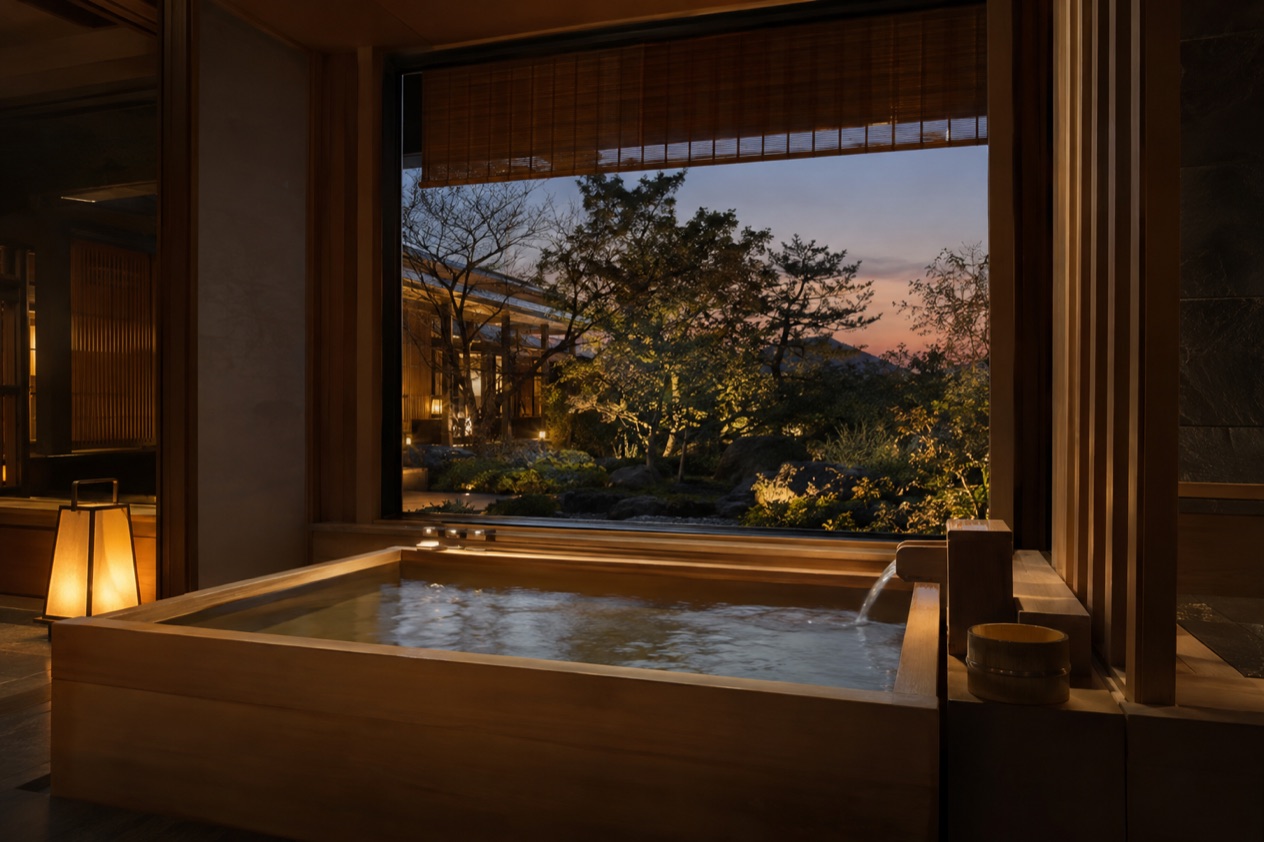
Which are Japan’s best-known luxury hotels?
Three names do most of the talking: Aman, Hoshinoya and the Park Hyatt Tokyo, each offering a very different idea of luxury. Japan’s national tourism organization groups high-end stays into four types: unique accommodations, hotels, resorts and ryokan. Aman and Park Hyatt sit in the hotel and resort camps, Hoshinoya blends resort and ryokan ideas, and the heritage stays belong to a category of their own.
Aman: Tokyo, Kyoto and Amanemu
Aman has three properties in Japan, and the architect Kerry Hill designed all three. Aman Tokyo opened in 2014 and was the brand’s first city property, a notable departure for a company known for remote resorts. Aman Kyoto followed in 2019, and Amanemu, in Shima, opened in 2016.
Each one reads as a quiet, architectural retreat rather than a grand lobby hotel. The consistent hand of a single architect gives the three a family resemblance even though the settings differ: a city tower, a Kyoto setting and the Shima coast.
A fourth, Aman Niseko, is planned to open in Niseko in 2027. In Tokyo, Aman Residences Tokyo opened in 2023 in the Azabudai Hills complex as a standalone residential property, with 91 units over 11 floors.
Hoshinoya: villas, tea rooms and island hideaways
Hoshinoya is the luxury brand of Hoshino Resorts, and its properties lean into place. Hoshinoya Karuizawa has 77 rooms, two hot-spring baths and a chaya, a tea room. Hoshinoya Tokyo opened in 2016 in downtown Marunouchi, bringing a ryokan-style approach into the middle of the business district.
The most unusual is Hoshinoya Taketomi Island, the only resort on Taketomi Island. It opened in 2012 and consists of 48 wood-structure villas arranged as a mini-village. Hoshinoya Okinawa, the chain’s second location in Okinawa Prefecture, opened on Okinawa Island in 2022. The brand has also gone abroad, with Hoshinoya Bali in 2017 and Hoshinoya Guguan in Taiwan’s hot springs in 2019.
Park Hyatt Tokyo
The Park Hyatt Tokyo occupies floors 39 to 52 of Shinjuku Park Tower, a building designed by Kenzo Tange that opened on April 25, 1994. It is the second-tallest building in Shinjuku. The hotel has a swimming pool with panoramic views of Tokyo, and it was the main setting of the film Lost in Translation, which is why visitors already feel they know its bar and its windows.
Aman’s spin-off brand Janu offers a lighter option. Janu Tokyo belongs to that brand, which runs larger hotels and aims to be slightly more affordable than Aman.
| Hotel | Place | Opened |
|---|---|---|
| Aman Tokyo | Tokyo | 2014 |
| Aman Kyoto | Kyoto | 2019 |
| Amanemu | Shima | 2016 |
| Hoshinoya Tokyo | Marunouchi, Tokyo | 2016 |
| Hoshinoya Taketomi Island | Taketomi Island | 2012 |
| Hoshinoya Okinawa | Okinawa Island | 2022 |
| Park Hyatt Tokyo | Shinjuku, Tokyo | April 25, 1994 |
Where are they?
Luxury stays are spread across the country, from Tokyo, Kyoto and Osaka to Hokkaido, Tohoku, Kyushu and Okinawa. Japan’s national tourism organization lists luxury accommodations in Tokyo, Kyoto, Osaka, Hokkaido, Tohoku, Kanto, Hokuriku Shinetsu, Tokai, Kansai, Chugoku, Shikoku, Kyushu and Okinawa, which means a high-end stay is possible almost anywhere a trip might lead.
In the big cities
Tokyo holds the densest cluster: Aman Tokyo, Hoshinoya Tokyo in Marunouchi, Janu Tokyo, Aman Residences Tokyo in the Azabudai Hills complex, and the Park Hyatt Tokyo at 3-7-1 Nishi-Shinjuku in Shinjuku. Each gives a different Tokyo, from the business district of Marunouchi to the skyscrapers of Shinjuku.
Kyoto has Aman Kyoto. Heritage Stays in Kyoto, some of them within walking distance of historic districts, offer another way to sleep in the old city, with tea ceremony, calligraphy and traditional clothing among the activities.
Beyond the cities: coast, mountains and islands
Amanemu sits in Shima, in the Ise-Shima area that Japan’s tourism organization features among its luxury destinations. Hoshinoya Karuizawa has its hot-spring baths and tea room, and Hoshinoya Taketomi Island offers its village of villas on a small island, the only resort there. Hoshinoya Okinawa brings the brand to Okinawa Island.
The featured luxury destinations go well beyond the famous names: Hokkaido Oriental, Hachimantai, Nasu, Hokuriku, Matsumoto and Takayama, Ise-Shima, the Kii Peninsula, Setouchi, San’In, Kagoshima, Aso and Unzen, and Okinawa and Amami. Aman Niseko, planned for 2027, will add a Hokkaido address.
What a stay can be built around
Japan’s tourism organization frames luxury travel around gastronomy, arts and culture, natural wonders, accommodation and exceptional stays. A stay can mean exploring the national parks, discovering artisanal heritage and traditional crafts, or tasting sake, shochu and awamori. Modern ryokan let guests take part in Japanese tradition and culture in a setting that is current rather than a museum piece.
What should you know before you book?
Choose the kind of stay first, because a city tower, a ryokan and a heritage property ask different things of a guest. The Heritage Stays program gives the clearest practical picture, and it shows how a traditional property differs from a hotel.
Reservations and timing at Heritage Stays
Reservations at Heritage Stays are required, and they can often be made through the property’s website or by phone. These stays are open year-round, but autumn (October and November) and spring (March and April) draw interest for the seasonal scenery. Since today falls in October, the autumn season is under way.
Check-in is typically from 3:00 PM to 6:00 PM and check-out is by 10:00 AM, though times vary by property. That window is worth planning around if you arrive from a long train ride or a morning of sightseeing.
Etiquette and what to expect inside
Guests at Heritage Stays are expected to remove their shoes indoors and to respect quiet hours. Those habits shape the rhythm of the stay, which is slower and more attentive than at a standard hotel. Activities such as tea ceremony, calligraphy and wearing traditional Japanese clothing are part of the experience.
At Hoshinoya Karuizawa, the hot-spring baths and the chaya tea room carry the same spirit into a resort format. A ryokan-style stay in a city, as at Hoshinoya Tokyo, suits travelers who want that atmosphere without leaving downtown.
Getting there and choosing a base
Heritage Stays are often reached by train or bus from major cities. That matters when deciding between a hotel inside a city and a remote retreat: a place like Taketomi Island or Amanemu in Shima is a destination in itself, while Park Hyatt Tokyo or Aman Tokyo puts you in the middle of urban sightseeing.
Think about whether you want the hotel to be the trip or the base for it. Taketomi’s village of 48 villas rewards staying put, while a Tokyo tower suits a traveler heading out each day. Janu Tokyo is the option within the Aman family for those who want the name at a slightly more affordable level.
Good to know before you go
Contact each property directly for its own prices and terms, since check-in and check-out times differ from one hotel to the next. Pack slip-on shoes, because you will take them off often.
Sources
- Japan National Tourism Organization, heritage stays (https://www.japan.travel/en/heritage-stays/), checked October 11, 2026
- Japan National Tourism Organization, luxury accommodation (https://www.japan.travel/en/luxury/accommodations/), checked October 11, 2026
- Wikipedia, Aman Resorts (https://en.wikipedia.org/wiki/Aman_Resorts), checked October 11, 2026
- Wikipedia, Hoshino Resorts (https://en.wikipedia.org/wiki/Hoshino_Resorts), checked October 11, 2026
- Wikipedia, Park Hyatt Tokyo (https://en.wikipedia.org/wiki/Park_Hyatt_Tokyo), checked October 11, 2026
To plan your stay
- Best Time to Visit Japan: Cherry Blossoms, Autumn Colors, Weather and Festivals
- Things to Do in Japan: Kyoto Temples, Onsen, Street Food and Day Trips
- Sending Luggage from the Airport in Japan: Hands-Free Travel, Hotel Delivery and Coin Lockers
- Know Before You Go to Japan: Entry, Money, Etiquette and Getting Around