
A bell sounds from a temple hillside, the Enoden train rattles past with its windows open, and a shop near the station is already frying senbei, the rice crackers that people carry through the lanes. Kamakura is a city of temples, shrines and a bronze Buddha in the open air, spread across several neighborhoods that each have their own rhythm. Choosing where to sleep means deciding which of those rhythms you want to wake up to.
What is the best area to stay in Kamakura?
For a first visit, the area around Kamakura Station gives you the widest choice of restaurants, shops and train connections. If temples and the Great Buddha are your reason for coming, Hase puts you beside Kotoku-in. If you want a stay in a traditional inn with tatami floors, look at the ryokan and heritage-style properties, which are a different way of sleeping rather than a different district.
Kamakura is a city of Kanagawa Prefecture, on the island of Honshu in the Kanto region, and it was the seat of the Kamakura shogunate from 1185 to 1333. That history is why the city is organized around temples and shrines rather than around a single downtown. Tsurugaoka Hachimangu and the Great Buddha are the landmarks that draw most itineraries, and where you sleep decides how you reach them.
Travelers on a first trip usually want one base that keeps every option open. The station area is built for that. It is where the lanes of small shops begin, where meals are easy to find after the temples close, and where the Enoden line starts its run along the coast. You can step out of your hotel, grab a coffee, and decide that morning where to go.
Sightseers who plan to spend their days among the temples may prefer to sleep nearer to a single cluster of them. Hase gathers the Great Buddha and the hillside temple gardens around one stretch of the Enoden line. Kita-Kamakura is the name for the temple district north of the center, where the grounds are wooded and the lodging is sparser. The choice is between convenience for meals and proximity to the sights.
For a budget trip, the useful idea is to look beyond the old town. Fujisawa, the junction where the Odakyu line meets the Enoden line, is a larger railway town, and staying there means you reach Kamakura by the same Enoden train that tourists ride. Guesthouses, business hotels and apartments are the sorts of lodging that fit that plan, and the trade is a ride in the morning and again at night.
Families tend to want a place where the day can be broken up: a morning at a temple, a pause at a café, a return to the room, an evening meal without another train ride. The station area suits that rhythm because everything is nearby. Hase works too if the Great Buddha is the main goal, since it keeps the biggest sight beside the room rather than across town.
Nightlife in Kamakura is modest compared with the big cities. What it offers is small izakaya, the casual Japanese pubs where plates of grilled skewers and cold beer arrive in no hurry, and wine bars tucked into side streets near the station.
Visitors treat Kamakura as a day trip from Tokyo. From Shinjuku, one alternative to the usual rail route is to take the private Odakyu line to Fujisawa and change onto the Enoden line, a journey of about 90 minutes. Sleeping in Kamakura instead means you meet the temples when the day trippers have gone, and you still have the evening in a town of lanterns and low rooftops.
The areas differ less by price or comfort than by what surrounds the front door. In one, you hear shop shutters and train announcements. In another, a temple bell and the rustle of trees. In a third, an Enoden carriage clatters by while you eat breakfast. Think about which of those sounds you would like to hear, and the rest of the decision tends to follow.
The best areas to stay in Kamakura
Four bases cover most trips to Kamakura: the area around the station, Hase, Kita-Kamakura and the Fujisawa junction. Each suits a different kind of traveler, and each puts a different part of the city outside your window.
Around Kamakura Station
This is the part of town where Kamakura feels like a living city rather than a set of monuments. Shops sell pottery, sweets and handmade goods, cafés fill with people between temple visits, and the smell of grilled rice crackers drifts along the lanes. It is the base that suits a first visit, a trip with children, or anyone who wants dinner options without a second train ride.
The lodging here leans toward business hotels, small boutique-style properties and guesthouses, the kinds of places that fit a city center. Tsurugaoka Hachimangu, the shrine that anchors the old shogun capital, belongs to the same part of the city, so the shrine, the shops and the station form one loop that you can return to between outings.
For getting around, the Enoden line begins here and runs on toward the coast. The Enoshima-Kamakura Free Pass, which comes with a roundtrip from Shinjuku, includes unlimited use of the Enoden line for one day, although it does not cover fares on local buses. A practical tip: if you sleep here, plan your temple days as outings that return to the station for lunch.
Hase and the Great Buddha
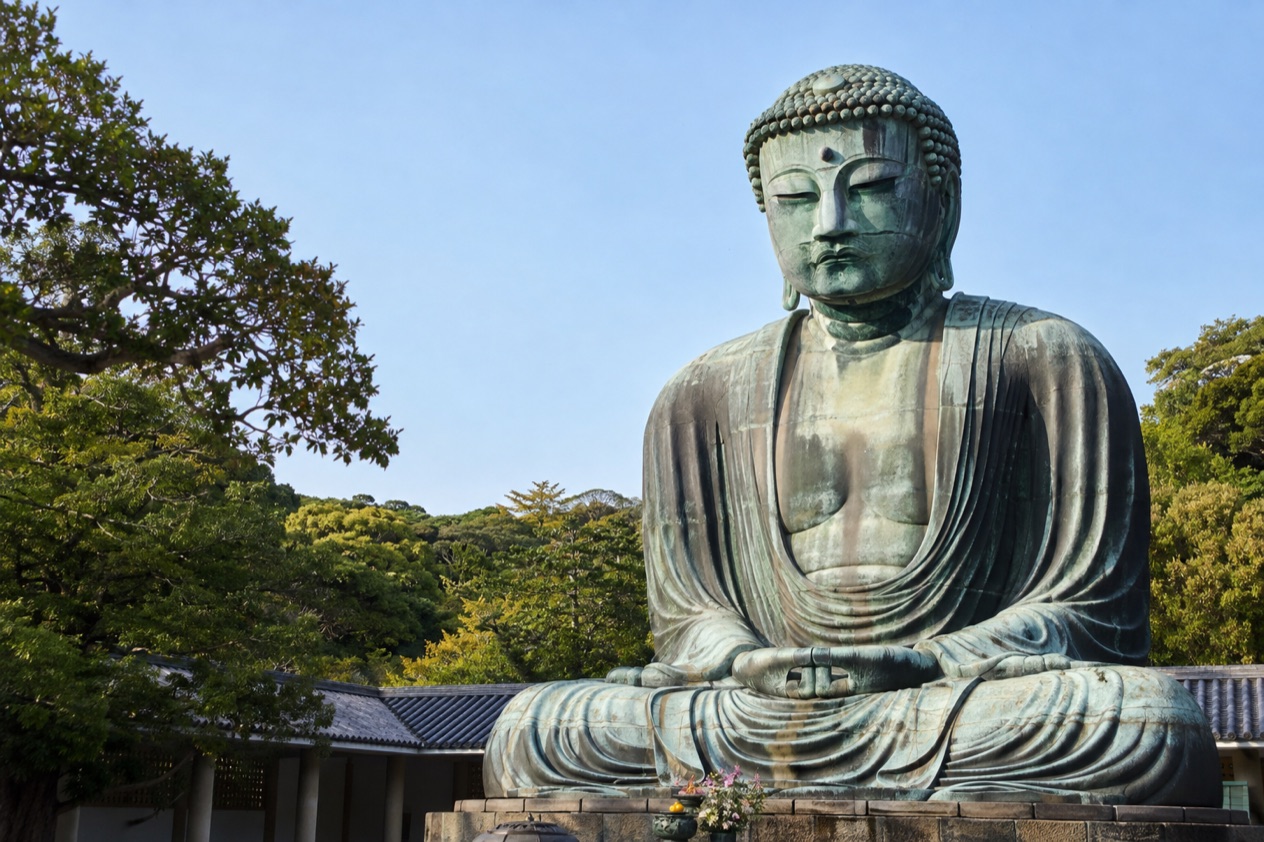
Hase is the neighborhood of the Great Buddha. Kotoku-in holds the monumental bronze statue of Amida Buddha that sits outdoors, and it is the figure that survived a tsunami in the 15th century while the hall around it did not. Staying here means the statue and the hillside temple gardens are your neighbors rather than a destination on a map.
The lodging tends toward small inns, guesthouses and apartment-style stays rather than large hotels, in keeping with a residential coastal district. It suits travelers whose trip is built around temples and gardens, and couples who want a smaller base than the center can offer. It is less suited to anyone who wants a long list of restaurants outside the door.
The Enoden line serves the district, and its small carriages are part of the scenery as well as the transport. Since local buses are not included in the Enoshima-Kamakura Free Pass, the train is the part of that ticket you will actually use here. A tip for the evening: eat before you return, since you will be away from the dense streets of the station area.
Kita-Kamakura
Kita-Kamakura is the district of Zen temples, where the grounds are set among trees and the approach to each gate is lined with moss, stone and cedar. It appeals to travelers who want their stay to feel like part of the temple landscape, not just a stop on the way to it. Mornings here tend to belong to bells and sweeping brooms.
Lodging is limited and small in scale. Guesthouses and a few traditional-style stays are the kinds of places you look for, and you should expect to find fewer cafés and shops than in the center. It suits repeat visitors, photographers of old gates and gardens, and anyone happy to take a train into the heart of the city for dinner.
If you sleep here, the day naturally starts with temples and ends with a return ride toward the station area for something to eat. It is the most reflective choice among the four, and also the one where you give up the most convenience. A tip: treat the district as a place to wake up in, and plan your meals around the center.
Fujisawa and the Enoden connection
Fujisawa is where the Odakyu line meets the Enoden line, and it is the route used when you travel from Shinjuku on that alternative path, about 90 minutes in all. It is a bigger railway town than Kamakura, with the business hotels, chain restaurants and convenience stores that come with a transport junction. It suits travelers who want a practical base rather than a scenic one.
The lodging here is the plainest of the four: business hotels, apartments and guesthouses designed for people who arrive late and leave early. The reason to choose it is the connection. From the junction, the Enoden line carries you to Kamakura, and the Enoshima-Kamakura Free Pass covers that line for the day, though not local buses.
A tip for this base: if you come in on the Odakyu line from Shinjuku, you are already on the route to the coast. Treat each day as a trip into Kamakura on the Enoden line, and come back in the evening to a town with plenty of places to eat. It is a trade of atmosphere for ease of arrival.
Kamakura areas compared
| Area | Best for | Feel | Getting around |
|---|---|---|---|
| Around Kamakura Station | First visit, families, evenings out | Shops, cafés and small izakaya near Tsurugaoka Hachimangu | Enoden line starts here |
| Hase | The Great Buddha and temple gardens | Residential coastal district beside Kotoku-in | Enoden line |
| Kita-Kamakura | Temple-focused trips, repeat visitors | Zen temple grounds among trees | Train toward the center |
| Fujisawa | Practical base on the Odakyu route | Railway junction town with business hotels | Odakyu line and Enoden line |
The main trade-off is between being near the station and being near a particular temple. The station area gives you restaurants, shops and the start of the Enoden line, but the temples are an outing from your room. Hase and Kita-Kamakura put you inside the temple landscape, but you give up the evening choices and take a train when you want a larger meal.
The old town and the junction town pull in opposite directions. Kamakura, the old shogun capital of 1185 to 1333, is where the atmosphere lives, and sleeping there means you wake up inside it. Fujisawa gives you a practical base on the way, with the Enoden line as the bridge, and you accept a ride into the temples each morning and a ride back each night.
Kita-Kamakura and Hase are the two places where a stay changes the kind of day you have. In Kita-Kamakura, the day begins among Zen temples and moves toward the center for dinner. In Hase, it begins with the Great Buddha and the gardens on the hillside. In both, the evening is simpler than in the station area, and that is part of what you are choosing.
If you cannot decide, the station area is the base that asks you to give up the least. Every other district is reachable from it by the Enoden line or by train, the shops and restaurants are around the corner, and the hotel stock is the broadest. The others reward a more specific plan, and are worth choosing when you know what that plan is.
How to choose your hotel in Kamakura
A traditional ryokan is the stay that most changes the trip. Ryokan, the Japanese inns believed to have emerged in the 8th century, typically have tatami floors, futons laid out for the night, private baths (sometimes outdoor), a cotton yukata robe to wear, a kaiseki dinner of small seasonal courses, and a traditional Japanese breakfast. Choosing one means the dinner and breakfast are part of the stay rather than something you go out to find.
Heritage Stays are a related idea. Visitors at these properties can take part in cultural activities such as tea ceremony and calligraphy, or wear traditional Japanese clothing. Reservations are required and can often be made through the property’s website or by phone. For a city with so many temples and so much history, a stay of this kind turns the evening into part of the visit.
A business hotel is the plain alternative: a private room, a small bathroom, and a bed rather than a futon. It fits travelers who spend the day outside and want a reliable place to sleep, and it is the kind of lodging you find around railway stations and junctions. The comparison with a ryokan is not about quality but about whether the room is a base or part of the experience.
A capsule hotel is a sleeping pod in a shared space, the most compact form of lodging in Japan. A guesthouse is a smaller, often more casual property with simple rooms and sometimes a shared lounge, which gives the stay a more social feel. Both are options for a short night between long days, and neither asks you to plan around meals or ceremonies.
Think about the station before you think about the room. Kamakura Station is where the Enoden line begins, and a base near it keeps the train at your door. Hase and Kita-Kamakura trade that for the temples, and Fujisawa trades it for the Odakyu connection from Shinjuku. Ask which of those you would rather have in the morning when you pick up your bag.
Families and travelers with limited mobility should weigh what the district looks like before choosing it. Kamakura’s temples are built on hillsides and approached through gates and stone paths, so a base in the station area, where meals and shops sit near the door, keeps the day flexible. Consider asking a property about its layout, such as floors and bath arrangements, before you decide on a traditional inn.
A ryokan is also a question of rhythm. Dinner is served at a set point in the evening, and the breakfast comes in the morning, so the day has a shape that a hotel does not impose. If you want to spend your evenings wandering and eating at an izakaya, a hotel near the station frees you from that. If you want the quiet ritual of a kaiseki dinner, the inn is the answer.
One more thing to settle is whether you want Kamakura as a base or as a stop. Staying overnight turns it from a day trip into a place where the temples are the neighbors and the evening belongs to you. Whichever lodging you pick, the Enoden line, the shrine and the Great Buddha are the same, and the choice is about where you are standing when the day begins.
Good to know before you go
From Shinjuku, one way to reach Kamakura is to ride the private Odakyu line to Fujisawa and change onto the Enoden line, a journey of about 90 minutes. The Enoshima-Kamakura Free Pass includes a roundtrip from Shinjuku and unlimited use of the Enoden line for one day, but it does not include fares on local buses. Kamakura has a population of 172,929, and the temples sit among the neighborhoods rather than apart from them.
Sources
- Wikipedia, Kamakura (https://en.wikipedia.org/wiki/Kamakura), checked October 11, 2026
- Wikivoyage, Kamakura (https://en.wikivoyage.org/wiki/Kamakura), checked October 11, 2026
- Japan National Tourism Organization, ryokan stays, what is included, etiquette (https://www.japan.travel/en/guide/japanese-ryokan/), checked October 11, 2026
- Japan National Tourism Organization, heritage stays (https://www.japan.travel/en/heritage-stays/), checked October 11, 2026