
After a day of walking through Tokyo’s stations and crowded crossings, the idea of sinking into hot water up to your shoulders becomes very appealing. The Japanese bath is a whole culture, and it starts with the word onsen, which covers hot spring sources and the bathing facilities built around them.
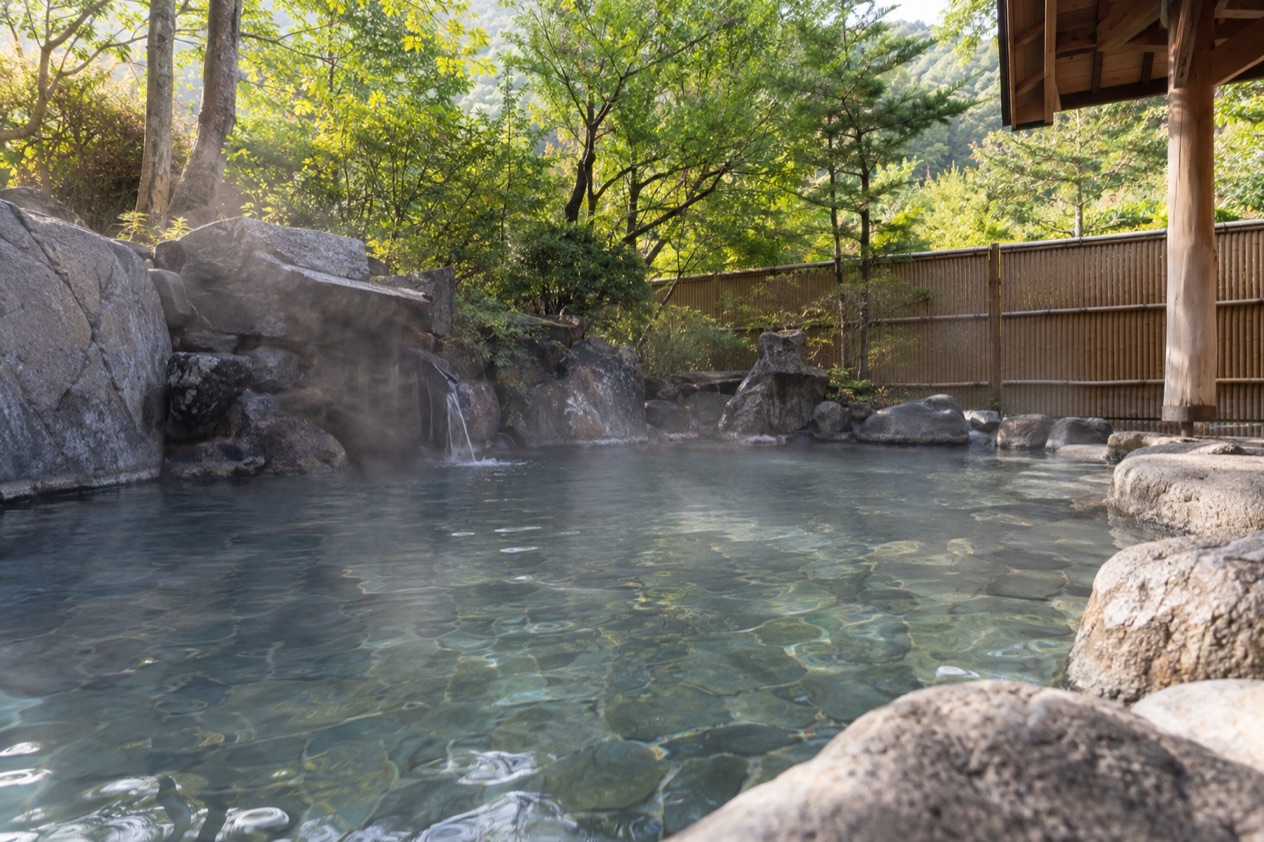
Can you visit an onsen in Tokyo?
Yes, you can bathe in an onsen as a visitor, and the experience follows the same pattern wherever you go in Japan. An onsen is a hot spring source together with the bathing facility built around it, so the word describes both the water and the place where you soak. The Japan National Tourism Organization notes that bathing in an onsen is generally believed to give a significant boost to one’s wellbeing, which is a good part of why so many travelers build a soak into their trip.
The water itself is local. Its natural composition and benefits vary from region to region, so one hot spring can feel and taste quite different from another. That is why Japanese travelers often choose a hot spring area by the character of its water, and why a bath in one town is never quite a repeat of the bath in the next.
What the facility looks like inside
Look for the hiragana character ゆ (pronounced yu) or an emoji of a semicircle with three curved vertical lines rising from it. The semicircle stands for the bath and the lines for steam, and together they mark an onsen across Japan, on signs, curtains and maps.
Inside, there is usually one bath section for men and another for women. They are indicated by the kanji 男 for man and 女 for woman, which are worth learning before you push through a curtain. Many onsen offer magnificent views, and some are outdoor baths called rotenburo, where you soak with open air around you and the sky overhead.
If you do not want to be fully immersed
Not every hot spring experience means getting into a tub. There are unique sand baths, and there are outdoor foot baths for those who do not want to fully immerse in water. A foot bath is a gentle way to try the heat of a spring while staying dressed, and it suits travelers who are curious but not ready for a shared bath.
Tattoos
Some onsen have a policy prohibiting tattoos, but more onsen now allow tattoos than before. In a no-tattoo onsen, you may be able to enter if you cover your tattoos with a sticker or patch. The Japan National Tourism Organization advises checking with the facility beforehand, so the question is settled before you arrive with a towel in your bag.
Which ones are best known?
The experience most closely tied to the onsen tradition is the ryokan, a traditional Japanese inn, and the Japan National Tourism Organization points to it for the ultimate onsen experience. Most ryokan have an onsen and focus on the onsen aspect of the stay, so the bath is part of the evening rather than an extra stop. For a traveler based in Tokyo, this is the setting that people mean when they talk about a classic hot spring getaway.
Staying in a ryokan
A ryokan stay is built around the bath. You soak, you change into the robe provided, and the rhythm of the evening follows from there. Staying in a ryokan allows you to taste local cuisine and visit tourist sites at your own pace, which the tourism organization describes as a relaxing and enriching experience.
Because the water varies from region to region, the ryokan you choose shapes what the bath is like. Some sit beside outdoor baths with a view, and others center on a quieter indoor pool. Reading the description of the bath is as useful as reading the description of the room.
Private baths in the room
Many luxury ryokan offer a private onsen in the rooms, which the tourism organization calls perfect for a romantic getaway. A private bath changes the experience in a practical way: you bathe on your own schedule, with no shared changing room and no question about the posted rules for tattoos.
Even so, the habits of the onsen still apply in spirit. The bath is for soaking, and the washing happens before you get in. A private bath simply gives you the whole space to yourself, which suits couples and anyone who would rather ease into the custom.
Day visits and the idea of a hot spring town
An onsen does not have to mean an overnight stay. The word covers the facility as well as the spring, so a bathing facility built around a hot spring source counts whether you stay for the night or only for a soak. What changes from one place to the next is the water, the setting and the view, from a rotenburo with open air to a plain indoor bath.
When you choose, think about what you want from the visit. A foot bath suits a short stop, a sand bath is a different experience altogether, and a ryokan turns the bath into a full evening with a meal of local cuisine.
What should you know before you go?
The main thing to know is that bathing etiquette exists to make the experience pleasant for everyone. The Japan National Tourism Organization puts it simply: being aware of your surroundings and considerate of others will help everything go well. That attitude covers most of what you need, and the rest is a handful of habits you can pick up on the spot.
Reading the signs and finding your bath
Start at the entrance. The ゆ character and the steam emoji tell you that you are in the right place, and the kanji 男 and 女 tell you which side to enter. With a usual split between a men’s section and a women’s section, it pays to recognize those two characters before you reach the changing room, since you will not always see an English sign.
If you are visiting an outdoor bath, a rotenburo, the same signs apply. The view is part of the appeal, so take a moment to look around before you settle into the water.
Tattoos and what to do about them
Tattoos are the question that worries travelers most, and the answer is mixed. Some onsen prohibit them, but more onsen now allow them than before. If a facility has a no-tattoo policy, you may still be able to enter by covering the tattoos with a sticker or patch.
The tourism organization asks you to check with the facility beforehand. A quick question before you arrive is far better than finding out at the door, and it also tells you whether a private bath in a ryokan room might suit you better.
Being a good guest in the bath
Bathing etiquette is a shared courtesy. You are in a space where other people are trying to relax, so keep your voice low, watch where you step and stay aware of the people around you. The same spirit that guides behavior in a ryokan guides behavior in any onsen.
If you are unsure about a step, watch what other bathers do and follow along. Most of the custom is visible, and the setting itself, with its steam, its warm water and its view, encourages a slower pace than the rest of a Tokyo trip.
Good to know before you go
Decide early whether you want a quick soak or a full ryokan stay, since the two feel quite different and the second turns the bath into the center of an evening. If tattoos are a concern, ask the facility before you set out, and consider a private onsen in a ryokan room when you want to bathe on your own terms. Foot baths and sand baths are there for anyone who prefers not to be fully immersed.
Sources
- Japan National Tourism Organization, onsen: what it is, etiquette, famous areas (https://www.japan.travel/en/see-and-do/onsen/), checked October 11, 2026
To plan your stay
- Best Time to Visit Tokyo: Cherry Blossoms, Autumn Leaves, Weather by Month and Festivals
- Where to Stay in Tokyo: Shinjuku, Shibuya, Asakusa, Ginza and Roppongi
- Tokyo from the airport: Narita and Haneda, the Skyliner, Local Trains and Taxis
- Know Before You Go to Tokyo: Entry, Money, Getting Around and Local Etiquette